


The Sea of Galilee, a critical water source in Israel, has dropped further due to last week’s intense heatwave, reaching 212.595 meters (697.5 feet) below sea level as of Sunday, only 40.5 centimeters (16 inches) above the critical red line, noting the lake's capacity and limitations for water usage.
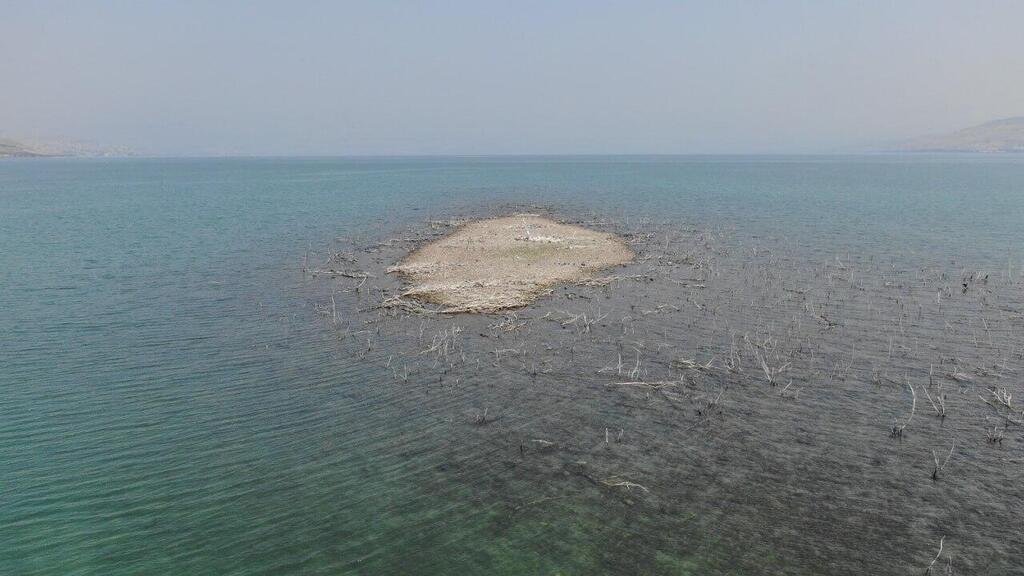
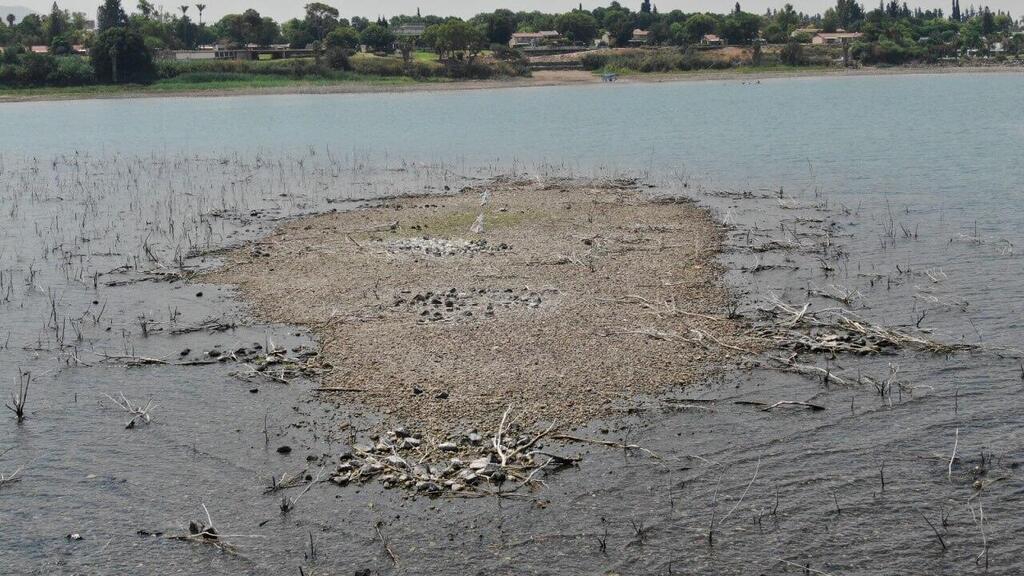
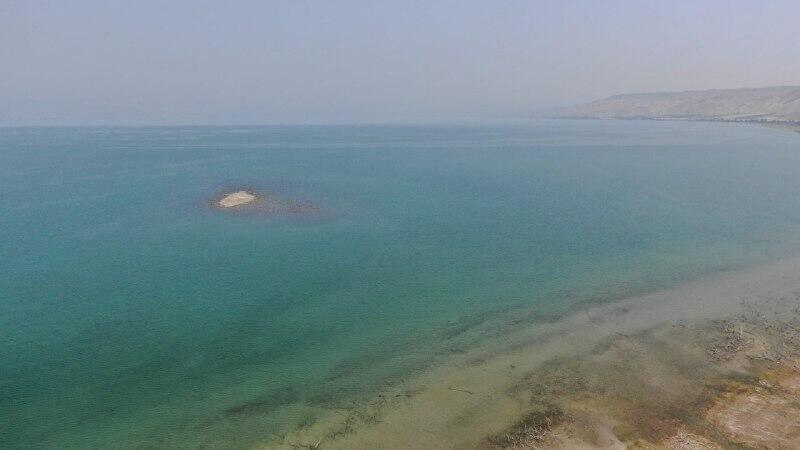
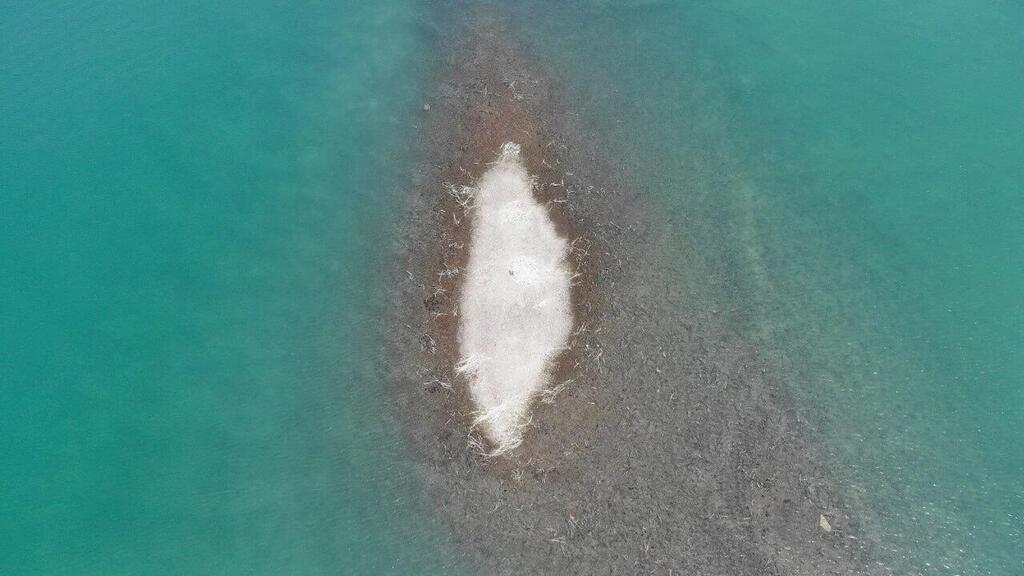
The high evaporation rate, particularly spiking in the last two days of the heat wave, has exposed more of the island near Kibbutz Ma’agan. “The Sea of Galilee lost several centimeters since the heat wave began, with evaporation rates rising by tens of percent compared to typical summer days,” Firas Talhami, head of the Water Authority’s northern region, noted.
(Photo: Shai Mizrachi, Igud Arim Kineret)
Talhami warned of a sharp decline, predicting the level could hit the red line by late September. “In a normal summer month, the level drops 30 to 35 centimeters (12 to 14 inches), and I estimate we’ll reach that within six weeks.
“We’ve minimized pumping from the lake, but another severe heat wave like last week could accelerate the drop. These heat waves only worsen the decline.” Despite the concern, he offered reassurance, saying, “We’ll continue managing the water supply professionally and cautiously to ensure stable access for all consumers.”
Idan Greenbaum, chairman of Igud Arim Kinneret, expressed growing alarm. “We watch with concern as the Sea of Galilee loses centimeters daily, with the famous island off Kibbutz Ma’agan—now a symbol—expanding before our eyes. We hope and pray for a rainy winter and the start of desalinated water inflows.”
Data from the Kinneret Authority shows the level was 220 centimeters (86 inches) lower than on August 17, 2024, and 353 centimeters (139 inches) below the red line compared to the decade’s peak on that date in 2020. In 2017 and 2018, however, levels fell below the red line.
(Photo: Shai Mizrachi, Igud Arim Kineret)
(Photo: Shai Mizrachi, Igud Arim Kineret)
Historical figures reveal a steady decline. On October 1, 2024, the level stood 212 centimeters (83 inches) above the red line, dropping to 171.5 centimeters (68 inches) by January 1, 2025, and 167.5 centimeters (66 inches) by April 1.
By June 1, it lost 40 centimeters (16 inches) to 126 centimeters (50 inches), and by August 1, it fell to 58 centimeters (23 inches) above the line. With the lake losing about 1 centimeter (0.4 inches) daily in August, experts warn that, if the trend continues, it could dip below the red line just days after Rosh Hashanah in late September.