

A 300-meter (985-foot) section of Jerusalem's Lower Aqueduct, believed to have been built during the Hasmonean period more than 2,000 years ago, has been uncovered during an archaeological excavation by the Israel Antiquities Authority (IAA) south of Kibbutz Ramat Rachel. The discovery was made at a site where the Israel Land Authority is developing a new residential neighborhood.
According to the IAA, the aqueduct was a massive and sophisticated engineering project that formed part of an ancient water system carrying spring water from the Gush Etzion area and Solomon's Pools to the Temple Mount in Jerusalem.
Dr. Benyamin Storchan and Gil Fried, the IAA archaeologists directing the excavation, described the discovery: "Jerusalem's Lower Aqueduct was an impressive engineering project, apparently built during the reign of the Hasmonean kings to supply water to Jerusalem. It was so well designed that it continued to be used intermittently throughout different periods, until as recently as about 100 years ago."
The two archaeologists said the aqueduct extended approximately 21 kilometers (13 miles), from Solomon's Pools south of Bethlehem to Jerusalem.
"Along most of its route, the water flowed along a very gentle gradient, descending about one meter for every kilometer," they said.
Gallery
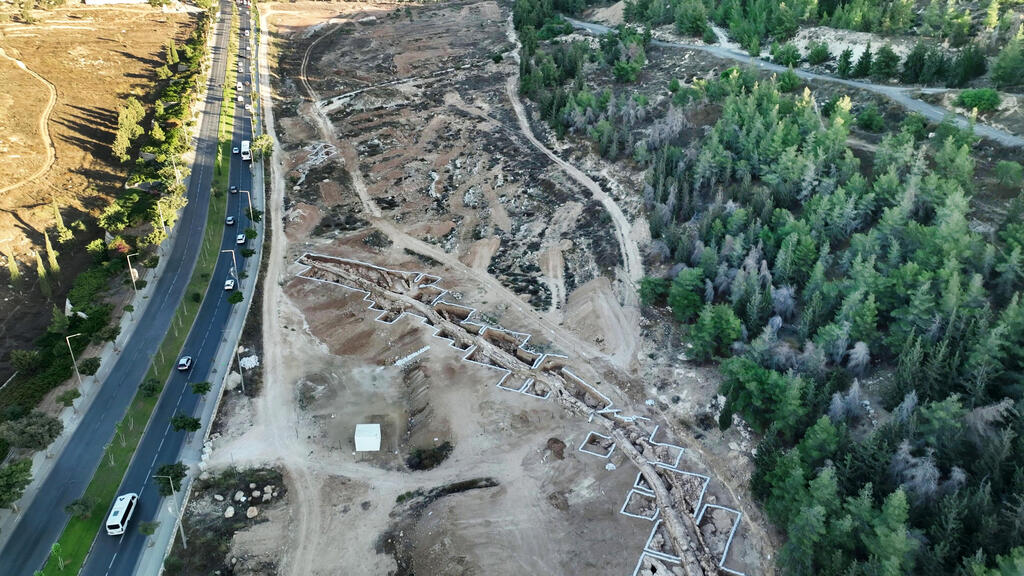
An aerial view of the Jerusalem aqueduct uncovered near Ramat Rachel
(Photo: Emil Aladjem, Israel Antiquities Authority)
According to the excavation directors, the aqueduct was designed to allow water to flow by gravity, without pumps or mechanical devices. To achieve this, its planners had to maintain a precise, gentle gradient over many kilometers while adapting the route to the slopes and rocky terrain. Inspection points were installed along the system, providing access to the channel to clear blockages and carry out routine maintenance.
The newly uncovered section reveals different stages in the water system's history. Initially, water flowed through a plaster-lined channel. About 500 years ago, during the Ottoman period, a ceramic pipe was installed inside the original watercourse.
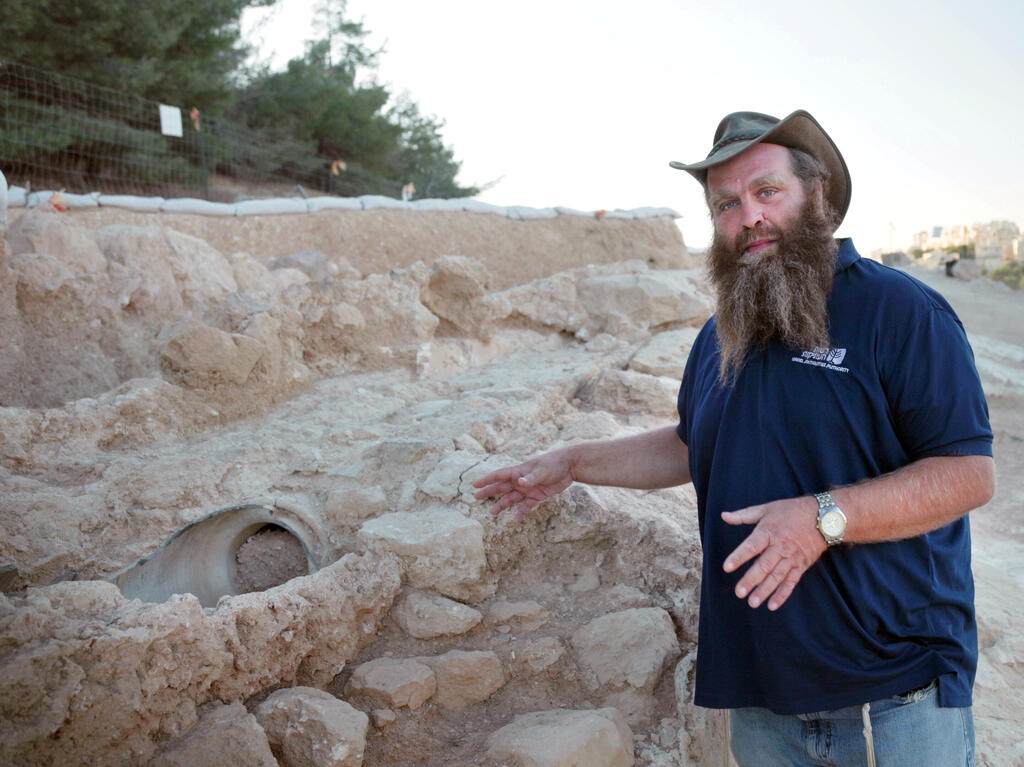
Dr. Benyamin Storchan, excavation director on behalf of the Israel Antiquities Authority
(Photo: Emil Aladjem, Israel Antiquities Authority)
At that time, the exterior of the aqueduct wall was coated with plaster, and stones were embedded in it one by one while it was still wet. This created a rough surface with a distinctive appearance that extended along the aqueduct's route. The successive repairs reflect the aqueduct's importance and the ongoing efforts to maintain Jerusalem's water supply.
The IAA emphasized that its cooperation with the Israel Land Authority would allow the ancient remains to be preserved as an integral part of the developing urban landscape. Under the plan, the aqueduct section will be incorporated into the main entrance to the new neighborhood and displayed to the public in a way that allows visitors to view it from all sides.
Dr. Amit Reem, director of the IAA's Jerusalem District, also commented on the discovery.
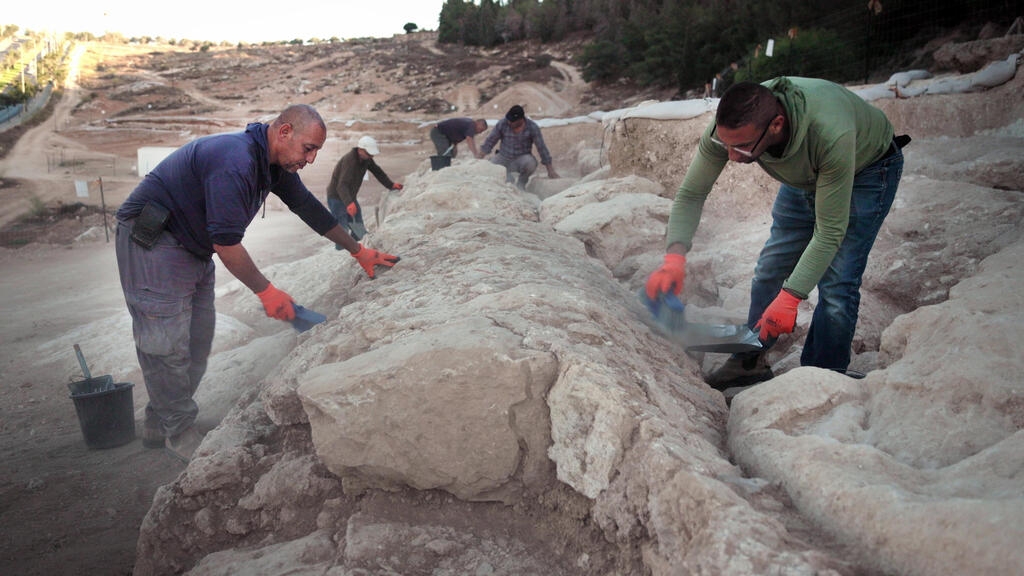
The Lower Aqueduct of Jerusalem, attributed to the Hasmonean period, as uncovered during the excavation
(Photo: Emil Aladjem, Israel Antiquities Authority)
"The aqueduct is an engineering marvel. Even today, with all our modern technology, building such a system would require extensive planning and effort. It is remarkable to think that people were able to bring water to Jerusalem in this way some 2,000 years ago, and we want the public to be able to appreciate this achievement up close.
"The Israel Antiquities Authority's dream and vision is to create a continuous park that would allow visitors to walk along the aqueduct from southern Jerusalem to the Old City. We are advancing this initiative together with the Jerusalem Municipality and other partners."
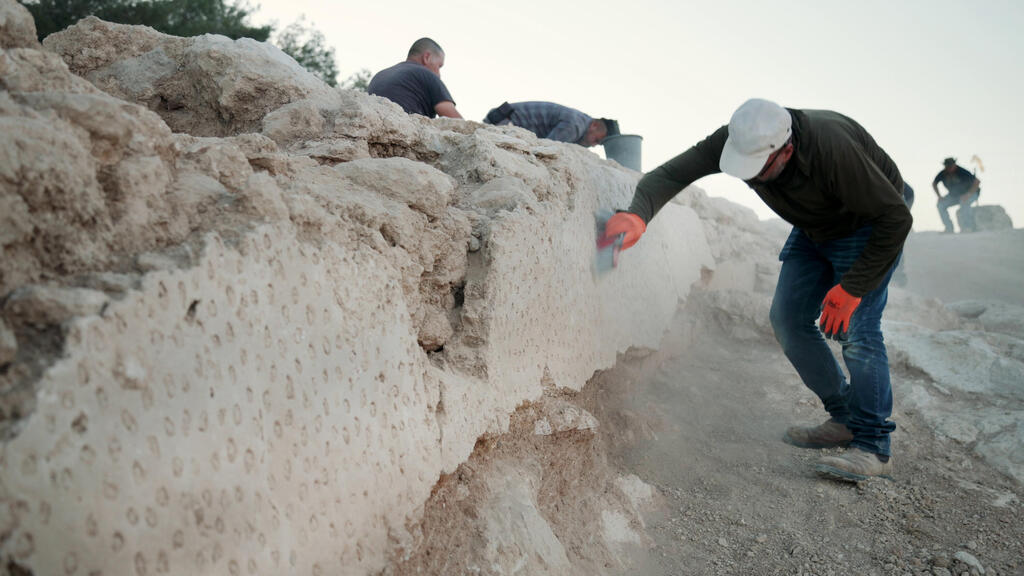
During the Ottoman period, stones were embedded in the wet plaster covering the aqueduct wall
(Photo: Emil Aladjem, Israel Antiquities Authority)
Heritage Minister Rabbi Amichai Eliyahu said: "The aqueduct, whose construction is attributed to the Hasmonean kings, tells the story of leaders who knew how to plan for the future, expanding Jerusalem's capacity to accommodate residents, pilgrims and public life centered around the Temple.
"Incorporating the aqueduct into the new neighborhood continues that story. The city is growing, and we are pleased that its integration into the neighborhood will allow future generations to experience this heritage firsthand."
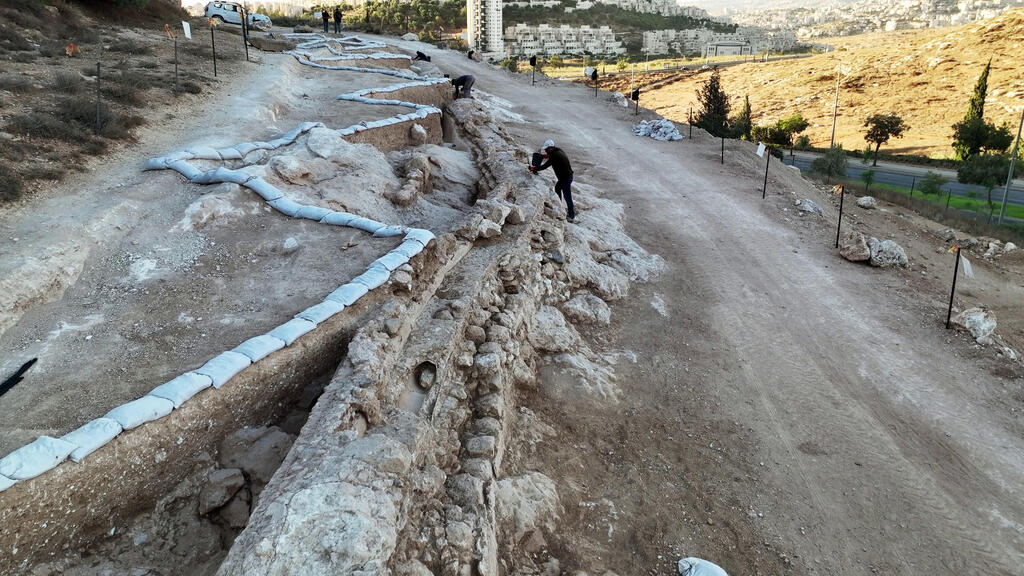
The uncovered section of the aqueduc
(Photo: Emil Aladjem, Israel Antiquities Authority)
Yehuda Eliyahu, acting director of the Israel Land Authority, added: "The magnificent discovery of the ancient aqueduct in the heart of the area planned for Jerusalem's new neighborhood reminds us that we are continuing a proud legacy of construction and development spanning generations."
The IAA said the discovery will be presented publicly for the first time this week at the 19th annual "New Studies in the Archaeology of Jerusalem and Its Region" conference, which will take place in Jerusalem and Tel Aviv.
The conference is organized by the Israel Antiquities Authority, Tel Aviv University, the Hebrew University of Jerusalem and Tagliot – the Israeli Institute of Archaeology.