

Stormy weather began early Saturday with rainfall concentrated mainly in northern Israel, though parts of the center were also affected. The highest rainfall was recorded in Karmiel, where 50.2 millimeters fell between Friday and Saturday at 9 p.m., according to the Israel Meteorological Service. Rain reached as far south as Mitzpe Ramon, which recorded the lowest amount in the current system, just 0.9 millimeters. Due to the weather conditions, Route 234 at the Tze’elim bridge was closed to traffic until further notice.
Second in terms of rainfall was Kibbutz Hefetz Haim near Gedera, which recorded 40.8 millimeters, slightly more than the 40.2 millimeters measured in Mitzpe Harashim in the Misgav region. Significant rainfall was also recorded along the northern coastal plain: Akko received 36.6 millimeters, Shavei Zion 36.1 millimeters, Haifa Bay 31.2 millimeters, Nahariya 27.8 millimeters and the Technion area in Haifa 22.7 millimeters.
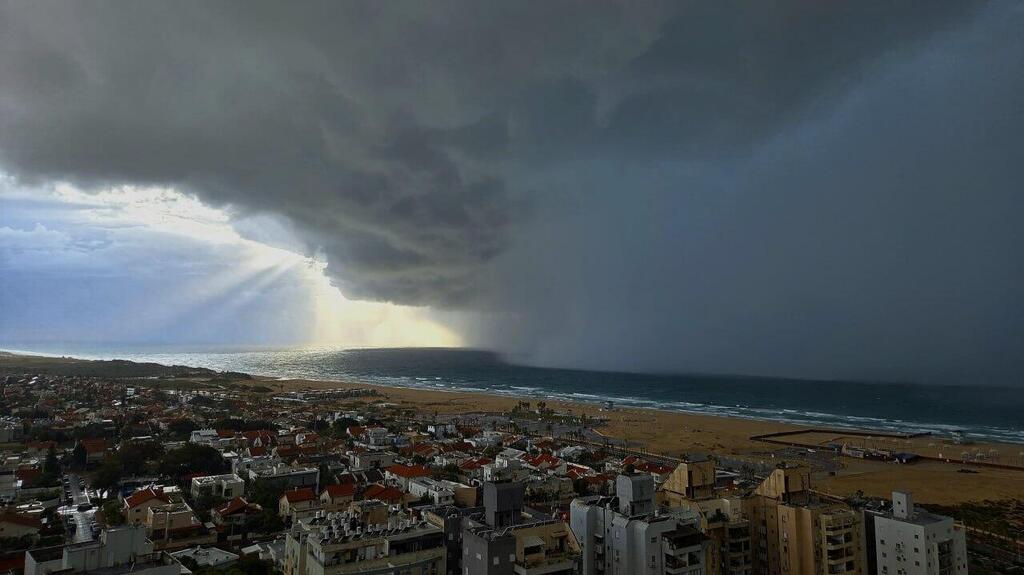
At Kibbutz Manara, near Kiryat Shmona along the northern border, 36.2 millimeters fell over the weekend. In El Rom in the northern Golan Heights, 29.4 millimeters were recorded, while Kibbutz Amiad north of the Sea of Galilee received 36.9 millimeters, an identical amount to that measured at the Dir Hanna station.
Substantial rainfall was also recorded in communities surrounding the Sea of Galilee. Kfar Menachem received 22.6 millimeters, Tiberias 18.7 millimeters and Tzemach 19.2 millimeters. As a result, a significant rise in the Sea of Galilee’s water level may finally be seen, after little change since the start of the rainy season.
Rain also reached central Israel. Measuring stations in Tel Aviv recorded between 18.7 and 24.7 millimeters. Rishon LeZion received 14 millimeters, Rehovot 15.9 millimeters and the Ashdod port area farther south 22.9 millimeters. The community of Nitzan in the Hof Ashkelon Regional Council recorded 39.1 millimeters.
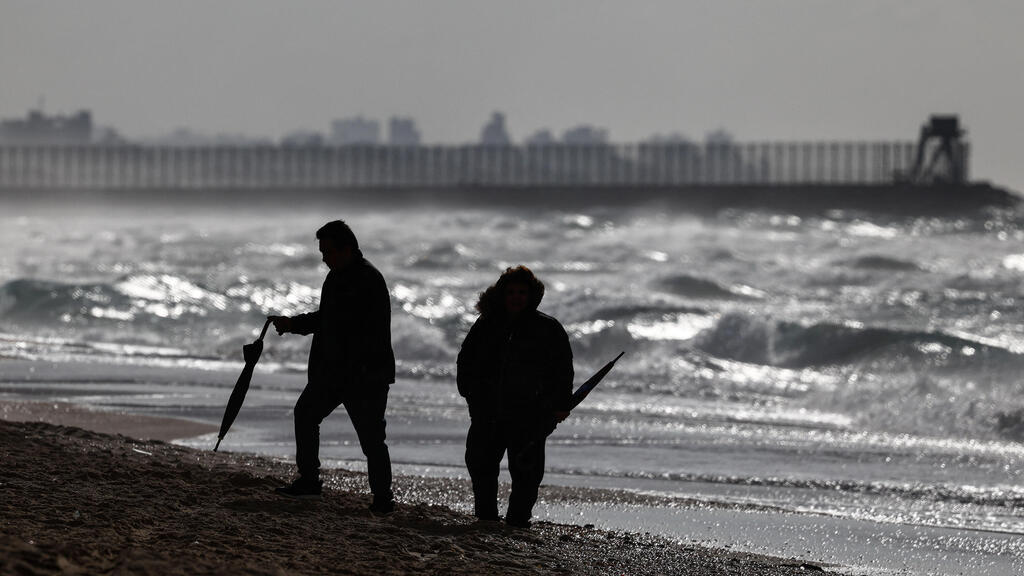
Walking in the rain in Zikim Beach
(Photo: Amir Cohen/Reuters)
In Itamar in Samaria, 17 millimeters fell, while Karnei Shomron recorded 33.9 millimeters and Ariel 25.7 millimeters. In Jerusalem, measuring stations recorded between 15.6 and 20 millimeters, slightly less than Beit Shemesh, which received 23.2 millimeters. In the south, the Sderot area recorded 26.5 millimeters, Lahav 17.7 millimeters, while Beersheba received only 4.2 millimeters.
Overnight, rain fell from northern Israel down to the northern Negev, accompanied by isolated thunderstorms. Snow is expected on Mount Hermon. There is concern about flooding in the southern coastal plain and flash floods in streams in the northern Negev, the Beersheba area, the Judean Desert and the Dead Sea region.
Looking ahead, on Sunday intermittent rain is expected from northern Israel to the northern Negev. Isolated thunderstorms may occur in the morning, and there remains a risk of flooding in eastern streams. Strong winds are expected. From the afternoon hours, rainfall will gradually weaken and diminish, but it is forecast to intensify again overnight. Temperatures will remain colder than usual.
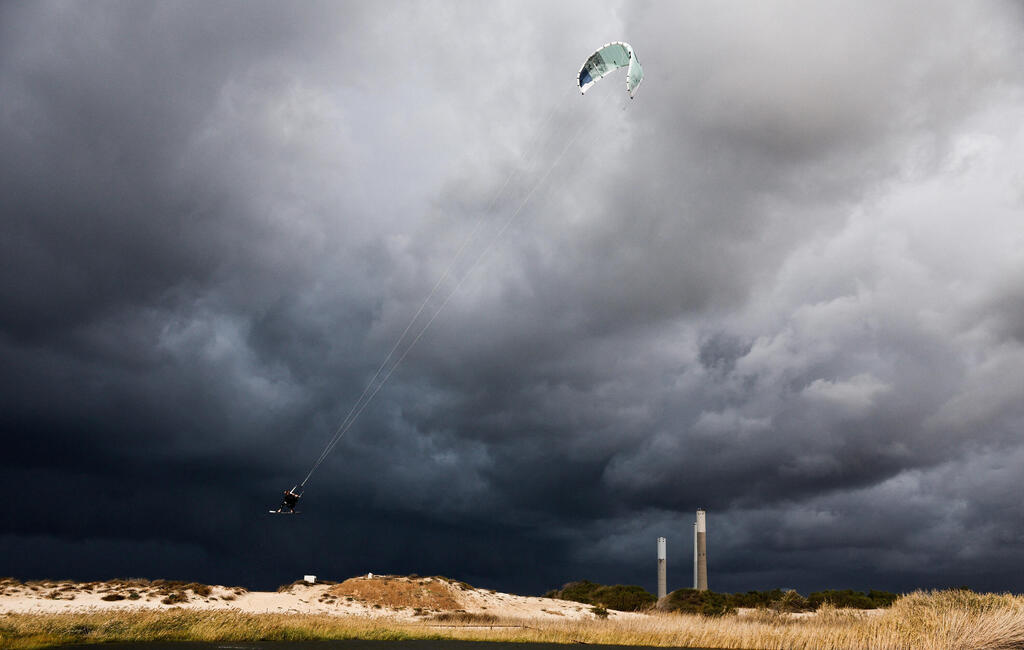
Zikim Beach
(Photo: Amir Cohen/Reuters)
The peak of the storm is expected on Monday, when rainfall will focus on central Israel. According to the Meteorological Service, very heavy precipitation of 60 to 80 millimeters within just a few hours is expected in the Sharon region, Samaria, Judea and the Shfela during the first half of the day. There is a real risk of flooding and flash floods in the Alexander, Yarkon, Ayalon, Sorek and Lachish rivers. Strong winds of 90 to 100 kilometers per hour are also forecast.
On Tuesday, drizzle to light local rain may persist in northern and central Israel, accompanied by a slight drop in temperatures. On Wednesday, the final day of 2025, skies will be partly cloudy, with local rain in northern Israel. Strong winds will blow along the coastal plain, while temperatures will rise slightly in central and southern areas.
The forecast for Thursday, which will usher in 2026, has not yet been published by the Israel Meteorological Service, but according to overseas weather sites, rain is expected, as well as during several days in the first week of the new year, beginning Sunday, January 4.