


Twelve-year-old Alice thought the animal entering her family’s tent at Duga Beach on the Sea of Galilee was her dog. Moments later, the jackal attacked her face.
“We laughed all day, walked around, were at the lake and everything,” Alice told ynet Saturday morning. “At night we went to sleep, and suddenly some animal came into the tent. I didn’t know what it was. Then I thought it was my dog and started petting it.”

Only after the attack did she realize it was a jackal. “Then we saw it inside,” she said.
Alice was one of 11 vacationers attacked overnight by a pack of jackals at Duga Beach, on the northeastern shore of the Sea of Galilee. The victims were bitten and scratched and evacuated for treatment at the North Medical Center in Tiberias.
Her grandmother, Mira Genin, 60, from Rishon Lezion, was sleeping in the tent with her when she woke to Alice’s screams at about 2:10 a.m.
“We didn’t understand what had happened, and I saw an animal running out of our tent,” she said. “I thought it was a cat. We turned on the light in the tent and saw that Alice’s whole face was covered with scratches and bites. We started washing her face, and there was a large scratch under her eye.”
Genin said the family went to the site office, where they were told that jackals had attacked several guests overnight.
“While we were waiting, more and more people came out of tents screaming and said they had been attacked, bitten and scratched,” she said. “At the hospital, they already said these were not just scratches, but real bites to the face and hand.”
“What was supposed to be a family outing turned into a terrible nightmare, like a horror movie,” Genin said. “I never dreamed our family trip to the Sea of Galilee would end with hospitalization.”
Alice received stitches and began rabies treatment. Her grandmother said she will need additional cosmetic treatment later.
“She has her bat mitzvah in a month, and in a few days she has her school graduation ceremony, and her whole face is scratched,” Genin said. “Who would have thought a pack of jackals would attack people during a vacation at the Sea of Galilee?”
Alice said after receiving treatment: “Now, after they treated me, I’m okay.”
The Israel Nature and Parks Authority said the circumstances were being examined at the scene and with medical officials. “The civilians were evacuated to the hospital because of the importance of receiving treatment and rabies vaccination,” the authority said.
Jackals are medium-sized predators from the canine family and are native to Israel. In recent years, their numbers have grown sharply, largely because of easy access to food, and they have spread across the country.
Biting incidents involving jackals have also been reported in central Israel, including Tel Aviv, where a relatively large jackal population lives in the Yarkon Park area. Estimates put the population there at 500 to 800 jackals, and a study is underway to determine its size. Ramat Gan is believed to have a similar population.
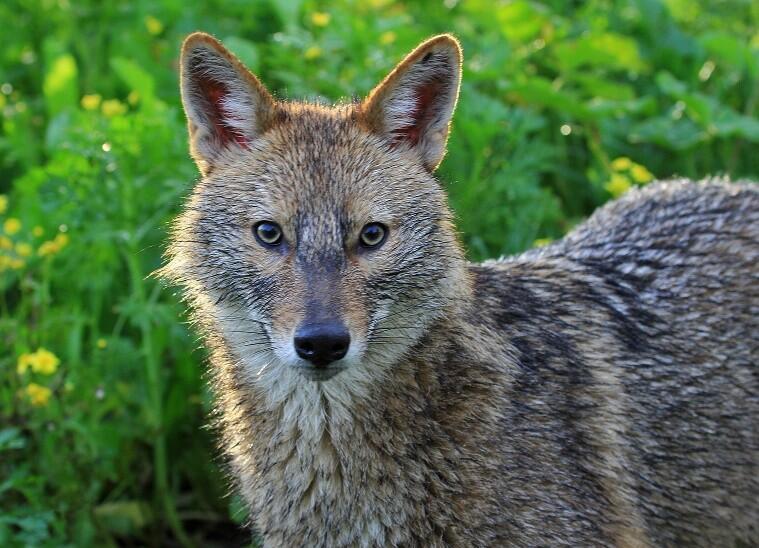
Jackal
(Photo: Noam Aaron)
The Nature and Parks Authority has received reports of 10 jackal bite incidents in Ramat Gan in recent months. In Tel Aviv, three jackal bites were reported over the past two weeks.
Dr. Tomer Nisimian, veterinarian for the Nature and Parks Authority, said rabies transmission often involves two overlapping cycles: one among dogs, cats and other urban animals, and another among wildlife.
“Today there are many rabies incidents in dogs, although we have also had unusual cases of rabies in wild animals, including a rock hyrax and a badger,” he said. “There is a large jackal population in Yarkon Park, and it has continued to grow.”
The current season is also the birthing period for jackals, which may make them more aggressive. In one recent case, a female jackal with pups was involved in three biting incidents in the Tel Aviv metropolitan area. The Nature and Parks Authority decided to capture her and relocate her with the pups.
Officials say the public should not feed wild animals under any circumstances and should not leave trash or food scraps outdoors, even inside sealed bags. Visitors should take their trash with them, sleep only in regulated overnight camping areas and store food and waste inside vehicles at the end of the day. Anyone who encounters a wild animal should keep a safe distance and avoid approaching it.
The attack comes amid a sharp rise in confirmed rabies cases. Since the start of the year, 71 cases have been confirmed in Israel. In all of 2025, there were 102 confirmed cases, itself a much higher figure than in previous years.
Several rabies cases have been detected in northern Israel, an area now considered infected. Many involved jackals. This year, rabid jackals were found in Degania Bet, Yardena, Arbel, Menahemia, Dalton and Rosh Pina. Two rabid dogs were also found in Amirim and Kadita.
Rabies has also spread from the north toward central Israel, with cases detected in Jerusalem, Shoham, Rosh HaAyin, Modi’in Illit, Holon and other locations.
Rabies is dangerous and fatal if untreated. The Health Ministry urges anyone exposed to a wild animal to immediately contact the local health bureau. On weekends and in the evening, the public should go to urgent care centers at hospitals.
In any case of a bite, scratch or contact with an unfamiliar animal, the affected area should be washed thoroughly with soap and water, followed by immediate medical treatment. Pet owners are also required to ensure their animals are vaccinated against rabies in accordance with the law.