


The Roman Spring at Hamat Tiberias National Park, a historic site fed by hot springs near the Sea of Galilee, has nearly dried up, signaling a worsening drought in Israel. The spring’s flow depends on the lake’s water level, which dropped to -212.48 meters (-696.85 feet) on Wednesday, just 52 centimeters (20.47 inches) above the critical lower red line.
After heavy rainfall in 2020 revived the spring following a decade of near-dryness, it drew thousands of visitors to its warm waters within an ancient bathhouse facing the Kinneret and Golan Heights. Now, the site is nearly parched, though 17 other springs at varying elevations remain active, with higher ones drying first.

Avi Uzan, head of the Israel Nature and Parks Authority's wetland habitats unit, explained the crisis. “The Sea of Galilee's hot and saline springs, including those at Hamat Tiberias, respond to rainfall levels. Last winter’s low precipitation failed to recharge the aquifer, causing the Roman Spring to dry up first among the 17 in the area,” he said.
He expressed deep concern, noting, “Drying springs and streams expose ecosystems to invasive species, making recovery difficult. Once a habitat dries, native flora and fauna die and invasive species take over, preventing full restoration even if water returns.”
Other northern springs, such as those feeding the Dan, Banias, Snir and Golan Heights streams, face similar risks. The upper Jordan River, a critical ecosystem, is severely impacted, with some sections completely dry. “In the Dan Spring’s pools, only 10 centimeters (3.94 inches) of water remain due to reduced flow,” Uzan said.
Get the Ynetnews app on your smartphone: Google Play: https://bit.ly/4eJ37pE | Apple App Store: https://bit.ly/3ZL7iNv
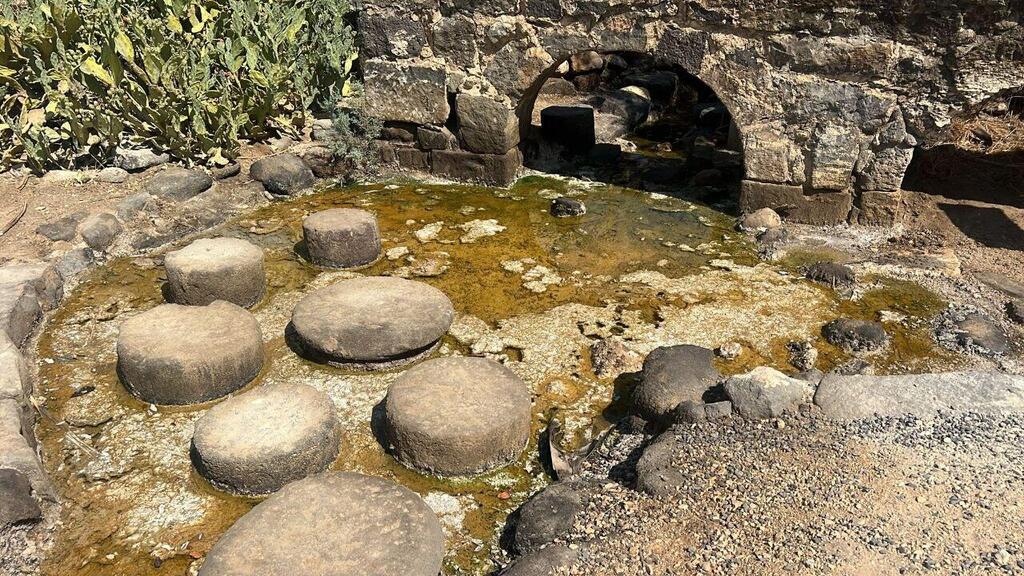
Heavy drought at the Hamat Tiberias spring
(Photo: Sharon Mado, Nature and Parks Authority)
The Nature and Parks Authority is developing a monitoring plan to track the Jordan’s ecological decline, as human activity exacerbates the impact of low water flow. “These are nearly our only water sites. Humans are affected, but nature suffers too,” Uzan added.
Wildlife faces dire consequences. River mussels risk extinction as drying mud traps them, while fish deaths threaten otters. “Drying is a catastrophe. A reduced flow allows some recovery, but complete drying lets invasive species dominate, preventing springs from returning to their original state,” Uzan warned.
Last winter’s scant rainfall, combined with upstream drilling for drinking water near the Sea of Galilee, has worsened the situation at Hamat Tiberias. The authority continues to monitor the region’s springs, bracing for further ecological fallout from the ongoing drought.