

Dipping an apple in honey is an integral part of the Rosh Hashanah tradition. But could apples become difficult, or at least much more expensive, to buy in the not-too-distant future? What are the challenges involved in growing apples and is climate change affecting them? A new study examined the world's leading apple-producing countries and reached a particularly troubling conclusion.
The study examined 13 of the world's leading apple-growing countries over a period of about six decades, including China, the United States, Turkey, India and Japan. It looked at how changes in weather were associated with changes in crop yields, and the results reveal a complex picture: An analysis of data from all the countries found that higher temperatures and increased precipitation were associated with lower apple production.
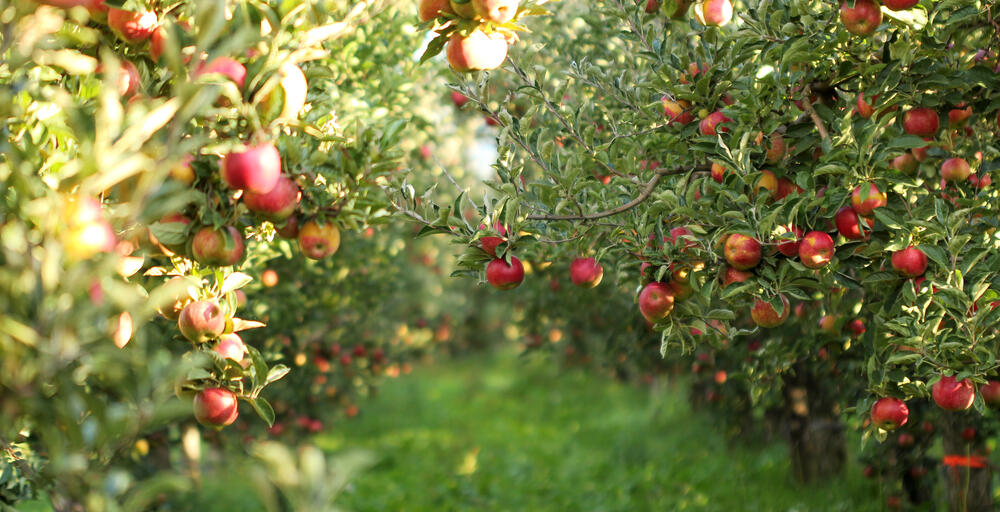
However, when each country was examined separately, the picture was less consistent, with the impact of climate conditions varying from place to place. The study also notes that in countries with higher production levels, the use of technologies such as advanced irrigation systems and adapted growing methods may help mitigate the effects of heat.
What an apple tree needs
"The apple originated in the mountains of Kazakhstan, and its flowering mechanism is based on the fact that it gets very cold there in winter. The tree sheds its leaves during this period and essentially enters a kind of dormancy," explains Dr. Yael Grunwald, a researcher in the Department of Fruit Trees at the Volcani Institute and a graduate of the Mimshak program, who studies the adaptation of fruit trees to climate change.
Grunwald explains that apple trees rely on weather signals to "understand" when the time is right to flower and begin the process of growing fruit.
"To do this, the tree needs to 'accumulate' a certain number of hours at low temperatures. Scientists believe this mechanism evolved to prevent the tree from flowering too early in the middle of winter if there are suddenly a few warm, sunny days. If the tree begins to flower during those days and temperatures then plunge again, the flowers will freeze and fail to develop into fruit, severely damaging that year's crop. In this way, the tree avoids flowering too early and ensures optimal fruit development."
But as the climate warms, this internal clock can be disrupted. Flowering can also be affected when winters are not cold enough.
"In Israel, for example, apples used to be grown in the Hula Valley, but they can no longer be grown there because it isn't cold enough. Today, apples in Israel are grown almost exclusively in the Upper Galilee and the Golan Heights, at elevations of 600 meters [about 2,000 feet] and above," she says.
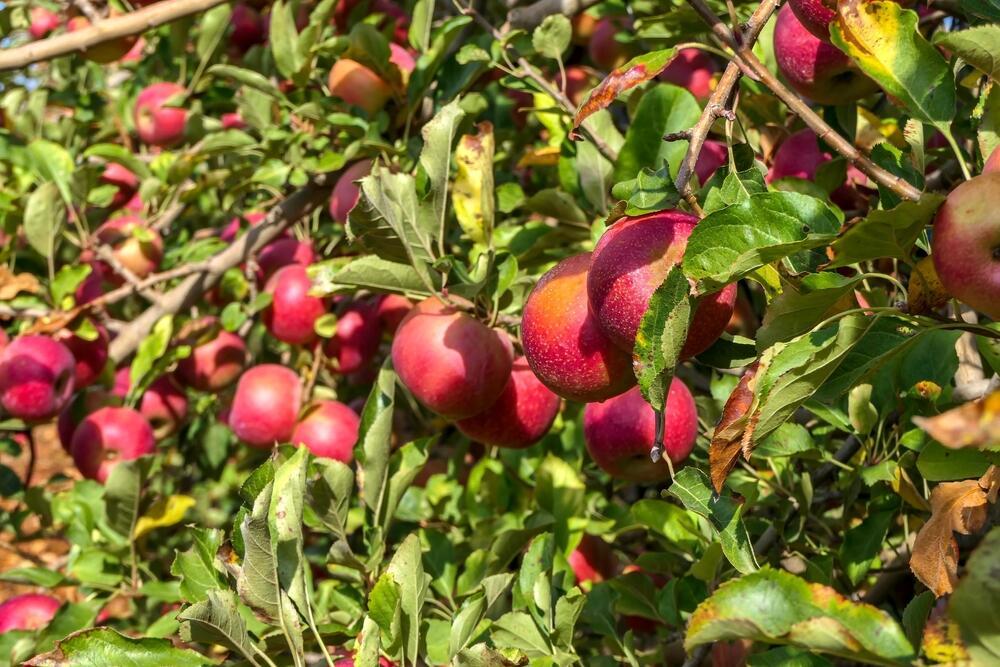
Apple tree in the Golan Heights
(Photo: Emma Grimberg, shutterstock)
"Another challenge is the summer heat. Trees can generally withstand a very hot day if it happens occasionally, but when there is a prolonged heat wave, as happened in August last year, it becomes extremely challenging for the tree, particularly when it is close to harvest season. The fruit effectively 'cooks' from the heat while still on the tree, damaging the crop," Grunwald explains.
She adds that extreme rainfall events, which are becoming more frequent because of climate change, also pose difficulties for apple trees. When rain floods an orchard and the soil becomes overly saturated, the roots struggle to absorb oxygen and are unable to transport water up through the tree, a physiological phenomenon in plants known as anoxia, or flooding damage.
So how can apples still be grown under these conditions?
Grunwald explains that alongside climate change, apple-growing methods have evolved in recent decades to produce more fruit on smaller areas of land and cope with changing growing conditions.
One apple-growing method that has gained momentum over the past 20 years is two-dimensional cultivation. Instead of large apple trees planted far apart, this method arranges smaller trees more densely in narrow rows, allowing growers to plant more trees in a given area and increase yields. But because the trees are smaller and have fewer leaves, their fruit is more exposed and therefore more vulnerable to the sun.
"This means the trees have to be grown under nets that provide shade, and that requires a very large financial investment. In an orchard like this, it takes growers about seven years to recoup their investment," Grunwald says.
To cope with changing climate conditions, a range of strategies are now being tested in the field. In orchards, growers can use shade nets, as well as precision irrigation systems and various cooling methods to reduce heat stress. Another strategy is selecting varieties suited to local conditions, as well as breeding and developing varieties that can better withstand changing conditions.
Grunwald describes a breeding program at the Volcani Institute, founded by the late Dr. Moshe Fleishman and conducted in cooperation with Northern R&D at the MIGAL Galilee Research Institute.
"In an apple orchard in Beit Dagan, we are developing varieties that require fewer chilling hours and will be able to grow in warmer regions," she says.
Grunwald stresses that understanding growing conditions and the differences among varieties will be critical to the future of apple cultivation.
"There are significant differences in the anatomy of different varieties that make some trees more heat-resistant than others. We therefore need to understand these mechanisms so we can make the right choices when planting new orchards. Israel is one of the hottest places where apples are grown, so there aren't many precedents to draw on. There is still a great deal of research to be done. The existing knowledge is really in its infancy."
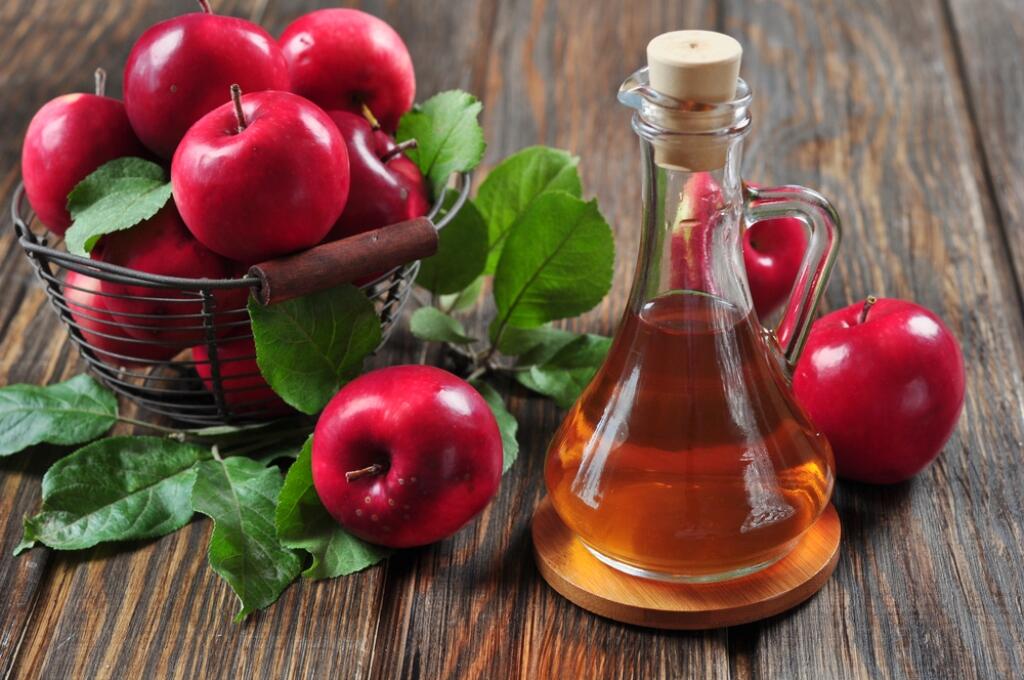
(Photo: shutterstock)
Nearly 50% of the apples sold in Israel are imported and, according to Grunwald, they are generally of lower quality.
"Because storage methods have improved significantly, the apples are sometimes a year old," she says. "Most of the apples we see in supermarkets may look beautiful and shiny, but when it comes to taste, there is no comparison with locally grown apples. Especially at this time of year, in the months around the harvest, Israeli apples are in a different league.
"However, there is currently no capacity to produce enough apples locally to meet market demand. That means consumers looking for Israeli produce will have to pay more or settle for imported produce," she concludes.
This article was produced by Zavit, the news agency of the Israeli Society of Ecology and Environmental Sciences.