

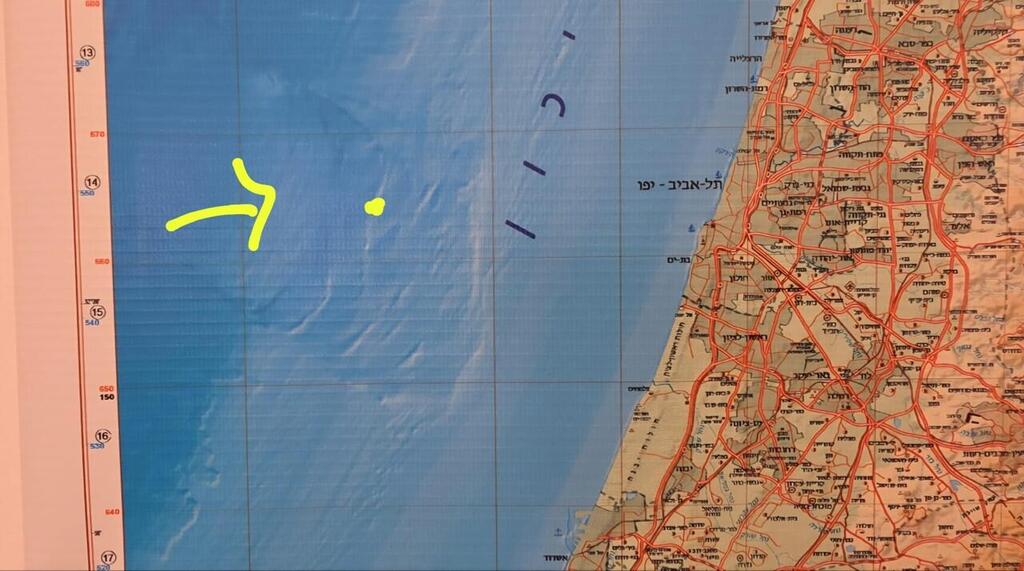
The wreckage of the Altalena, the Irgun ship that was shelled in 1948 on the orders of then-Prime Minister David Ben-Gurion during Israel's War of Independence, was located overight between Sunday and Monday about 20 kilometers (12 miles) off the Israeli coast. The ship was found intact at a depth of 503 meters (1,650 feet) following a complex maritime search operation and months of careful planning and preparations. Prime Minister Benjamin Netanyahu said in a statement filmed near the Tel Aviv beachfront that the Altalena would be “raised from the depths of the sea.”
But professionals involved in recovering ships from the seabed, as well as academic experts, say the statement is unrealistic. Despite Netanyahu's pledge, they say the chances of salvaging the Altalena intact are virtually zero. At most, robots could be used to cut off a symbolic section such as the bridge, mast or part of the deck.
Professionals say that, because the ship sank nearly 80 years ago, it has undergone extensive corrosion and could break apart and crumble as soon as work begins on it. As a result, they say, a plan to salvage the entire vessel is, at the very least, highly unrealistic.
The Heritage Ministry, which was responsible for the operation, focused solely on the first stage — locating the ship — and did not discuss what would be done with it once it was found.
Galili added that the site is at such a depth that there is almost no fishing, oil drilling or wave and current activity in the area. The environment is therefore relatively stable and the ship could remain preserved there for hundreds more years. If they try to remove it from the water, they could enter an expensive spiral in terms of the economics and practicalities of preservation and maintenance. In my opinion, this is an illogical and potentially endless project. It is important and good that the Altalena was found because it is part of the country's history, but there is a great deal that can be done to preserve the memory and historical story without going overboard.”
“Today, only Norway and the Netherlands have ships capable of lifting objects weighing up to 20,000 tons from the water,” Galili said. “Even if those ships were brought to Israel, the great depth would require the use of robots and complex attempts to secure the hull with cables and pull it above the surface.”
The condition of the ship would also have to be taken into account, he said. “We must not forget that over the years the ship has undergone chemical and biological deterioration. So even if they manage to attach cables to it and try to pull it up, it could break apart.”
Galili added that even in the most optimistic scenario, in which the ship does not disintegrate, an expensive preservation process would be required. In his view, the case is a classic example of the need to preserve a wreck at its site.
“As an example, you can look at the underwater memorial established in memory of the events of ‘Black Friday’ in August 1953, when two Israeli Air Force de Havilland Mosquito planes crashed off the Carmel coast and Haifa Bay,” Galili said. “A memorial was also established in May 2025 to commemorate the illegal immigrant ship Haim Arlosoroff on the Hulda Gurvitz Promenade in Haifa's Bat Galim neighborhood, about 100 meters from where the ship ran aground on February 28, 1947.”
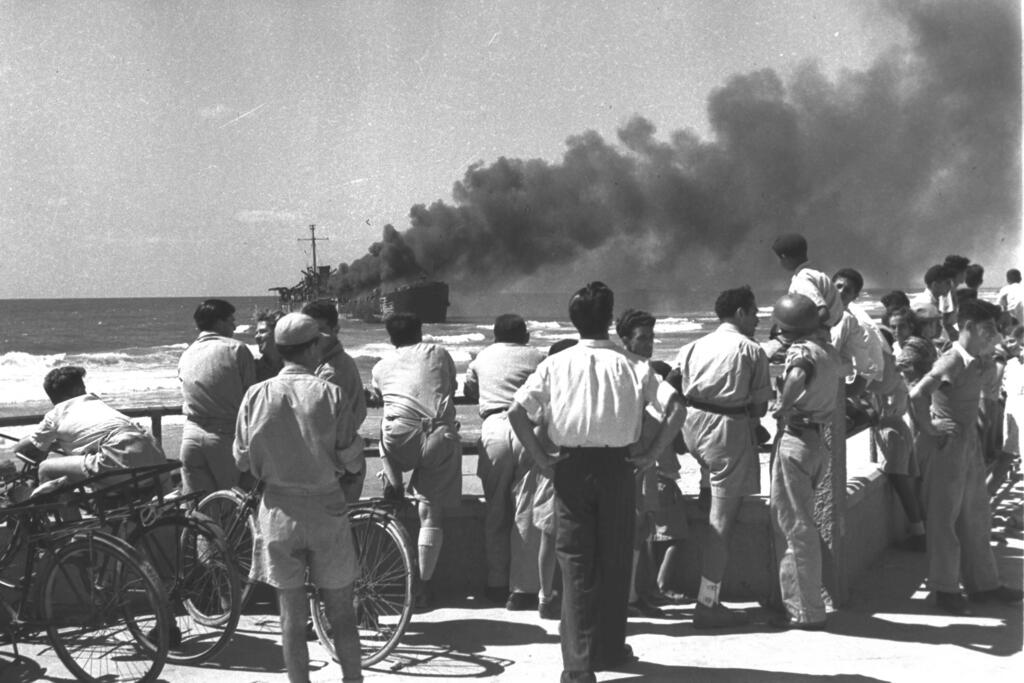
The Altalena burns off the Tel Aviv coast in 1948
(Photo: Government Press Office)
“You can come once a year and hold a dignified ceremony,” he said. “You can also remove a symbolic piece of the ship, preserve it and put it on public display, as was done with the INS Dakar submarine.”
Galili added that the site "is at such a depth that there is almost no fishing, oil drilling or wave and current activity in the area. The environment is therefore relatively stable and the ship could remain preserved there for hundreds more years. If they try to remove it from the water, they could enter an expensive spiral in terms of the economics and practicalities of preservation and maintenance. In my opinion, this is an illogical and potentially endless project. It is important and good that the Altalena was found because it is part of the country's history, but there is a great deal that can be done to preserve the memory and historical story without going overboard.”
Galili also addressed Netanyahu's pledge, saying such statements are apparently made without a well-founded understanding of the problems and challenges that could arise in such a complex project.
Prof. Prof. Deborah Cvikel, head of the Department of Maritime Civilizations at the University of Haifa, also said the chances of recovering the ship are low. Given that no information has been released about the condition of the vessel or how much of it remains, she said, the cost-benefit considerations of such a complex operation must be taken into account.
It is important and good that the Altalena was found because it is part of the country's history, but there is a great deal that can be done to preserve the memory and historical story without going overboard
“First of all, this is an exciting discovery that represents an important part of the history of the Land of Israel,” she said. “But if it were up to me, I would organize a flotilla of family representatives and hold a dignified ceremony to bring closure.”
Cvikel added: “We need to think about what to display and where to display what remains of the ship. There is an enormous financial cost that must be taken into account, as well as the fact that this was ultimately a ship that was shelled. If they bring up a piece of metal scrap from the water, it could be embarrassing. Is it worth the money and investment that would be required? There are other important things to spend the money on, whether archaeological projects or support for communities in the north and south. A virtual museum could also be considered. Not everything needs to be brought up from the sea.”
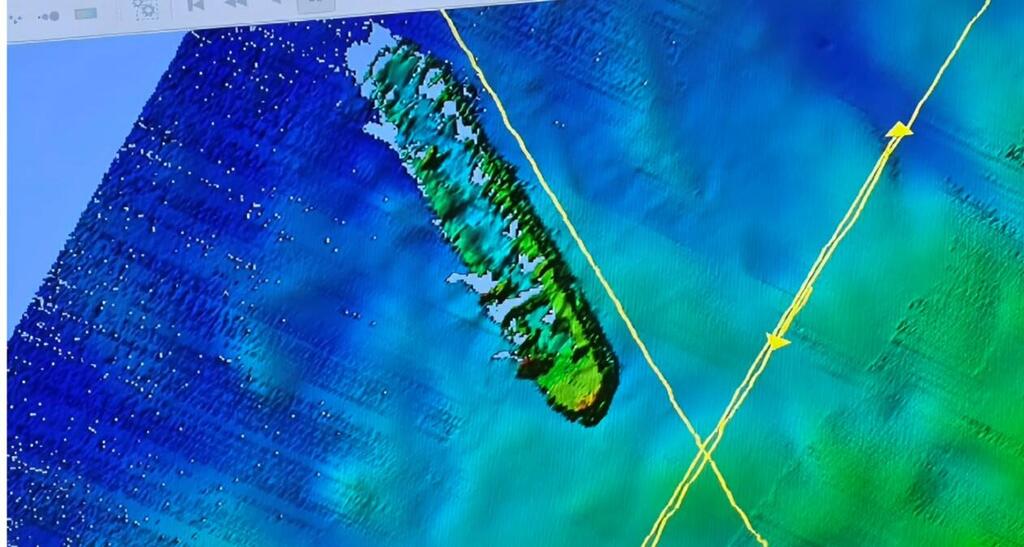
The wreckage of the Altalena
“If it were up to me, I would organize a flotilla of family representatives and hold a dignified ceremony to bring closure.”
Cvikel also highlighted the environmental issue, saying that removing the wreckage could potentially harm the marine environment.
“Ships beneath the sea often become artificial reefs,” she said. “So if they want to remove what remains of the Altalena, it could create a problem by harming marine life.”
Yossi Kivshany, a maritime works expert who was recruited 10 years ago to locate the Altalena with funding from the Menachem Begin Heritage Center and in coordination with Yariv Levin, also takes a similar view.
His task was to try to determine where the Altalena was buried. He interviewed people who had been involved in its sinking and reached the area, where he located what appeared to be a large metal object at a depth of about 500 meters in an area prone to mudslides.
“When it comes to the sea, you tend to speak in question marks rather than exclamation points,” Kivshany said.
According to Kivshany, the ship underwent a lengthy dismantling process and most of what was aboard it was sold to scrap dealers in Jaffa. It was sealed with iron plates, made lighter and then sunk at a remote location where no one would reach it. The ship that sank it left behind incomplete and insufficient coordinates.
Kivshany added: “At the time, Yariv Levin was considering raising only something symbolic from the ship and turning it into a memorial because all that remained was an iron hull and there was nothing significant left on it. Maybe its name is still there. It's an iron hull. There is no bridge, no mast and no superstructure. Everything was dismantled. Don't forget that many years have passed and it was damaged by dozens of shell holes. If you want, you can raise the Titanic too, but the question is what budget you have. You can cut off a piece of the metal, and I estimate that would cost $1 million to $2 million. Raising the entire ship would be very problematic and could cost many tens of millions of dollars. It could disintegrate from corrosion. There are also mudslides there. It's simply not realistic.”
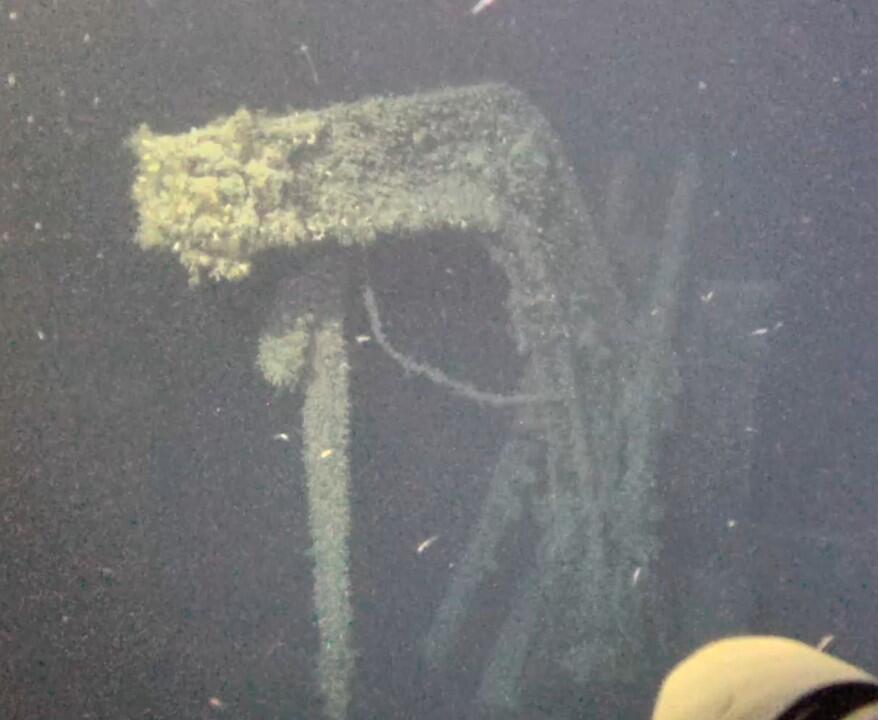
One of the surviving sections of the Altalena
The Altalena sailed to Israel from France carrying about 930 immigrants, including Holocaust survivors, as well as a large quantity of military equipment. In negotiations held shortly after the establishment of the Israel Defense Forces and the dismantling of the underground militias, Irgun commander Menachem Begin demanded that some of the weapons be transferred to Irgun battalions in Jerusalem.
Israel's first prime minister, David Ben-Gurion, rejected the demand and ordered the ship to be shelled if it did not agree to hand over all the weapons to the IDF. Nineteen people were killed in the exchange of fire — 16 from the Irgun and the ship and three from the IDF.
The ship remained afloat off the Tel Aviv coast for several months until Ben-Gurion ordered it sunk. For decades, attempts were made to locate the Altalena and raise it from the water so its remains could serve as a memorial to those killed.
About a year ago, several ministers approached Defense Minister Israel Katz with a request to transfer the cannon that fired on the ship from the IDF Command and Staff College in Glilot to the Begin Heritage Center in Jerusalem.
The ship that located the Altalena Monday night was an Italian vessel that is actually under contract with Israel Natural Gas Lines. The Heritage Ministry, through the Survey of Israel, chartered it for a single day.
After extensive preparatory work, the search area was mapped in advance to save time. Israel drew lessons from previous searches, cross-referenced data and determined where not to search. As a result, the ship was located in just one day.
The search cost only 1 million shekels ($300,000). The Italian vessel deployed robots that filmed the Altalena.