

Archaeologists have uncovered a prehistoric cave near the town of Fureidis, south of Haifa and near the Zikhron Ya’akov interchange, dating back between 400,000 and 250,000 years, authorities said.
The cave, a time capsule from the Acheulo-Yabrudian culture, remained sealed for hundreds of thousands of years, preserving evidence of early human life that is exceptionally rare in Israel and the wider Levant.
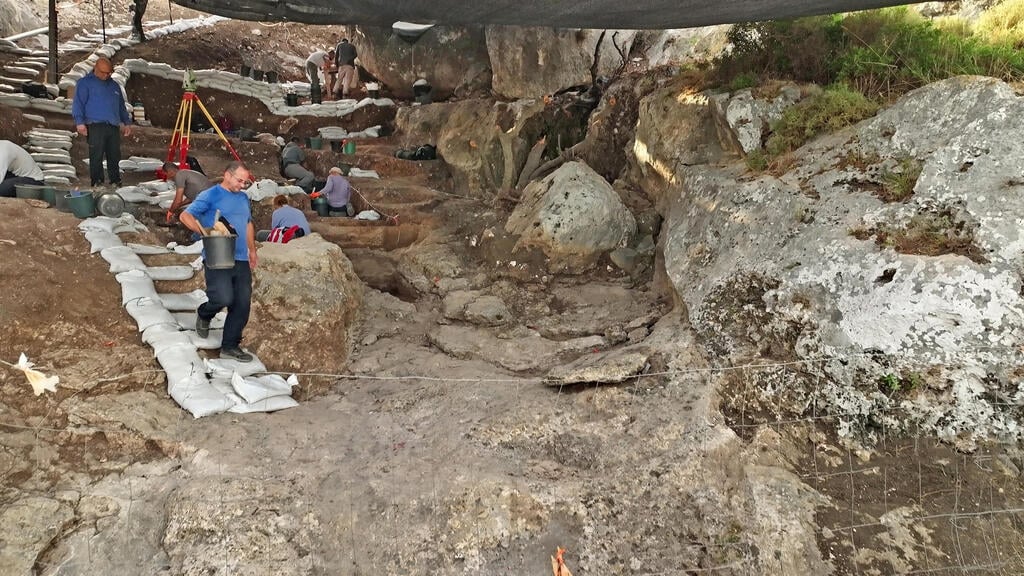
Researchers from the Israel Antiquities Authority and the University of Haifa are leading the excavation, with support from Ayalon Highways Company. The dig is directed by Dr. Kobi Vardi and Amit Gabbay of the Antiquities Authority in cooperation with Prof. Ron Shimelmitz of the Zinman Institute of Archaeology and the School of Archaeology and Maritime Cultures at the University of Haifa.
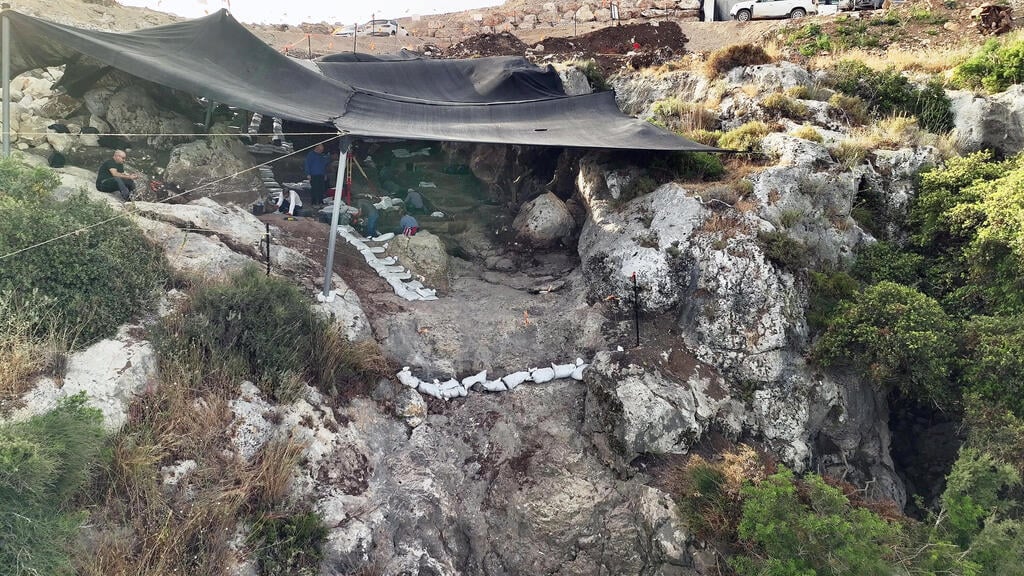
“We have been fortunate to excavate a unique site of global importance that has been protected from the ravages of time thanks to the exceptional conditions that existed here,” Shimelmitz said. “This time capsule belongs to a unique period at the end of the Lower Paleolithic era, just before Neanderthals and modern humans became dominant and spread across many regions. Only a handful of sites from this period have been uncovered in Israel and the Levant and most remain inaccessible to research.”
Shimelmitz explained that the site captures gradual changes in human physiology, technology and society that foreshadowed the complex traits and behaviors of both Neanderthals and modern humans. “To a degree, they can be seen as the seeds that led to the development of our complex culture,” he said. “One of the central processes during this period was the transition to living in larger groups and spending longer periods at the same sites.
(Photo: Emil Aladjem, Israel Antiquities Authority)
Evidence from caves of this era shows intensive use of fire and prolonged human activity, suggesting complex and rich camp life. Many researchers link these findings to the emergence of social cooperation and knowledge transfer, key processes in human evolution.”
(Photo: Emil Aladjem, Israel Antiquities Authority)
Dr. Vardi, head of the Prehistory Branch at the Antiquities Authority, emphasized the rarity of the site’s preservation. “Every prehistorian who visits the site is thrilled. This site, which is no less significant than the famous Nahal Me’arot site and dates to the same period, will allow us to study in high resolution how humans lived during this era,” he said.
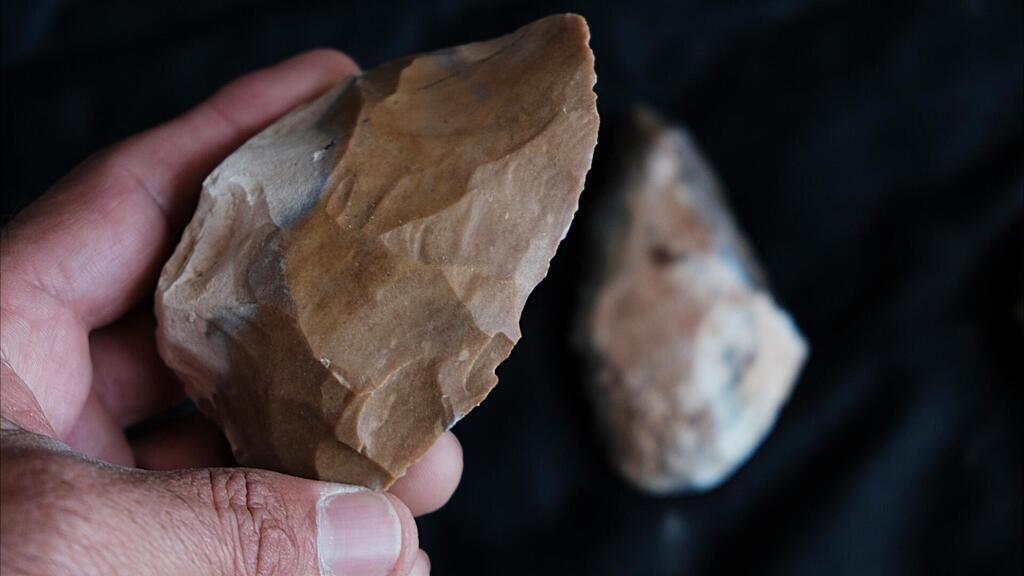
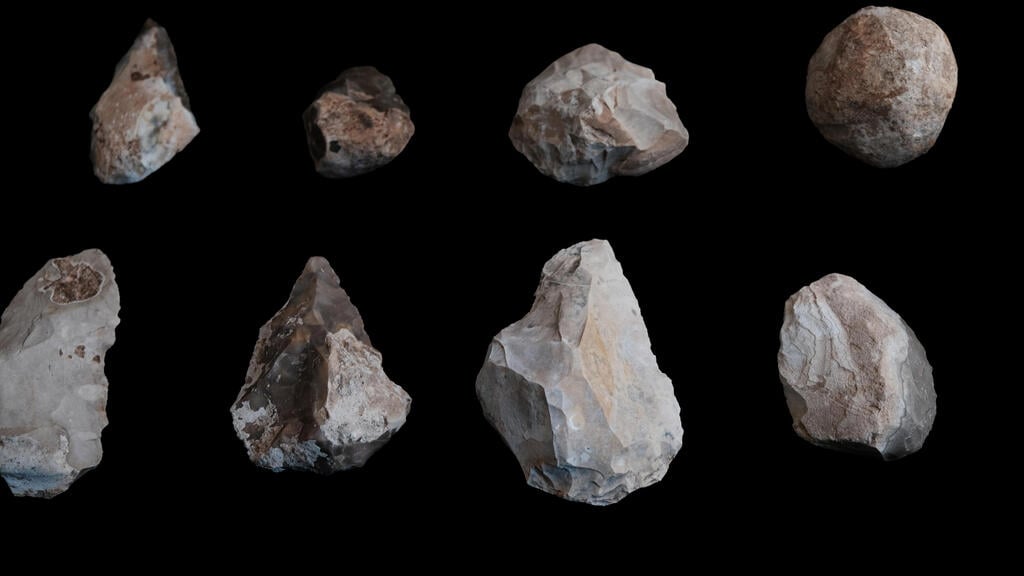
Excavations have revealed a variety of advanced flint tools, including small sharp handaxes, scrapers and blades, as well as animal bones from species such as fallow deer, gazelle and ancient horses. Traces of water at the site suggest it was a focal point for ancient hunter-gatherer groups, providing both resources and shelter.
(Photo: Emil Aladjem, Israel Antiquities Authority)
The researchers noted that the site will support a broad research program aimed at reconstructing how humans lived, adapted to their environment and developed technologies and social patterns over the course of human evolution. “The gradual changes we see in this period set the stage for later cultural complexity,” Shimelmitz said.
The excavation is being facilitated by Ayalon Highways Company, which allowed archaeologists to conduct the dig while maintaining plans for nearby infrastructure. Researchers said they hope that once the study is completed, the cave will be open and accessible to the public, including residents of Fureidis, students at nearby schools and anyone interested in Israel’s prehistory.
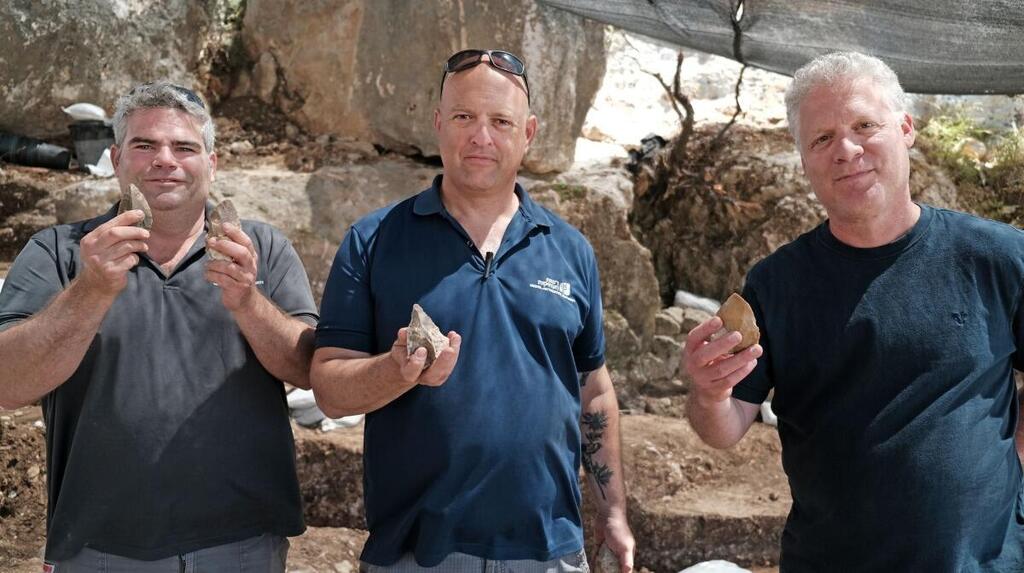
From right to left: researchers Prof. Ron Shimelmitz of the University of Haifa, Dr. Kobi Vardi and Amit Gabay of the Israel Antiquities Authority
(Photo: Emil Aladjem, Israel Antiquities Authority)
“This is a site that bridges tens of thousands of generations, offering a window into human life hundreds of thousands of years ago,” Vardi said. “It allows us to observe early humans’ adaptation, technological innovation and social development in unprecedented detail.”
The team managing the excavation includes Shimelmitz, Vardi and Gabbay. Together, they are overseeing the careful removal of sediments and artifacts to ensure that both human and animal remains, as well as stone tools, are preserved for ongoing study. The researchers noted that such well-preserved caves from this time period are extremely rare and that findings from this site will contribute significantly to understanding the Acheulo-Yabrudian culture and the evolution of early humans in the Levant.