


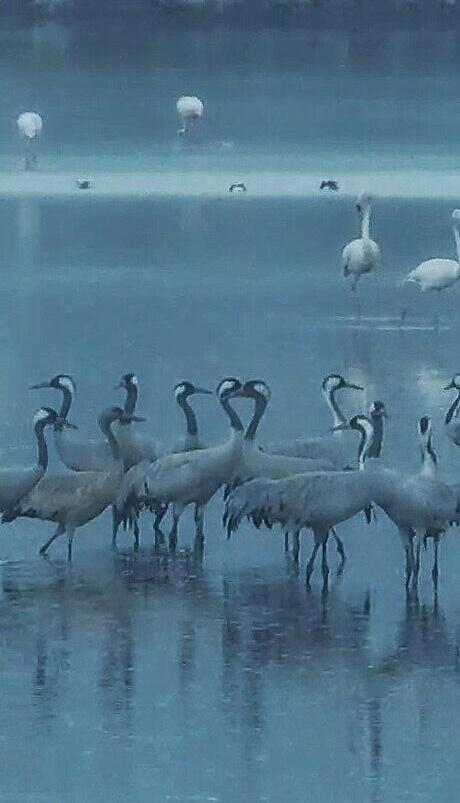
In recent nights, Inbar Shlomit Rubin has barely taken her eyes off the screens. The field manager at KKL-JNF’s Agamon Hula closely monitored the site’s cameras, waiting for the familiar movement that marks the autumn migration season. The night before last, between Saturday and Sunday, that wait ended: the first crane families landed at the lake.
“Every night, over the past few nights, I’ve been glued to the cameras at Agamon to see whether they had already arrived,” Rubin told Yedioth Ahronoth and ynet. “This year the cranes were a little late, and they’re finally here. I immediately went out at first light in the hide cart to the area where I had seen them on the screens, so I could see them and bring this beauty to everyone.”
The first crane families have arrived at Hula Lake
(Video: Inbar Shlomit Rubin, Agmon Hula KKL-JNF)


The cranes arriving in Israel make their way mainly from northern Russia, as well as from Finland and Estonia. They are mostly family groups, including young cranes that hatched this past spring. Agamon Hula, located along the migration route, serves as a critical stopover where they can rest and replenish their energy, thanks to its abundant food and safe habitat.
They are now joining a wide variety of birds already settled in the area, including flamingos, spoonbills, shorebirds, ibises and herons.
This year, however, the biological clock appears to have shifted slightly.
“I don’t know how to explain why they were so late this year,” Rubin added. “The first ones usually begin arriving between September 23 and the end of the month, but this year they only arrived now. It could be that because of the warm weather in Europe, they waited and did not set out on the journey, giving the young cranes a few more days to mature and grow stronger, and gain a few more days of feeding before the long trip.”
For local authorities in the Hula Valley, the arrival of the birds is not only a spectacular and noisy natural event, thanks to the cranes’ familiar calls, but also a significant engine for the regional economy.
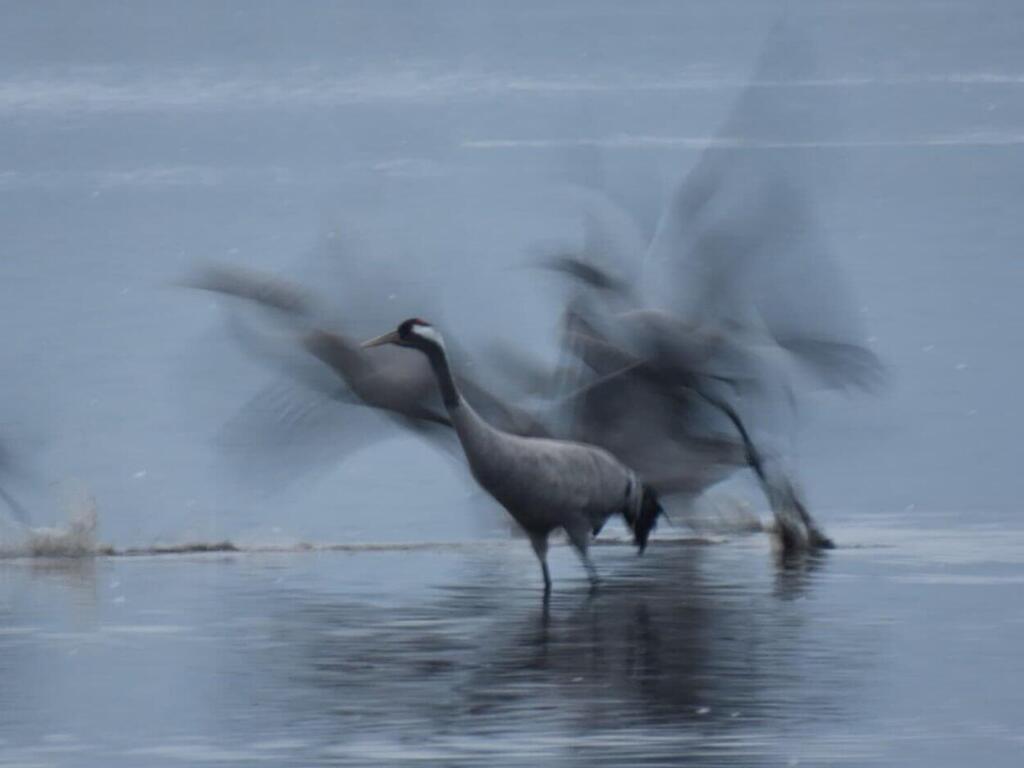
Cranes land at Agamon Hula
(Photo: Inbar Shlomit Rubin, Agmon KKL-JNF)
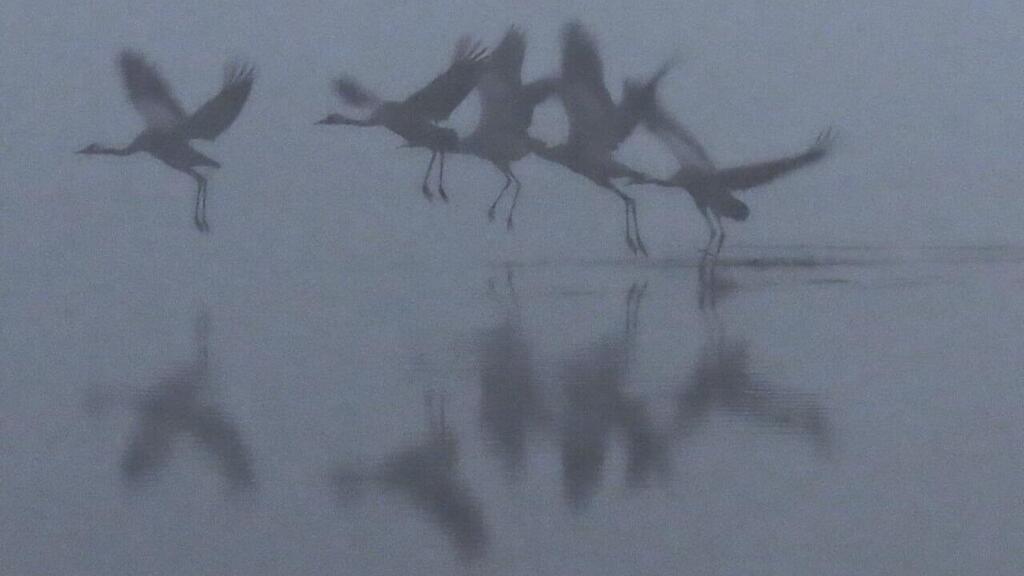
(Photo: Inbar Shlomit Rubin, Agmon KKL-J)
“Agamon Hula-KKL-JNF is far more than a unique nature site — it is an anchor and a significant tourism and economic asset for the residents of the north and the Galilee," according to KKL-JNF Chairman Eyal Ostrovsky. "The exciting return of the cranes each year reminds us of the importance of protecting nature, and at the same time of our responsibility to continue strengthening the Galilee, local tourism and the communities that live and work there. KKL-JNF will continue investing in the region and working so that Agamon and the Galilee as a whole continue to grow, develop and attract large numbers of visitors from across Israel and around the world.”
For travelers, this is only the beginning of the annual autumn migration. In the coming weeks and months, tens of thousands more cranes and hundreds of thousands of additional migratory birds are expected to land at Agamon Hula.
The gray-winged, long-necked advance party has already arrived, but at the Hula wetlands, nothing is taken for granted.
“Now, once the first ones arrive, the rest usually come in droves,” Rubin said hopefully. “But with them, you can never know.”