

“About a month and a half ago, I went for a routine morning walk in the fields around the kibbutz", recalls Brurya Karni Hadas, a resident of Kibbutz Kerem Shalom, located along the fence with the Gaza Strip.
"When I reached the access road back to the kibbutz, I ran into a pack of six to seven dogs, including two females fresh from giving birth. They began barking, baring their teeth and advancing toward me. I lifted stones and threw them in their direction while walking backward to make sure they were not following me."
Dogs stray in the Gaza border communities
(Photo: Igal Zorea)


Karni Hadas, who grew up around dogs and says she is not usually afraid of unfriendly animals, adds: “It was so stressful that I no longer go out for walks outside the kibbutz."
The picture portrayed by Karni Hadas does not occur only in the fields of Kerem Shalom which is located along the borders with Egypt and the southern Gaza Strip. Residents from all communities around the Gaza border report packs of stray dogs crossing from the Strip into Israeli territory after Oct. 7, a phenomenon that continues to this day.
While no official full estimate exists, the numbers are believed to range from hundreds to several thousand stray dogs moving in packs. “They band together into large groups, sometimes dozens of dogs, which circle settlements, threaten residents and in some cases even attack,” says Bella Alexandrov, CEO of the Western Negev Cluster, made up of 11 councils in the Western Negev.
At Kerem Shalom, Karni Hadas says, the dogs enter into the kibbutz itself, “to the extent that children are afraid to go outside in the afternoon.” In the northern Negev settlement of Nativ HaAsara, resident Hila Fenlon says she had to turn around while walking after a pack attacked someone on a nearby trail.
“They’ve taken over our area. You see them inside the settlement, or when you stroll on the Zikim beach, or when you’re hiking the agricultural fields nearby. Some move in aggressive packs, and the encounter with them can be terrifying and dangerous.
"Residents in border‑area communities who only recently returned to their homes are now also afraid of running into a pack of feral dogs acting like wild animals, rather than pets,” she says.
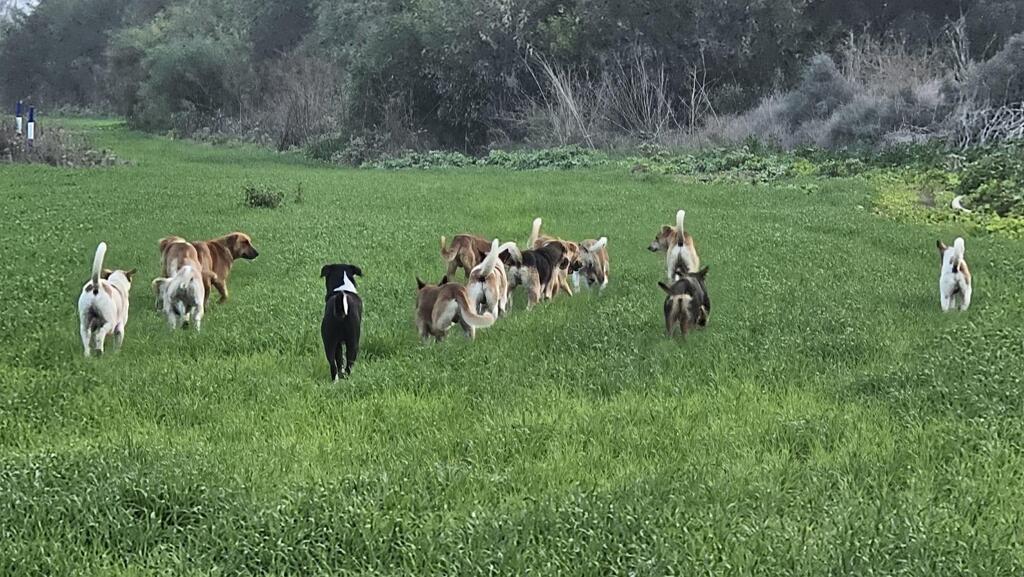
“This impairs people’s sense of security and routine in already traumatized communities,” Alexandrov adds. “People avoid agricultural work, visiting the area, and even the feeling of home. On top of that, there is a real risk of disease spread, which we are not set up to manage at this scale.”
Thousands of stray dogs, one regional dog shelter
Stray dog packs have long been visible in the Negev even before the war. Here, unregulated garbage dumps provide abundant food, and the lack of basic veterinary services, such as spaying and neutering of dogs, has fueled the growth in wild dog populations, especially in Bedouin‑populated areas.
But since Oct. 7 and the breach of border fences between Israel and Gaza, the phenomenon has escalated into a direct public‑safety threat. “The feeling is that the state is leaving local authorities to deal alone with a national problem,” Alexandrov says, pointing out that the regional cluster is supported by just a single municipal kennel in Sderot.
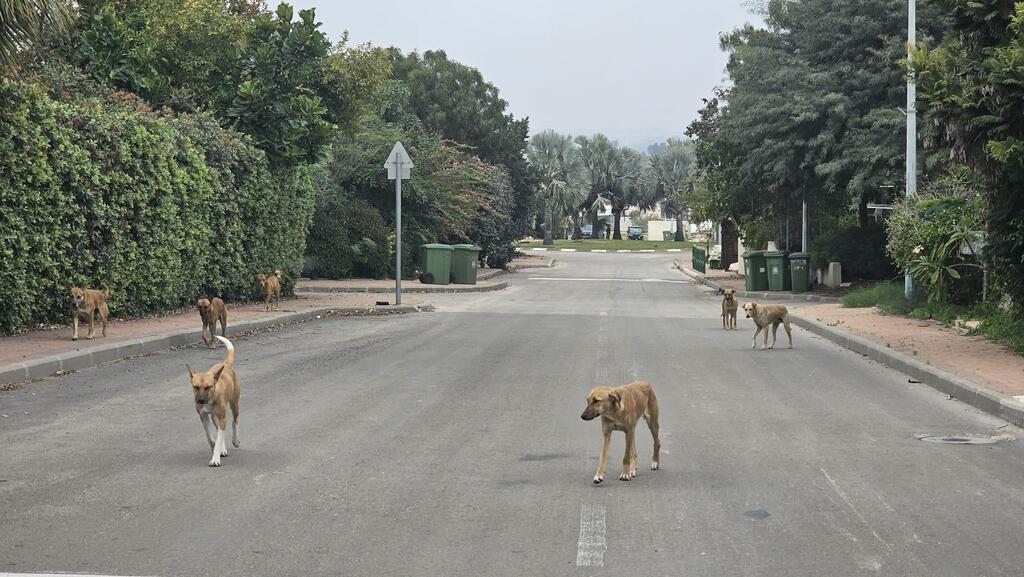
Straying dogs at Nativ HaAsara
(Photo: Hila Fenelon)
That kennel came under scrutiny about six months ago in an investigation by the animal‑rights group Let the Animals Live, which documented stray dogs held in quarantine under severe conditions, including starvation, alleged abuse and in some cases mass euthanasia. Two municipal veterinarians and the kennel manager subsequently resigned.
The few remaining staff members, local officials warn, are struggling to keep up. “They are burned out, both emotionally and professionally,” says Alexandrov. “They’re dealing with disturbing scenes, public criticism and activists who document and threaten them. They have no backing, no budget and are constantly facing criticism. Some simply can’t take it anymore."
Currently, only four veterinarians remain, two of them working part-time, along with six inspectors. This small team is expected to handle hundreds of stray dogs, in addition to their other responsibilities.
“The number is absurd,” a senior official in the Eshkol cluster says. “The Agriculture Ministry must help us by significantly expanding the workforce with dedicated funding and appropriate compensation.” Recruiting new veterinarians is especially difficult, he adds, partly due to low starting salaries of about 13,000 shekels (around $3,400) per month.
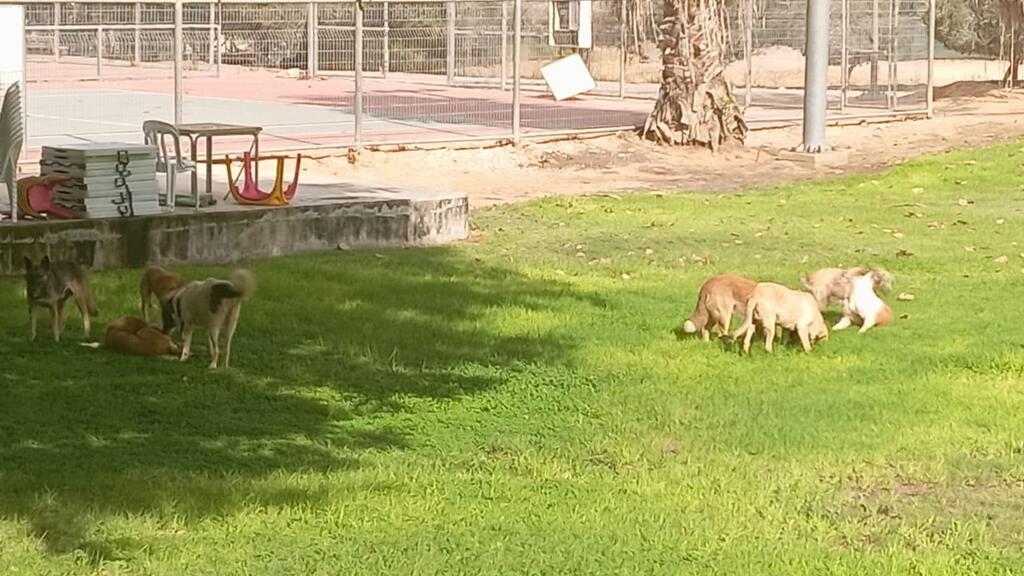
Starying dogs at Nativ HaAsara
(Photo: Hila Fenelon)
The Agriculture Ministry acknowledges the crisis and has recently allocated about 5 million shekels to the Western Negev Cluster to address it. But bureaucracy has blocked implementation.
Alexandrov explains: “There is only one contractor who is willing to catch stray dogs, and his rates are much higher than what the ministry is willing to cover. Another issue is that the ministry’s funding only supports catching one to three dogs at a time. But we’re facing packs of 10 to 12. Who’s supposed to cover the rest?"
Communities call for a national coordinator
Following public criticism over images from the Sderot dog shelter, and public criticism over the Agriculture Ministry’s performance, which is responsible for enforcing the Animal Welfare Law and overseeing all veterinary services in the country, top Agriculture Ministry officials, including Tamir Goshen, chief veterinary officer at the Ministry of Agriculture & Food Security met on Sept. 30 with Western Negev leaders, including Sderot Mayor Alon Davidi, who chairs the regional cluster.
At the meeting, Davidi made clear that local governments cannot manage the problem on their own and demanded the appointment of a national project coordinator, with a dedicated budget, to oversee all related efforts: capturing, quarantining, sanitation, setting up a dedicated shelter, and eliminating food sources along the Gaza border.
Attorney Nataly Brodner Mor, deputy director general of the Agriculture and Food Security Ministry, said that appointing a national coordinator is a justified demand. “This is indeed a national phenomenon that requires a holistic response. We’re leading the effort, though we’re not the only responsible ministry,” she said.
Brodner Mor named other involved agencies: the Interior Ministry, the Environmental Protection Ministry and the National Security Ministry, each with different responsibilities. “We’ve been trying for more than two years to get all the ministries on board, unfortunately, without success. We need to get funding."

Straying dogs in the Gaza border communities
(Photo: Igal Zorea)
Brodner Mor now heads a special task force within the Agriculture and Food Security Ministry addressing the stray dog crisis. She says the team is currently drafting a proposal for government approval, which would include appointing a national coordinator and allocating budgets.
“What’s happening along the Gaza border is also happening along the Lebanon border; we’re seeing a similar phenomenon there. The task force is addressing the issue across the country, but the numbers are much higher in the Gaza surrounding area and the northern border."
The Ministry of Agriculture acknowledges that it lacks solid data on how many dogs have crossed into Israel or how many are roaming. But officials have made financial projections.

Att. Nataly Brodner Mor (left) and Bella Alexandrov ובלה
(Photo: Snir Katzir, Yuval Yosef)
“We estimate the damage at 190 million shekels ($50 million) annually,” says Brodner Mor. “That includes public health issues, such as vaccinations, medical and psychological treatment for bite victims, the risk of rabies outbreaks, which are already happening in the north, as well as harm to agriculture and livestock.
"These dogs attack calves and wildlife; they destroy farmland. It’s a chain reaction. If we don’t deal with this now, it’ll get much harder later as these dogs become fully feral."
Controversy about the dogs' adoption
Back in the Gaza-border region, officials say they are overwhelmed. “Almost daily, we receive reports of attacks or near attacks, with no adequate response from local authorities or the cluster,” according to a summary document from the meeting with the ministry’s veterinary services director.
“There is no capture and euthanasia protocol suitable for the reality on the ground. The veterinarians cannot carry out euthanasia on their own, not professionally, not emotionally, and not in light of opposition from animal rights groups. The support procedures are rigid, and large sums of money remain frozen, not reaching the regional veterinary services."
Veterinary officials explained during the meeting that it is difficult to euthanize dogs in the field using poison or firearms, partly because of the presence of soldiers in the area, and also because "field euthanasia could be documented, and the vets don’t want to be exposed to public shaming or backlash,” they said.
In response, Dr. Goshen proposed a controversial solution: “Since these dogs are not adoptable and cannot be returned to Gaza, legislative changes should be considered to allow immediate euthanasia without transferring them to a shelter, to protect the safety of residents.”
“Killing won’t reduce the stray dog population,” says Yael Arkin, CEO of Let the Animals Live association. “Research shows the population compensates for eliminating. Even if you eliminate half a pack and leave one male and one female, the next litter will be larger, more puppies will survive due to increased food availability, and the pack will spread to other areas. The solution is to incentivize spaying and neutering and monitor reproduction."
Arkin also rejected the claim made by the head of the Veterinary Services that the strays cannot be adopted. “We’ve taken in many dogs from the Gaza-border region,” she says. “They’re sweet and affectionate. Some dogs in the packs are indeed aggressive, but that’s a small percentage. Most stray dogs can be placed in homes."
However, she also notes a 50% drop in adoptions through her organization compared to last year. “Part of it is the economic situation, but it’s also because people prefer small dogs, wrongly thinking you can only have a small dog in an apartment. We mainly have medium and large dogs, and many people still prefer to buy purebred dogs.”
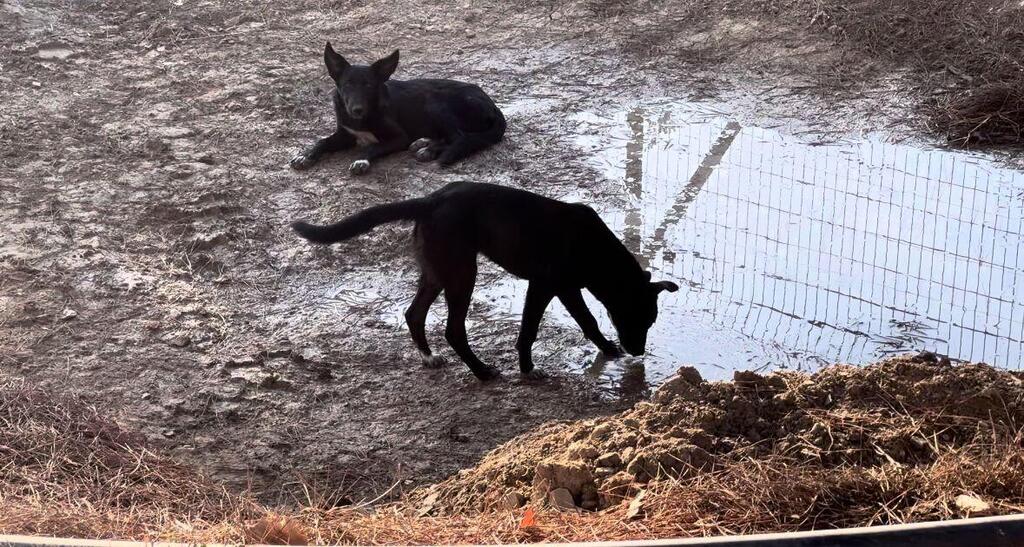
Straying dogs in the Gaza border region
(Photo: Igal Zorea)
While debate over how to deal with the crisis continues, residents say little is actually being done. “Like in other areas, it seems the government is choosing to ignore us,” says Ohad Cohen, CEO of Future for the Otef, a civil movement formed after Oct. 7 that brings together residents from communities along the Gaza border.
“Responsibility for this issue lies with the agriculture minister and his ministry. We expect immediate action to regulate the stray dog crisis and find a comprehensive, long-term solution together with the Western Negev Cluster. Border-area residents should not have to deal with the consequences of neglect alone. Two years after Oct. 7, it’s time the state stops ignoring our problems and takes real responsibility."
"Euthanasia is a last resort"
In response, the Agriculture Ministry said it is helping local authorities in multiple ways, including “providing approximately 10 million shekels in targeted support for capturing stray dogs, rehabilitating them and transferring them for adoption."
The ministry said that, together with municipal veterinarians, it is working to curb the spread of the problem and increase pet vaccination rates through targeted campaigns in high-risk areas. “A new nationwide awareness campaign was recently launched to educate the public about rabies, its risks and the importance of vaccinating dogs and cats,” the statement read.
As for long-term plans, the ministry said a task force led by its deputy director general is currently working on a proposal for government approval. The plan would include a multi-year initiative to address the phenomenon, particularly along the Gaza border region. The committee is also working with other relevant ministries, including Defense, the IDF and others, to help restore order along breached border areas.
As for euthanasia, the ministry stated: “Contrary to what has been suggested, the Agriculture and Food Security Ministry carefully balances human and animal health with animal welfare. Recently, the ministry published a comprehensive plan for dealing with stray dogs, including a 4.5 million shekel program for capturing, training and promoting responsible adoption.
"Euthanasia is carried out only as a last resort, strictly for dogs that cannot be captured and pose an immediate danger to humans or other animals. Even then, euthanasia is conducted only with approval and supervision by the ministry's veterinary services."