

Saudi Arabia’s Environment, Water and Agriculture Ministry said this week that camels in the kingdom will be issued their own “passports” as part of a new effort to create a national database and improve efficiency in managing the animals.
In a post on X, the ministry said the passports are meant to record the identity of camels, which hold deep historical and cultural significance on the Arabian Peninsula and are central to a livestock market reportedly worth billions of dollars.
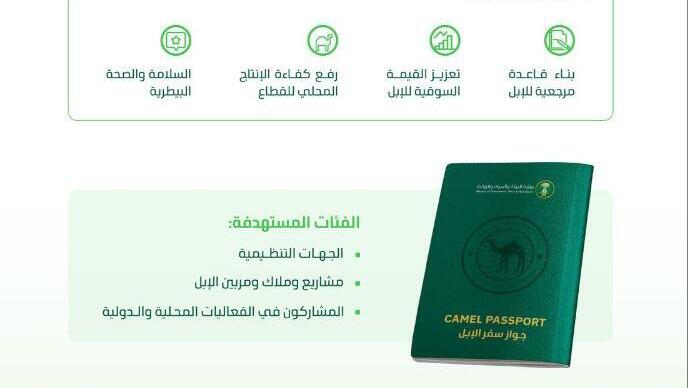
The ministry’s post included a photo of what the future passport might look like, stamped with a camel image, but did not provide a date for when the first passports will be issued. Officials said the passport will include the camel’s microchip number, passport number, name, date and place of birth, breed, sex, color, issuance date and photos of the animal.
Reports say the passport will also record vaccinations each camel receives, potentially helping build a reliable medical record for the animals, boosting veterinary tracking and simplifying monitoring of disease and outbreaks.
Al Jazeera reported this week that, as of June 2025, there are already more than 2.2 million camels in Saudi Arabia. Camels are widely seen as a cultural symbol in the kingdom and confer social prestige on their owners.
Large official events featuring camels, such as camel races and beauty contests, are held in Saudi Arabia. Enthusiasts often spend large sums on animals entered in competitions to win prizes. In recent years, Saudi authorities banned cosmetic treatments for camels after some were found to have undergone procedures such as lip enhancements and Botox injections before beauty contests. The ban is intended to maintain the “purity of the competition,” officials said.
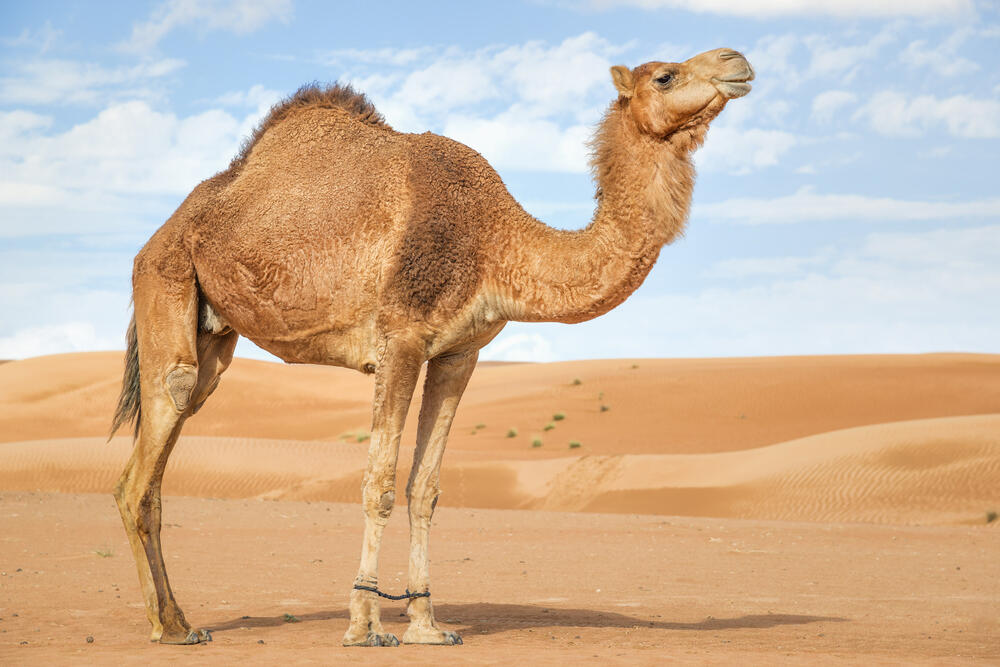
A camel
(Photo: Shutterstock)
Saudi camels drew international attention in October when Finance Minister Bezalel Smotrich mocked the kingdom amid talks of normalization, saying: “If Saudi Arabia tells us, ‘Normalization in exchange for a Palestinian state’—then no, thank you. Keep riding camels in the Saudi desert.”
Smotrich’s remark sparked controversy across the Arab world and beyond. Saudi officials called the comment ignorant. Smotrich later apologized on X, saying, “My off-the-cuff and unsuccessful remark about Saudi Arabia was certainly out of place and I regret the offense it caused.”
Could camel passports spread? Last November, the United Arab Emirates embassy in Israel said that it is backing a new cultural‑heritage initiative in the Negev Desert, aimed at preserving Bedouin Arab traditions — including reintroducing camel racing festivals — in cooperation with local Bedouin communities and the town of Arad.
According to a post on the embassy's X account, Ambassador Mohamed Al Khaja met with the mayor of Arad and a delegation of Bedouin elders during a visit south, where the trio laid the groundwork for the initiative. Photographs released by the embassy show Emirati officials with Bedouin community leaders and local municipal representatives, marking their commitment to reviving Bedouin culture.
“This project aims to strengthen Arab heritage, preserve ancient Bedouin traditions and ensure the continuity of this cultural legacy for future generations,” the embassy said in a statement accompanying the photos.