

Dormant volcanoes in the Golan Heights, inactive for hundreds of thousands of years, could theoretically erupt again, according to geologists, though researchers stress earthquakes remain the far greater natural threat.
Mount Avital and Mount Bental, among the most prominent volcanic sites in the Golan, are part of the volcanic line — a chain of dormant volcanoes stretching across the plateau. The two neighboring peaks are considered part of the same volcanic complex and are fed by a shared underground magma source. Mount Avital rises to 1,204 meters above sea level, while Mount Bental stands at 1,165 meters.
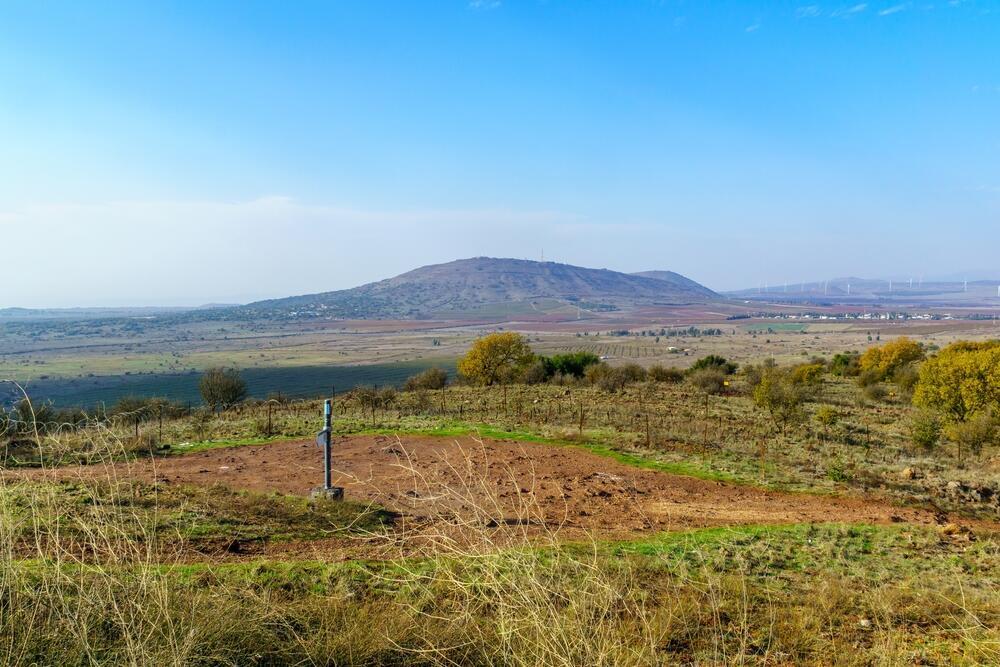
The volcanoes were formed by eruptions of scoria, a dark, porous volcanic rock, along with fine ash produced by powerful explosions when magma met groundwater. Those blasts shattered parts of Mount Avital’s core, creating its distinctive horseshoe shape, and spread ash across Mount Bental’s slopes. A volcanic park on Mount Avital’s eastern flank displays exposed ash layers and models explaining the area’s volcanic history.
Basalt flows in the Golan erupted over millions of years. The youngest eruptions that shaped Avital, Bental and Ram crater lake occurred about 100,000 years ago, following earlier eruptions some 700,000 years earlier. Whether those eruptions marked the end of volcanic activity remains uncertain.
Prof. Oded Navon of the Hebrew University of Jerusalem says volcanic eruptions have occurred farther east, in Syria, even in recent centuries. Based on geological dating, he estimates a pause of about 600,000 years between eruption phases in the Golan — a gap that could, in theory, repeat.
“It is possible this could happen again, but it is impossible to say where or when,” Navon said. He emphasized that volcanic eruptions, unlike earthquakes, usually provide advance warning signs.
Renewed magma movement typically causes small earthquakes, ground deformation and unusual gas emissions. These signals allow volcanologists to monitor activity and prepare for a possible eruption. Navon added that over the past three million years, volcanic activity in the region has gradually shifted northward and eastward, toward southern Syria.
Prof. Amotz Agnon, also of the Hebrew University, said volcanic phenomena extend beyond the Golan, from southern Syria through the Galilee toward Mount Carmel, and southeast into Jordan. Most of that region has seen little activity over the past 100,000 years, with more recent eruptions concentrated around the Jabal al-Druze area.
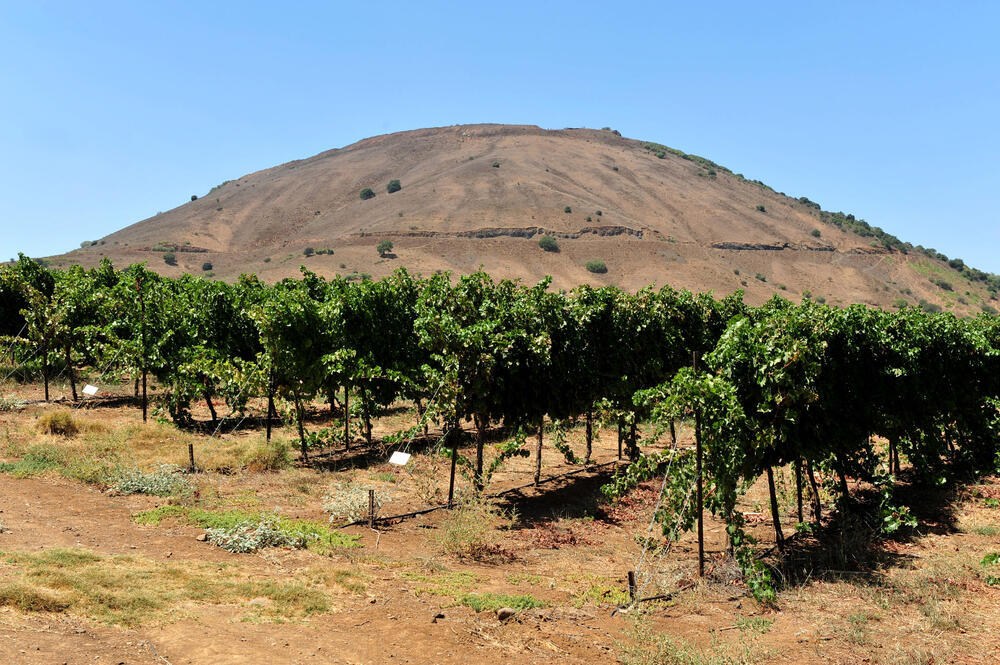
Mount Bental
(Photo: ChameleonsEye/Shutterstock)
Ram crater lake in the northern Golan, he said, is itself the remnant of a volcanic explosion that created a circular crater later filled with water.
Scientists note that volcanoes long considered dormant can erupt suddenly. One well-known example is Mexico’s Parícutin volcano, which emerged unexpectedly from a cornfield in 1943 and grew into a mountain within nine years.
Both Navon and Agnon stress that the more immediate concern is a major earthquake along the Dead Sea Rift, which runs through the Jordan Valley, Dead Sea, Arava and Gulf of Eilat. Earthquakes in the region could reach magnitudes of up to 7.5.
Still, a future eruption of Mount Avital or Mount Bental could cause serious damage in the northern Golan and nearby areas, potentially affecting southern Syria and, under certain wind conditions, spreading ash across the Golan and the Galilee.
Recent eruptions elsewhere, including Ethiopia’s Hayli Gubbi volcano after 12,000 years of dormancy, highlight that long-quiet volcanoes can awaken — reinforcing the importance of continued geological monitoring.