

In less than a year, the iconic Nahal David (stream) underwent a transformation unlike anything seen in living memory. A single extreme flash flood rapidly carved out a vast, deep pool beside the Dudim Cave, far larger and more dramatic than anything generations of hikers had known, briefly turning Ein Gedi nature reserves into an exceptional attraction.
Then, in a series of additional floods, the same stream reshaped itself yet again. Sediment filled the pool almost completely, nearly erasing it and underscoring how the desert landscape, which appears fixed and timeless, is in fact dynamic and fragile, a product of an ongoing struggle between water, rock and natural forces.
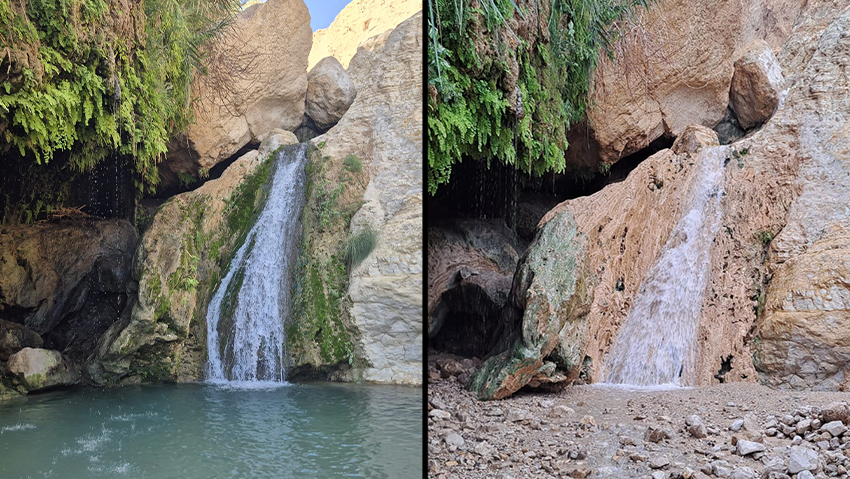
For decades, beloved Nahal David, which flows toward the Dead Sea, preserved its familiar form: the same waterfall, the same shallow pool beneath a cave tied to a biblical story, and the same short, leisurely trail. For many Israelis, it became one of the most nostalgic fixtures of childhood field trips. Then came last year’s unusual winter, and one storm in May 2025 shattered every expectation.
"It was a flood of an intensity not recorded here for at least 200 years," Eden Oliel, Nature and Parks Authority’s Arava region manager, told Ynet. "In just half an hour, more than 30 millimeters of rain fell. That completely changed the entire drainage basin of Nahal David."
What appeared in news reports as just another "severe winter" proved, in the Judean Desert, to be a rare and massive event that reshaped long-standing patterns, both in nature and in memory. Half an hour of destruction led to years of infrastructure repairs. The flash flood in May spared nothing.
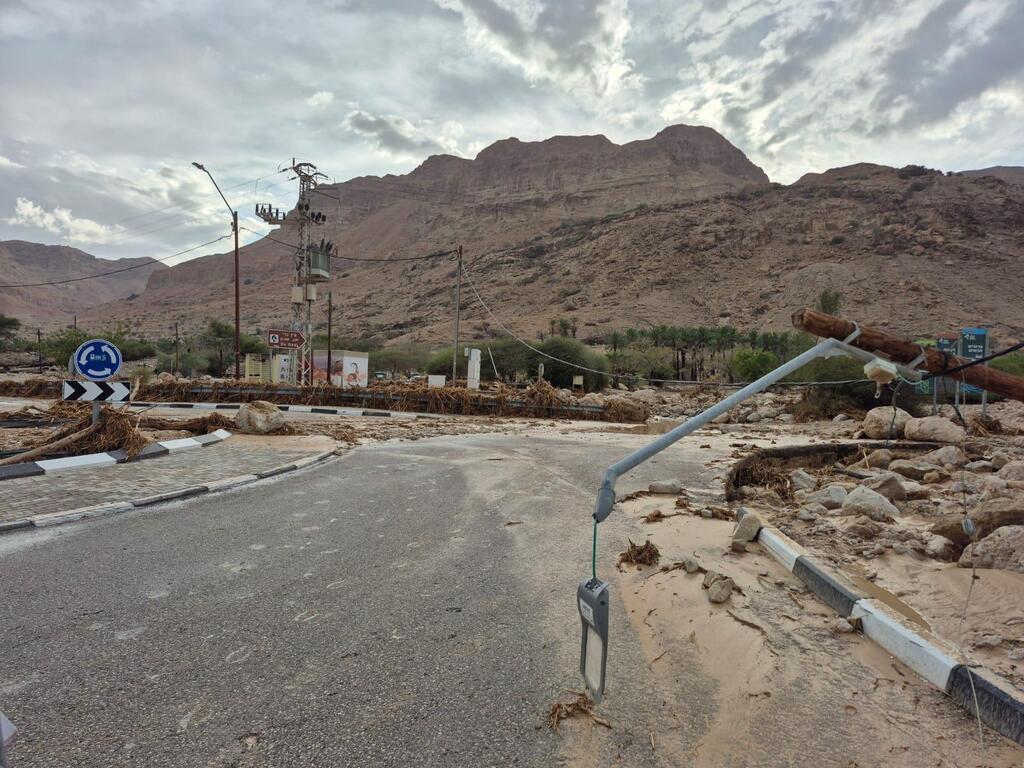
Sediment at the entrance to the Ein Gedi nature reserve, May 2025
(Photo: Shuki Dori, Nature and Parks Authority)
"All the hiking infrastructure was simply swept away and destroyed," Oliel said. "Stairs, trails, rockfall protection nets, 15-meter-high retaining walls, railings, anchors. Everything was uprooted. Trees were torn out, and since then we have been dealing with a very complex restoration process."
The pools changed as well, Oliel adds. "In the nearby Nahal Arugot (stream), the upper pools were completely clogged with sediment and massive boulders. Elsewhere, some pools expanded. In Nahal David, the change was dramatic. The familiar Dudim cave and waterfall became significantly deeper and wider."
Ironically, while tourist infrastructure was destroyed, the shallow pool beneath the famous waterfall filled with clear water and turned into what many called the most beautiful natural swimming pool in the Middle East. It quickly became a magnet for hikers and photographers chasing a rare sensation.
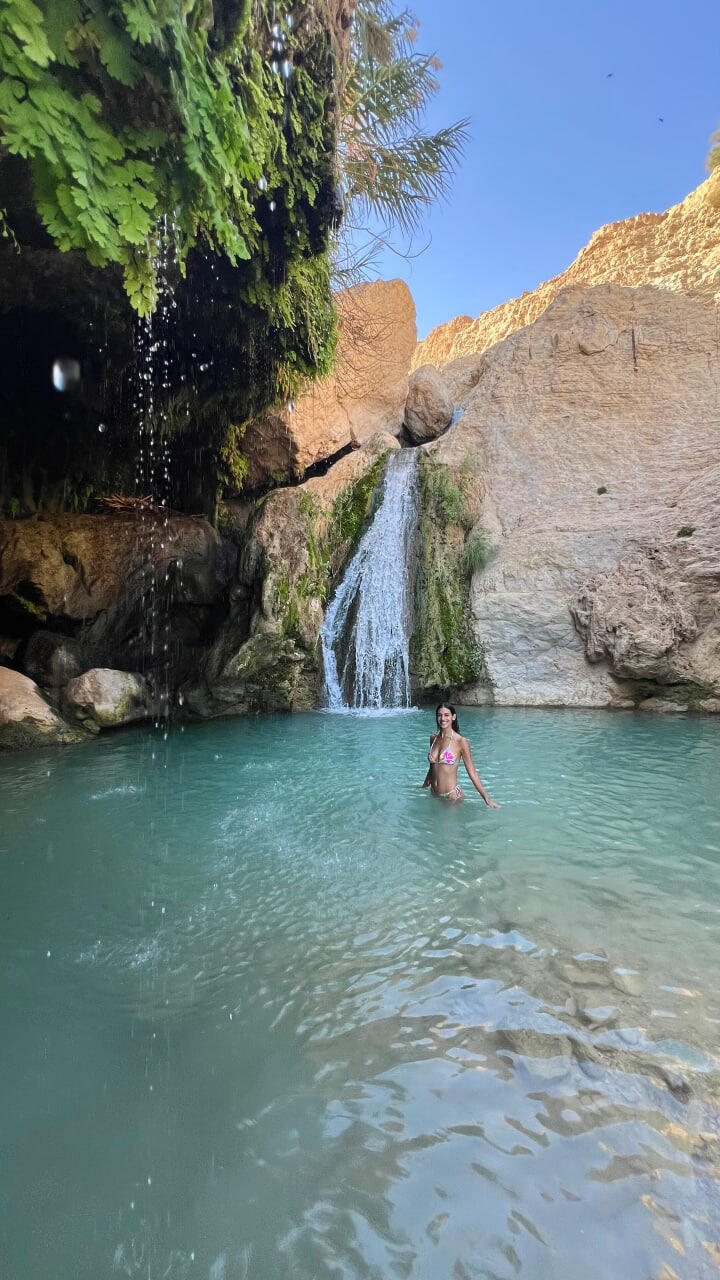
October 2025: Hen Yosef at the pool that expanded following the floods
(Photo: Courtesy of Hen Yosef)
When Oliel first saw the transformed pool, he was stunned. "I came to inspect the infrastructure damage, and the change in the Dudim Pool literally took my breath away. The first thing I did was photograph it. The second thing was to get in the water."
The pool’s popularity surged, driven by social media, but so did safety concerns. "Beyond the beauty, you immediately think about crowding, risks of falling and pressure on the trail," Oliel said. "You see an incredible pool and realize it will be packed, with no proper infrastructure leading to it."
Spring travel blogger Hen Yosef was among the few who managed to swim there. "We arrived there by accident," she recalled. "We planned to hike Nahal Arugot, but were told the pools there were no longer usable. Then we heard something amazing had happened in Nahal David, so we went."
The video Hen Yosef published in October 2025.
(Video: Hen Yosef)


"I know Nahal David well. I go there every year," she said. "Suddenly I saw something completely different. We were speechless. We just stood there saying, 'Wow'. Hardly anyone knew about it yet. We were almost alone. It was the most beautiful pool in the country, no doubt."
Unfortunately, I did not make it to the new, inviting Dudim Pool that formed in the heart of the desert after a once-in-200-years flood, says Oliel. Naively, I did not believe there was any need to rush and take a dip in the upgraded pool of Nahal David. I assumed the most worthwhile pool in the Middle East would wait for me at least another hundred years. Then, without any warning, everything changed again. Winter, it turns out, was not satisfied with just one major event.
Additional floods during the season brought extraordinary rainfall. In the final flood, all the pools in Nahal David filled with sediment. "Every single one," Oliel said. "That’s something we are simply not used to."
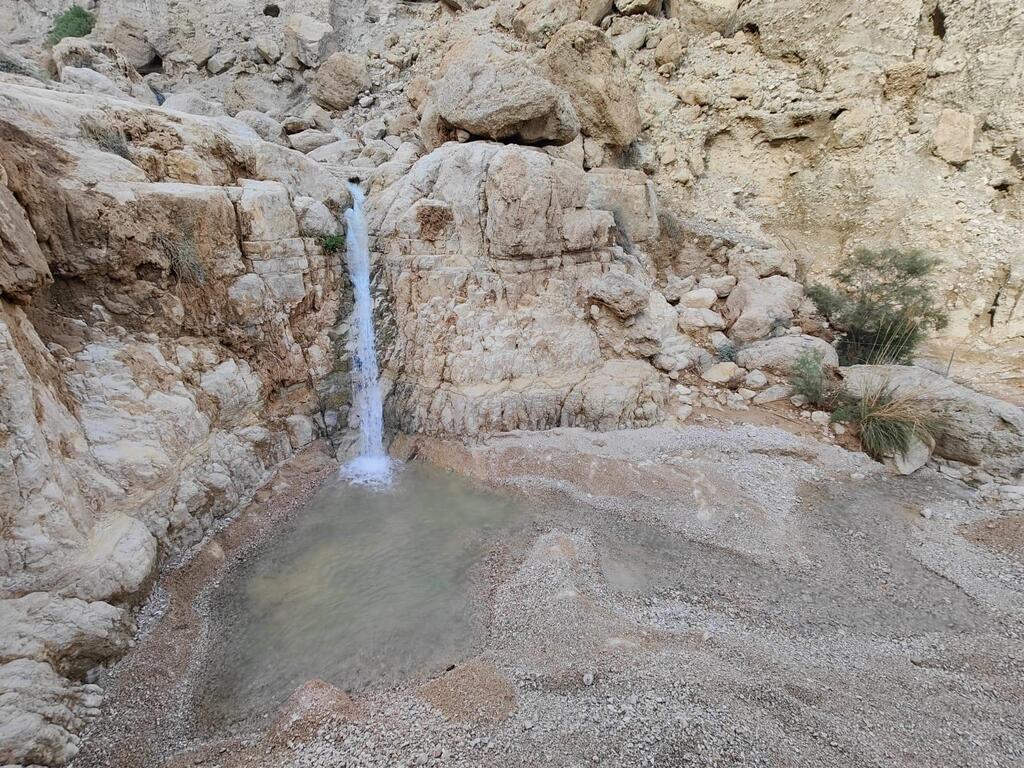
The first pool at Nahal David
(Photo: Natalia Ladijanski, Nature and Parks Authority)
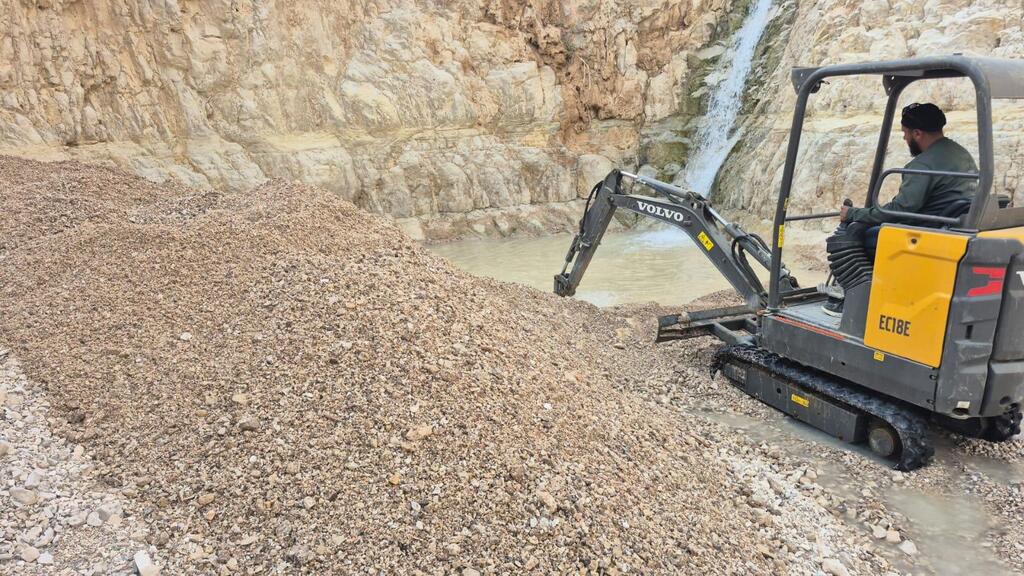
Sediment removal work at the pool
(Photo: Shuki Dori, Nature and Parks Authority)
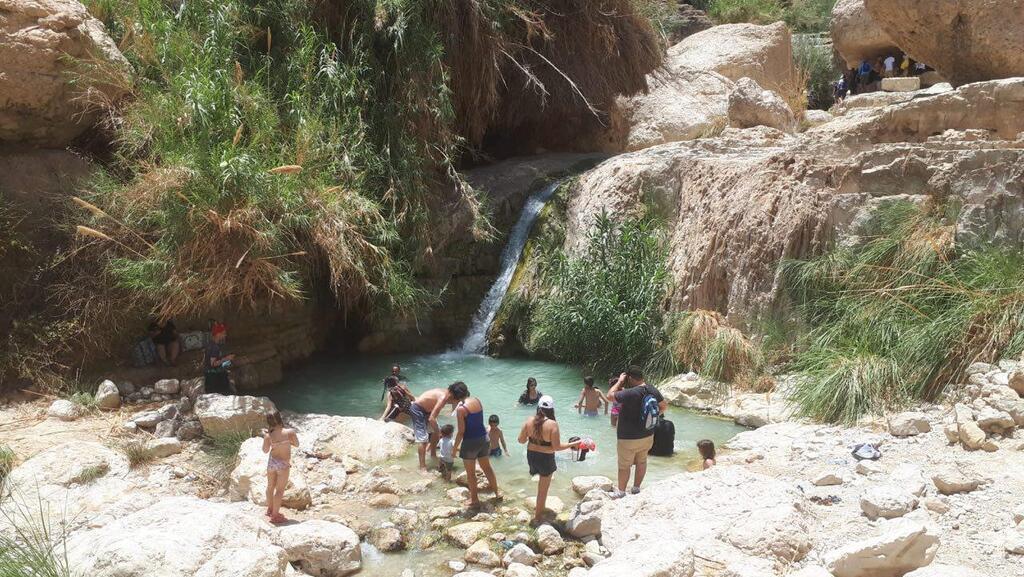
The pool in the past
(Photo: Matan Bogomolsky, Nature and Parks authority)
Normally, one pool fills while another deepens. This time, almost all were blocked. Heavy machinery cannot reach the site, and it is a protected nature reserve. "When I heard the pool was gone, my heart broke," Yosef admitted. "But then I thought how lucky I was, and everyone who managed to see it at its peak."
The Land of Israel is known worldwide for its biblical landscapes, and the Judean Desert offers sweeping views of ancient mountains and streambeds, much as they were seen by our ancestors. But is that image accurate? Within a single year, Nahal David took on two radically different forms. An unusual flood created a vast, deep pool beneath Dudim Cave that became a striking attraction. Subsequent floods then filled it with sediment and nearly erased it. The same stream, the same location, but a completely different face, underscoring just how temporary and dynamic the desert landscape truly is.
While many hikers were disappointed, researchers see the destruction as a natural process, even if extreme by Judean Desert standards. The system fills and empties, responding to floods, with no obligation to preserve a fixed landscape, even a beautiful one.
"For animals, it doesn’t matter whether there is a pool or flowing water. There is water, and they drink," Oliel said. "For people who like to swim, it’s obviously a loss." Still, he rejects calling it a tragedy. "I find it exciting. Seeing the changes, the power of nature. A place that had a pool and now doesn’t, or a place that suddenly opens into a huge pool."
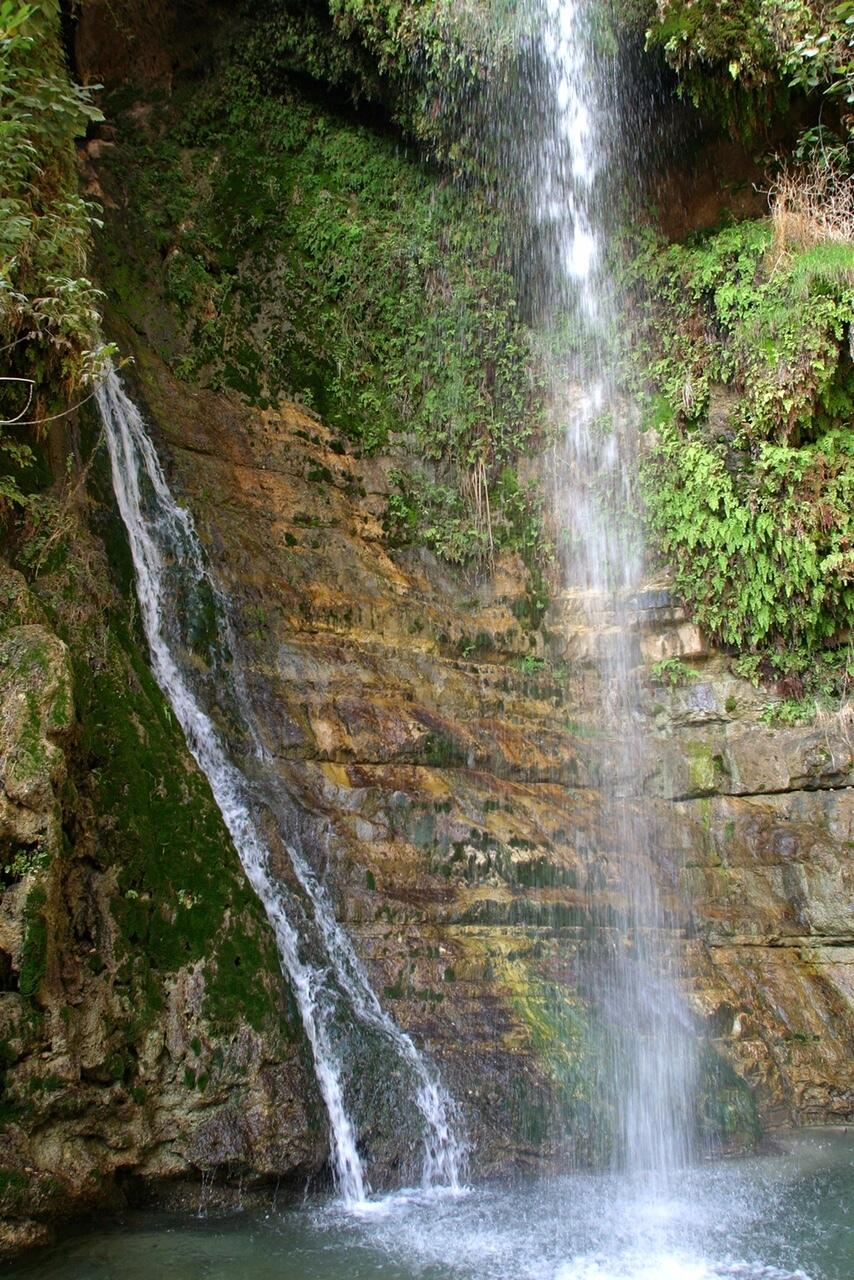
David waterfall is still there
(Photo: Doron Nissim, Nature and Parks Authority)
His real frustration, he admits, comes from elsewhere. "We work extremely hard to restore the infrastructure, and then another flood comes along and destroys part of that work. It is frustrating. But we roll up our sleeves and keep going."
Most of the reserve is currently open. Only the section between the first pool in Nahal David and David’s Waterfall remains closed. At the lower pool near the entrance, crews partially cleared sediment to allow limited public access, including an accessible path.
Swimming this year in Nahal David may be disappointing, but the hike remains worthwhile. The experience is less nostalgic and more immediate, a reminder that the desert is not frozen in time. It is a living system, changing before our eyes, and perhaps, like the climate itself, entering a deeper transformation. "Perhaps another once-in-200-years flood will arrive in a few months, restore the inviting pool, and maybe even create an even better one", Oliel says.
Nature and Parks Authority officials urge visitors to adjust expectations. "Don’t come expecting to see exactly what was there before," Oliel said. "Come to witness the changes and the power. We are experiencing climate change here firsthand."