

Israel set clocks back one hour overnight, marking the official start of standard time, but cooler fall weather remains absent across much of the country.
At 2:00 a.m. Sunday, clocks were shifted back one hour, granting Israelis an extra hour of sleep. Standard time will remain in effect until March 27, 2026, when daylight saving time resumes.
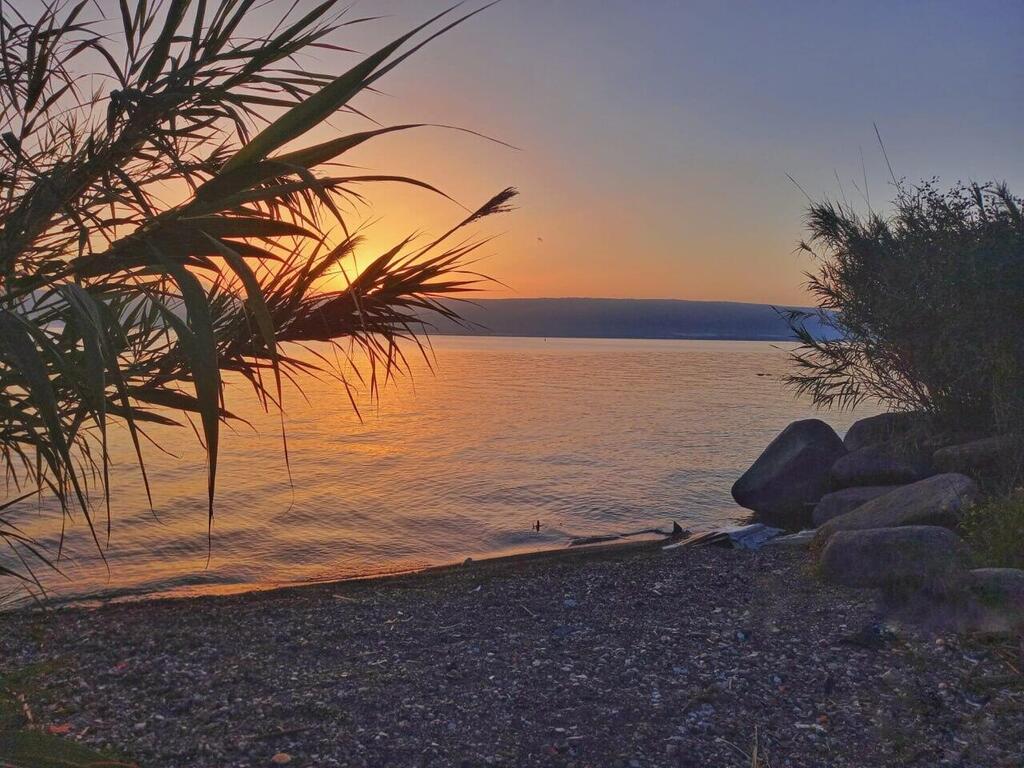
Sunrise over Sea of Galilee
(Photo: Tami Nechemia)
Despite the seasonal clock change, weather conditions remain unseasonably warm and dry. Sunday’s forecast calls for partly cloudy to mostly clear skies with a slight drop in temperatures in the hills and inland areas, where conditions are expected to return to seasonal norms.
Monday will bring a slight rise in temperatures in those same regions, with a small decline again expected by Wednesday.
Dr. Amit Givati, director of the Israel Meteorological Service, told Ynet that last week was unusually hot for late October, and the entire month was both warmer and drier than average. Looking ahead, he said, long-range models continue to indicate dry and above-normal conditions into at least the first half of November.
“The outlook remains pessimistic,” Givati said, “with no signs of cooling or rainfall on the horizon.”
For those unsure whether their phone automatically updated to standard time, officials advise entering the device’s settings, switching the date and time from “automatic” to manual, and selecting “Jerusalem” as the local time zone.
Forecasted high and low temperatures for Sunday (in Celsius and Fahrenheit):
Jerusalem: 26°/14°C (79°/57°F)
Tel Aviv: 27°/18°C (81°/64°F)
Haifa: 26°/20°C (79°/68°F)
Safed: 24°/15°C (75°/59°F)
Katzrin: 27°/17°C (81°/63°F)
Tiberias: 30°/19°C (86°/66°F)
Nazareth: 27°/18°C (81°/64°F)
Afula: 29°/17°C (84°/63°F)
Beit She'an: 32°/19°C (90°/66°F)
Lod: 29°/16°C (84°/61°F)
Ashdod: 27°/17°C (81°/63°F)
Ein Gedi: 29°/21°C (84°/70°F)
Be'er Sheva: 29°/15°C (84°/59°F)
Mitzpe Ramon: 25°/16°C (77°/61°F)
Eilat: 33°/21°C (91°/70°F)