

Farmer Ayala Noy-Meir stood helpless as flames tore through one of the oldest olive groves in Israel, watching trees that had survived for centuries burn before her eyes.
“So many bad things have been happening in our country lately, and we don’t want this to come across as a sob story,” farmer Ayala Noy-Meir says the morning after a fire tore through the ancient olive grove in Moshav Zippori, a grove she and her parents, veteran farmers Rachel and Micha Noy-Meir, have lovingly tended for decades.
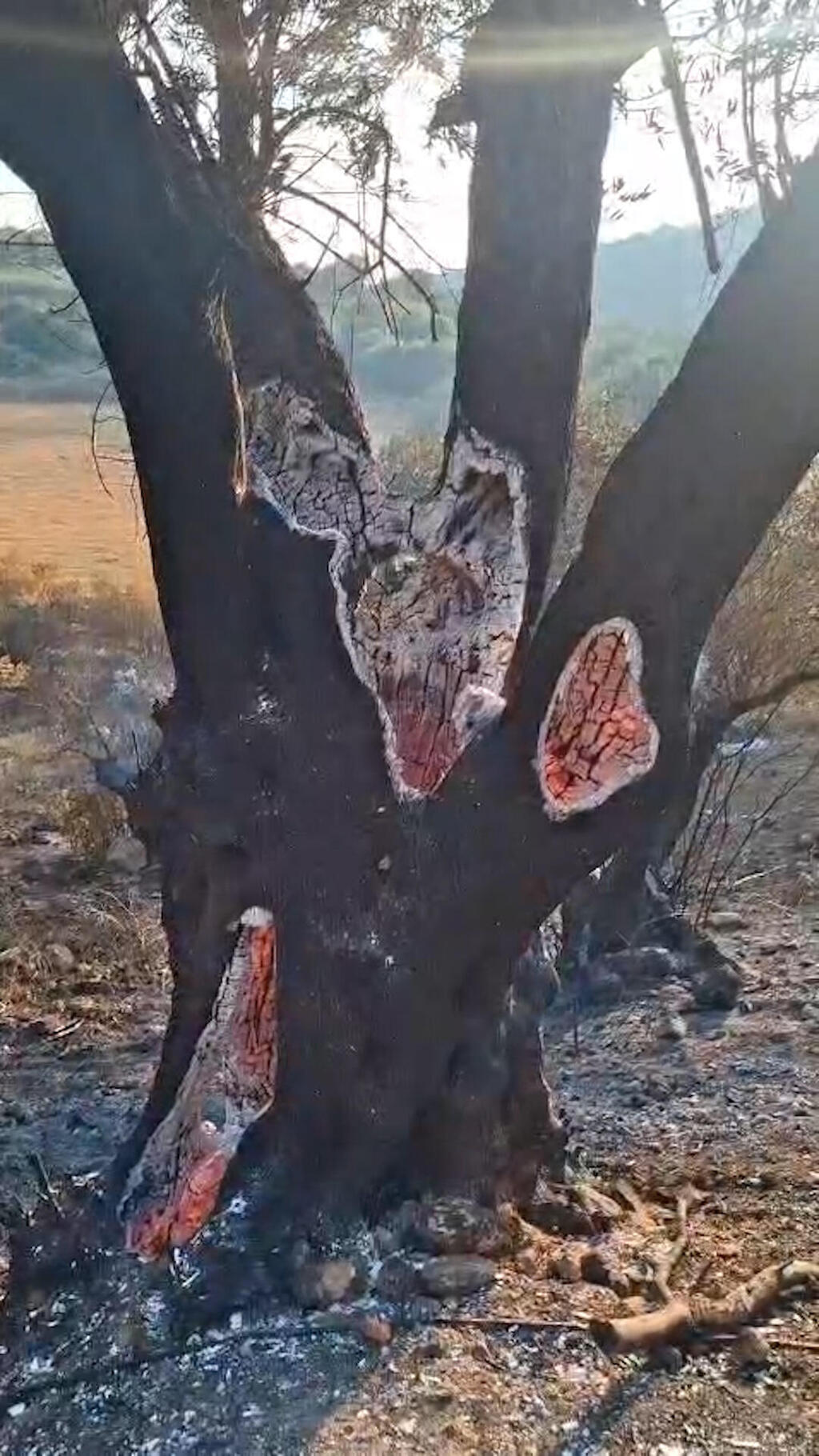
But the damage is severe. Hundreds of ancient olive trees, some estimated to be more than 1,400 years old, were burned in the blaze, along with the family’s younger olive grove. The Noy-Meir family, which has tended the trees for decades, is now asking the public for help to save what remains.
The family leases about 4,000 dunams from the Israel Land Authority, paying significant sums in order to care for the ancient trees, water them through the hot summer months, prune and restore them and, in some years, harvest them for olive oil.
The oldest tree in the grove goes up in flames
(Video: Ayala Noy-Meir)


“We have been doing this for more than 20 years because it breaks our hearts to see these ancient trees untreated and unpruned,” Noy-Meir said. “There is no proper irrigation system in these ancient groves, and apart from us, there is no one who takes care of the trees in an organized way.” In the summer, she said, the family drives through the grove with a water tanker, watering each tree individually.
Noy-Meir said the fire also exposed a broader problem in Israel’s open agricultural areas: “Israel’s open areas are suffering because fewer herds are grazing there, as cattle farming becomes less profitable amid state-backed imports of cattle and frozen meat,” Noy-Meir says. “It may lower prices for consumers, but farmers are paying the price.”
“Today, with less grazing, as raising cattle in Israel is no longer truly profitable because of theft and competition from imports, herds are gradually disappearing,” she said. “We try to clear weeds in sensitive areas, along roads and near picnic sites, especially now as they dry out and become highly flammable, but we cannot clear everything, and the costs are enormous.”
The family had sent a herd of donkeys into the young grove before the fire, hoping they would help clear vegetation. “But it was not enough to prevent it,” she said.
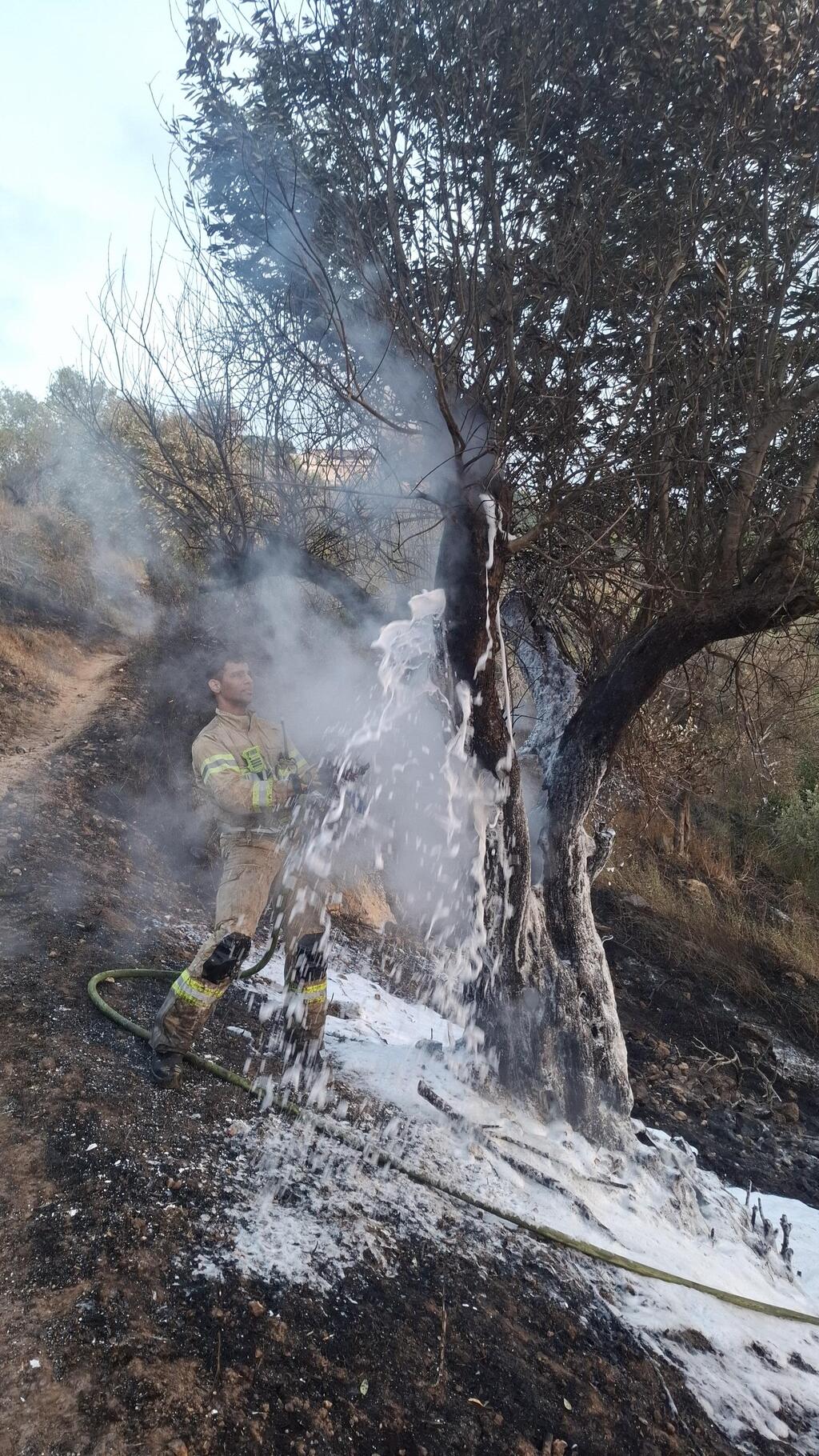
“Any cigarette thrown from a car is enough to ignite such a fire”
(Photo: Ayala Noy-Meir)
The cause of the fire has not yet been determined. “We don’t know whether it was arson, or whether the fire was caused by a cigarette or match thrown into the area by hikers,” Noy-Meir said. “Yes, even a cigarette thrown from a car is enough to ignite a fire of this scale.”
The grove includes rare local varieties, such as Malisi and Syrian olive trees. Some were burned. The family’s younger Picual grove was also destroyed, wiping out the expected harvest for the next two years.
“Not all our land burned, and we have about 6,000 olive trees here, but the damage amounts to several hundred thousand shekels that we will have to absorb,” she said. “That means no profit for the next two years. To survive financially, we will have to take bank loans and pay the highest interest rates in the economy, the ones given to farmers.”
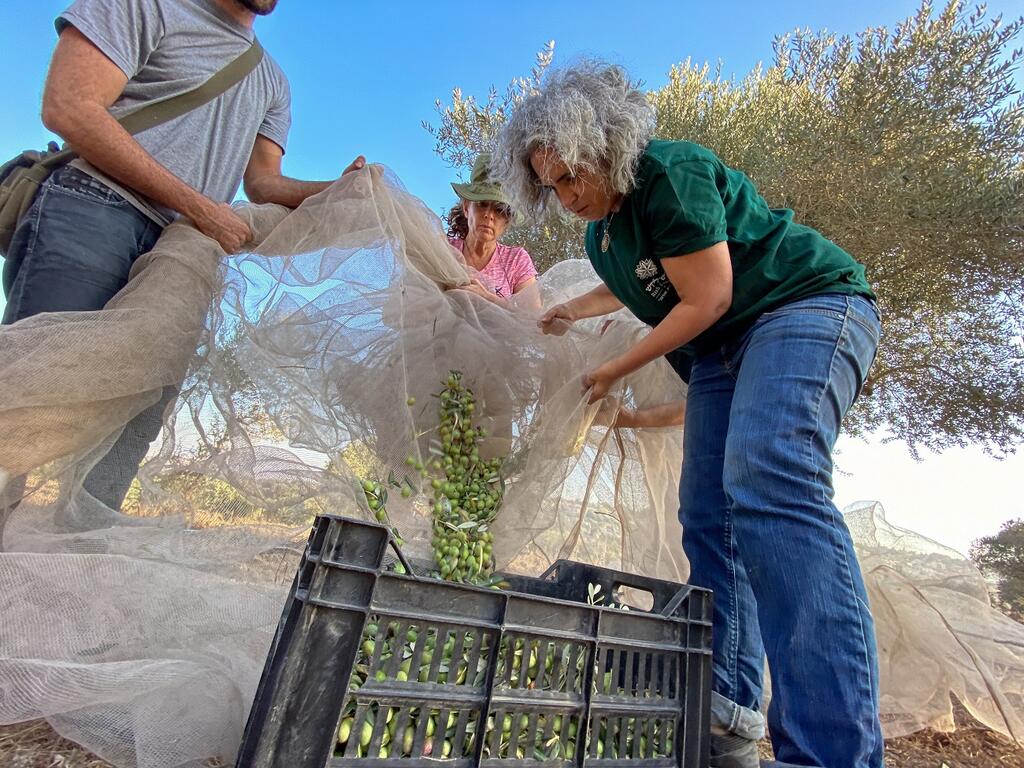
Ayala Noy-Meir harvests olives in the family grove
(Photo: Sarit Krupka)
And they are not alone. Fire danger, the decline in grazing herds, and what farmers describe as the state's neglect of its own agricultural lands are affecting hundreds of farmers across Israel.
“Grazing is not being managed properly in our area. We asked the relevant authorities to clear the overgrown dirt roads around the grove and leading to it. Even a single cigarette tossed from a car can set off a fire.”
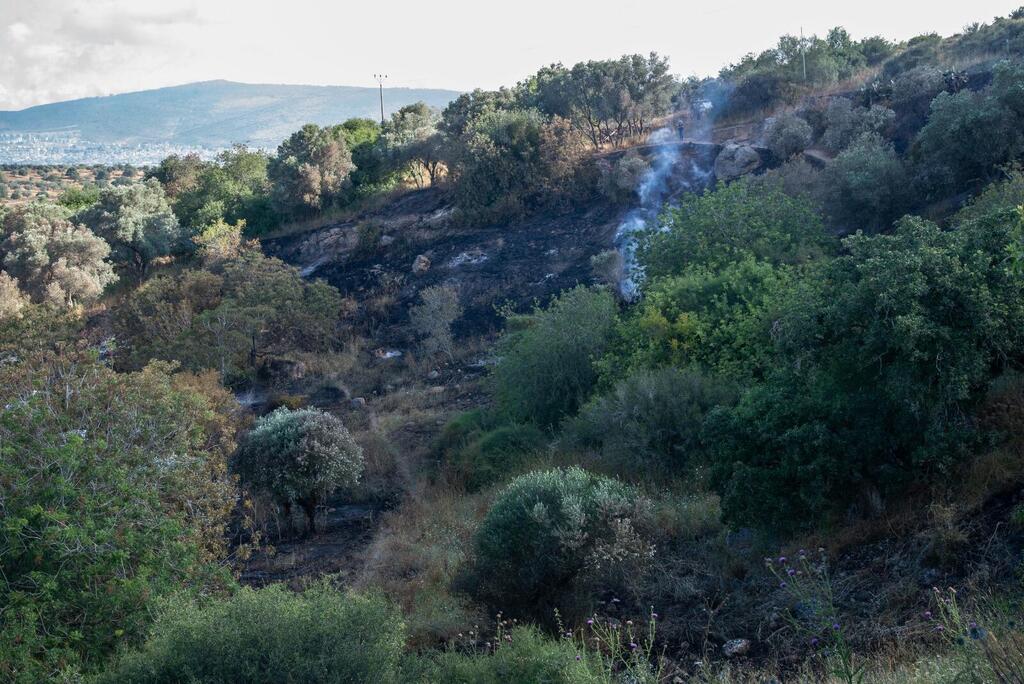
One of the oldest groves in Israel goes up in flames
(Photo: Ayala Noy-Meir)
Representatives from the Agriculture Ministry and Israel Land Authority visited the site, she said, and the family also appealed to the Nature and Parks Authority, whose roads lead to Zippori National Park, to better manage the vegetation.
“We would like there to be bodies in the country that coordinate all of this, certainly now before fire season,” she said. “It is not only us. This happens to everyone. We see this struggle with every farmer still left in the country.”
“You have to fight all kinds of bodies because there is no clear management and no official address,” she says, stressing that she does not want to sound accusatory, “because everyone has so much to deal with these days.”
The immediate concern is saving trees that may still survive. In a crowdfunding appeal, Noy-Meir's family said they must install irrigation within days and prune damaged trees before bark beetles reach the weakened wood.
“Unfortunately, after very difficult financial months, with fewer visitors and tourists and reduced activity among restaurants in central Israel buying less olive oil, we cannot bear this expense alone,” the family wrote. “We need the public’s help.”
This is what the ancient tree looked like the day after the fire
( Video: Ayala Noy-Meir)
Noy-Meir’s parents, Micha and Rachel Noy-Meir, are veteran farmers in the area. Rachel immigrated from Wales nearly 60 years ago and met Micha, who was born in Moshav Shavei Zion near the sea. The couple has lived in Zippori since the 1980s and later founded their organic, sustainable olive press, Rish LaKish.
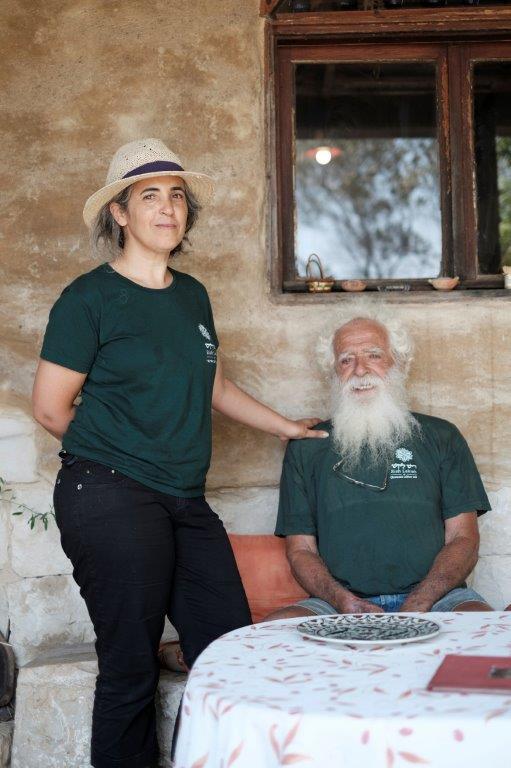
Ayala with her father Micha at the family olive press
(Photo: Assi Haim)
Their children, all involved in sustainability, encouraged them to take responsibility for the area’s old olive groves and plant new ones.
Now the family is offering supporters various rewards for donations, including grove tours, seminars for companies and organizations about olive oil, and olive oil packages, as they try to raise the funds needed to restore the burned grove and save the ancient trees that remain.