


Two poodles injured by a missile blast in Eilat on Saturday are undergoing surgery, but their owners may have to cover the costly veterinary care alone because Israeli law does not compensate for injuries to pets during wartime.
The dogs, Tzili and Gili, were wounded by shrapnel from a missile fired from Iran. They were taken to a veterinary clinic in the southern city for treatment.

Tzili has already undergone orthopedic surgery on her leg and was recently released home. Gili remains hospitalized and will require surgery once his condition stabilizes.
The procedures are being carried out at the “Hayot Habayit” veterinary clinic in Eilat. Their owners must pay the expenses themselves, similar to many other pet owners whose animals have been injured during the war.
Many rely on the goodwill of veterinarians, donations or crowdfunding campaigns to cover the costs.
Veterinarians Dr. Natalie Neuenschwander and Dr. Guy Haimovitz were called to the clinic Saturday after the dogs were injured.
“Security forces contacted us and asked us to come to the clinic, which is very close to the impact site,” Neuenschwander said. “The owner brought the two poodles, Tzili and Gili. Tzili arrived conscious and we examined her. She suffered an orthopedic injury to her leg and underwent surgery.”
Gili’s condition is more complicated.
“Gili, the male, arrived with a severe blast injury and is still hospitalized,” she said. “We are waiting for him to recover and stabilize so we can perform orthopedic surgery. He is receiving fluids, antibiotics and painkillers.”
During the treatment, additional sirens sounded in Eilat, and the veterinarians moved Tzili, Gili and other animals in the clinic into a shelter.
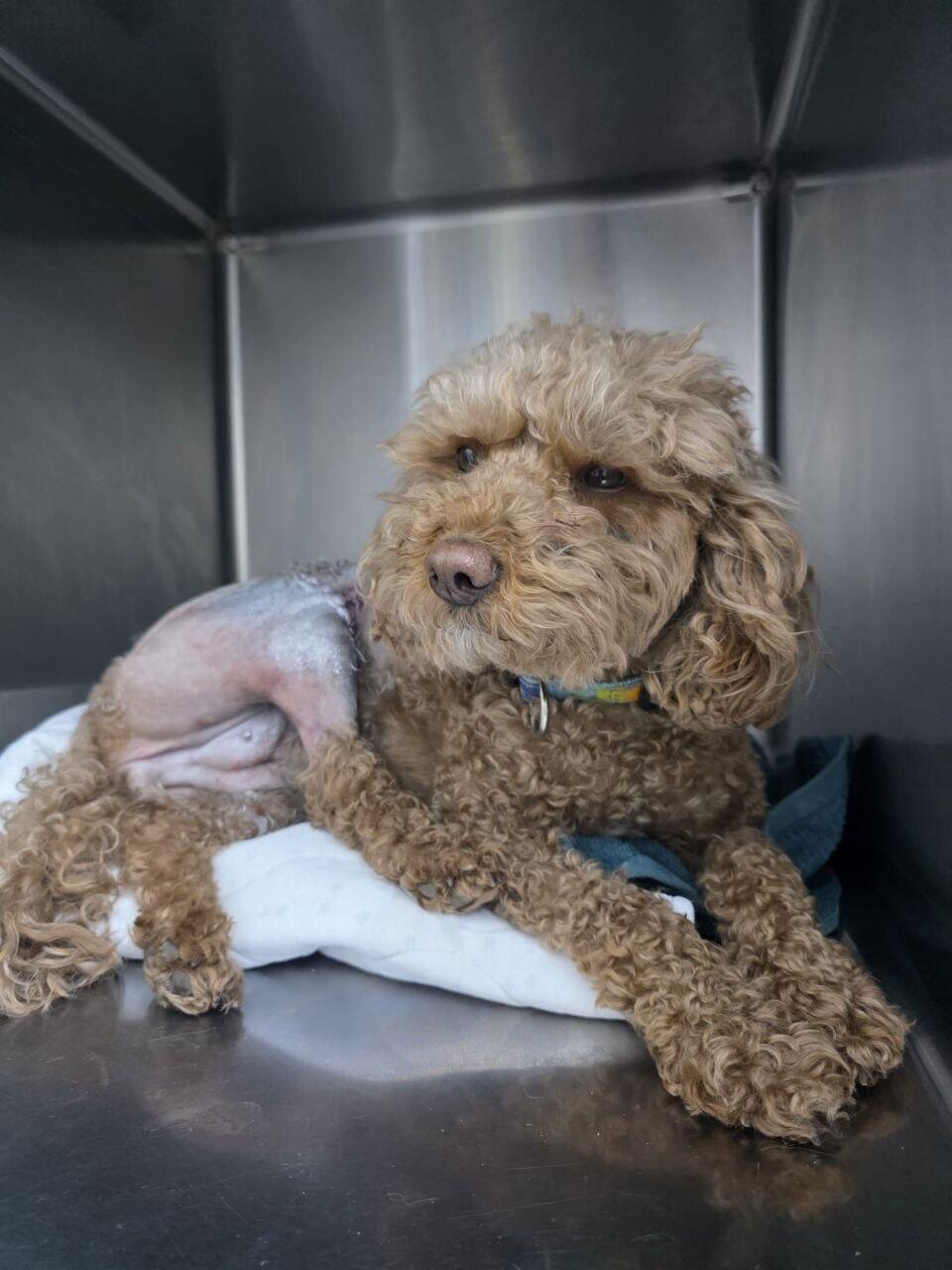
Tzili after orthopedic surgery on her legs
(Photo: Inbal Habari)
The dogs belong to Daniel, an Eilat resident, and her sister Inbal Habari. According to Habari, a relative who was walking the dogs during the attack was also injured.
“A relative took the dogs out for a walk and was hurt as well,” she said. “He now has both legs in casts. Gili is still recovering. He has a shattered pelvis and a broken leg. We’re waiting for him to stabilize before surgery. Tzili had orthopedic surgery today after tearing a ligament in one of her legs.”
Alongside concern for the dogs’ condition, the family fears the financial burden.
“I would like to know what the state’s role is in this story,” Habari said. “The dogs were injured and they have no insurance. The costs are very high. We are grateful the veterinarians stepped in to treat them, but we still don’t know if we will be able to pay.”
Veterinarians say the situation reflects a broader problem.
Dr. Hilik Marom of the Israeli Veterinary Medical Association said the state does not provide assistance when animals are injured during war.
“The state pays nothing,” he said. “In the first weeks of the war we encountered many injured animals and the state had no response. Assistance came from generous donors abroad, people in our organization and veterinarians themselves.”
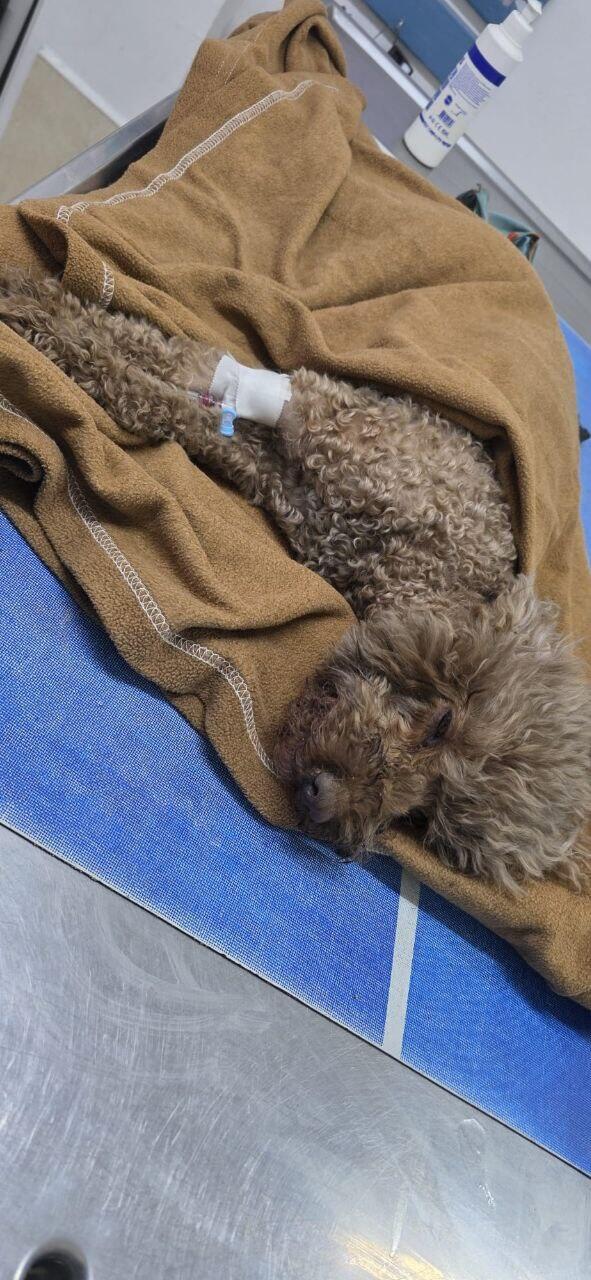
Gili recovering while still on pain medication
(Photo: Inbal Habari)
Legally, pets are defined as property, but that classification does not help owners receive compensation.
“The state does not take responsibility for animals,” Marom said. “Property tax regulations do not apply to animals. Ironically, pets are legally considered property, but compensation laws still do not cover them.”
Insurance companies also do not cover such cases, he added, because most policies exclude war-related damage.
“Cats arrived with burns in their airways from fires at impact sites, dogs and other animals were injured, and the cost falls entirely on their owners,” Marom said.
The Israel Tax Authority said in response that compensation funds apply only to damage caused to property such as buildings, vehicles, infrastructure and objects.
“Pets are not considered property under the Property Tax Law, and therefore bodily injuries to them are not eligible for compensation,” the authority said.
Knesset member Yasmin Sacks Friedman of the Yesh Atid party said the law should be changed.

Knesset member Yasmin Sacks Friedman of the Yesh Atid party
(Photo: Elad Gutman)
“For years I have tried to amend the law so animals are not treated as property but as living beings,” she said. “If the state insists on defining animals as property, it cannot avoid responsibility when they are injured by missile strikes.”
Sachs Friedman said she has sent a letter to the Finance Ministry and the Tax Authority urging the government to find a solution and compensate owners for veterinary treatment of animals injured in the war.