


Dozens of millimeters of rain have fallen in recent days in northern and central Israel, but this is only the beginning. The Byron storm is arriving and is expected to bring rainfall through Friday that could reach 150 millimeters in some areas, more than the average for all of December, one of the rainiest months of the year.
By Tuesday night, rain had already swept across the coastal plain. In Zichron Yaakov, 21 millimeters were measured in just one hour. The rain intensified overnight, accompanied by thunder and lightning, and is gradually spreading inland.
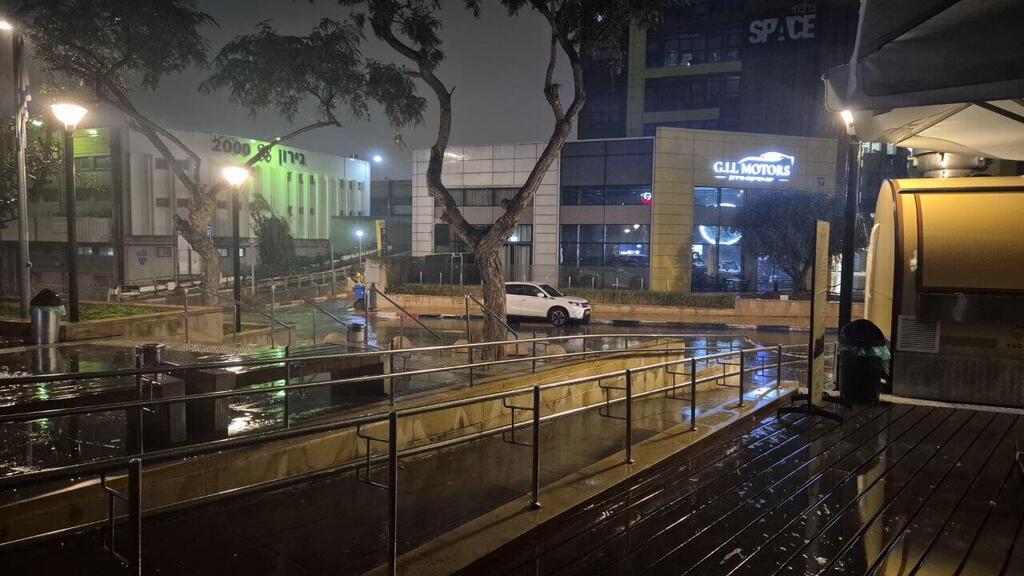
After the system’s focus over the past two days was in the north, attention today, and especially Thursday, shifts to the Dan region and the southern coastal plain. The Israel Meteorological Service issued a yellow warning for significant precipitation of 40 to 60 millimeters expected in the Carmel, the northern coastal plain, the central and southern coastal plain, and the Shephelah from 9 p.m. Tuesday until 9 p.m. Wednesday.
Ein Carmel led Tuesday’s rainfall totals with 62 millimeters. Haifa recorded 59 millimeters, Zichron Yaakov 49 millimeters and Nahariya 41 millimeters. The top rainfall totals since the start of the system, through 10 p.m. Tuesday, were in Ein Carmel, Shavei Zion and Nahariya, each with 76 millimeters over 48 hours. Haifa recorded 71 millimeters, and Kibbutz Ayalon near the Lebanon border had 54 millimeters.
Rain swept across Israel
(Video: Adi Louis)


In the eastern part of the north, there has been little rain so far, and the Sea of Galilee area has also remained mostly dry. Meteorological Service Director Amir Givati said in an interview with the ynet studio that Tel Aviv "will not drown." So far, the city has received 22 millimeters over two days. Jerusalem has seen no rain, nor has the south.
On Wednesday morning, the rain is expected to strengthen over central Israel, the Dan region and the Shephelah, with a risk of flooding. From afternoon into evening, rain is also forecast for the Negev and the Dead Sea area, with a chance of localized flash floods in Dead Sea streams.
The peak of the system is expected overnight between Wednesday and Thursday and throughout Thursday. Heavy rain with thunderstorms is forecast from the north to the northern Negev. Strong downpours are expected along the coast and in the Shephelah, with concern for significant flooding. By Thursday afternoon, the rain is expected to spread inland and intensify, reaching the Jerusalem area and the northern Negev. There is a risk of flash floods in Judean Desert streams.

Herzliya’s municipal boats are ready
(Photo: Herzliya Municipality)
Byron is expected to remain into Friday. Flooding and flash-flood risks will continue, but rain should gradually weaken and become more scattered during the day. Temperatures will rise slightly but remain a bit below seasonal norms. On Saturday, warming is expected to continue and temperatures should return to normal for the season. Light local showers could still occur in the north and center, but most will be mild.
Since the start of the winter season, Tel Aviv has seen 70 millimeters of rain, and Ashdod even less, only 25 millimeters. Forecasters expect much higher totals in the Dan region and along the southern coast within a few days, raising precipitation levels that currently stand at less than half the seasonal average.
Alongside the rain, gusts could reach 70 to 90 kilometers per hour, though not widely. Local authorities have spent recent days preparing for Byron. In Herzliya, municipal boats have been readied in case of unusual flooding. The Airports Authority warned of possible changes to flight schedules and urged the public to follow airline updates and prepare accordingly.
Ayalon Highways held situation assessments. Flood-prone sites seen in previous storms were mapped, pumps were added for potential flooding, heavy equipment was placed on alert and patrol teams were reinforced to assist drivers in emergencies. At the same time, real-time monitoring is underway for water levels and road conditions.
The main dangers in central Israel include falling trees, signs and poles, as happened in Tel Aviv just a few weeks ago when a balcony collapsed and a traffic light and pole nearly struck a couple. There is also a risk of flooding in underground parking garages. Such flooding led to tragedy five years ago, when a couple drowned in an elevator in their building’s garage after it filled with water during a rainstorm. Heavy rain could also cause the Ayalon Stream to overflow and force closures on sections of one of the country’s busiest highways.
On Wednesday morning, the rain is expected to intensify across the north, central Israel, the Dan region and the Shephelah, with flooding possible. From afternoon into evening, showers are also forecast for the Negev and the Dead Sea area, with a chance of localized flash floods in Dead Sea streams. Overnight, intermittent rain with thunderstorms is expected to continue, and the risk of flooding and flash floods remains.
The peak of the system is expected overnight between Wednesday and Thursday and through Thursday. Heavy rain with thunderstorms will fall Thursday from the north to the northern Negev, with especially intense downpours along the coast and in the Shephelah and concern for significant flooding. By Thursday afternoon, the rain will spread inland and strengthen, reaching the Jerusalem area and the northern Negev. There is a risk of flash floods in streams of the Judean Desert, while the southern Negev may see only isolated local rain. Rain is expected to intensify again in the evening, and temperatures will be lower than usual for the season.
Byron will stay with Israel through Friday. Flooding and flash-flood risks will continue, but rain is expected to weaken and become more scattered during the day. Temperatures will rise slightly, though they will remain a bit below seasonal norms. Isolated thunderstorms are possible.
On Saturday, the warming trend will continue and temperatures should return to normal for the season. The north and center may still see occasional local showers, but most will be light.
Forecast temperatures for Wednesday and Wednesday night (Celsius):
Jerusalem 9-15, Tel Aviv 13-19, Haifa 14-16, Safed 9-12, Katzrin 10-14, Tiberias 13-17, Nazareth 12-14, Afula 12-17, Beit Shean 14-19, Lod 12-19, Ashdod 13-20, Ein Gedi 14-17, Beersheba 11-18, Mitzpe Ramon 9-14, Eilat 14-20.
First published: 02:29, 12.10.25