

The Trump administration has appointed Israeli-American Harvard astrophysicist Prof. Avi Loeb as its official “UFO hunter,” naming him to lead a new scientific advisory panel that will examine unidentified anomalous phenomena and report to U.S. intelligence.
The new body was established as part of President Donald Trump’s initiative to disclose classified information and respond to growing public pressure over the issue.
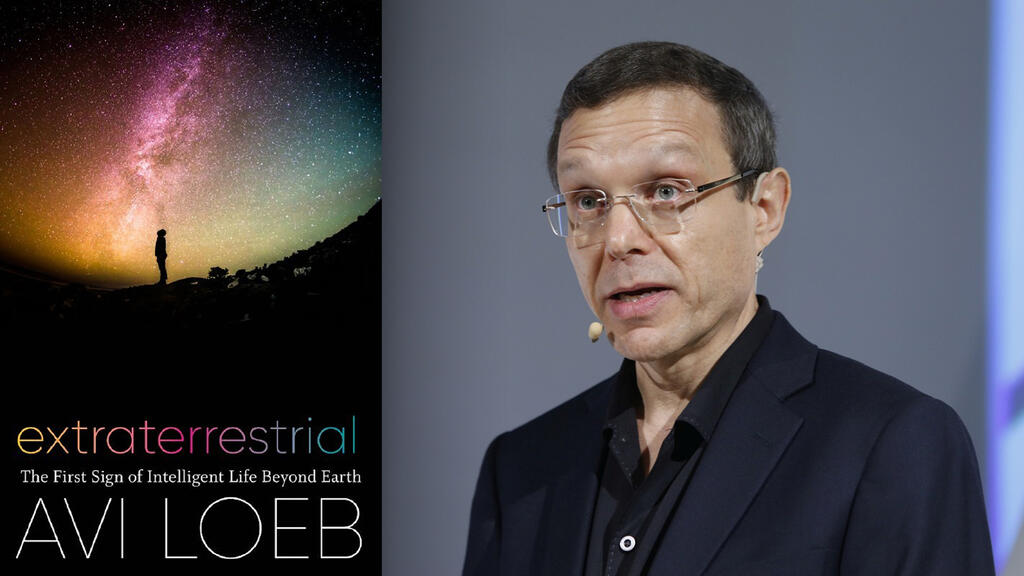
Loeb, a former chair of Harvard’s astronomy department, comes to the role with an impressive scientific record but a controversial public image. Before becoming a familiar figure in UFO circles, he studied black holes and galaxy formation and published hundreds of papers.
He entered the public spotlight in 2017 after ‘Oumuamua, the first known interstellar object observed passing through the solar system, was identified. While most researchers viewed it as a comet, asteroid or stray block of ice, Loeb proposed another possibility: a light sail that may have broken off from extraterrestrial technology. The idea became the basis for a bestselling book, but also a red flag for scientists who argued that he was getting ahead of the evidence.
Loeb later founded Harvard’s Galileo Project, which searches for “signatures of technologies from extraterrestrial civilizations.” He also led an expedition to the Pacific Ocean, near Papua New Guinea, that collected tiny metallic spherules from the seafloor near the reported crash site of a 2014 meteor. Loeb suggested the material could be interstellar, and possibly technological in origin. Other researchers said it was more likely volcanic rock or coal ash.
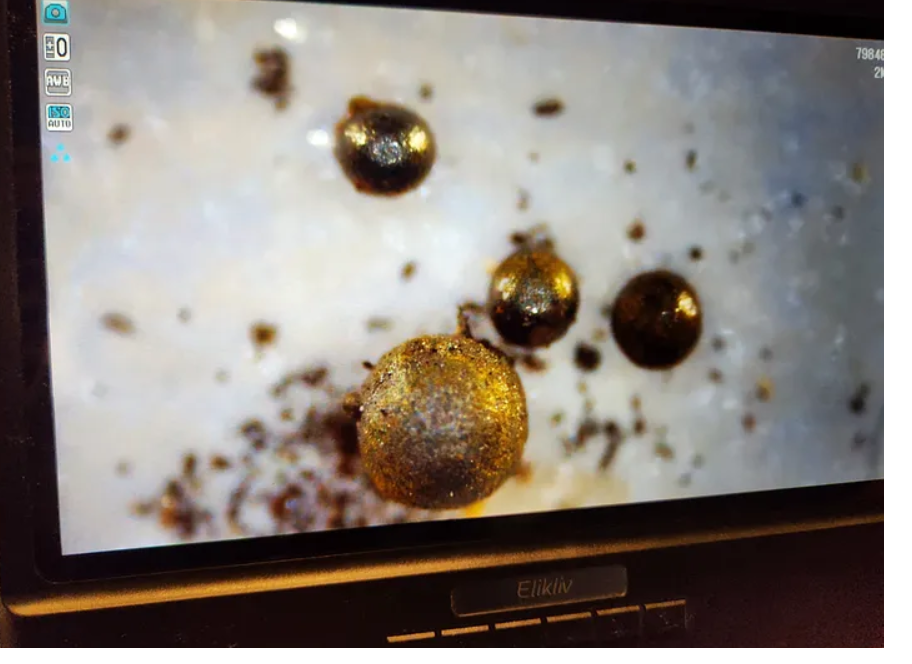
Some of the spherules found in the ocean
(Photo: Prof. Avi Loeb's research team)
Loeb described the new role as “a detective story,” saying it is “very enjoyable, as long as you don’t pay too much attention to the naysayers.”
He said he is approaching the work from the assumption that the objects are human-made, and from a national security perspective. He also stopped short of embracing popular cover-up theories, saying, “My impression is the government is baffled by not being able to infer the nature of some of these objects.”
Loeb has promised to publish updates for the public and create a website to share findings. He also urged people to keep their focus on the evidence, saying: “Let us keep our eyes on the glowing orbs, not on social media.”
The Pentagon has already released three batches of materials, from old FBI reports to recent military videos showing glowing objects, including footage from the Middle East. In Congress, a bipartisan group has been demanding more disclosure, while some Republicans have claimed the United States is hiding evidence of encounters with aliens. The Pentagon, however, stresses that it has found no evidence of extraterrestrial life.
Serving alongside Loeb will be scientists and UFO disclosure activists. One is billionaire Ben Lamm, who is trying to revive extinct species such as the dodo, the Tasmanian tiger and the dire wolf, and who has used satellites to search for unidentified objects.
Another member is retired Rear Adm. Timothy Gallaudet, who has claimed that the United States knowingly possesses unidentified aircraft that crashed. “The nonhuman intelligence that operates them or controls them are absolutely real,” he said.
After its first meeting, the panel asked the Pentagon for more than 50 videos, images and documents.
Loeb’s appointment has drawn expected opposition from academia and parts of the security community. Arizona State University astrophysicist Steve Desch said Loeb uses flawed methods. “I don’t know what’s going to come of this, but we’re not going to get any closer to answering these questions with him in charge,” he said.
Sean Kirkpatrick, who investigated UFOs for the Pentagon, said Loeb is “not viewed favorably” in the scientific community and lacks national security experience.
For now, however, polls show that eight in 10 Americans believe the government knows more than it is telling.