


The desert is bursting into bloom, covered in shades of white, pink, purple and red. Because of the war, thousands of Israelis seeking a brief escape from sirens have headed south to the desert, including areas around Mitzpe Ramon and the Ramat Negev Regional Council. They are among the few able to witness the spectacular display.
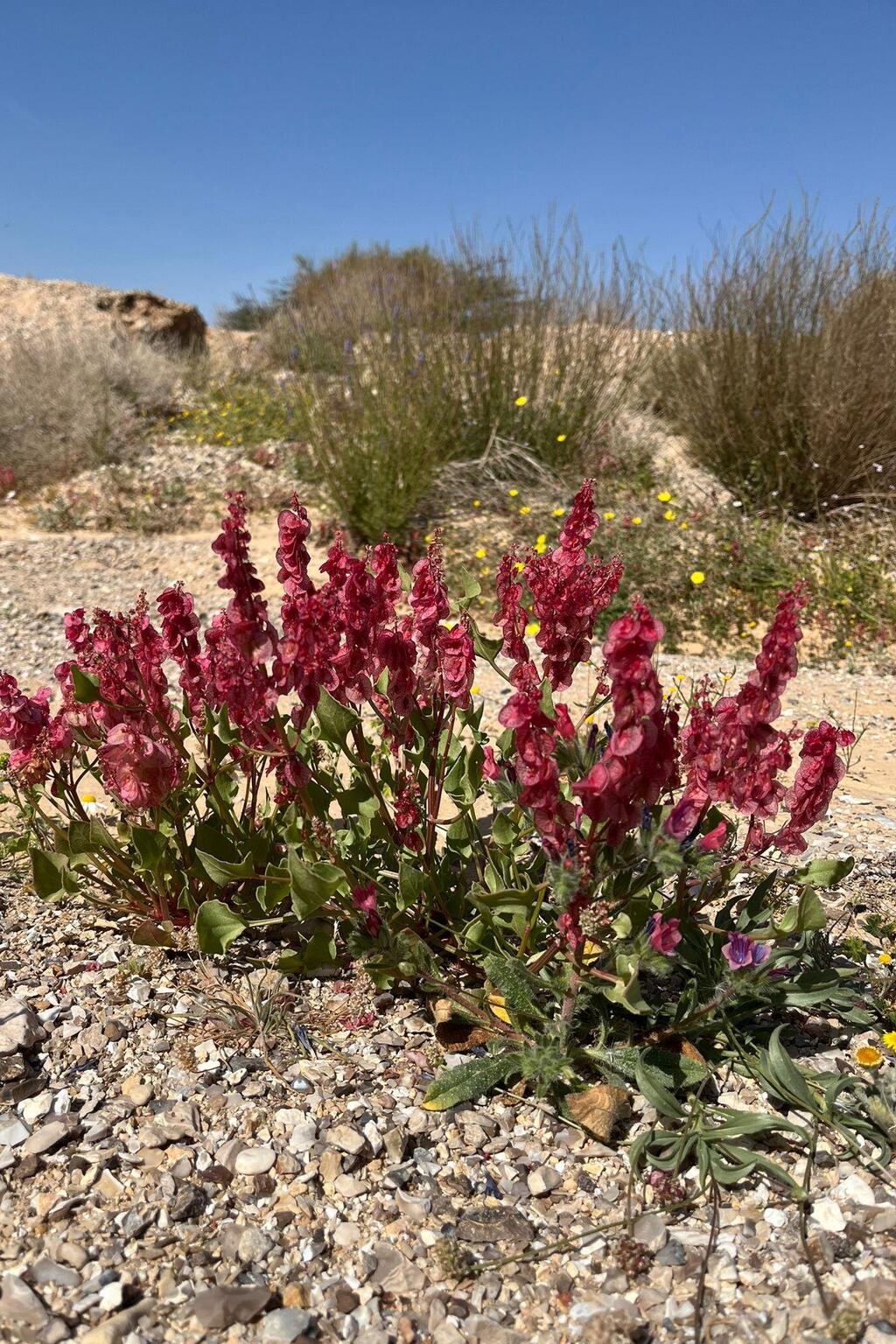
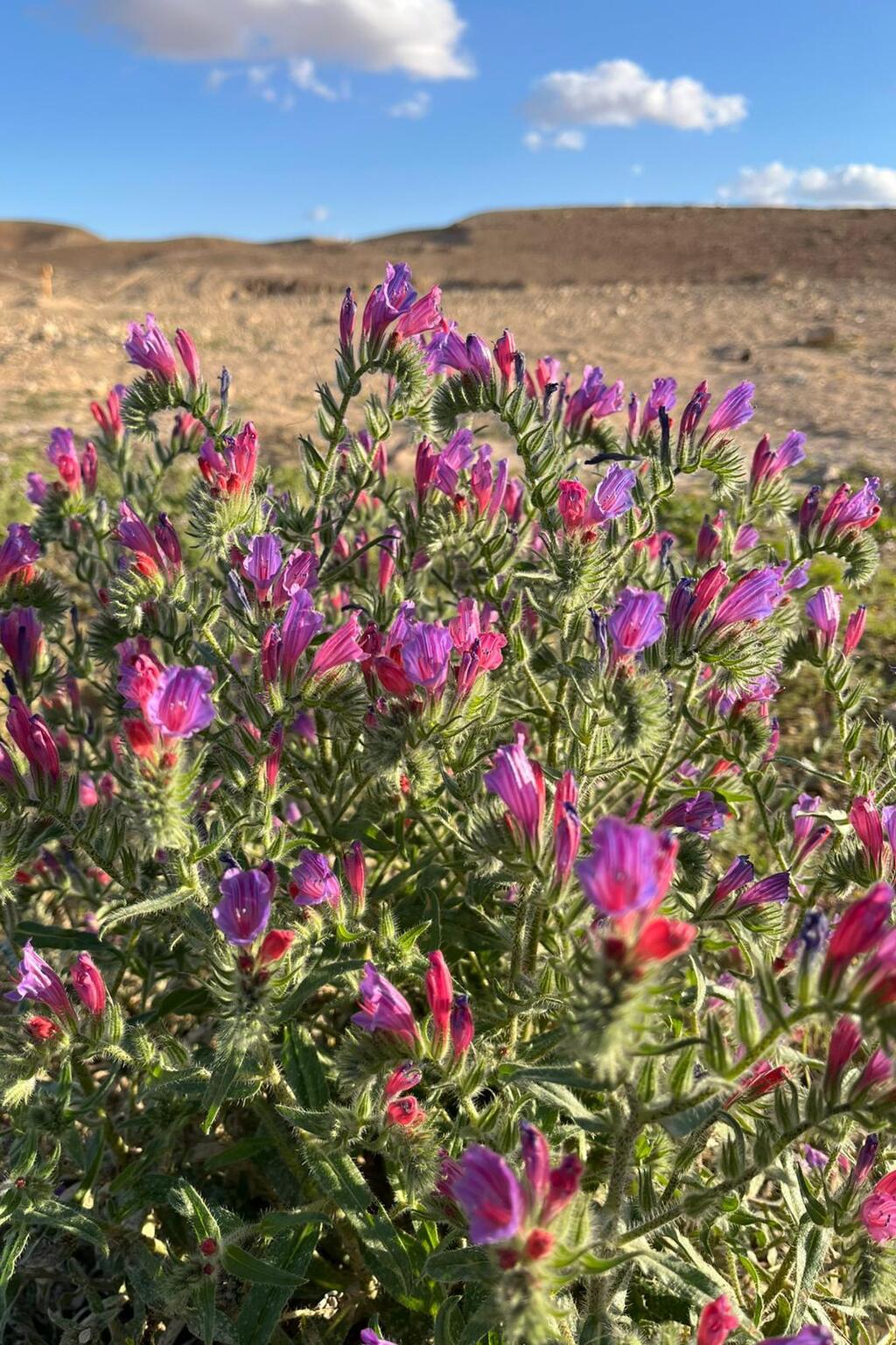
Desert bloom: Echium judaeum
(Photo: Jamil Atrash/Nature and Parks Authority)
Dr. Dotan Rotem, an open-space ecologist at the Israel Nature and Parks Authority, said the ecology of the arid desert can be surprising. “When the desert is in its 'usual' dry state, we enjoy vast open landscapes as far as the eye can see,” Rotem said. “But in years with significant rainfall, like this year, different parts of the desert are painted in a range of colors, mainly from annual plants.”
The Retama raetam (White Weeping Broom) blooms every year even in dry conditions because its deep root system reaches moisture stored deep among streambed stones, where small amounts of water remain for long periods, he explained.
Annual plants, however, follow a different strategy. “They disperse very large numbers of seeds that can survive extremely long dry periods, sometimes for decades, until the long-awaited rain arrives,” Rotem said. “When it does, they grow rapidly, bloom and produce many seeds that wait for the next cycle.”
Low-lying areas where water collects create better conditions for growth than rocky slopes. Plants take advantage of the short window to grow before the arid conditions return.
Many animals also seize the opportunity. In recent days, a wide variety of insects and other arthropods can be found, attracting reptiles and birds that feed on the sudden abundance.
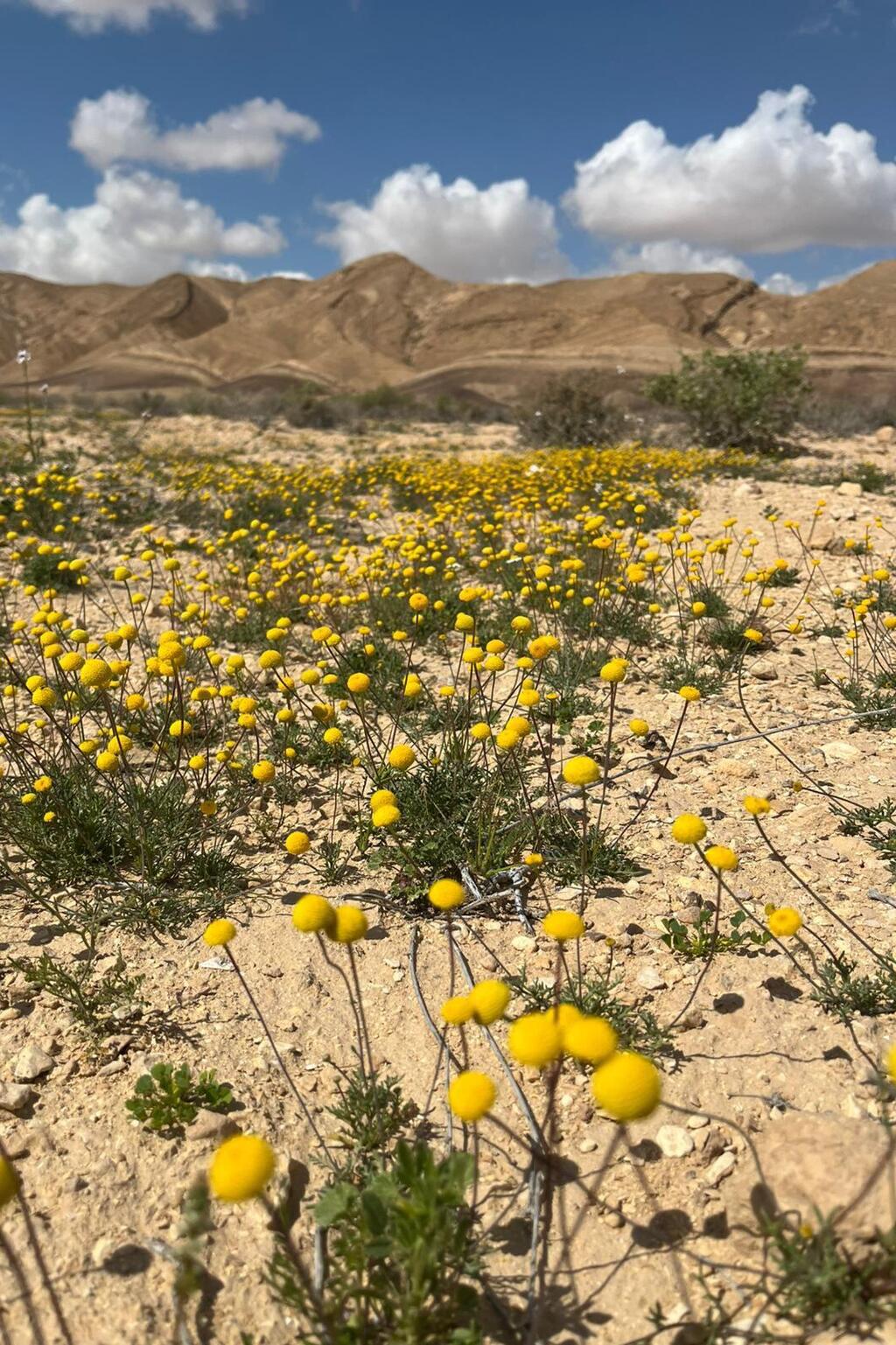
Aaronsohnia factorovsky near Nahal Zin
(Photo: Jamil Atrash/Nature and Parks Authority)
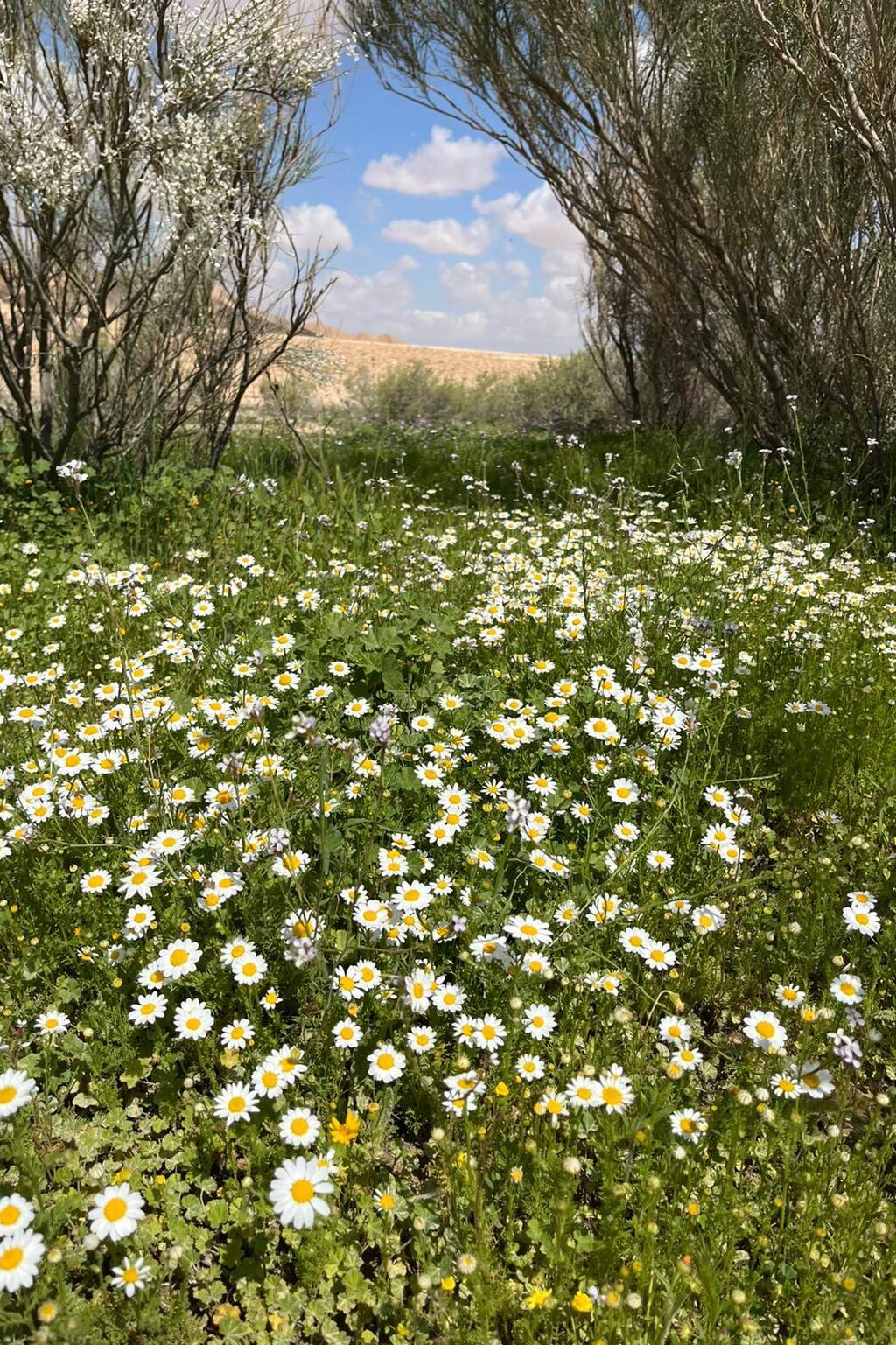
Chamomile (Anthemis) near Mador Stream
(Photo: Jamil Atrash/Nature and Parks Authority)
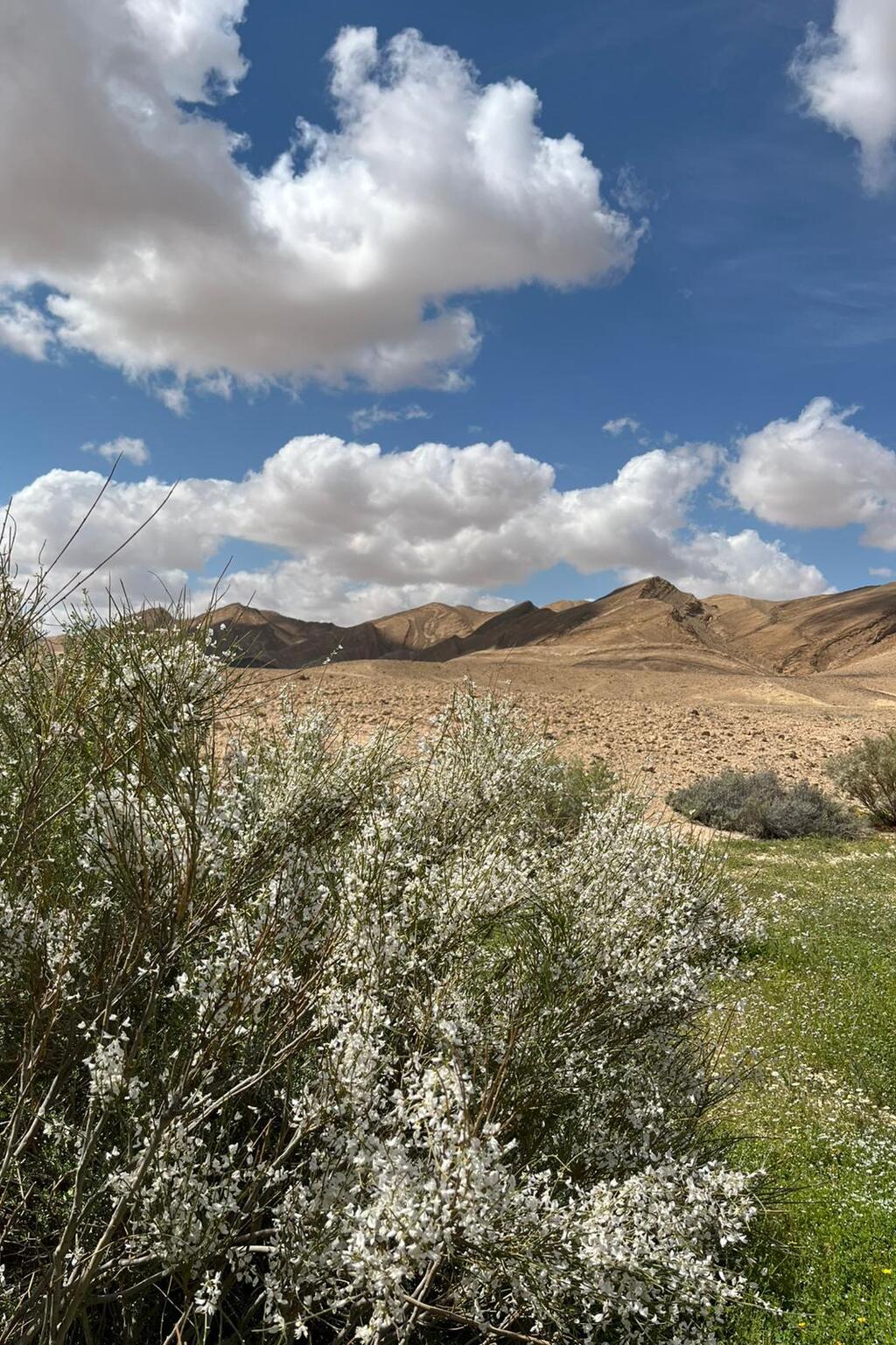
White Weeping Broom
(Photo: Jamil Atrash/Nature and Parks Authority)
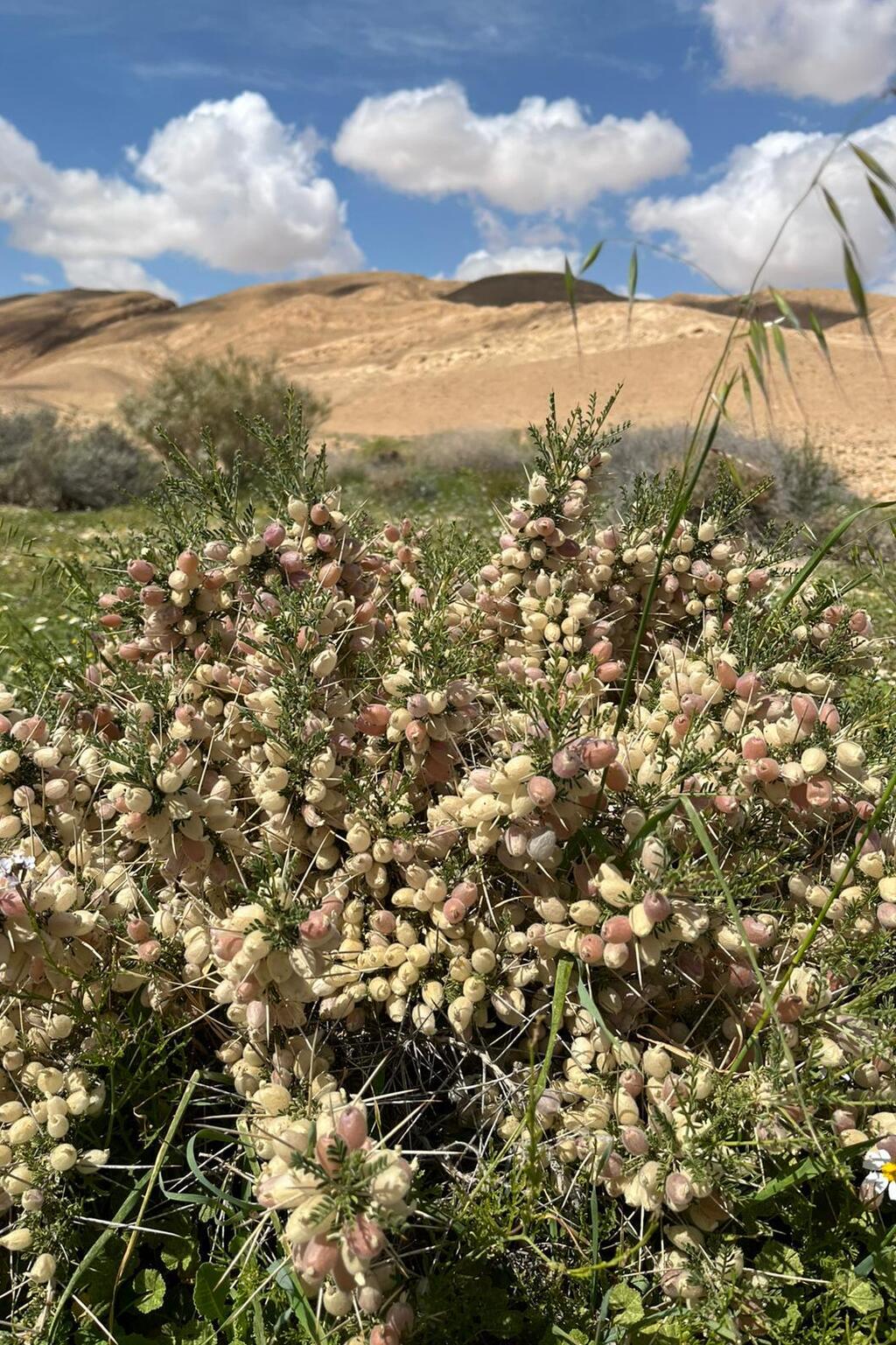
Bloom in the Great Crater Nature Reserve
(Photo: Jamil Atrash/Nature and Parks Authority)
Jamil Atrash, a ranger responsible for the Makhteshim route in the Nature and Parks Authority, documented the desert’s colors. “These are the most beautiful days of the desert,” he said. “There are flowers of every kind and in a wide range of colors. It’s a spectacular sight.”