

People can argue over who owns hummus, fight over the origins of falafel and keep debating whether Israel appropriated ptitim. But when it comes to sabich, there is only one person who could have claimed ownership of the dish, and his name was actually Sabich.
The year was 1961. Ramat Gan was home to many immigrants from Iraq. On Uziel Street, near Bar-Ilan Garden, which still exists today, and the old Lili and Gal-Or movie theaters, Sabich Halabi, who immigrated to Israel from Baghdad in the 1950s, opened a small kiosk that would eventually become the first sabich stand in the world.
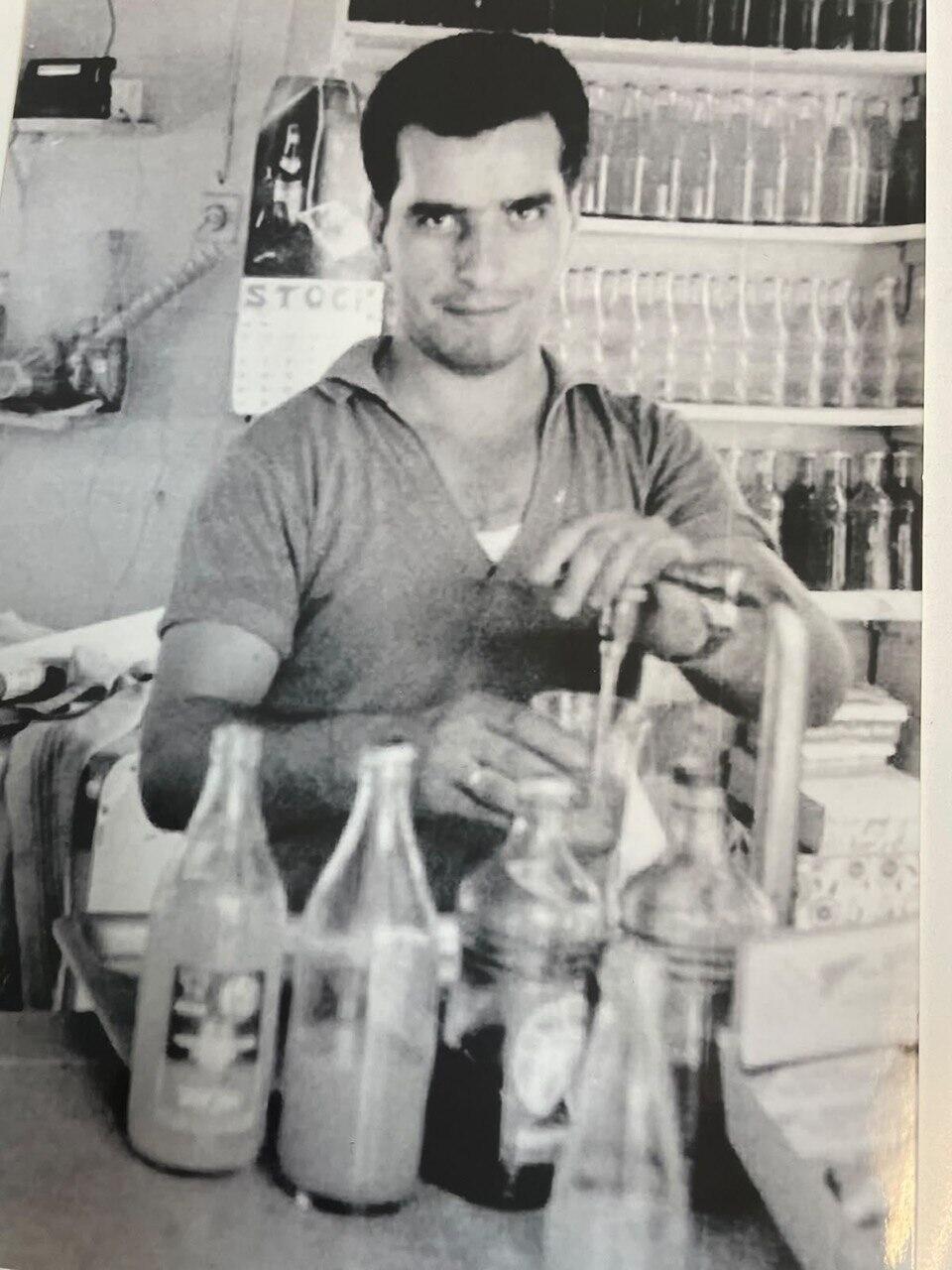
“We lost the right to make money from the name,” one of Halabi’s relatives told ynet this week, “but what hurts me more than the money is that people don’t believe my story. When I tell them the dish is named after Sabich Halabi, some people think I’m making it up.”
Everything in a pita
The prehistoric roots of sabich go back to Iraq. The traditional Shabbat breakfast of Iraqi Jews was made up of many of the ingredients in what we now know as sabich, though back then it had the much less exciting name of “lafa with egg and eggplant.”
Back in Ramat Gan, Halabi and his wife Rina initially sold soft drinks, candy, cigarettes and snacks to passersby from their small kiosk. But for the drivers of bus line 63, whose last stop was right next to the stand, that was not enough. They wanted a filling meal and asked the couple to bring food into the kiosk.
Sabich remembered the Shabbat table of his childhood in an Iraqi home: brown eggs that had cooked overnight, eggplants fried in advance, boiled potatoes, hummus, amba, chopped salad and a handful of fresh herbs. Then, instead of serving everything on a plate, as was customary in Iraq, he packed all the ingredients into one pita. To him and his wife, it seemed like a simple, filling and easy-to-eat solution for tired and hungry bus drivers finishing their shifts. That is how, almost by accident, a classic was born.
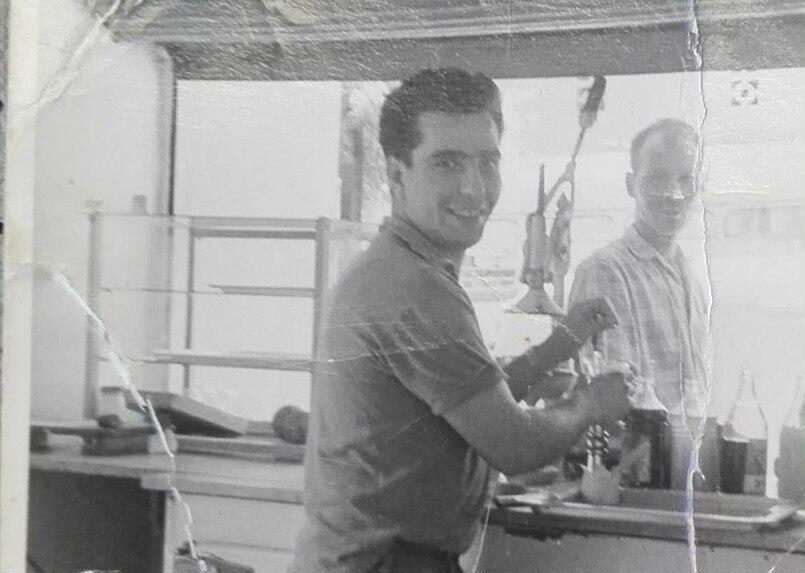
Sabich’s dish became a hit
(Photo: Courtesy)
Word of the bus drivers’ delicious meal spread like wildfire. Everyone wanted sabich, and a long line formed around the stand.
Sabich himself had not planned to brand the dish with his own name. It simply happened. “People would stand in line and ask, ‘Make me a dish, Sabich.’ People on the side thought the dish itself was called sabich, and it became ‘a sabich dish,’” a relative explained. “If you ask any Iraqi who was born in Iraq what sabich is, he won’t know.”
Over the years, different theories emerged claiming the name came from the Arabic word “sabah,” meaning morning, or that it was an acronym for “salad, egg, more eggplant.” None of them is true.
Did Sabich understand that he had given the dish its name?
“In the early 1990s, there was a flood of sabich stands across the country. He saw it and told his wife that even after his death, the family would not be rid of him, and wherever she went she would see his name. Sabich was hardworking, and he was also a copywriter. He invented sayings and threw around phrases. For example, he had something called a ‘mana b’shwung,’ where anyone who had already eaten one portion and wanted a second could order without waiting in line. He peeled the eggs on the spot, put his hand into the boiling water, pulled them out and peeled them one by one, then cut them there. People say he no longer had feeling in his fingers because of the boiling water.”
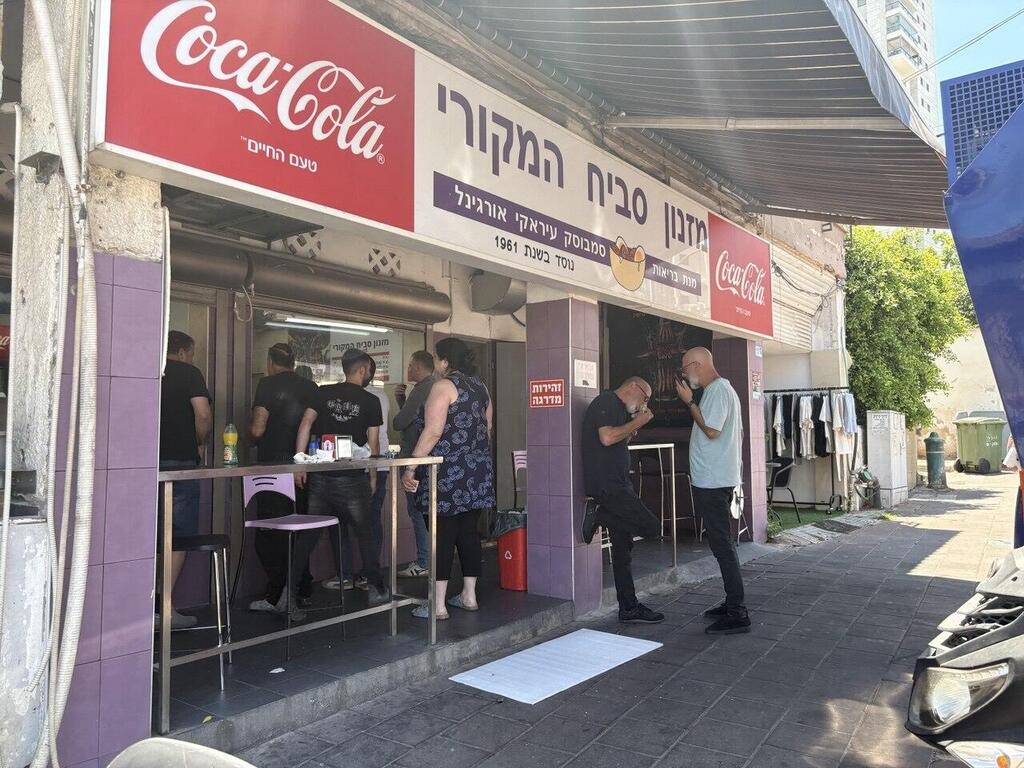
The snack bar at the corner of Negba and HaRoeh today
(Photo: Tiki Golan)
He could have made a fortune from that name.
“Both Sabich and his partner Yaakov were old-school people and didn’t know how to leverage it. At some point their children got involved, but it was too late, and sabich had already become the name of a food. In the 1980s, the family registered the name of the dish, ‘sabich,’ as a trademark and paid fees to the Justice Ministry for years, but everyone was already calling it that and no one sued. Today you can find sabich all over the world. There is sabich in Costa Rica, Budapest and New York. It became international.”
The pride of Ramat Gan
Sabich’s success pushed almost everything else out of the kiosk. Only cigarettes remained, almost until the end, alongside the beloved dish.
In the 1960s, Rina faced personal crises that forced Sabich to run the stand alone. He decided to bring his close friend Yaakov Sasson into the business, and the two became full partners. To this day, the Halabi and Sasson families stand behind the business.
The partners left the original stand on Uziel Street in 1982 and moved not far away, to a snack bar on HaRoeh Street at the corner of Negba Street. The famous sabich still operates there today.
Sabich had three children, two of whom remain involved in the business to this day. The place is now managed by the son-in-law of one of the children. Yaakov also had three children. One of them opened a sabich stand on Hibat Zion Street 30 years ago, and it is still operating. Yaakov’s two other children still work in the business.
For 30 years, the families have run the stand in an unusual rotation, two weeks at a time: two weeks for the Halabi family, then two weeks for the Sasson family.
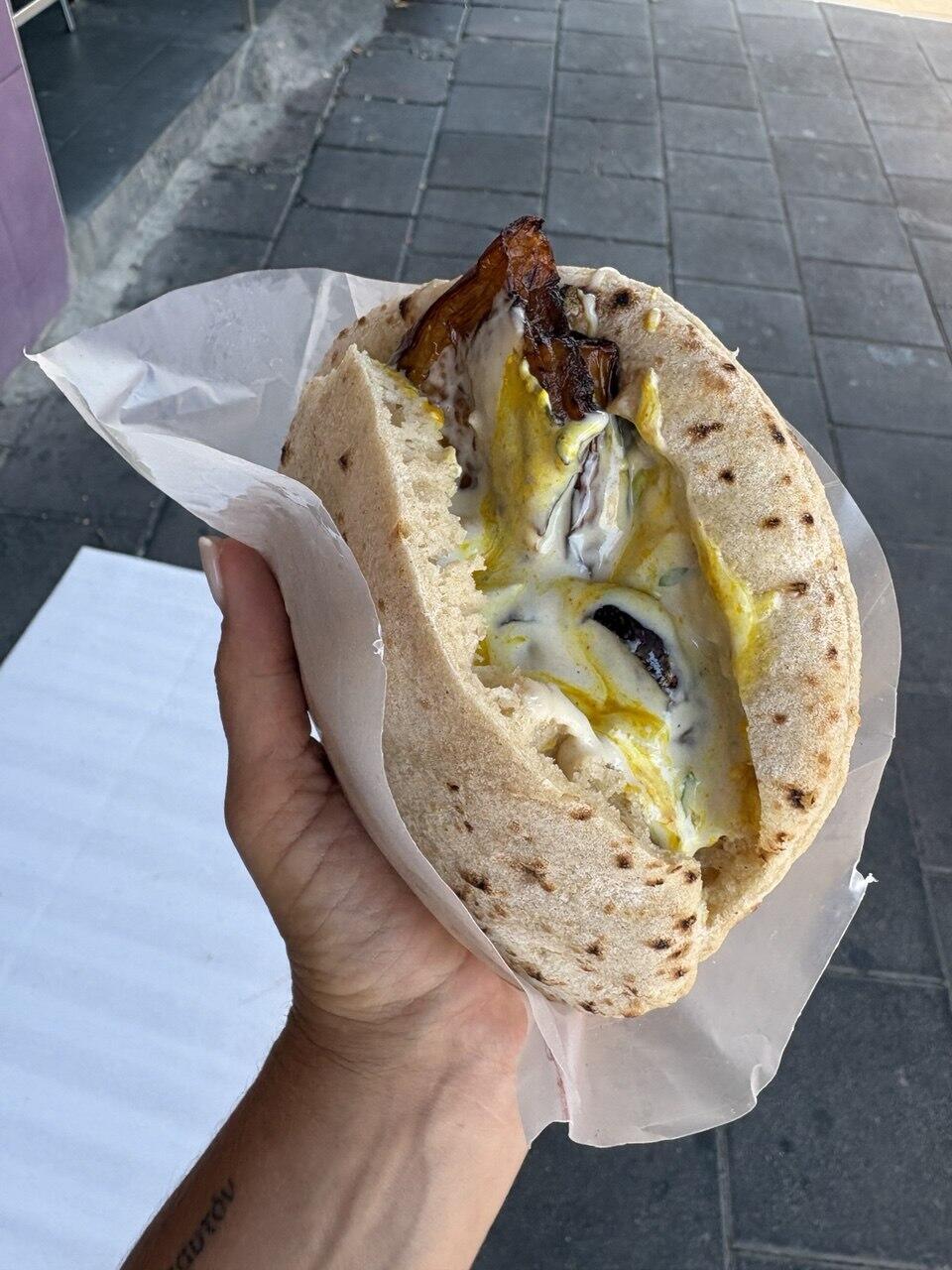
A beloved street food born by chance
(Photo: Tiki Golan)
Sabich died in 2012 after a courageous battle with ALS. Until his final days, he insisted on continuing to come to work at the snack bar. Six years later, his friend and partner Yaakov Sasson also died.
The Ramat Gan Municipality also honors the special legacy of the Halabi and Sasson families. About three years ago, the city established Sabich Square near the snack bar, a tribute to the man who, without meaning to, turned a traditional Shabbat breakfast of Iraqi Jews into one of Israel’s most beloved street foods.