

Sometimes we remember this world of real food, the kind that does not come from TikTok. It does not need stretchy cheese or the tapping of fingernails. Behind it lies the accumulated knowledge of mothers and grandmothers who worked through this recipe or that one from top to bottom, bottom to top, until its entire doctrine was embedded in the palms of their hands. The texture of the dough, the smell.
The lovely Sima Lahiani of Kiryat Gat shared with us her perfect recipe for Moroccan sesame cookies. The reputation of these cookies has traveled far, bringing her fame for all the right reasons. What a precise hand, and what wonderful explanations.
Every time one of Sima’s trays emerges from the oven, it also contains family, love, roots in Morocco, life in Israel, matters of religion, when the grandchildren are coming and whether there is a war.
Real cuisine is always a vast story. And it is tastier, too.
So yes, we will bring you more of Sima’s treasures, we promise. But we will start with these addictive cookies. We expect to receive hate mail after you finish an entire tray by yourself. Because it will happen.
Moroccan sesame cookies
Crisp, very easy to make, perfect with coffee and truly not too sweet.
Note that Sima measures everything with a standard disposable cup for hot drinks.
Ingredients, for 3 to 4 large trays:
- 1 kilogram flour, minus 1 cup
- 1 cup toasted sesame seeds
- 1 cup sugar
- 3 packets baking powder, this is not a mistake
- 2 packets vanilla sugar
- 1 package soft margarine, 200 grams, or butter for a dairy version
- 1 cup freshly squeezed orange juice
- 1 cup oil
Instructions:
- Preheat the oven to medium heat, 180 degrees Celsius.
- Place all the dry ingredients in a bowl and mix with a spatula.
- Add the margarine, orange juice and oil, and mix with a spatula until the ingredients are relatively combined.
- Knead the dough until it is smooth and pleasant to the touch. It is best to work with gloves.
- Divide the dough into four equal parts and roll out on baking paper. If you have a synthetic rolling pin, you can roll the dough directly. If you are using a wooden rolling pin, it is easier and more convenient to place another sheet of baking paper on top.
- The dough is very forgiving. If it goes over the edges, cut it off and return it to the bare parts of the paper.
- When the dough is thin, even and covers the paper, cut it into relatively equal squares and prick it with a pastry docker or a fork.
- Place one tray at a time in the oven, on the lower rack, and bake for 10 minutes.
- Remove briefly from the oven, run a knife or cutter over the scored lines so the cookies do not stick to one another, and return to the oven for another 5 to 7 minutes, or until golden.
- Cool completely before separating.
- Store in an airtight container.
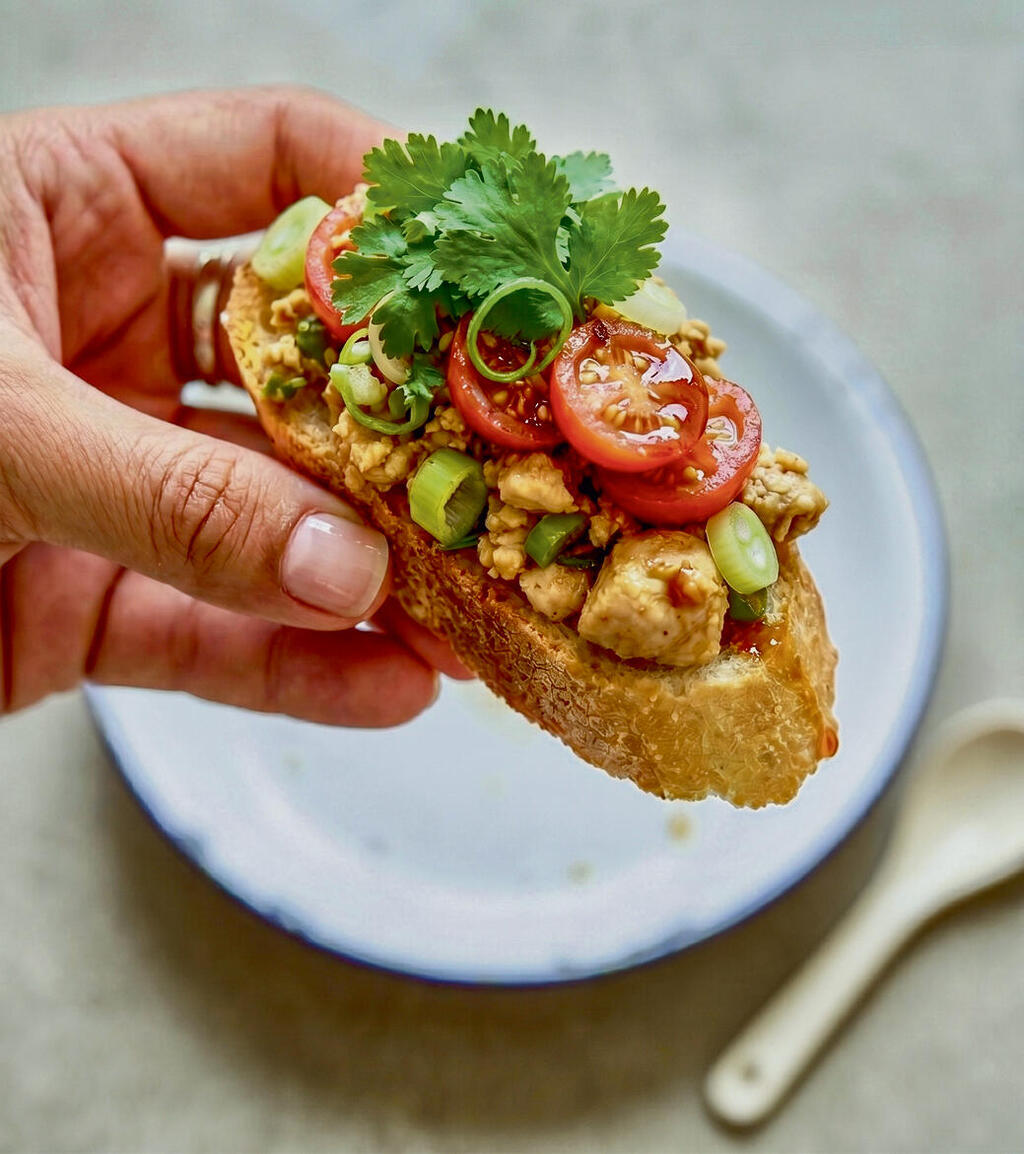
The tastiest salad from leftover chicken
Did you make boneless chicken thigh skewers or grilled chicken breast for Friday night dinner? Or maybe you made chicken soup? In short, do you have leftover chicken that can no longer really serve you in its original form?
Here is a winning combination: a complete meal in one bowl and a way to eat lots of protein and lots of vegetables. You can fill a sandwich with it or pile it onto a cracker. Most of all, it is worth keeping in the refrigerator for that moment when you urgently want something tasty, worthwhile and filling that is not junk.
Ingredients:
- 500 grams cooked, chopped chicken breast
- 1 small red onion, diced
- 2 tablespoons chopped Kalamata olives, optional
- 20 cherry tomatoes, chopped or sliced
- 2 stalks green onion, very thinly sliced
- 2 tablespoons chopped cilantro
- 1 teaspoon chopped mint
For the dressing:
- ¼ cup mayonnaise
- 2 garlic cloves
- 1 teaspoon mustard
- 1 teaspoon crushed chili
- A little dried thyme or oregano, optional
- Salt and pepper, generously
Instructions:
- Place all the ingredients in a bowl.
- Blend the dressing ingredients in a blender or with an immersion blender. You can also add a little lemon juice or water, crush the garlic and shake everything well in a jar.
- Pour over the salad and mix well until the dressing coats everything.
- Keep refrigerated.
The Basque saga
We fell. That is, the cake fell. But wait for the bottom line.
Two weeks ago, we published here the mother of all recipes for a proper Basque cheesecake.
The explanation was scientific. The execution was not actually complicated. Mix all seven ingredients together with an immersion blender. Chill for two hours. Bake in a hot oven for 25 minutes, rotating every 10 minutes, then lower to medium heat until the center of the cake reaches 62 degrees Celsius. There it is, 30 words in less than a paragraph.
But when you understand why to chill, why to rotate, why to blend with an immersion blender and not a mixer, the odds of the cake failing drop significantly.
Then came the official Basque holiday, and the family demanded its right to cheesecake.
We bought a festive new springform pan, exactly the right size. We also bought all the ingredients, and they are not cheap. Cream cheese and a vanilla bean alone are practically half a property in Greece.
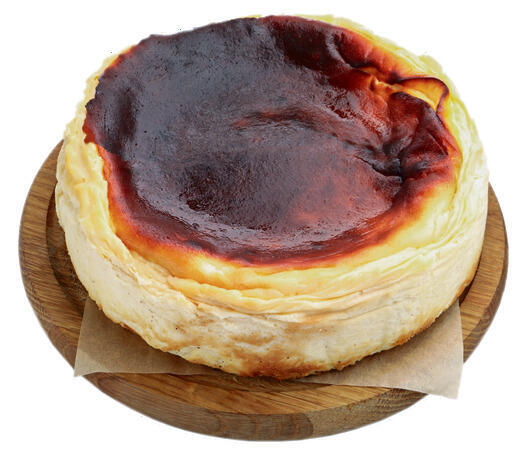
(Photo: New Africa, Shutterstock)
We blended properly and chilled for two hours, lined the pan with paper and poured in the batter. A waterfall of cream cheese, sugar, eggs and real vanilla bean flowed onto the floor and counter, into the cutlery drawer and all around it. We quickly collected what we could with a scraper into a large bowl and spent a long time cleaning every crack and crevice filled with cream. We ran to a professional kitchenware store and bought a handsome springform pan, at twice the price, made by Roso. Again we cut baking paper and carefully lined the pan, poured in the batter we had saved and sent it to the oven.
Eight minutes into the event, the smell in the house gave it away: This pan was not sealed either. The batter rose and flowed down toward the baking tray beneath it, spread there defiantly and dried into a sweet omelet-casserole. The pan was already half empty. Oh, the heartbreak.
Dinner was that evening, and the stores were already closed. There was no choice.
We quickly gathered what remained of the batter into a disposable aluminum pan, into which we shoved baking paper as best we could. There was no time for careful cutting. We collected and scraped the omelet-casserole from the tray below. The omelet stood like a proud volcano in the middle of the soft batter. We had long since abandoned the precise scientific instructions we had laid out here only a few days earlier.
With a spoon, we pressed the mountain of casserole into the wet batter so it would not show, wondering what it would look like after baking. That was it. We put this accident back in the oven and continued according to the instructions, high heat and then medium heat, as though a whole battery of baking mistakes had not just taken place.
That evening, we served the cake at the table. It looked beautiful, like a Basque cake. We waited for the moment we would slice it and discover the truth, and the scrambled mess inside. There was no trace of the scramble. It remained creamy, soft and wonderful.
We thought Basque cheesecake was made of simple instructions and precise science. Forgive us. Like everything else, here too there is mostly fate and intention. Together, they know how to overcome even the greatest fiasco.
So after three pans, a cutlery drawer and a countertop, a magnificent fall to the floor below and the stuffing of a mountain of scrambled cake back inside, we got a glorious Basque cheesecake. We have no idea how to format this deranged preparation process into a recipe.
Or as a friend summed it up: A real Basque cake is transferred through four pans. You only did three.
Leah Tzarfati’s smoked salmon
Last week, we promised to tell you about the source of the salmon in the basket we prepared for Louis, so here we are keeping that promise.
Leah Tzarfati is a total surprise: a Haredi woman, mother of six and maker of the tastiest smoked salmon we have ever eaten, including in Scandinavian countries.
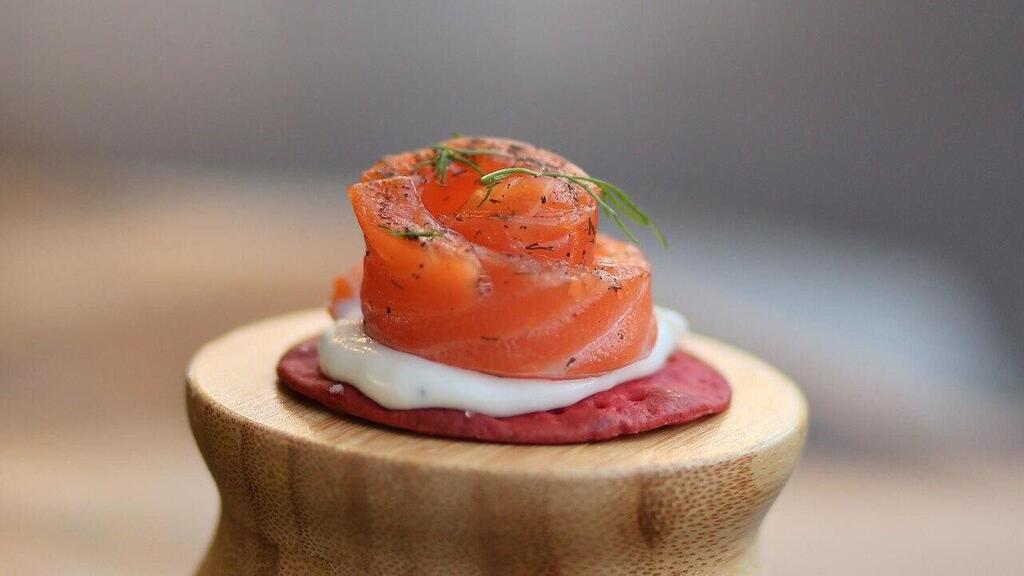
Leah Tzarfati’s smoked salmon
(Photo: Rivka Shabtai)
Her story begins with passion and frustration: She wanted excellent smoked salmon, like the kind she ate as a child in Canada, and did not understand why it was so hard to find. Having no choice, she learned to make it herself, and even traveled to Montreal for training with a maker of pickled fish who taught her the craft. She insists on Norwegian salmon and slices the fish herself. The result is a masterpiece. After she began making salmon for herself, orders started coming in and kept piling up. One thing led to another, and she founded a factory and even opened a store in Sarona. Her products can be purchased in various delis around the country or ordered directly from her, Tzarfati Smoked Fish. As with Ortiz anchovies, once you try Tzarfati’s smoked salmon, it will be very hard to go back to any other product. Consider yourselves warned.