


It is Sunday, the weekly day off in India, and Lucky Cafe in Ahmedabad is packed. Outside, auto-rickshaws and motorcycles jostle through unending traffic, with car horns providing the city’s near-constant soundtrack. Inside, the tables are crowded with young families, groups of friends lingering over weekend conversations and customers sitting alone. Children laugh and make a mess of the napkins; two young men are deep in conversation. Cups of chai and buttered buns cover the tables as people settle in to discuss whatever happens to matter that morning.
At first glance, there is nothing particularly unusual about the place. Then you notice the graves. They are everywhere, low and elongated, draped in embroidered pink, green and gold cloth, scattered with red rose petals and protected by metal railings. What is striking is not simply that they are there, but how little anyone seems to notice them. Conversations continue. Chairs scrape across the floor. Children play. Nobody lowers their voice or looks uneasy. For the regulars, the graves are simply part of the furniture. They were here first. The customers, in a sense, are the visitors.
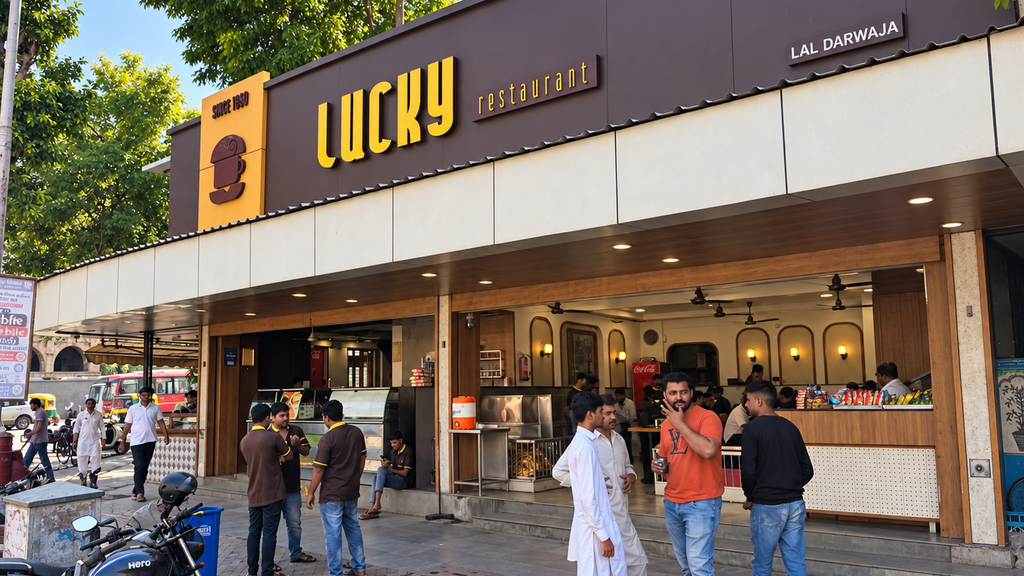
Lucky Cafe sits in the heart of Ahmedabad’s Old City, in the western state of Gujarat, amid a maze of narrow lanes, mosques, temples and intricately carved wooden houses. The historic center was designated a UNESCO World Heritage Site in 2017, although the title has done little to tame the exhilarating disorder of daily life. Ahmedabad still moves to its own crowded rhythm, somehow making room for everything at once.
Gujarat, and Ahmedabad in particular, is not an obvious stop for most Israeli travelers. The city does not go out of its way to charm visitors. It is more commercial than many of India’s better-known tourist destinations, less interested in presenting itself for the camera and busy getting on with its own life. That is also part of its appeal. Veiled women ride scooters past vendors pushing overloaded carts. Young men in checked shirts weave through crowds alongside men in white kurtas. A woman in high-waisted jeans stops for a selfie near food stalls and piles of garbage. Mosques and temples stand almost side by side.
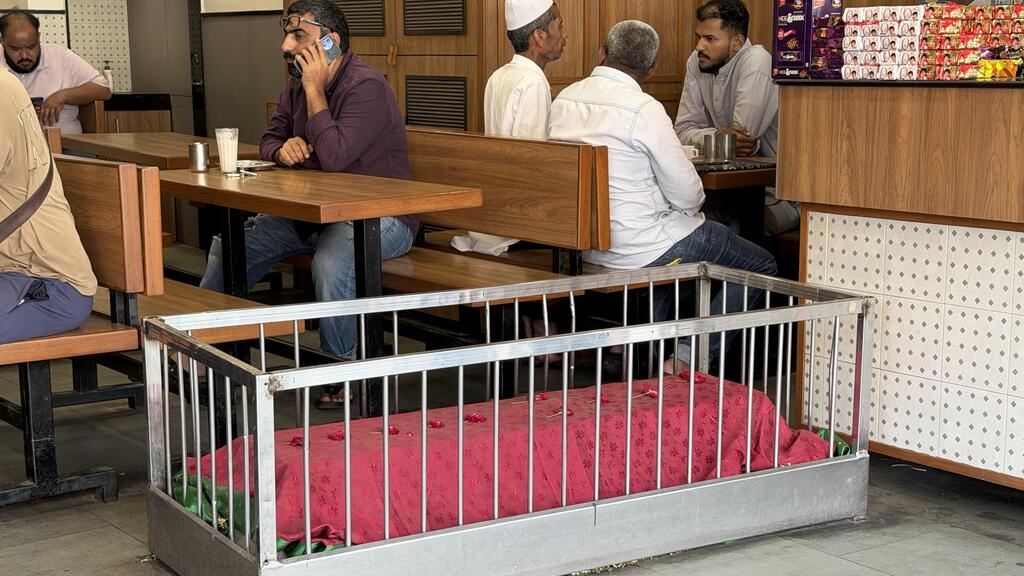
(Photo: Eitan Gefen)
There is even a synagogue. Magen Abraham, the only synagogue in Gujarat, serves a Jewish community of about 130 people whose roots here stretch back generations. Like so much else in Ahmedabad, all of these worlds somehow occupy the same few streets.
The monsoon season is almost over. Earlier that morning, the sky had opened without warning, sending sheets of rain across the city and flooding the streets within minutes. A few hours later, there was barely any trace of it. The sun had returned with full force, bright and punishing. Inside Lucky, meanwhile, business carried on among the graves.
Where the living and the dead share a table
Lucky’s story began modestly. In the 1950s, K.H. Mohammed, who had come to Gujarat from the southern state of Kerala, set up a small tea stall beside an old Muslim cemetery. A large neem tree offered shade from the fierce Gujarat sun, and a few cups of chai were enough to sustain the business. Then more customers began arriving, and the stall needed more space.
“Slowly, over time, we grew and expanded the stall until it became this restaurant,” a waiter tells me. His uncle now owns the business.
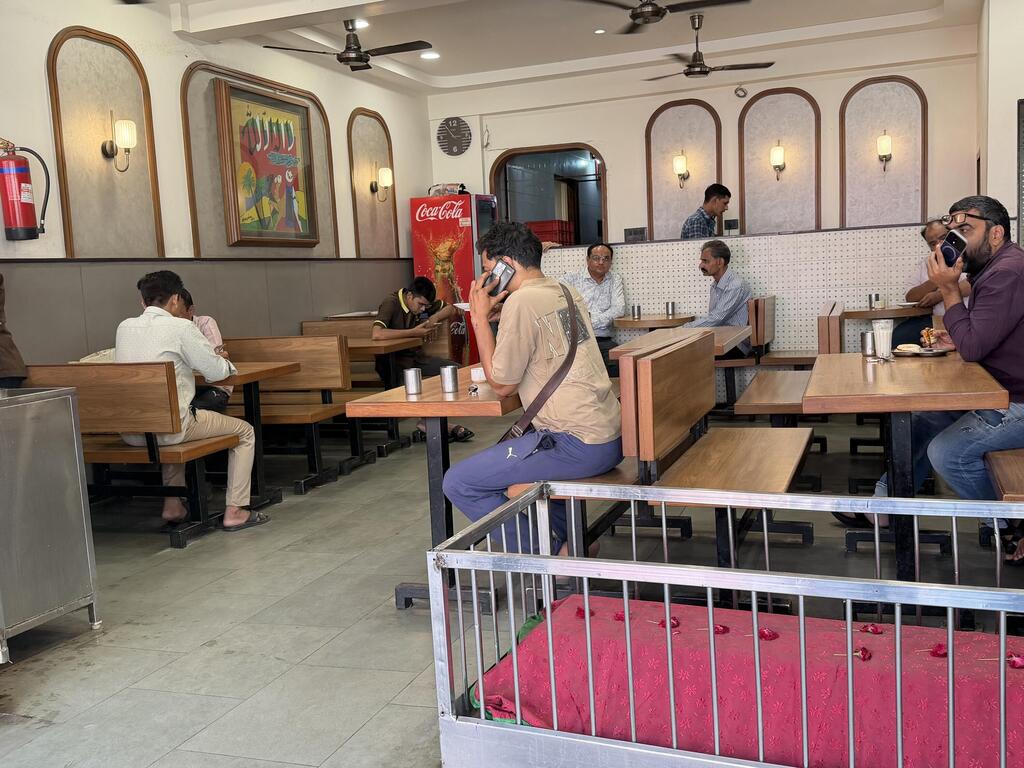
(Photo: Eitan Gefen)
Expansion presented one obvious problem: the cemetery was not going anywhere. So instead of removing the graves, the cafe simply grew around them. Tables were fitted into the available spaces, metal railings were placed around the burial plots and even the old neem tree was incorporated into the restaurant. This was not conceived as some macabre attraction. It was a practical accommodation, a way of making room for a growing business without disturbing what was already there.
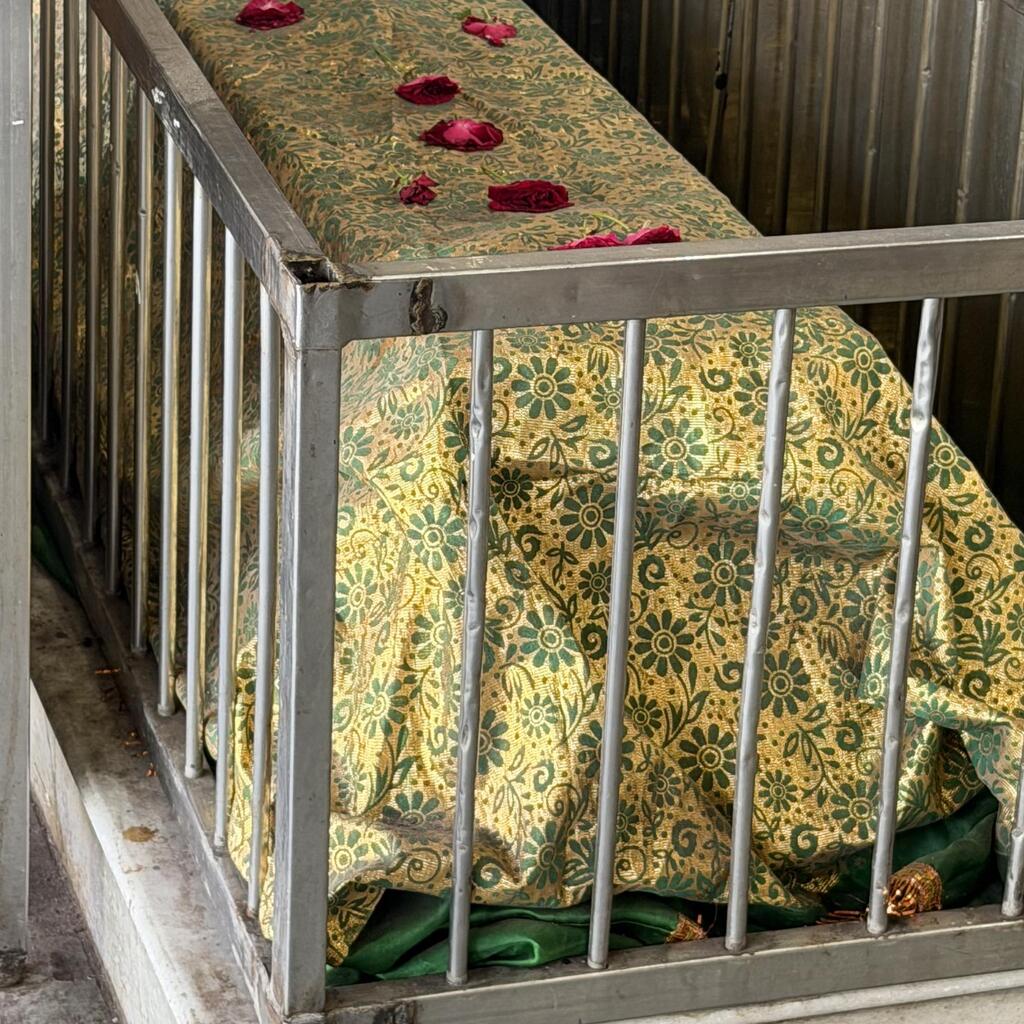
(Photo: Eitan Gefen)
Today, 26 graves remain inside the cafe. One of the men who helped Mohammed establish and run the business reportedly believed they brought good fortune, which gives the name Lucky an added resonance.
The graves are treated accordingly. Every morning, staff members clean them and lay fresh flowers over them. “We light incense here every Thursday, and every day we pray and place flowers on the graves,” the waiter says. It is part of the daily routine, alongside brewing tea, serving customers and clearing tables.
Buttered buns, sweet chai and a local institution
Lucky is also a vegetarian restaurant, as are many establishments in Ahmedabad, but its best-known order is far simpler: maska bun and chai. The dish has roots in the Iranian cafes established by Persian immigrants in Mumbai and Pune from the late 19th century. A soft, slightly sweet bun is sliced open and filled with a generous layer of butter, thick enough to remain visible between the two halves.
The appeal is in the simplicity. The warm, pillowy bread gives way around the butter with each bite, mixing sweetness with a rich, creamy saltiness. There are also versions with pineapple or strawberry jam for anyone who wants to push things further into dessert territory.
Then comes the chai, hot, sweet and fragrant with spices. You can alternate between a bite and a sip, but many locals have a better method: Dunk the bun straight into the tea. The bread soaks up the chai, softens almost instantly and carries the melted butter with it. It is messy, indulgent and extremely effective.
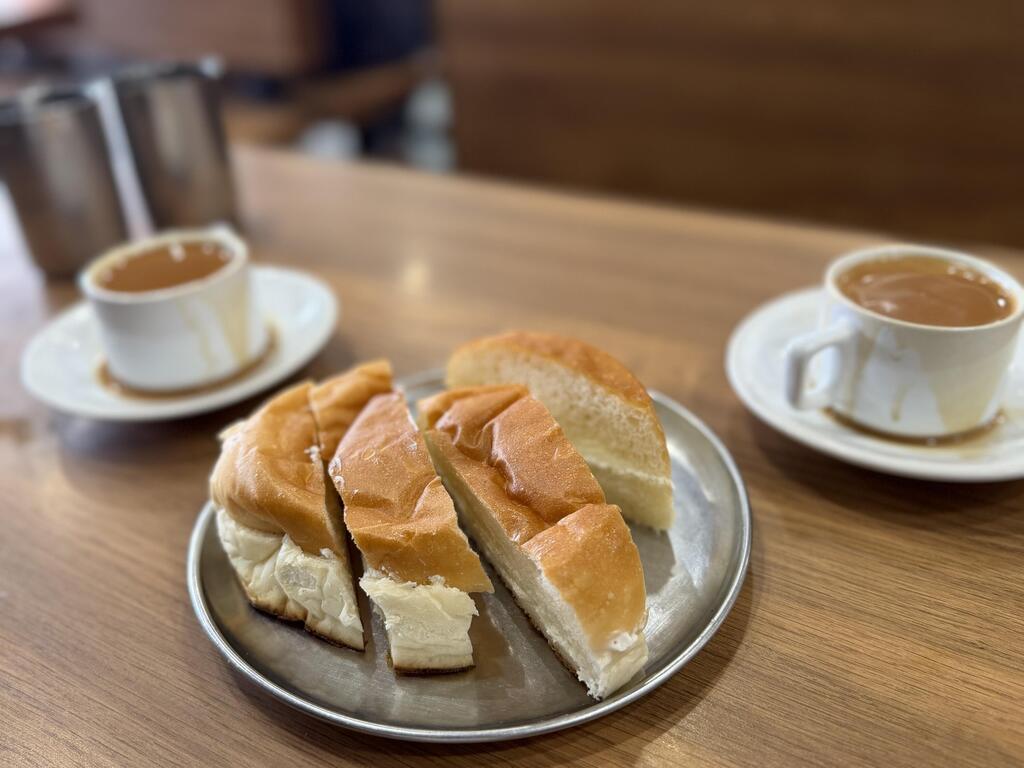
(Photo: Eitan Gefen)
Pretty much everyone in Ahmedabad knows Lucky. It draws regulars as well as people passing through, and few seem particularly interested in its unusual layout. The novelty belongs mostly to outsiders. For local customers, this is simply where you come for tea.
Among those customers was once M.F. Husain, one of India’s most celebrated modern painters, often described as the “Picasso of India.” Husain was close to the cafe’s founder and gave him an original painting. The work, featuring camels and a desert oasis among its imagery, still hangs on the wall today.
Ahmedabad is the kind of city that asks for a little patience. First come the horns, the heat, the traffic and the feeling that everything is happening at once. Then, gradually, the city begins to make sense on its own terms.
And if you give it enough time, you may eventually find yourself doing what generations of locals have done: sitting in an old cafe, dipping a buttered bun into sweet chai with an ancient grave a few feet away.
By then, the strangest thing may be how normal it feels.