

A new study suggests there may be a way to make French fries healthier without sacrificing their crisp texture.
Researchers at the University of Illinois Urbana-Champaign are testing a method that combines traditional frying with microwave heating, reducing oil absorption while maintaining the crunch consumers expect. The approach may also shorten cooking times, making it attractive for the food industry.
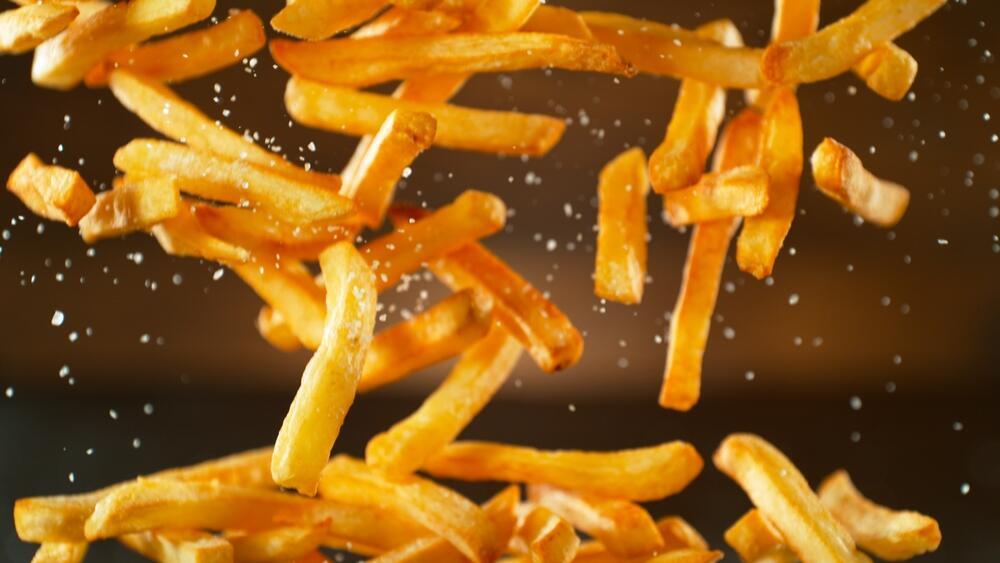
The link between high-fat fried foods and health problems is well established. Experts from Harvard University’s School of Public Health have long warned that frequent consumption of deep-fried foods is associated with a higher risk of Type 2 diabetes and heart disease. The American Heart Association also recommends significantly reducing fried food intake to maintain healthy blood pressure and prevent cholesterol buildup.
The main issue lies in how frying works. Potatoes act like a sponge during deep frying, absorbing large amounts of oil and empty calories, which can lead to rapid weight gain.
“Consumers want to eat healthier, but at the point of purchase, cravings often take over. High oil content adds flavor, but also a lot of energy and calories,” said lead researcher Prof. Pawan S. Takhar. “Our research focuses on achieving lower fat content without significant differences in taste and texture.”
Takhar and doctoral student Yash Shah presented their findings in two recent studies examining how microwave-assisted frying changes what happens inside fries during cooking.
In one study, the team collaborated with Washington State University researchers and used a specially designed “microwave fryer.” The system operated at two frequencies, one similar to a standard household microwave.
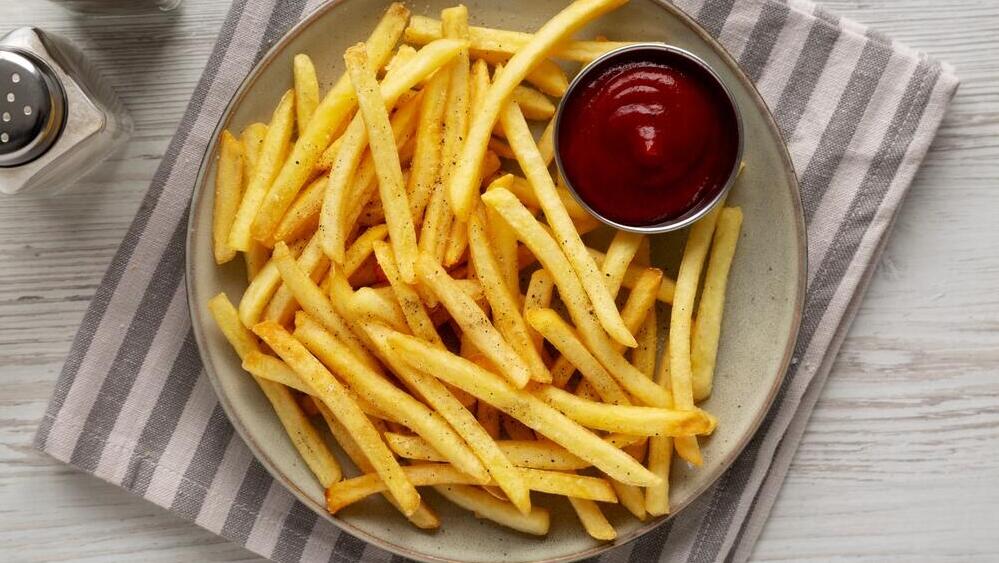
(Photo: Liudmyla Chuhunova/ Shutterstock)
During the experiment, potatoes were washed, peeled, cut into strips, blanched and salted. They were then fried in soybean oil heated to 180 degrees Celsius, while researchers measured temperature, pressure, texture, moisture and oil content throughout the process.
Takhar explained that a key challenge in frying is preventing oil from penetrating the food. At the start, potato pores are filled with water, leaving no space for oil. As cooking continues and water evaporates, empty spaces form, creating negative pressure that draws oil inward.
“Think of a straw in a drink,” Takhar said. “If you blow air into it, you create positive pressure and push the liquid out. If you suck, the liquid rises. Now imagine many tiny straws inside the food. With positive pressure, oil stays out, but with negative pressure, it gets pulled in.”
Microwaves change that dynamic. Unlike conventional frying or baking, which heat from the outside in, microwaves heat from the inside out. The waves cause water molecules to move, generating more steam and shifting pressure toward positive levels, which helps reduce oil absorption.
The result is faster moisture loss, shorter cooking times and less oil in the fries.
However, using a microwave alone does not work.
“If you only use a microwave, you get soggy fries,” Takhar said. “To achieve a crispy, tasty texture, you still need traditional heating. That’s why we propose combining the two methods in one system: conventional heating maintains crispiness, while microwave heating reduces oil uptake.”
The researchers say existing industrial frying systems could be upgraded relatively easily by adding microwave generators, which are inexpensive and widely available. The approach could offer a practical solution for large food manufacturers seeking to reduce fat content without compromising taste.