

Open Instagram or TikTok these days and you are likely to see someone biting into a bright green plum, showering it with salt and lemon, and capturing that sharp crunch on camera. The unripe green plum, once the forbidden fruit many of us snatched from a neighbor’s tree, has become the season’s hottest and sourest obsession.
What was once a culinary secret in certain communities, mainly across the Middle East, has become a viral trend drawing in everyone. For some, it is a nostalgic taste of childhood. For others, it is the discovery of a strange fruit that has become a fascinating ingredient in modern cooking.
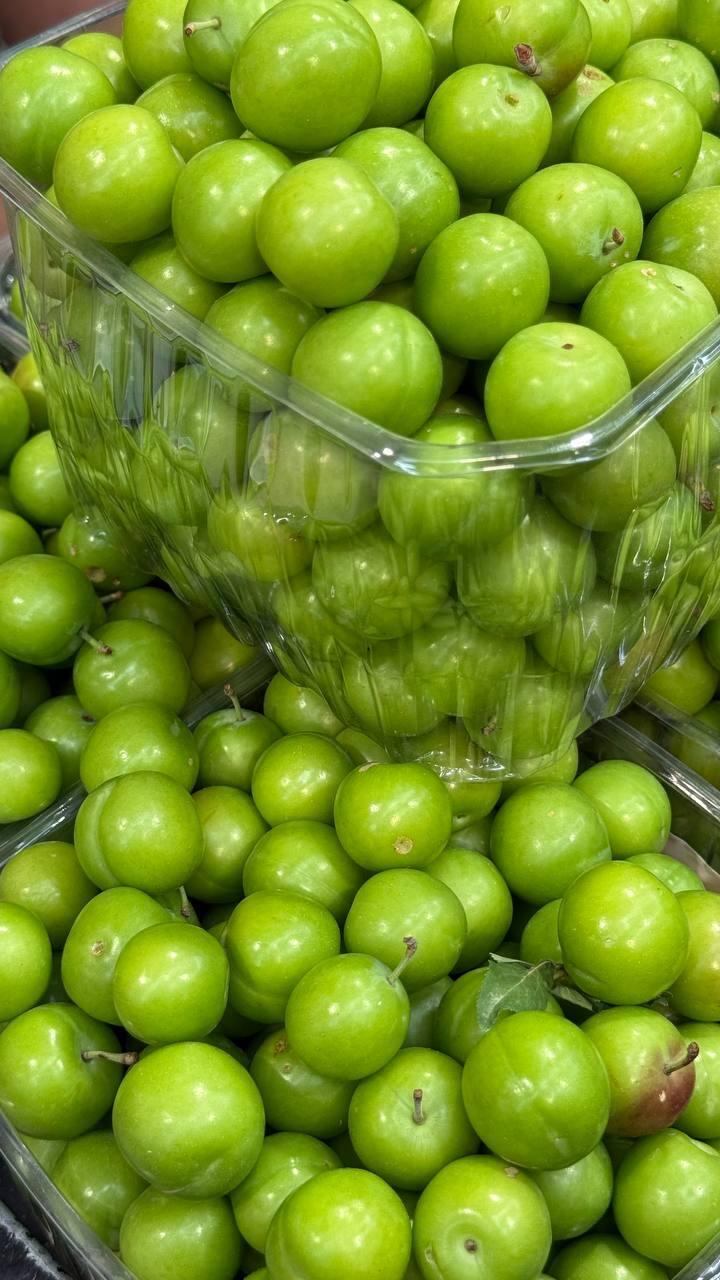
A short window, once a year
One reason this plum is so in demand is that it is here only briefly. Its season is especially short, offering just a few weeks in spring when it can be found at nearly every fruit and vegetable stand in the local market.
It is a fleeting moment, just before the fruit ripens, softens and turns sweet and honeyed. While Europeans tend to wait patiently for the fruit to ripen, here in Israel, and in countries such as Turkey and Azerbaijan, fans prefer the punchier version: a small fruit, about 2 to 4 centimeters across, firm and refreshingly sour.
The classic and most beloved way to eat it is with a little salt, which cuts through the sourness and brings out the flavor. But the current trend has taken it several steps further. Today, it can be found in jams, pickles and even bold ice cream flavors and chef-driven dishes.
Alongside the crunch, however, comes an important question: Is this trend actually good for us? Meital Levy, a clinical dietitian at Leumit Health Care Services, explains the nutritional value of unripe green plums and how they differ from ripe plums.
“There is definitely a difference,” Levy says. “When the plum is unripe, the sugar, i.e., fructose, has not yet developed in the same amount as in ripe fruit. That means it raises blood sugar less and may suit people looking for a lower-sugar fruit. Unripe plums contain more vitamin C, since it breaks down as the fruit ripens, and they contain tannins, which create a stronger feeling of fullness.
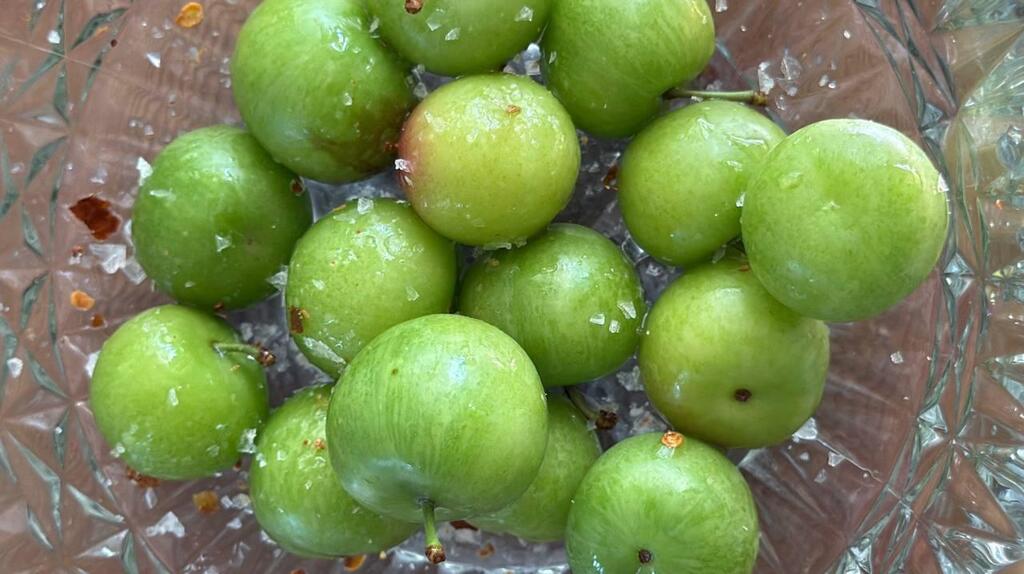
Here for a fleeting moment
(Photo: Sapir Gordo)
“By contrast, ripe plums contain sorbitol, a sugar with a positive effect that helps stimulate digestive activity, a quality the unripe fruit does not have. Ripe plums are easier to digest and richer in antioxidants that become more available as the fruit ripens.”
Are there risks or side effects to consider when eating unripe green plums?
“Yes. For some people, eating unripe plums can cause stomach pain, gas or even constipation because they are harder to digest, unlike ripe plums, which support bowel activity. They can also cause a puckering or dry sensation in the mouth because of the tannins.”
Who should avoid them?
“Anyone with a sensitive digestive system or irritable bowel syndrome, young children, older adults whose digestive systems are not functioning at their best, and people who have undergone medical procedures involving the digestive tract.”
How to get the most nutritional value from plums?
“For the greatest health benefit, it is better to eat a ripe but firm plum, meaning not too soft. That is the ideal balance between nutritional value and flavor. It is recommended to eat it with the skin, which contains fiber and antioxidants, and to combine the fruit with protein, such as yogurt, or healthy fats, such as nuts and almonds, which slow sugar absorption into the bloodstream and provide the body with additional minerals.”
What about eating unripe fruits and vegetables in general?
“In general, eating them unripe is not recommended. The only exception involves starches: When starch has not fully developed, blood sugar rises less. Still, that comes with trade-offs in taste and other nutritional downsides.”