

Potatoes. That is the first thing that comes to mind when linking Lag BaOmer — a Jewish holiday marking the 33rd day of the Omer count — with food. But it turns out there is another way, and a big one. This time, we decided to leave the potatoes and sausages behind and turn the traditional bonfire into a true gourmet celebration in the open air. The rules: open fire only — no grill, no oven and no shortcuts. Just coals, wood and patience.
The setting: Ben Shemen Forest in central Israel. The boss: chef and blogger Ruben Maislos, who specializes in gourmet cooking over an open flame. “You don’t control the fire — you work with it,” he says, tossing premium wood cuts from a 60-shekel bag onto the flames.
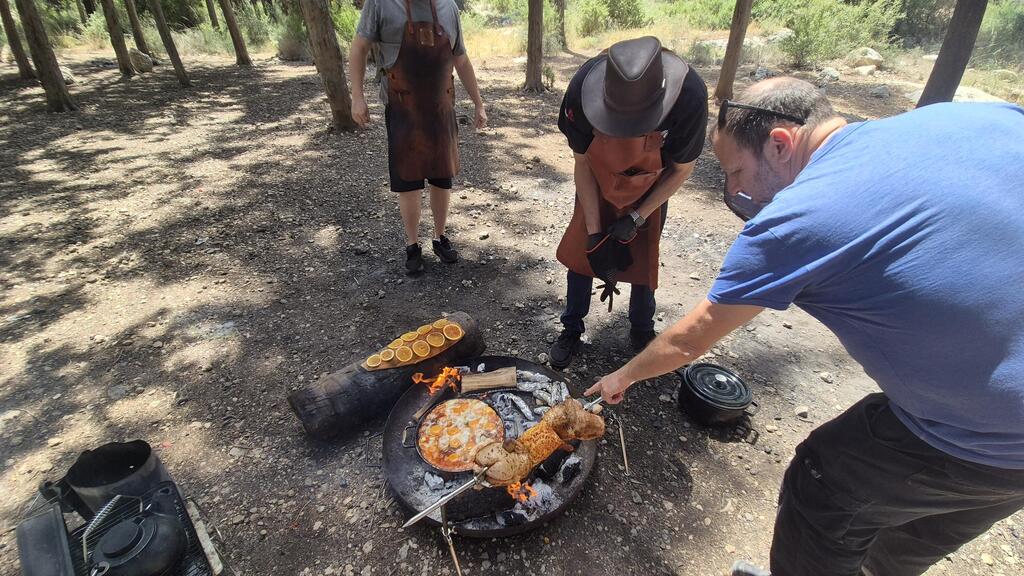
The hedonistic feast begins with a whole chicken cooked over the fire. Instead of the standard side of charred potatoes, Maislos opts for something more exotic.
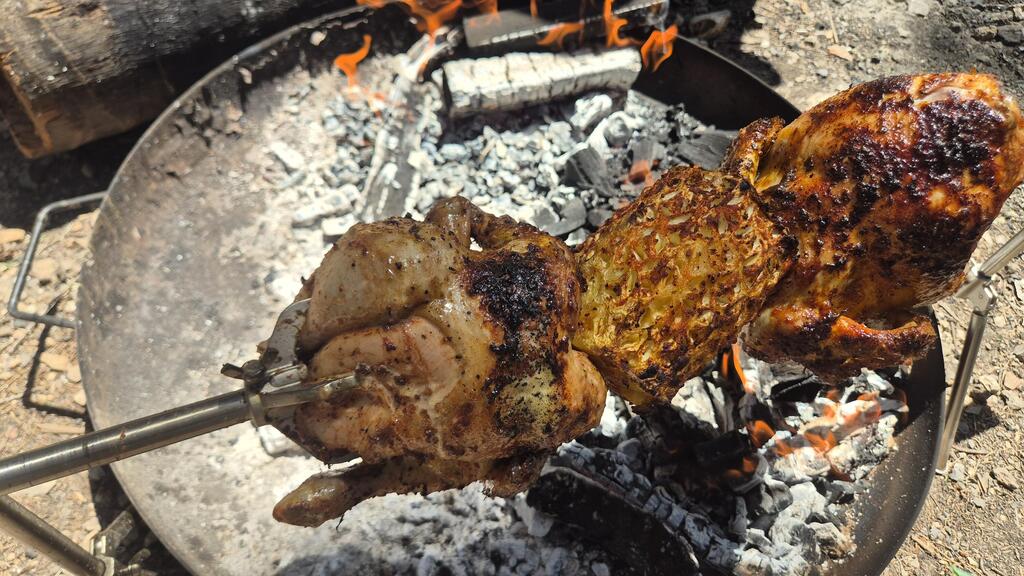
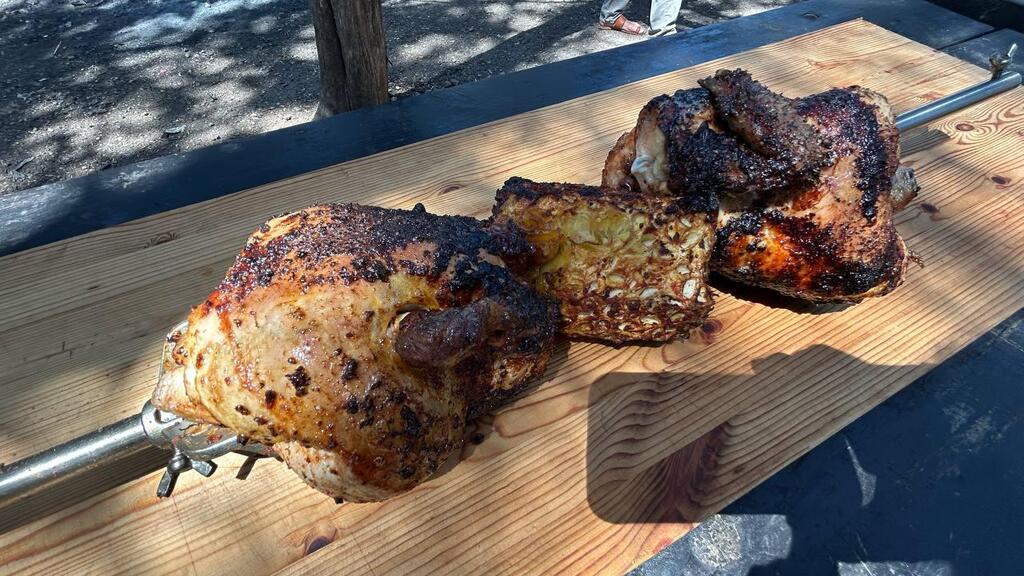
“The cooking pineapple will add a lot to the caramelization flavors of the chicken,” he explains, expertly skewering chickens and pineapple onto a rotating spit. “The fire is at just the right temperature. Soon it will start to brown.”
The rotating spit is essentially a field version of what is known in professional kitchens as a rotisserie — an adjustable metal skewer with a small electric motor, mounted on foldable metal stands on either side of the fire.
Fat drips onto the flames, and the aroma is intoxicating, but Maislos makes clear this is no quick process.
“The main idea with a rotating spit is not to roast the chicken in one spot, but to expose it to heat from all sides evenly,” he says. “The chicken and pineapple will rotate for at least two hours. The fat melts gradually, drips onto the coals and creates brief flames that add a smoky flavor. That builds a crispy outer layer while keeping the inside juicy. If you know how to read the fire, the result is less aggressive and more controlled.”
(Photo: Assaf Kamar)
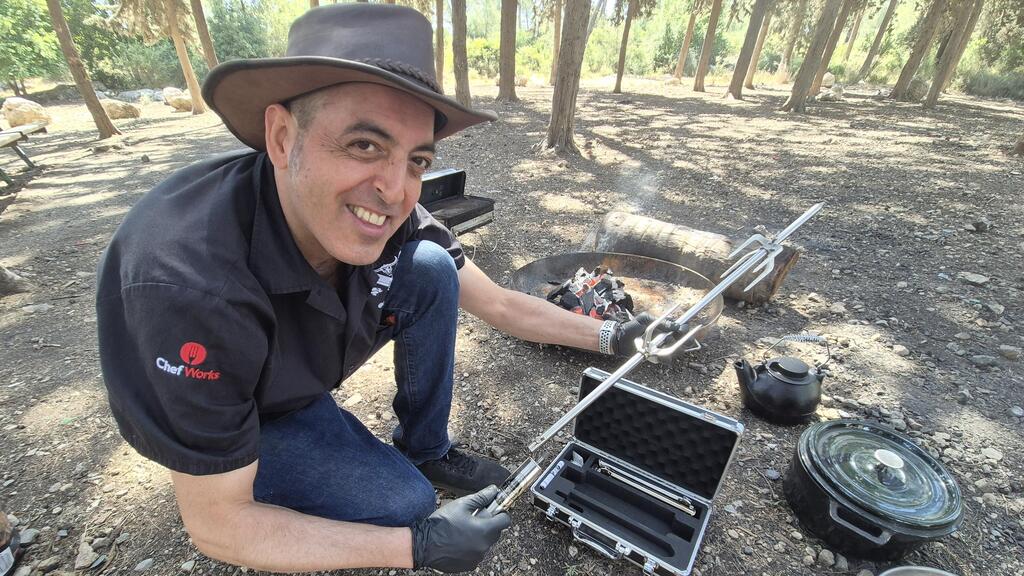
Ruben Maislos
(Photo: Assaf Kamar)
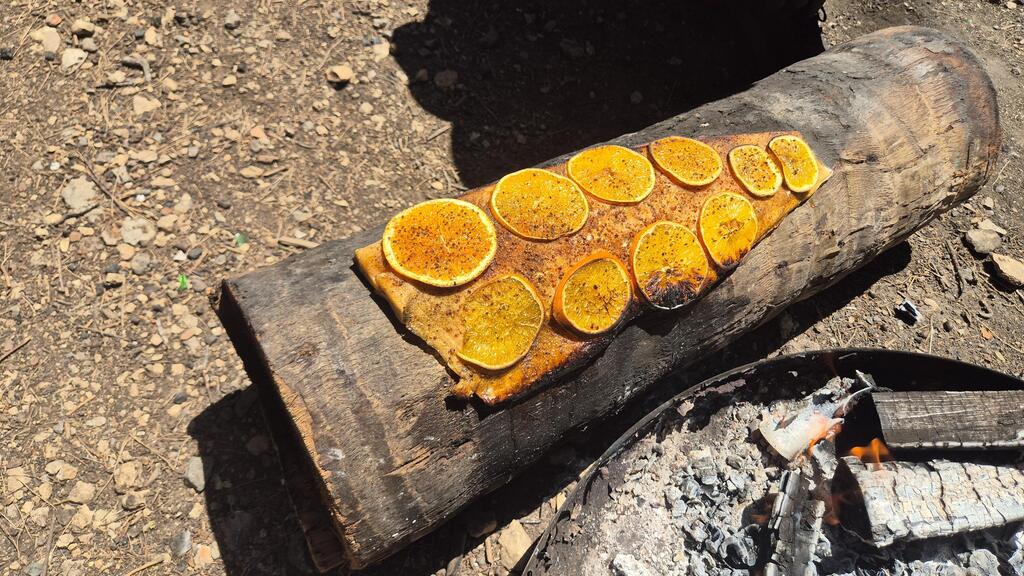
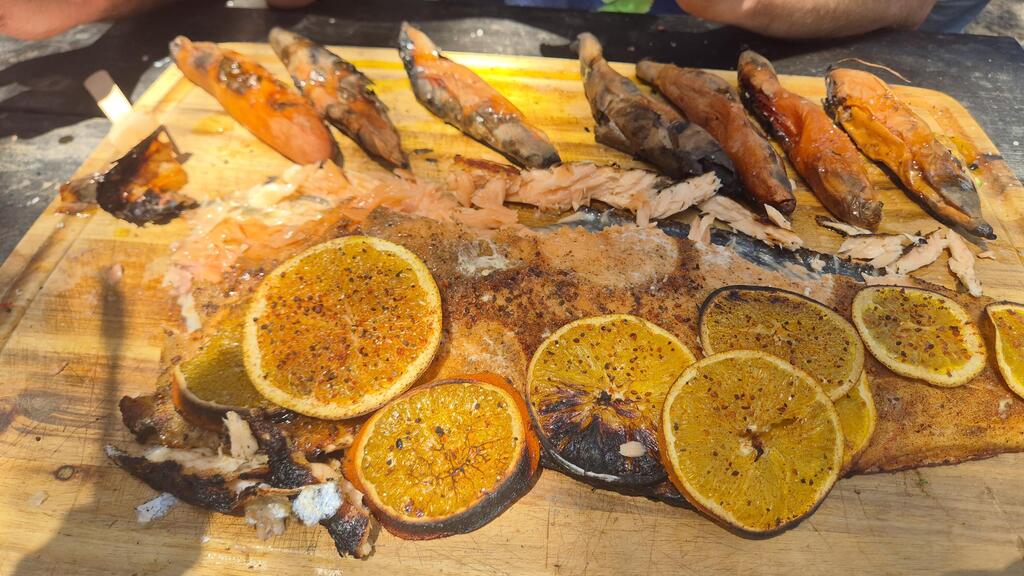
A first glass of red wine is poured. The chef seasons a large cut of salmon and places it directly on a dusty log facing the open flames, as if it were the most natural thing in the world. No grate, no oven, no real control — just heat from the fire.
“Salmon is actually quite forgiving because it’s very fatty,” he says. “It’s very easy to cook — and very easy to ruin,” he adds with a laugh, acknowledging my concern. “If you cook it with the skin on, it’s easier to succeed. I like to cook a whole piece slowly, at a relatively low temperature, and just let it cook.”
It is a traditional roasting method that relies on time, an understanding of fire and a small gamble — whether the delicate fish will burn or become a smoky masterpiece.
“We’ll add oranges so it doesn’t dry out,” Maislos reassures. “And it’s OK if there’s a bit of charring.”
(Photo: Assaf Kamar)
While the fish rests on the log and the chicken and pineapple rotate, a cast-iron pan filled with ground meat goes into the fire.
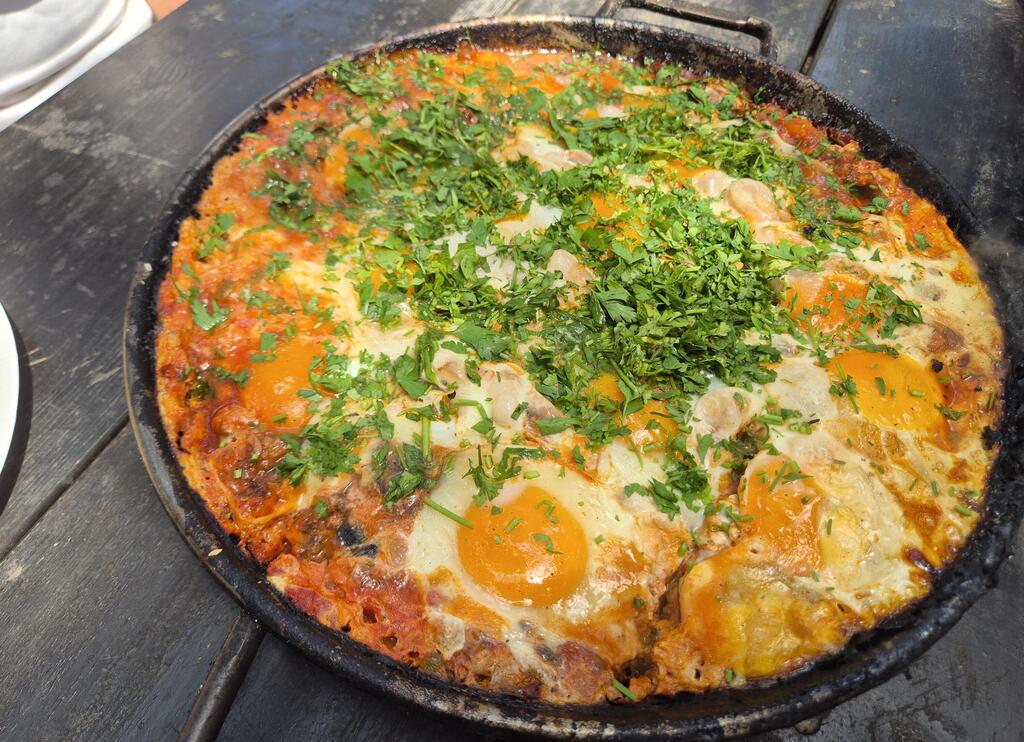
“You let the liquids evaporate, and then you’re left with the fat,” he says. This forms the base of an upgraded shakshuka — a North African dish of eggs poached in a spiced tomato sauce — followed by the rest of the ingredients: onions, garlic, hot peppers, bell peppers and only then tomatoes and eggs.
The smell of fresh kebab fills the air, but not everything goes smoothly. Some of the eggs slip into the fire, and a sudden gust of wind intensifies the flames, threatening to burn the dish. Maislos remains unfazed.
“You have to keep your finger on the pulse, so the fire isn’t too strong — burning the outside while leaving the inside raw,” he says. “The secret is patience. Things don’t happen on a fixed timeline. Every ingredient behaves differently.”
(Photo: Assaf Kamar)
Then comes the moment everyone is waiting for.
“The shakshuka is ready!” he shouts, ringing a bell.
There is no ceremony, no order. Pitas are torn open by hand, heads lean in and everyone eats voraciously.
“We’re eating like kings,” Maislos says with a laugh. “That’s how it’s meant to be on Lag BaOmer.”
I take a bite and pause. This is not shakshuka — it is something else entirely. The smoke is unmistakable, the meat flavor deeper. This is not home cooking but a culinary experience born in fire.
Another round of red wine, and our hungry guests are surrounded by a cloud of buzzing bees threatening to sting, but no one seems to care. They sit with disposable wooden spoons, scraping the pan clean — including the slightly burned edges.

(Photo: Assaf Kamar)
Flies nip at my legs, but another dish is already on the way.
Maislos examines the crisping fish like a doctor reading an X-ray, then rings the bell again.
“The salmon is ready!”
The thick fish is lifted off the log, and Maislos adds soft sweet potatoes cooked in the coals to the table. At a Jewish National Fund picnic table in the middle of Ben Shemen Forest, we devour divine salmon — crisp and flavorful. The slightly charred edges turn out to be the best part, or as the chef puts it: “It’s not burnt — it’s char.”
Everyone is amazed by the log technique, and the answer repeats like a mantra: “Wait patiently, and it works.”
(Photo: Assaf Kamar)
A glance at the rotating spit reveals a deep, perfectly charred color, and a strong aroma of tropical caramel fills the forest. After excellent meat shakshuka and charred salmon with oranges, the caramelized chicken arrives just in time. Maislos breaks it into pieces and slices the pineapple into indulgent sashimi-style cuts.
“When I was a kid, we made bonfires with potatoes and sausages,” he says. “Now we’ve grown up — and we’ve upgraded the game.”
No one cares anymore about the bees or flies. Everyone eats with their hands, tearing into juicy chicken as hot fat drips onto their knees. It was worth the three-hour wait.
(Photo: Assaf Kamar)
We are already quite drunk and thoroughly content, but we are not stopping.
Maislos refuses to end without dessert — and refuses to compromise on quality.
“Friends, we ate like kings,” he says, lifting his head from the fire. “Now it’s time for a proper dessert.”
And he does not mean marshmallows.
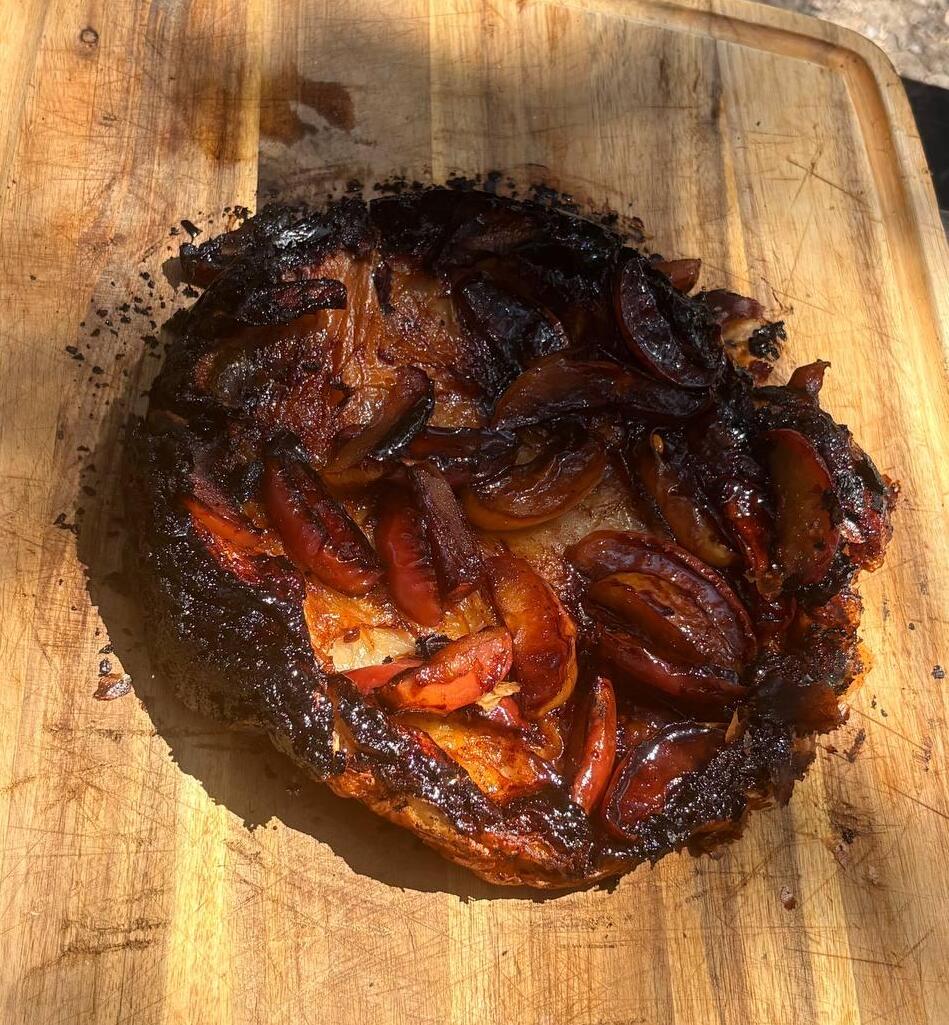
“We’re making a tarte Tatin — an upside-down apple pie over an open flame. We’ll prepare it in a cast-iron pot called a Dutch oven, and it’s going to be incredible.”
A classic French dessert in the middle of Ben Shemen Forest, cooked over a bonfire. The Dutch oven goes into the fire, and the first step begins with surprising simplicity. Sugar and lemon go in, and the heat does its work. Once the caramel begins to form, the apples follow. The forest fills with the rich aroma of sweet caramel and candied apples. Maislos covers the filling with puff pastry, seals the pot with a heavy lid and piles glowing coals on top.
Tarte Tatin
(Photo: Assaf Kamar)
There is no oven, no real temperature control. But it quickly becomes clear that it does not matter.
After 20 minutes of baking over the open fire, he pulls the scorching pot from the flames and flips its contents onto the picnic table. Despite slightly burnt edges, it is the most tempting tarte Tatin I have ever seen.
Who would have believed you could celebrate Lag BaOmer — and lick your fingers at the same time.