

On a gently sloping vegetable field in Moshav Gan Sorek, south of Rishon LeZion, two men in their thirties are squeezing reddish coral cauliflower and vibrant beets, pulling watermelon radishes from the earth and nibbling on them with delight. “Legendary,” “pure joy,” and other superlatives spill from their mouths. They speak of vegetables with the same love, excitement and passion that others reserve for talk of lovers.
One of them is chef Dudu Ben Abu, who, after I sampled his creative and original vegetable dishes at Amaya, the new kosher restaurant in Rehovot, I decided to call him “the vegetable wizard.”
“I come from a Moroccan family in Tiberias, and Moroccans love vegetables,” Ben Abu explains, describing his affinity for field produce. “My late grandfather Shlomo was passionate about artichokes and would collect them from everyone at the market so no one would get upset or jealous. They used to call him ‘Shlomo Artichoke.’ Grandpa would make anything with artichokes, including stews — veal cheek, shoulder roast.”
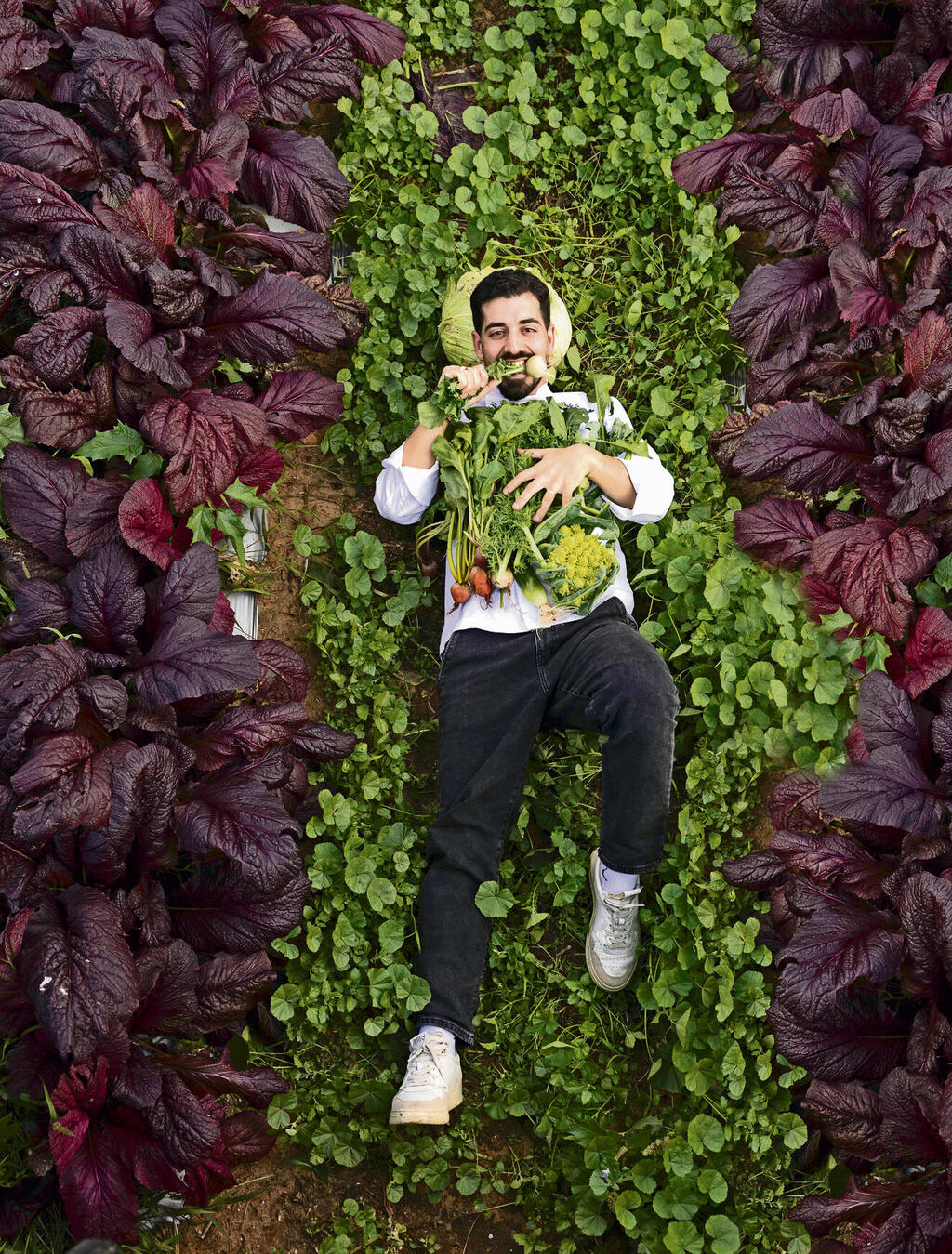
“At the restaurant I make an artichoke dish inspired by my grandparents, but with my own interpretation. Because I can’t use traditional artichokes, which are problematic from a kosher standpoint, I went with Jerusalem artichokes and combine them with asparagus in lemon butter.”
And Ben Abu picks the asparagus right here in the field, alongside his friend and foraging partner Ben Cohen, of the company Yochi Asparagus. This is a family agricultural business founded in 1983 by the late Aryeh and Yocheved Hamburger, and today run by Dvir Lesser, Yochi’s nephew, who specializes in growing premium asparagus. Yochi Asparagus farms about 350 dunams and grows some 20 boutique crops, including snow peas, Brussels sprouts, colorful beets and Gulliver spinach, marketed through its website alongside produce from some 60 farmers and producers across the country.
“Ben is the supplier I drive absolutely crazy,” Ben Abu says. “He can fulfill any dream. He takes me out to the fields, shows me the crops, and that’s how I decide which dishes to cook. And if he doesn’t have a particular vegetable, he gets it for me from the best grower.”
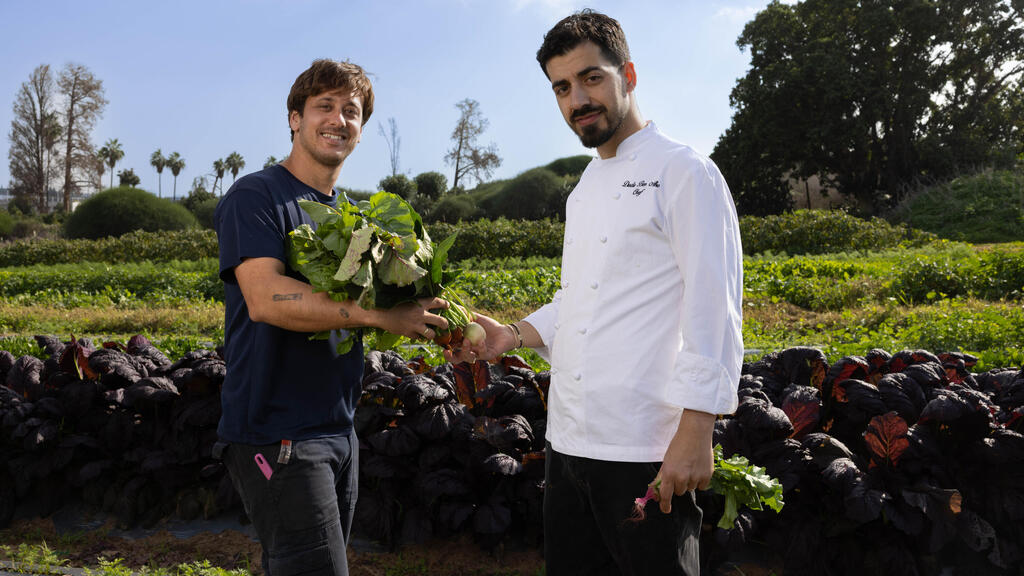
Dudu Ben Abu and his foraging partne Ben Cohen
(Photo: Oz Mualem)
Today, chefs and rising culinary stars are showcasing earth‑to‑table creations on restaurant menus and cooking reality shows. Ben Abu describes what is driving this trend. “I used to work with meat, but I wanted to create with vegetables, because with vegetables you can make a whole world — much more than with fish or meat. I break down every vegetable and treat it five ways in the same dish — foam, cream and more.”
After a visit to the packing house, where the asparagus — the pride of the operation — is packed, we climb into a tractor and race toward a more distant field where sweet corn grows. We pick the tender ears and nibble on them, and from these Ben Abu creates one of his standout dishes — charred white corn tortellini with leek and cheeses.
At the fields, the harvest box fills with bounty: onions, beets, broccoli, asparagus, horseradish, arugula, scallions, coral cauliflower and leafy greens. Then it’s time to part ways with Ben and head back to the restaurant, where he will demonstrate his new winter menu. On the drive from Gan Sorek to Rehovot, he reflects on the remarkable journey from Tiberias to glowing culinary reviews.
He is 32 years old, born to Pini and Shula, both from Moroccan immigrant families. His father was a butcher and his mother a kindergarten teacher. “My mom is a crazy good cook. The best Moroccan food in the world,” he says. “Unlike other mothers, Grandma Rachelle and my mom really got me into the kitchen. It started when I was 10. My mom taught me to make in her pots. In the winter menu, I pay homage to my mom’s harira soup — all the flavors and vegetables of harira are there, but in my interpretation I grind the vegetables, pair them with labneh and fill dumplings with them. Originally harira has chickpeas, so I make chickpea dumplings. And in my locust kebab dish, I use my mom’s pepper and eggplant stew. My mom is also known for her wonderful Moroccan fish.”
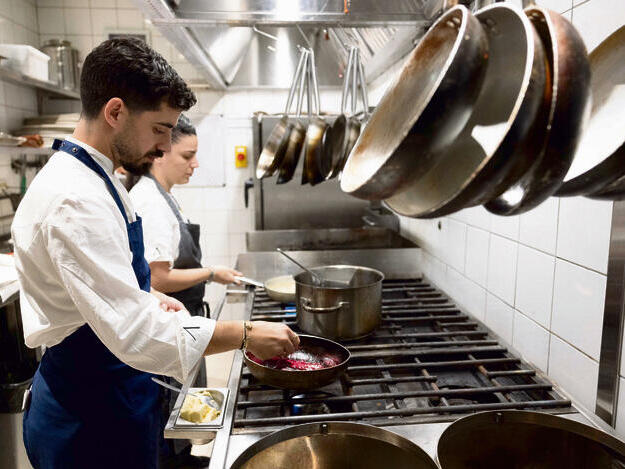
Dudu Ben Abu in the kitchen
(Photo: Oz Mualem)
It’s no surprise, then, that on his right hand dangles a gold bracelet etched with fish and tomatoes. “Since I love Moroccan fish, which is tradition in our home, I asked to have a bracelet designed to match,” he explains.
Ben Abu recalls his childhood in Tiberias with deep affection. “I grew up in Neighborhood D — the largest and roughest neighborhood in Tiberias — but I had an amazing childhood. The people are warm, they look you in the eye, they accept everyone. That’s what’s lovely about Tiberias — the family atmosphere. Everyone is friends with everyone. Tiberias also has a different food and spice culture and, by the way, we invented ketchup pizza. People don’t understand it, but the pizza is tasty.”
Ben Abu knows pizza well — he started his professional path as a teenager at Pizza Ratza. Working with him was a young man named Moshe Peretz, who would become one of the country’s most successful singers. “Moshe Peretz’s parents live near mine. A few months ago he came to the restaurant to celebrate his wife’s birthday, but no one told me he was there. I was probably in the kitchen and didn’t know he was dining with us. A lot of famous people come to us: Itay Levy, Tzvika Hadar, Shlomi Koriat and Shir Elemelich. Chefs like Tomer Tal have been here and enjoyed it.”
At 16, Ben Abu began washing dishes at Chef Ilan Roberg’s restaurant, Roberg — the only chef restaurant in Tiberias — and he became truly excited about cooking. The experience helped him during his military service as a cook in a Border Police base. “I made army food,” he laughs. “Pasta, soups, schnitzels.”
Two days after returning his kitbag, he landed in Tel Aviv and began working as a stager in restaurants of Chef Meir Adoni. “From Meir I learned food culture — how to season, how to work with ingredients. I also learned how to think and compose dishes. He too comes from a Moroccan family — that connected us. I admire him.”
How does a kid from Tiberias deal with the temptations of a big city?
“Wow. It was hard at first. You come from a small warm city to a huge city where nobody cares about you. But I adapted very quickly. I went out, but I wasn’t one of the party crazies. There were always temptations, especially around chefs, but I never gave in or touched drugs. My father raised us not to do those things and taught us to make the right decisions. I always protected myself. After Adoni, I worked three years at the Moroccan restaurant Ewa Safi — I enjoyed it and developed. Later I did projects and openings.”
Eventually, Ben Abu opened a seasonal chef restaurant in Rehovot with brothers Matan and Shalom Ben Aroush, real estate and trade professionals. “I always had a passion to open a fine dining restaurant where I’d bring the flavors of home. Rehovot is developing and many kosher restaurants are opening there. There are many traditional families living in the city.”
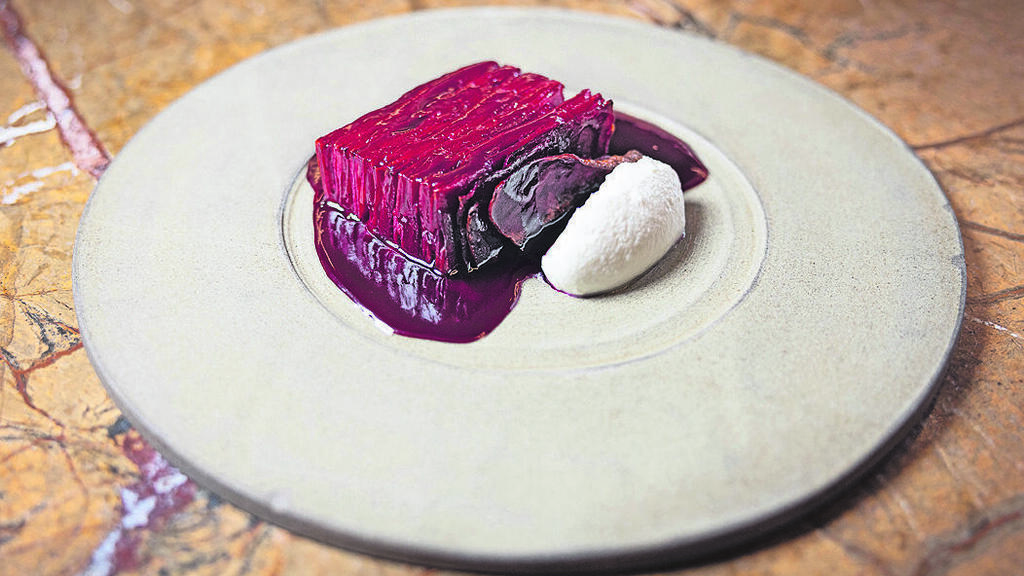
(Photo: Oz Mualem)
The restaurant, named Amaya by the Ben Aroush brothers, was chosen for its ancient roots in Latin and Spanish cultures, meaning “high place” or “edge.” According to Ben Abu: “The restaurant aims to take you on a journey through experience and flavors. In China, ‘Amaya’ means ‘night rain,’ adding another layer of beauty — a twist of aesthetics we try to aim for in our restaurant — something you can also find in nature.”
Recovering after the missile strike
Last June, during the Iran war, three days after the restaurant opened, a missile fell near the Weizmann Institute, causing extensive damage. “All the windows and the door in the restaurant shattered from the blast,” Ben Abu recalls. “In the kitchen the ceiling collapsed. Once we discovered everything was broken, we came, put up boards, and waited for repairs. To this day we haven’t received compensation.”
The main thing is that the restaurant quickly reopened and it’s hard not to be impressed by Ben Abu’s dishes, including gorgeous fish and fish stews.
You never studied cooking formally — how did you shape your culinary voice?
“At some point I decided I wasn’t going to make my mom’s or grandma’s food anymore, or Meir Adoni’s food — but my own food. I decided to step out of my comfort zone. I read cookbooks, watched food shows, and studied this whole world and learned how to touch every vegetable. My house is now full of cookbooks and I started traveling abroad with my wife — though I can’t go to Michelin restaurants because they aren’t kosher, so I choose destinations with kosher restaurants. I definitely made a leap with the knowledge I acquired.”
Ben Abu stopped cooking his mom’s dishes — but he found his own interpretation. For the winter menu, he adds an intriguing take on his mother’s chamin (Jewish stew).
“She makes the best pareve chamin in the country. It’s without meat, and she makes its stock from real dates. Whenever I come home from synagogue on Shabbat, a pot of chamin my mom made is waiting for me. When you taste it, you don’t feel that it’s pareve — she gives it a ‘meaty’ taste. I’m going to keep a pot of chamin on the stove in the restaurant every day — with spiced wheat and sweet potato, the wheat cooked all night. I’ll turn the sweet potato into a white foam. I’ll serve the dish in a special ceramic pot.”
But you don’t cook at home?
“Not at home. My wife cooks. She’s better than me. Moroccan‑Yemenite food. My kids eat everything — I raised them on all the flavors: garlic, onion, all the tastes.”
Don’t you want to go on cooking reality shows and gain more fame?
“I’m a pretty shy guy. I’m very embarrassed to stand in front of cameras. I open up slowly. A lot of reality shows have wanted me. MasterChef calls every year and I refuse. Today I do want people to know me and know my style and come taste my food.”
What’s your dream?