

In recent years, food waste has become an increasingly popular topic on social media, with content creators demonstrating how to store ingredients properly, make the most of what's left in the refrigerator and transform leftovers into entirely new dishes. But the idea is hardly new. Across the world, cooks have long found creative ways to use leftover food, and some of the dishes born out of necessity have become beloved classics in their own right.
Take bread pudding, for example. The dessert is closely associated with British cuisine, although variations can be found around the world. It is difficult to pinpoint exactly when it originated, but the idea behind it is simple: use stale bread instead of throwing it away.
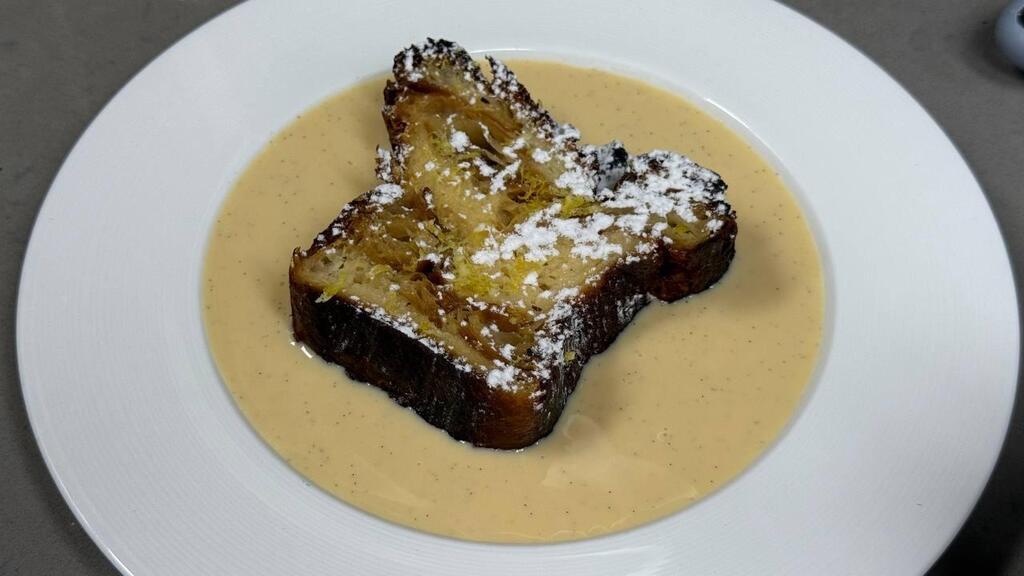
French toast follows the same principle of giving dried-out bread a second life. In France, it is even called pain perdu, meaning "lost bread." Stale bread also can be transformed into crunchy croutons for salads and soups, while leftover cake or cookie crumbs can find new life in chocolate truffles.
In Sicilian cuisine, arancini are breaded and fried rice balls that can also be made with rice left over from a previous meal. More recently, the salmon rice bowl became a TikTok sensation, combining cooked salmon and leftover rice, reheated together and seasoned with soy sauce and mayonnaise, then eaten with sheets of nori seaweed.
Not all these dishes necessarily originated as ways to use leftovers, but they demonstrate how simple ingredients can become something entirely new with a little creativity.
So how does yesterday's bread become a dessert that diners specifically order at a restaurant? We visited Alena restaurant at the Norman Hotel in Tel Aviv to find out how its bread pudding is made, the secret to achieving the perfect texture and how a dish rooted in frugality became a star of the menu.
The Norman Hotel's bread pudding
"Our restaurant is located inside the Norman Hotel. We serve breakfast with lots of bread and pastries, and because it's difficult to predict exactly how many guests will arrive, we always order a little more than we need," says chef Omer Shadmi Miller. "As a result, we have leftover bread, and bread pudding is one of our favorite things to make with it. Besides, the dish has become popular in Tel Aviv."
How do you make it?
"The process is simple. You tear the bread into pieces and prepare a mixture of cream, milk, sugar, vanilla and eggs. You soak the bread in the mixture so it absorbs the flavors and returns to a soft, dough-like consistency. Then you pack the mixture into a thick ceramic baking dish, sprinkle a little sugar on top so it caramelizes, and bake it in the oven.
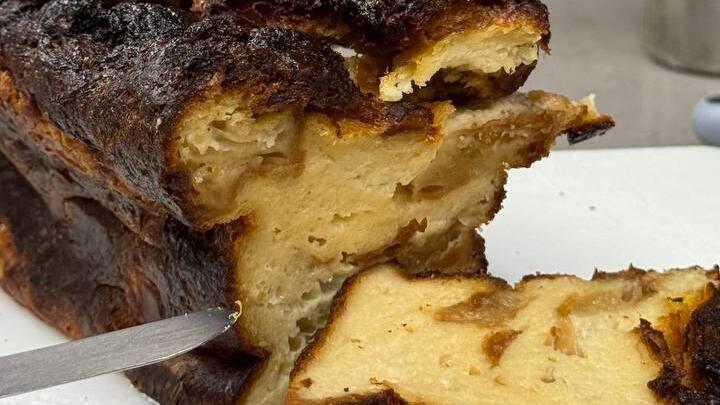
Bread pudding: The finished product
(Photo: Sapir Gordo)
"Because the baking dish gets very hot, the dessert develops a crust on the outside while remaining moist and wobbly in the center, which is what gives it the name 'pudding.'
"And here's a professional tip: Use several types of bread, such as croissants and brioche. It creates a kind of geological structure within the dessert, with different textures and surprises in every bite."
What transformed bread pudding from a way to use leftovers into a restaurant special?
"It became popular because it's easy to make and you can prepare it in large quantities. Unlike breadcrumbs used for schnitzel, pasta or croutons, where there are limits to how much you can use, bread pudding is very simple to prepare in volume.
"It's also a dessert everyone loves because, beyond trends, it's a classic. What could possibly go wrong when you combine cream, milk, vanilla, carbohydrates and caramelized sugar? You really can't go wrong. It's a comforting dessert that works beautifully in the morning, afternoon or evening."
What makes your version at Alena special?
"We don't try to make things different just for the sake of it. We take the classic version, maximize its potential and make it as good as possible. Then we add small touches to elevate it, such as lemon zest, which brings a citrusy freshness that cuts through the sweetness and richness."
Are there other things you do to reduce leftovers, both in desserts and in the kitchen generally?
"We do a lot to reduce food waste. We make breadcrumbs and stocks. When it comes to desserts, we freeze very ripe fruit that's about to spoil and turn it into sorbets and purées. Leftover croissants become almond croissants.
"The less food we throw away, the lower our food costs. That's something every kitchen knows is important."
Ultimately, not every leftover needs to become a new dish, and not every economical recipe was necessarily created out of a need to save money. But these examples remind us that sometimes the path to a great dish begins with what we already have in the kitchen.