

In a year marked by ceasefire, grief, displacement and rebuilding, Leket Israel emerged not only as a humanitarian organization, but as a national stabilizing force, a bridge between abundance and need in a society under strain.
The organization’s 2025 Annual Report, covering January 1 to December 31, offers a portrait of a country navigating fragility and resilience at once. While the return of hostages brought relief, entire communities across Israel continued to rebuild lives, livelihoods and a sense of security. Economic hardship deepened for thousands of families, and food insecurity expanded, making Leket’s mission of rescuing and distributing fresh, nutritious food more critical than ever.
'The challenges of the past year have reminded us how fragile stability can be, and also how powerful compassion and unity are in times of need': Joseph Gitler, Leket Israel founder and chairman
(Animation: Ben Shpayer)


At the center of the report is a simple idea: stability may fracture, but solidarity can scale.
Leket’s daily operations already place it among Israel’s largest humanitarian infrastructures. In 2025, the organization handled more than 70.6 million pounds of agricultural produce, distributing fresh food weekly to about 470,000 people. More than 120,000 volunteers participated across farms, logistics centers and distribution points, supported by a nationwide network of nonprofit partners.
But 2025 was not a routine year. During the 12-day war with Iran, known as Operation Rising Lion, Leket shifted into emergency mode within hours. Its infrastructure, workforce and partnerships were rapidly activated in coordination with national, military and community bodies.
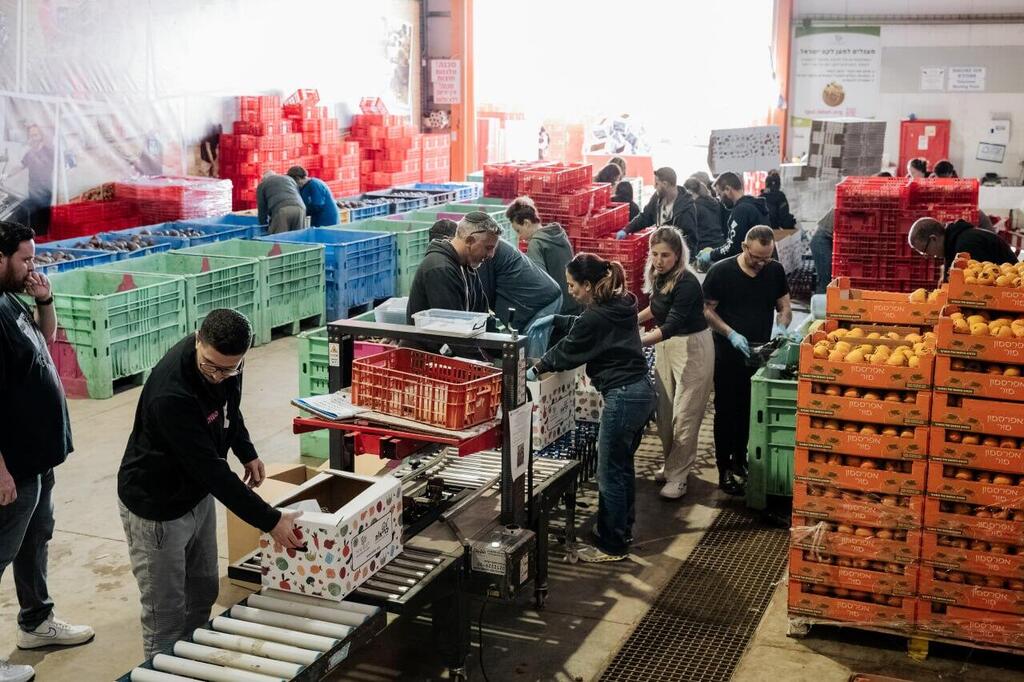
Over that short period, the organization distributed 1,464 tons of agricultural produce and more than 68,000 rescued and purchased hot meals to over 70 cities and towns. Temporary storage hubs were established for ready-to-distribute meals, emergency food stands were set up in evacuation centers, and nutrition support was delivered to displaced families under fire.
In Tamra, after damage to local water infrastructure, Leket assisted in emergency water delivery. In hotels housing evacuees, fruit and vegetable distribution points were installed to replace reliance on processed food. Even under rocket fire, food rescue, sorting and delivery operations continued.
The report frames this not as improvisation, but as design, a system built for scale, able to pivot instantly from routine service to national emergency response.
(Photo: Leket Israel)
For nearly 24 years, Israeli farmers have formed the backbone of Leket’s food rescue model, donating excess produce to feed tens of thousands daily. In 2025, that relationship reversed.
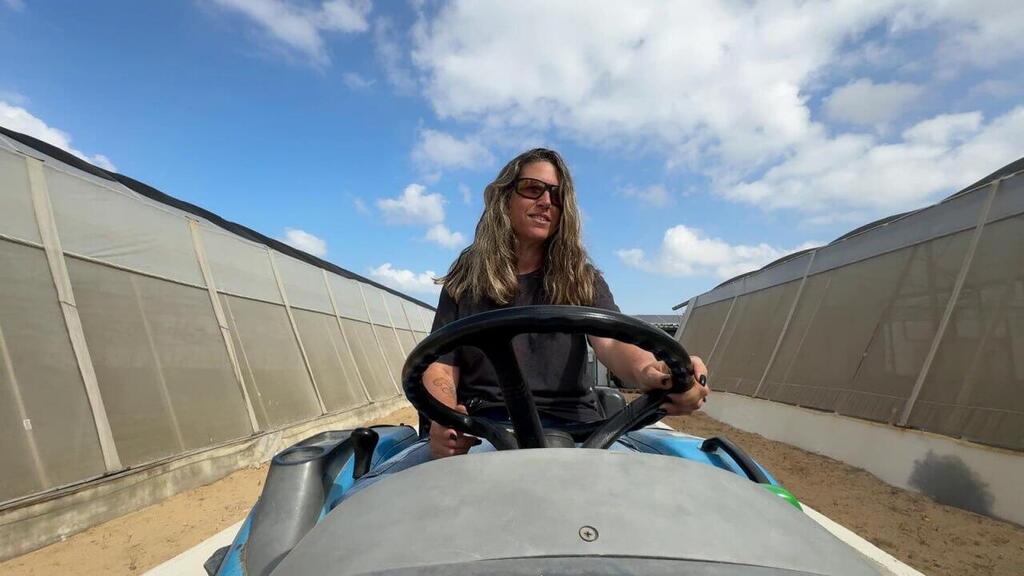
After Oct. 7 devastated farming communities in southern Israel, Leket redirected its volunteer network to support farmers whose fields and livelihoods had been destroyed. Volunteers restored greenhouses, replanted fields and rebuilt infrastructure.
One farmer from Netiv HaAsara described returning to a ruined farm and believing recovery was impossible until volunteers arrived day after day. Her first replanted crop, a zucchini field, was dedicated entirely to Leket for donation. The symbolism was clear: support flows in both directions.
This cycle of giving, the report argues, defines Leket’s model, not charity alone, but mutual commitment.
The report also documents the human dimension of food security.
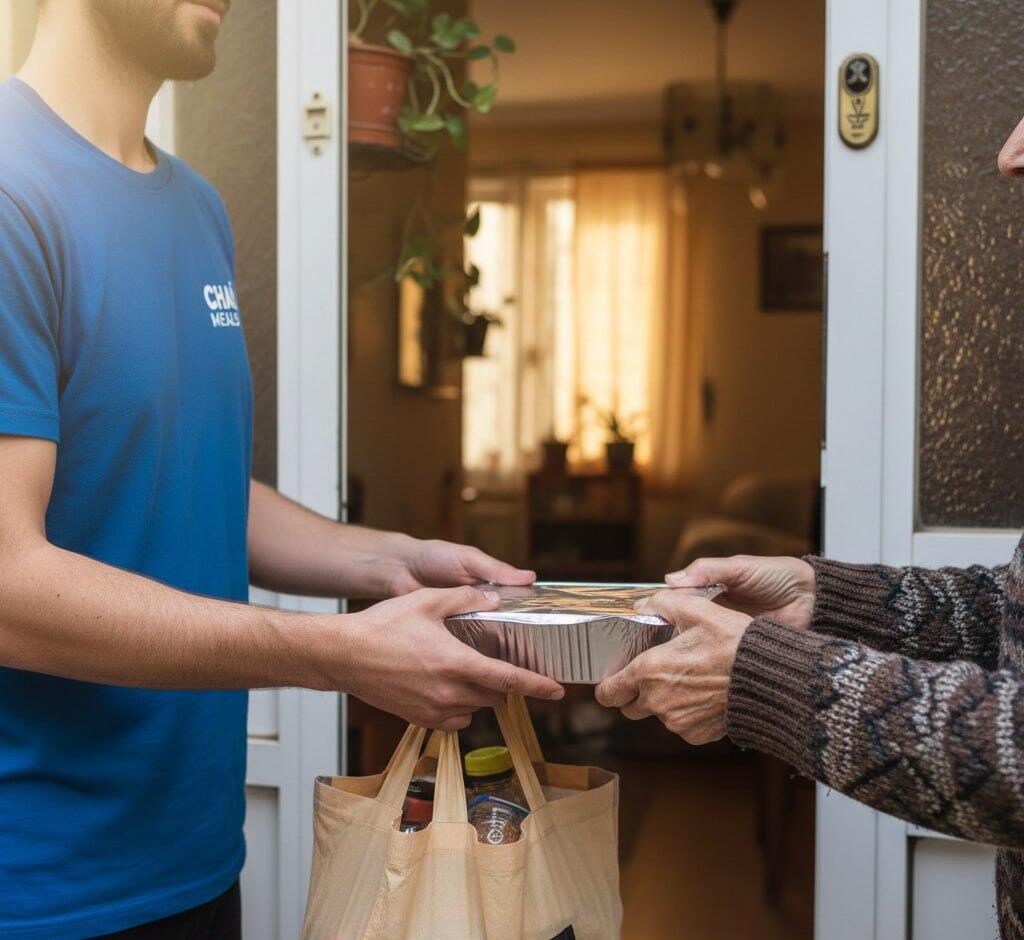
Rachel, a Holocaust survivor living in southern Israel, lost access to her community support network after illness left her homebound. Through Leket’s partner nonprofits, meals began arriving at her home. But the impact, she says, went beyond nutrition. “Not only the food, the warmth, the smile. It reminds me that we’re not alone.”
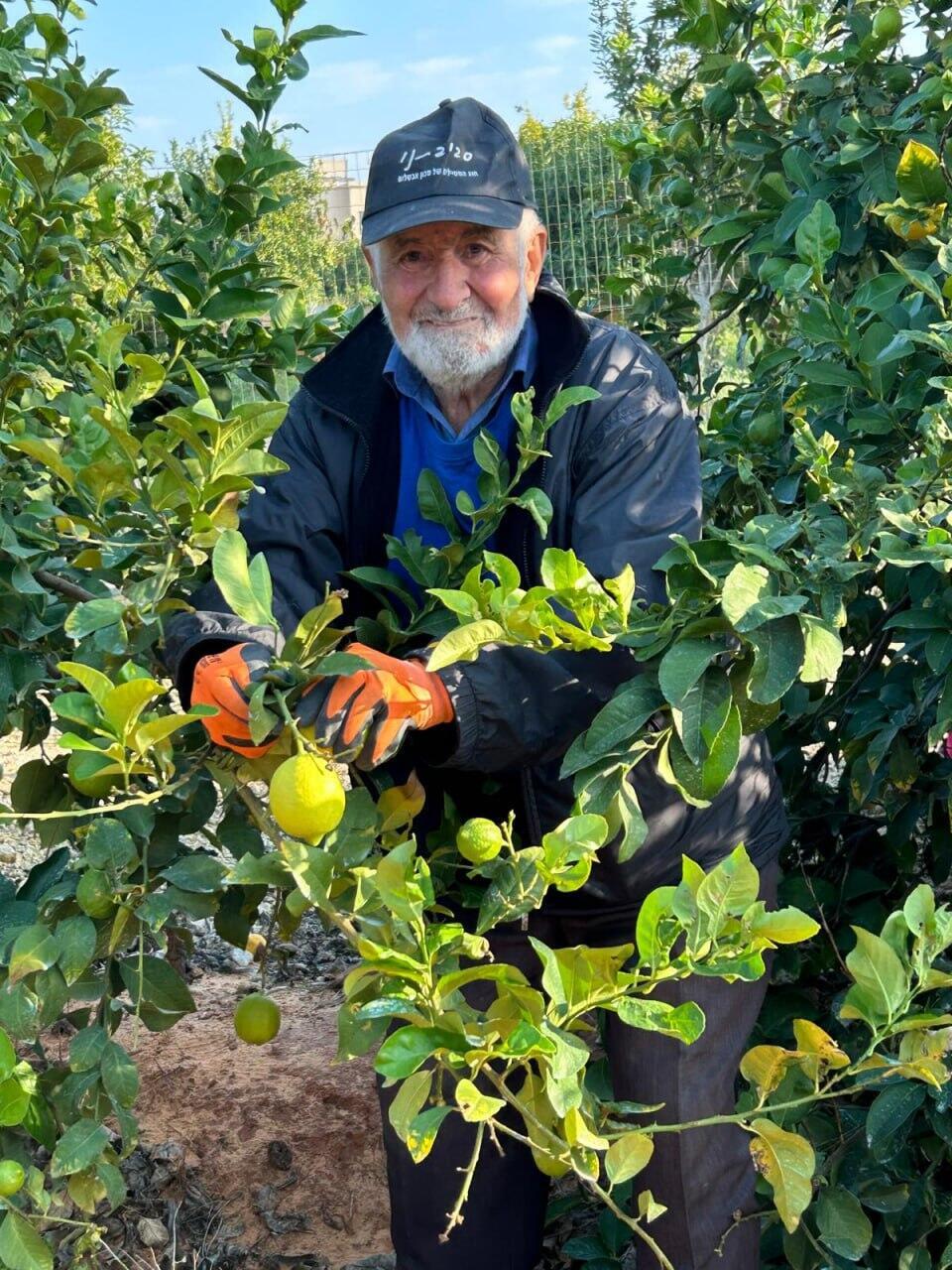
For Leket, social responsibility is framed not only as feeding people, but restoring dignity, presence and connection. Volunteers remain the organization’s core engine. In 2025 alone, tens of thousands of new volunteers joined Leket’s operations, many mobilized by war and displacement. Among them is a 91-year-old former produce merchant who volunteers twice a week in Leket’s fields with his daughters, a reminder that the organization’s strength is not technological alone, but human.
(Photo: Leket Israel)
Logistics matter, infrastructure matters, systems matter, but people sustain the system.
Leket Israel describes its role as a bridge between abundance and need. In 2025, that bridge expanded into something larger, between routine and emergency, agriculture and welfare, resilience and recovery.
As Israel looks toward long-term rebuilding, physical, economic and emotional, the organization positions itself not as a temporary response mechanism, but as permanent national infrastructure. “In routine or in emergency, Leket Israel does not stop.”
In a year when stability proved fragile, Leket’s model offers a different kind of security, one built on logistics, solidarity and the quiet, daily work of feeding a nation.