

The events of recent years, which dealt a severe blow to incoming tourism in Israel, have also taken their toll on the northern Dead Sea region.
"For years, most visitors were tourists from abroad, pilgrims who came in large numbers to the baptism site sacred to Christians," says Aryeh Cohen, head of the Megilot Dead Sea Regional Council. The annual Dead Sea Pioneers March, set to begin this Friday, offers an opportunity to rediscover this fascinating area.
"The pandemic and the war severely affected incoming tourism, but at the same time, more and more Israeli travelers have discovered the region, drawn by its beautiful, well-maintained beaches and relative proximity to central Israel," Cohen says. "At the same time, we're seeing a flourishing of new and interesting culinary ventures."
To mark the traditional march, I headed down to the lowest place on Earth to see whether northern Dead Sea really is experiencing a revival, visiting several recommended establishments that have opened in recent years.
Argentine barbecue with a view
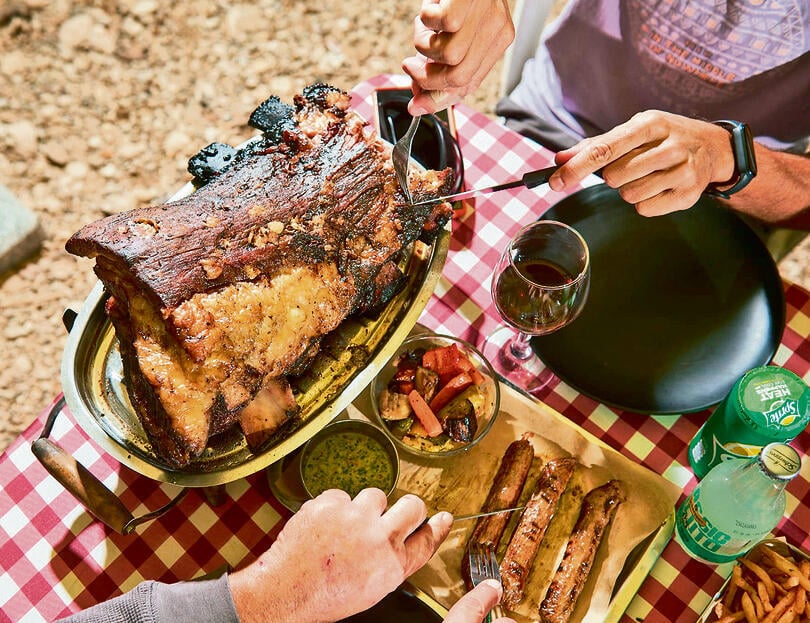
On October 2, 2023, just days before the October 7 attack, financial adviser Eliyahu Fishkel and his partner, Netanel Schlesinger, opened Asado in the Desert, a restaurant on Highway 90 opposite the community of Avnat. "There was nothing here. We built everything from scratch. Why did I suddenly decide to open a restaurant? For the soul," Fishkel says in a lilting Argentine accent. "Why did we choose the name? Because asado is our specialty, and it's a strong name."
Fishkel immigrated to Israel from Argentina 40 years ago, married and raised a family in Jerusalem. Twenty-two years ago, the Fishkel family settled at Kibbutz Beit HaArava. "We fell in love with the area, the calm, the quiet, the atmosphere. There's something spiritual here, good, healthy, clean energy. We've gotten used to the desert heat and hardly notice it anymore."
And it turns out Fishkel knows more than a thing or two about cooking, not just finances. "I've also worked as a chef in restaurants and created menus. At home, I cook Iraqi, Syrian, Italian and Chinese food," he says. And as everyone knows, Argentines know their meat. So this time, he decided to open a kosher Argentine grill restaurant.
"Our meat is excellent. Everything comes from Argentina," Fishkel says. "Our asado is an experience. The meat spends eight hours in the smoker. You shouldn't miss the lamb spare ribs or the rib-eye steak. The sirloin and burgers are also excellent. The chorizo is very special. It's made by a family that immigrated from Argentina." The sandwich selection is also worth exploring, and the empanadas are another must-try.
Another reason to visit Asado in the Desert is the spectacular, rugged scenery: the Dead Sea, the date palm groves of Mitzpe Shalem and the surrounding mountains. Sitting beneath the thatched canopies, I took in the breathtaking view, which naturally worked up my appetite. And you'll want to arrive hungry. The menu includes generous meat platters, priced from 270 to 780 shekels and designed for groups ranging from two to eight diners, making them a paradise for meat lovers. Fishkel has also developed an extensive beer and wine selection.
His partner, Schlesinger, operates a variety of activities from the complex, including off-road vehicle tours, jeep and bicycle excursions, culinary workshops, outdoor meals and overnight stays in nature for couples.
"People come from all over the country, sometimes just to eat here," Fishkel says. "We've had plenty of celebrities and members of Knesset, though I can't remember their names. Actors from 'Fauda' come to eat here. Naftali Bennett came with his whole family. They ordered meat platters and really enjoyed themselves."
The hangar next to the restaurant currently hosts an exhibition of photographs by Meir Bernstein, an ultra-Orthodox photographer whose work captures the beauty of the Dead Sea and its surroundings. It's well worth a visit.
- Asado in the Desert, Highway 90, opposite Avnat
A kosher feast for meat lovers
During the first COVID-19 lockdown, Reut Cohen, a Jerusalem restaurateur who became known for her indulgent burgers, decided to leave the capital and move to the northern Dead Sea region.
"After years of intense work, I wanted the peace and quiet of the desert," she explains. "The pandemic actually did me some good. It allowed me to take a break, and I decided to make a change in my life. For years, I had no time to spend with my family. I couldn't attend funerals or weddings or celebrate holidays. I worked 24/7. A restaurant is a prison."
Today, Cohen serves kosher meals at Hakarnivorit, or The Carnivore, a venue she opened at the Almog Junction shopping center.
"Now, thanks to keeping kosher, I can spend Saturdays with my children," says Cohen, whose humor and personal charm are hard to miss, laughing as she speaks. "At the new place, we offer a solution for local residents who want to hold small events, whether family celebrations or chef-prepared meals for up to 40 people."
Six times a month, Cohen opens the venue for special Hakarnivorit evenings. "What does that mean? Guests arrive at 7 p.m., and I start bringing food to the table: appetizers and salads. Once everyone has enjoyed the starters, I begin serving meat prepared in all kinds of ways. I cook over an open flame, and every cut gets the treatment it deserves."
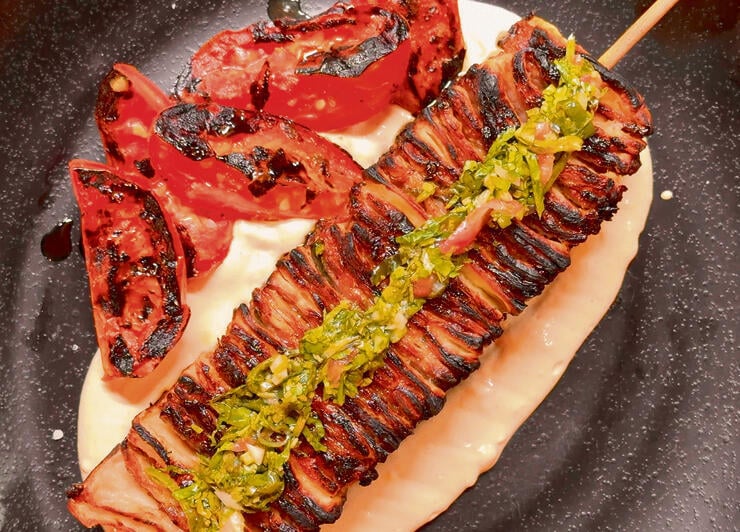
All-you-can-eat meat; Hakarnivorit
(Photo: Dvir Elbilia)
Cohen offers two dining options. The first, Carnivore Light, is intended for those with smaller appetites. It includes five types of meat and costs 250 shekels per person. The second, simply called Carnivore, costs 350 shekels per diner and includes salads and 10 different types of meat.
It's a pleasure to sit among the trees Cohen planted and the potted plants she lovingly tends while watching a live feed of her work in the kitchen on a large screen. She has also hung a sign offering humorous instructions for diners.
"Take your time eating. We're on desert time, and we have a whole evening ahead of us, with plenty of dishes and surprises," one reads. Another advises guests to "come in comfortable clothes so there's room for all the meat. Otherwise, you'll need to undo a button before the main course." A final warning suggests that "toward the end, you may want to call a tow truck."
And this extravagant meat feast certainly delivers value for money.
"I like giving people their money's worth," Cohen declares. "These days, you can easily spend 250 shekels per person at an average steakhouse or grill restaurant. Here, you can also add an unlimited alcohol package, with wine and draft beer, for another 100 shekels per person."
- Hakarnivorit, Almog Junction
The croissants steal the show
Along Highway 90, at the Lido/Kalia junction, 430 meters below sea level and near the beach, Shimshon Chen recently opened two upgraded kosher food carts that are well worth a stop. Their names pay tribute to their unusual geographic location: Cafe 430 and Grill 430.
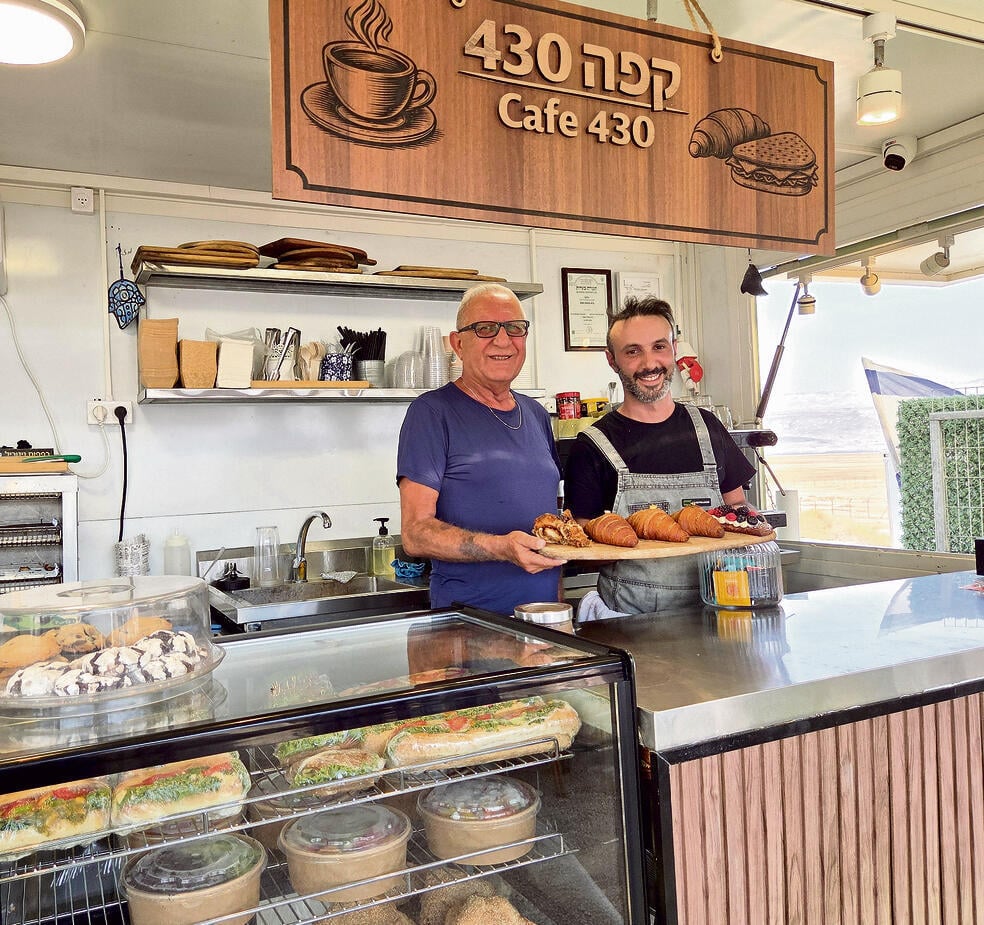
Sabich is the bestseller; Cafe 430
(Photo: Omer Harpaz)
Chen, a well-known and much-loved figure in the northern Dead Sea region, settled at Kibbutz Kalia 52 years ago and was among its pioneers.
"We built the kibbutz. There was nothing here," he says proudly. "Just rocks."
Over the years, Chen worked in agriculture and tourism and even opened a water park. "Before the pandemic and the wars, people came here from all over the world. Huge numbers," he recalls wistfully.
In recent years, Chen has focused on the food business, including a shawarma operation in Jerusalem. For his new food carts overlooking the Dead Sea, he recruited chef Nadav Rekach, who left the high-tech industry to pursue a culinary career. Rekach previously worked at the luxury Shaharut hotel and in the dining hall of Kibbutz Kalia, where he lives.
At the dairy Cafe 430, Rekach prepares elaborate, creative and delicious sandwiches, including cured salmon, sabich ("our bestseller") and egg salad ("fantastic"). The homemade bourekas are also worthy of praise.
"I make the sandwiches according to my whims," Rekach admits. "I enjoy changing and varying the menu depending on what I feel like making."
"Our croissants are the real stars," he boasts, and rightly so. "The Basque cheesecake is also fantastic. People go crazy for it. It's really good, and so is the lemon cream cake. You should also try the bread pudding I make from croissant dough. Our breads are very high quality."
Customers, he says, come from across the country, from the Golan Heights to Eilat. They include regulars working near the border, local residents and travelers passing through. Prices range from 25 to 50 shekels.
At the second cart, the meat-focused Grill 430, visitors can enjoy burgers made with quality beef (59 shekels), chicken breast salad (58 shekels), wings in chili sauce (36 shekels) and hot dogs (35 shekels).
"For now, the meat menu is basic, but it hits the spot. We plan to expand it," Rekach promises.
- Cafe 430 and Grill 430, Lido/Kalia Junction
A lively and delicious Greek taverna
As we arrive at Salty, a restaurant at Kalia Beach whose name seems inevitable for a place overlooking the Dead Sea, we're greeted by lively, infectious Greek music.
The restaurant belongs to Kibbutz Kalia and is run by Neri Stein, whose parents were among the kibbutz's founders.
"It was amazing growing up here. I had a wonderful, very free childhood. Friends, soccer, playing outdoors," Stein recalls.
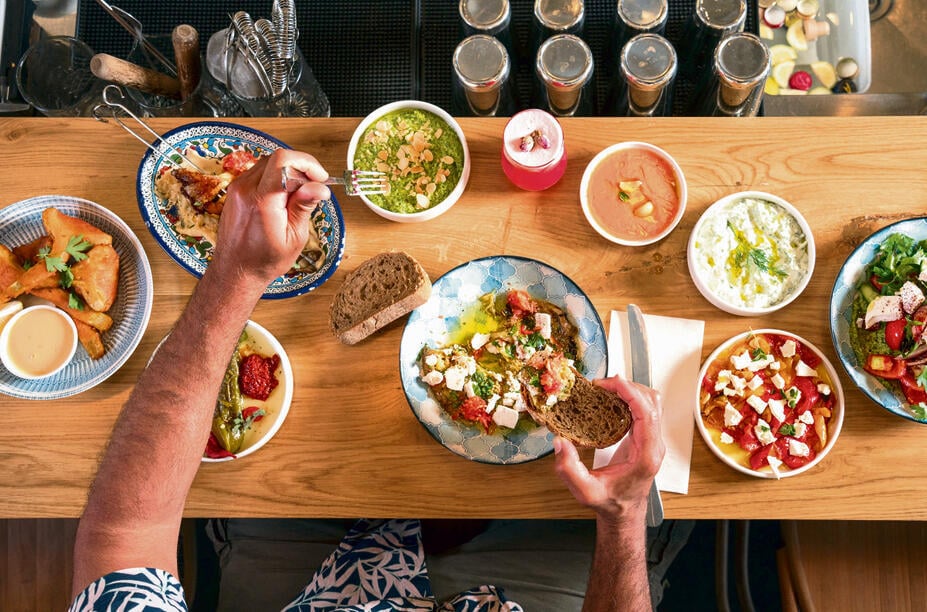
Greek and Mediterranean cuisine; Salty
(Photo: Itamar Ginsburg)
At 22, Stein moved to the Tel Aviv metropolitan area and established restaurants. But three years ago, he decided to return to his childhood surroundings and help revive local tourism.
"Until October 7, this was a bustling place. There were lines of people. Buses brought tourists from abroad. They asked me to develop the culinary scene, so I decided to try a pop-up, a kind of pilot project. Eventually, we decided to go with a Greek restaurant."
Salty, which boasts a spacious dining area and spectacular views, opened a year and a half ago. Chef Asaf Zilberstein, whose previous experience includes well-known restaurants such as Tel Aviv's Cafe Noir, was tasked with developing the menu.
The dishes will be familiar to anyone who has vacationed and indulged in Greece, though other parts of the Mediterranean are also represented.
There are plenty of starters designed for sharing, including green skordalia, tzatziki and marinated roasted peppers. Naturally, there's Greek salad, along with halloumi and tomato salad, vegetarian moussaka, kebabs with smoked labneh, rib-eye souvlaki, whole grilled sea bass and gyros made with chicken thighs and lamb fat.
For dessert, what else but loukoumades, the small fried dough balls drenched in honey syrup. Prices range from 22 to 135 shekels.
Salty is open on weekends, from Thursday evening through Saturday night, and on holidays. Once a month, the restaurant hosts a performance by a singer or DJ specializing in Greek music.
- Salty, Kalia Beach
Exploring the Dead Sea on foot
Participants in the Dead Sea Pioneers March, scheduled for this coming weekend, October 23-24, will be able to choose from three routes of varying difficulty.
The first is the Land of the Monasteries route, a 4.5-kilometer (2.8-mile) trail suitable for families that passes through the magnificent abandoned monasteries along the banks of the Jordan River. The sites have been closed to visitors since the late 1960s, during the period known in Israel as the "Pursuit Era," and have since been designated a closed military zone.
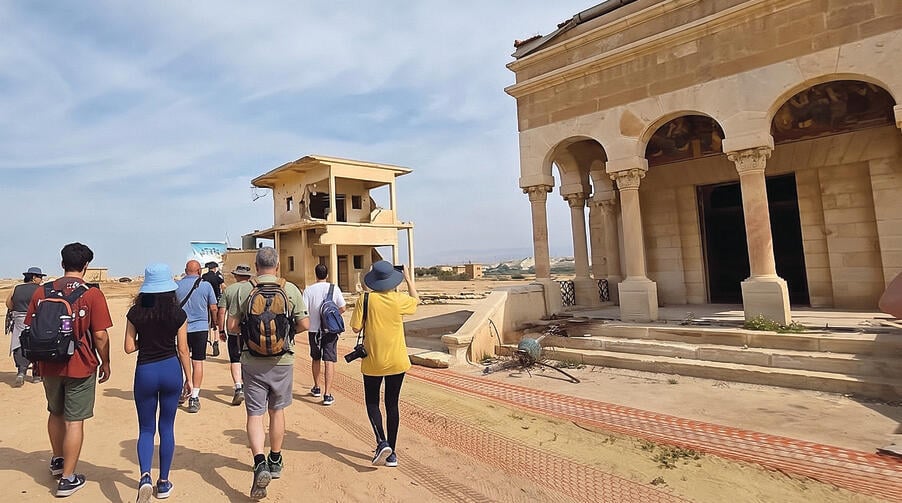
Magnificent abandoned monasteries; Land of the Monasteries
(Photo: Yonatan Eshed)
The second route, Land of the Monasteries and Historic Beit HaArava, covers 6.5 kilometers (4 miles) and is designed for families who enjoy longer walks. It combines the monasteries with Abdullah Bridge and a visit to the communal burial site at the historic Kibbutz Beit HaArava.
The third route, the Jordan River Estuary Trail, stretches 7.5 kilometers (4.7 miles) and offers views of the Jordan River channel and the point where the river flows into the Dead Sea. It is also intended for families comfortable with longer hikes.
The march will be accompanied by a wide range of tourist activities, including bicycle tours, visits to swimming beaches, boat trips on the Dead Sea, culinary experiences and art workshops.