

A few weeks ago, a well-known Israeli chef told us that the country’s restaurant scene had lost its spark. “Nothing exciting has happened here for a long time,” he said. “Everyone is playing it safe, serving only best-sellers. No one dares to take risks.”
But then we thought of Studio Gursha, the Ethiopian and pan-African fine dining restaurant led by chef Elazar Tamano, unlike anything else in the world. Open for just six months in south Tel Aviv, the restaurant offers dazzlingly beautiful and surprising dishes, every bite a revelation. It is an exotic culinary journey in the truest sense, refined and deeply flavorful. With elegant plating, complex preparation techniques and spiced cocktails that taste like nothing you have tried before, Studio Gursha represents a full-fledged culinary revolution. And it is happening right here in Israel.
Gallery
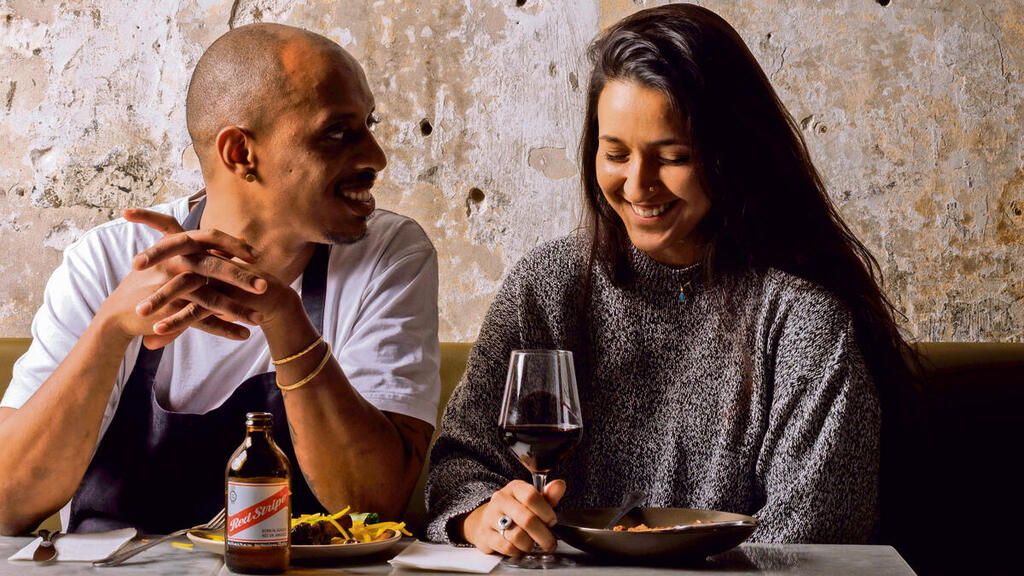
Elazar Tamano and Dana Hai put their own twist on the traditional Saturday brunch
(Photo: Haim Yosef)
Next week, the restaurant will take another bold step by launching its first African-inspired Saturday brunch. Ahead of the debut, we spoke with Tamano and his wife and business partner, Dana Hai, about six whirlwind months and the future of their one-of-a-kind restaurant.
“Something bigger than us”
Dana: “Has it really been six months already? It feels like a roller coaster, but we are starting to realize something huge is happening, something bigger than Elazar and me.”
Elazar: “Last week, a table whispered what I have heard before: ‘When we realized this was an Ethiopian restaurant, we were disappointed, but now we cannot stop talking about the food. We have never tasted anything like it.’ It used to sadden me. Now it makes me happy. People’s hesitation toward Ethiopian food comes from ignorance, and I get to change that. I can show them the beauty, power and flavors of this cuisine in a familiar and welcoming way. Once that door opens, they will be curious to explore more.”
Dana: “We were named Restaurant of the Year within months of opening, and our dishes are far from mainstream. This is only the beginning.”
Breaking stereotypes, one plate at a time
Elazar: “There are still so many stereotypes. Ethiopian friends tell me they are embarrassed to bring homemade food to work. But here, our non-Ethiopian staff falls in love with the cuisine and takes pride in it.”
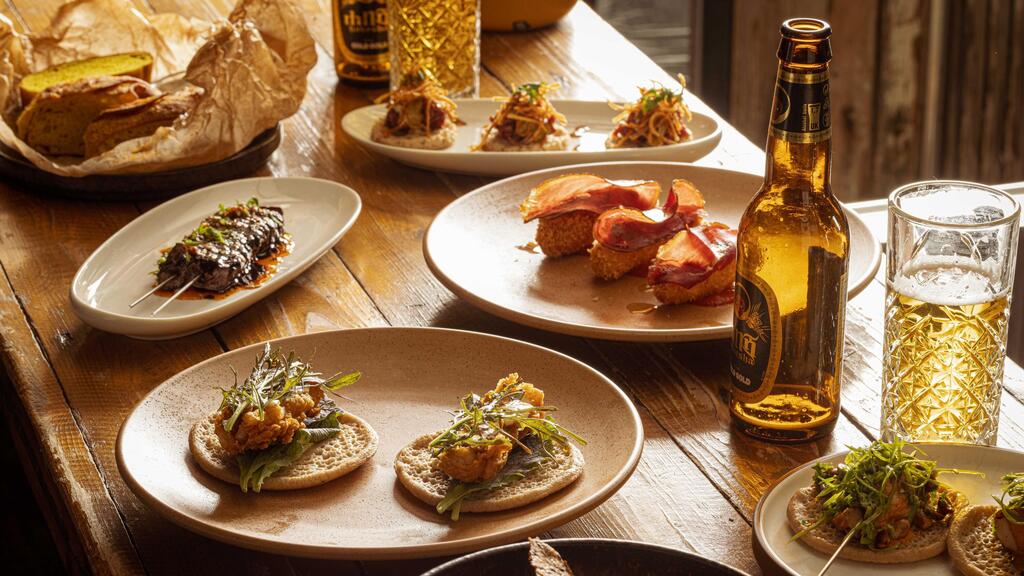
Studio Gursha
(Photo: Haim Yosef)
Dana: “One day we brought in roast beef sandwiches for the staff. They went to the kitchen, swapped the store-bought beef for our own version with cho aioli and chili paste. Those little moments make me smile.”
Even the injera, the Ethiopian sourdough flatbread, is now made by cooks who are not Ethiopian. “When my parents heard that, they could not believe it,” Tamano laughs.
He says the kitchen has become “a school.” His team learns to ferment spices, prepare cho, a spiced chili paste, and handle teff flour with the same precision used for risotto.
Building something by hand
The couple turned down offers from major restaurant groups to remain independent.
Elazar: “Guests come to the kitchen just to thank us. It is a constant stream.”
Dana: “At first, I was pale with anxiety every night. But now I know the place is thriving. The phones never stop ringing for reservations. We are full every night.”
Still, independence comes with challenges. “You become part chef, part contractor, part psychologist,” Dana says, laughing. “Every person, whether a supplier, cook or customer, needs something different. You have to figure out how to make them all move together.”
The upcoming African brunch
Elazar: “We wanted to take a familiar concept, Saturday brunch, and give it our twist. Expect African corn bread with egg salad, Ethiopian shiro hummus with mushrooms and berbere oil, crispy doro wat chicken lettuce wraps, and corn with spicy salsa and peanut syrup ice cream for dessert. But everything could still change. One thing is certain, it will not be your typical shakshuka brunch.”
Dana: “The vibe will stay the same, vibrant, loving and joyful. Where else in Israel do you see such a diverse crowd? Grandmothers celebrating birthdays, Ethiopian families, hipsters from Shapira, Arab diners from Jaffa, all sitting side by side. When was the last time you saw an Eritrean guest at a fine dining restaurant in Israel?”
A movement larger than a restaurant
Elazar: “Studio Gursha belongs here, in the city’s south, not on Rothschild Boulevard or in a polished high-end district. It is an underdog restaurant we built with our own hands. Someday we will open abroad; every tourist tells us we have to. And we know they are right.”
Dana: “It is bigger than Elazar, and it is bigger than me.”
Recipe: corn cobs with corn cream and berbere butter
It may sound complex, but each step is simple, and the berbere butter keeps in the fridge for weeks. Studio Gursha adds salsa on top for extra flavor.
Ingredients:
- 4 fresh sweet corn cobs
For the corn cream:
- Kernels from 2 corn cobs
- 200 g leek
- 2 cups milk
- 1¼ cups heavy cream
- salt
- 50 g butter
For the berbere butter:
- 200 g butter
- 30 g berbere spice mix

Instructions:
- Melt butter in a saucepan over low heat, add leeks and corn kernels and cook 5 minutes.
- Add milk, cream and salt
- Cook for 30 minutes.
- Blend until smooth.
- For the butter, melt ingredients together and cool.
- Grill the corn with a little berbere butter, then brush with more butter and serve topped with corn cream.
Recipe: African egg salad
A classic egg salad with a spicy, orange-hued berbere twist. Perfect with African corn bread.
Ingredients:
- 4 hard-boiled eggs, grated
- 1 bunch chopped scallions
- 1 finely diced red onion
- 5 tbsp mayonnaise
- Zest of 2 limes
- 2 tsp berbere spice mix
- Salt and black pepper
Instructions:
- Mix all ingredients and adjust seasoning.
Recipe: salted peanut praline
Crunchy and addictive, good enough to eat on its own.
Ingredients:
- 300 g roasted peanuts
- 150 g sugar
- 5 g salt
- 20 g canola oil

Peanut praline. A restaurant people want to return to
Instructions:
- Roast peanuts at 160°C for 15–25 minutes
- Make a caramel with the sugar, pour onto parchment and cool.
- Break into shards.
- Blend peanuts, caramel pieces, salt and oil until smooth, scraping the sides as needed.
- Add more oil if necessary for a creamy texture.
- Store in an airtight container at room temperature.
Who will embrace Ethiopia’s culinary heritage?
Ethiopian cuisine, rich with spices and history, has long been misunderstood. Contrary to the common myth that its bold flavors cover poor ingredients, its spice blends have always been a symbol of prosperity, the hallmark of an empire, not of poverty.
For more than 30 years, hundreds of thousands of Ethiopian Israelis have been eating injera, alicha and cho, yet these flavors rarely appear in “modern Israeli” restaurants. Sashimi? Sure. Ravioli? Absolutely. But shiro? Most have never heard of it.
It is time for a local brand to take up the challenge. Israeli spice companies, are you listening? The time for Ethiopian flavors has come.