

Every Passover Seder, a moment arrives that divides the table — not over politics, but over one controversial dish. The traditional plate of gefilte fish is set down, and guests split into two camps: those who wait for it all year and those looking for an escape.
In an effort to bridge that divide during wartime — and elevate the holiday staple into a luxury culinary experience — chef Shahaf Shabtay was asked to breathe new life into the much-maligned (or beloved, depending on who you ask) dish. He accepted the challenge with a sharp knife, tea and premium ingredients.
Expensive gefilte fish
(Report by Assaf Kamar; photography: Assaf Kamar)


Warsaw meets Shanghai
Shortly before the holiday, in the kitchen of the Pop & Pope restaurant, which recently reopened after a month of war, Shabtay stands over a fresh, appetizing fish. “I like challenges,” he says, “but this is one of the biggest — to take gefilte fish and turn it into something people would actually order in a restaurant.”
Shabtay himself has loved traditional gefilte fish since childhood. “It’s what I know from my mother’s side, the Polish-German side. We’d visit my grandparents in Tel Aviv, and every holiday — Rosh Hashanah, Passover — there was gefilte fish with horseradish. I really love it, but it’s interesting to turn a traditional dish into a restaurant dish.”
Despite his deep emotional connection to his grandmother’s recipe, the transformation begins with the ingredients — and a dramatic shift his grandmother might not recognize, but perhaps would appreciate. “Not carp — grouper,” he declares. Instead of the bony fish associated with Ashkenazi cuisine, Shabtay opts for one of Israel’s most prized fish. “It’s the jewel of the sea, an amazing fish — one of the best there is.”
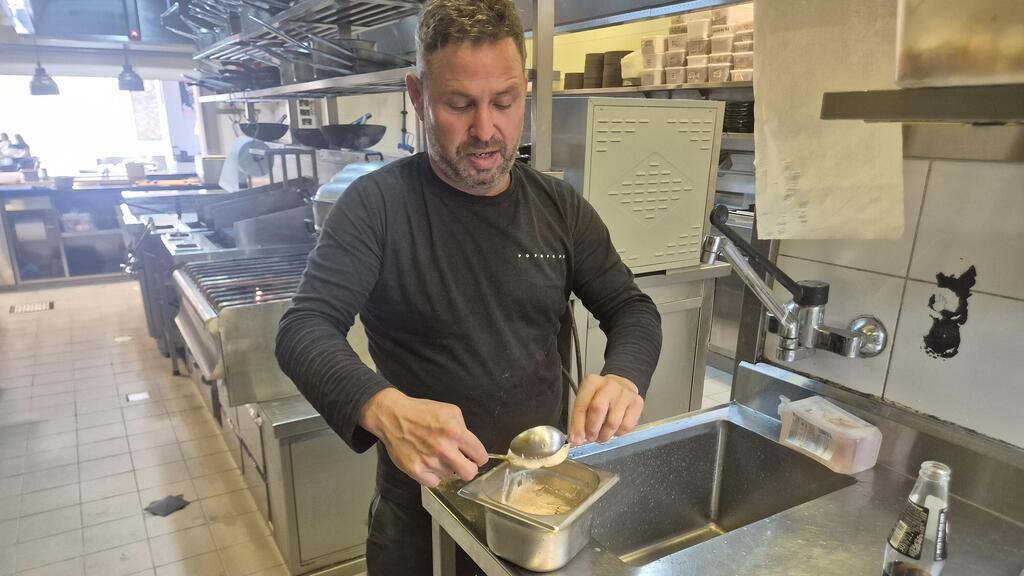
Chef Shabtay
(Photo: Assaf Kamar)
Even if it sounds like culinary sacrilege — grinding such a premium fish and combining it with jellied broth and carrots — he laughs it off. “We want something different. Luxurious. Not just a patty, but an experience.”
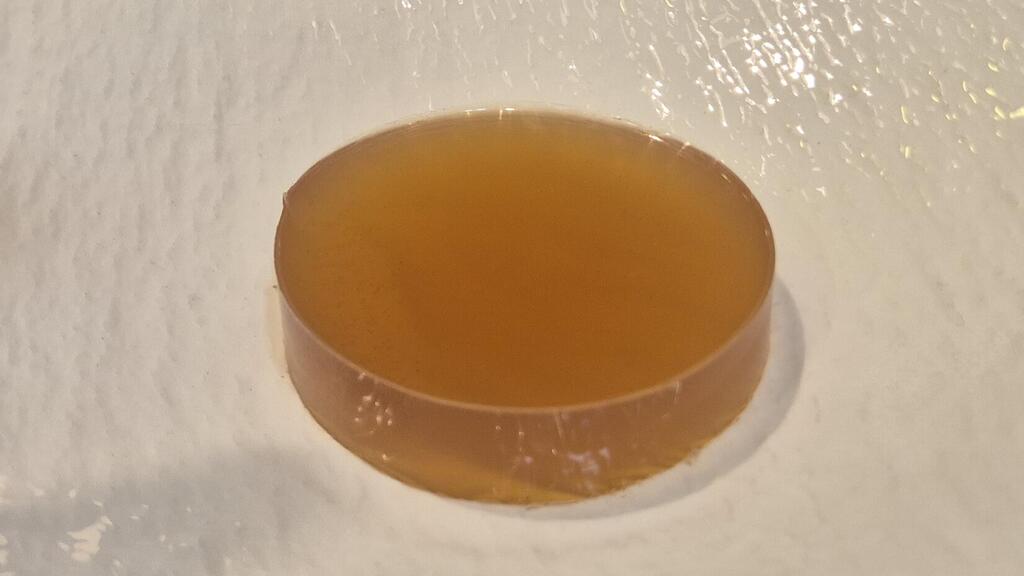
As for the jelly — often the most divisive element — Shabtay insists this is not the pale, trembling version many remember from childhood. “You’ll taste it and fall in love. You’ll want to add it to everything, even a breakfast spread. We took the grouper bones with seaweed and turned them into gelatin. It’s the taste of the sea with depth. It melts in your mouth — like the most flavorful broth. It’s the best part.”
As the process unfolds, the kitchen moves further from its Eastern European roots, incorporating tea, ginger, seaweed, date syrup and sesame oil. “This isn’t Poland, it’s Shanghai. We took Asia, took Polish technique and combined them.” Even the cooking method changes: “Instead of dropping patties into broth like at home, we steam them in tea stock — it gives a cleaner, more precise flavor.”
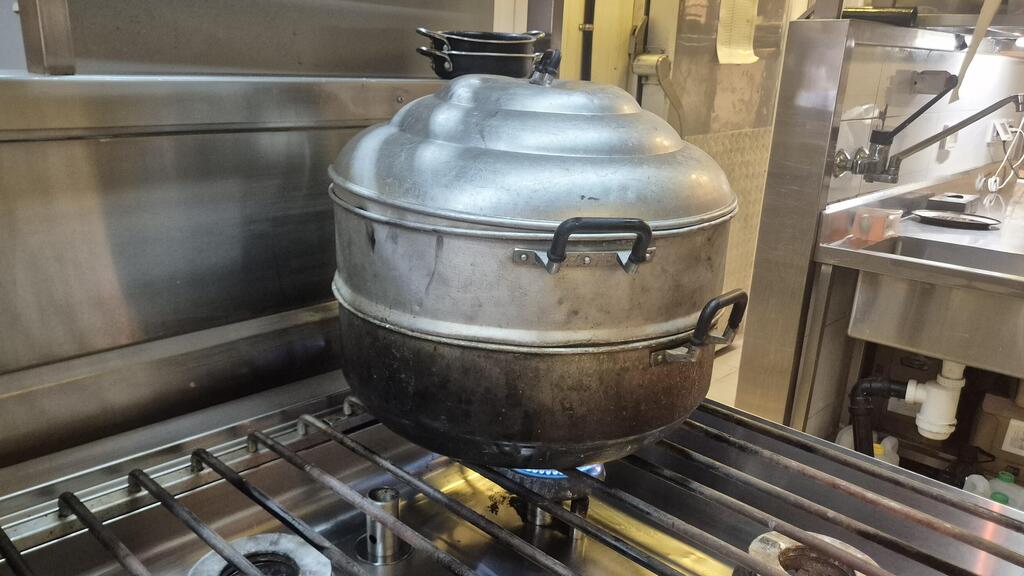
The steamer pot
(Photo: Assaf Kamar)
Five minutes to plate
The dish comes together quickly. Shabtay shapes the ground fish into elegant, oval patties. “I deliberately don’t make them too symmetrical — so it feels homemade, not overdesigned,” he explains. The patties are then quickly steamed. “Five minutes and it’s ready.”
Then comes the jelly — now transformed. The bright orange gelatin, made from the prized fish bones, has been chilled and reshaped. Shabtay slices it into thin pieces resembling gold coins and arranges them on the plate. “This isn’t what you remember. It’s something completely different.”
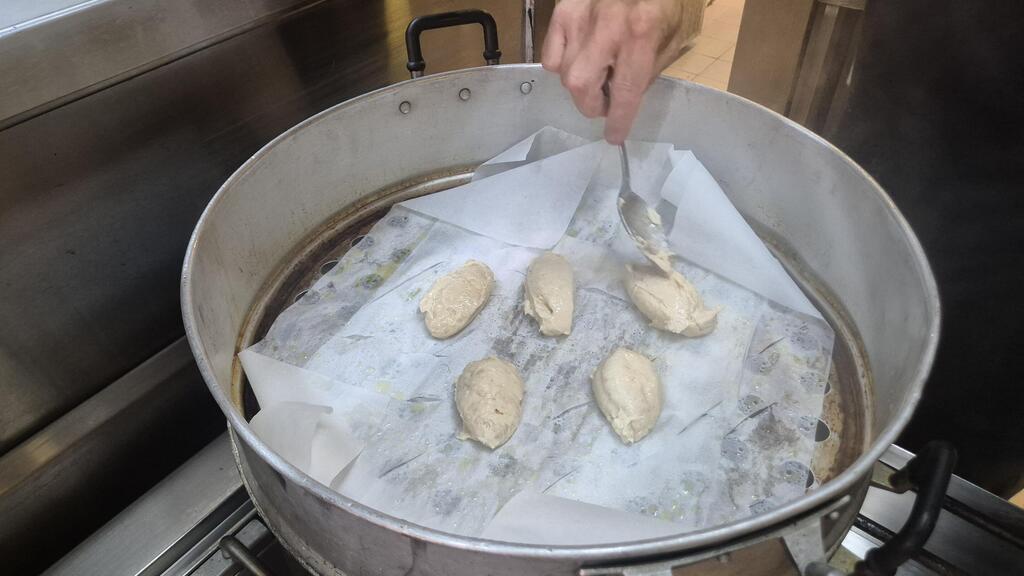
(Photo: Assaf Kamar)
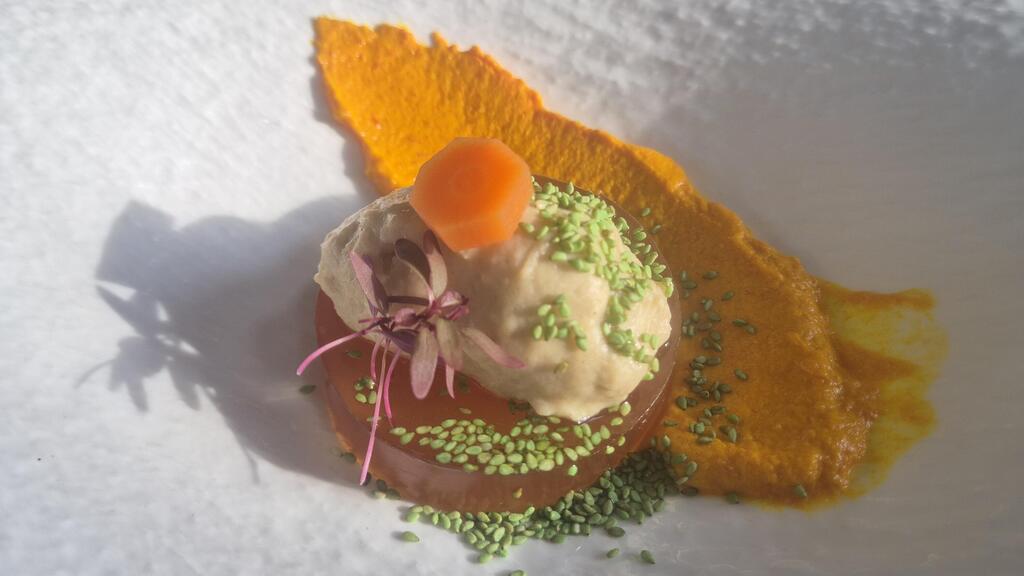
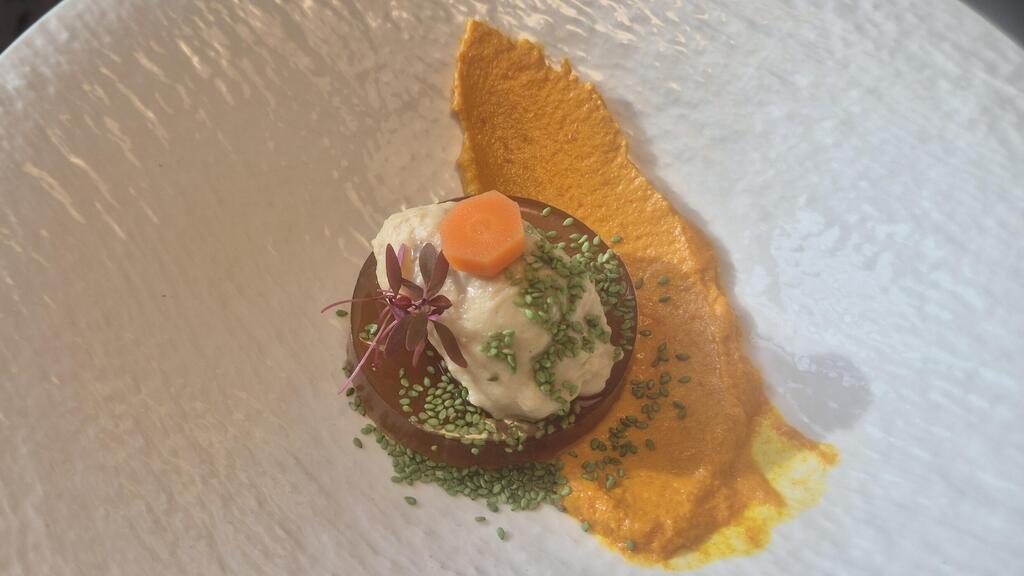
The dish is assembled layer by layer: carrot cream, a slice of gelatin, a tea-steamed grouper patty, followed by finishing touches including wasabi-infused sesame oil for a gentle heat. “It adds saltiness and balance,” he explains, topping it off with a traditional carrot ring — now part of a deconstructed take on a Jewish classic.
(Photo: Assaf Kamar)
Finally, it’s time to taste. Wine is poured, Passover blessings are recited, and a toast is raised to Israeli soldiers in Lebanon and civilians sheltering from attacks. Shabtay takes a bite combining all the elements and beams. “It’s a celebration.”
And indeed, it is a delicacy — a surprising and refreshing culinary experience blending Far Eastern flavors with airy fish and aromatic gelatin that bursts with taste.
The final result
(Photo: Assaf Kamar)
The inevitable question follows: how much does it cost? Shabtay answers simply: “I made this dish especially for you, it’s not on our menu. But based on your reaction, I’m considering offering this luxury gefilte fish as a one-time dish on Passover eve, at 98 shekels per serving.”