

“We’re going to eat the best meat available in Israel today, and I say that with the utmost humility,” chef Matan Abrahams says, opening what he describes as a high-end barbecue — or more precisely, a celebration of meat at a price point reserved for the top tier.
The event takes place on the roof of his home in Herzliya, and the stars are the cuts themselves. It is a scene far removed from the familiar Israel barbecue: no pita, no hummus and no skewers — instead, five of the most expensive dry-aged cuts available, alongside a grill-smoker and wine from Agur Winery, opened just as fat begins to drip onto the coals and white smoke rises.
Inside Israel’s 1% Steak Feast
(Video: Assaf Kamar)


It is a stark contrast to the atmosphere of war that has gripped the country and could return at any moment. “We will celebrate, in spite of our enemies,” Abrahams says.
The smoker looks almost like a spaceship. “We’re getting close to 400 degrees, this is not a regular smoker,” he explains, noting that it combines grilling and smoking. “It’s like a furnace that lets the smoke swirl and cling to the meat.”
According to him, the critical moment comes with the sound of searing: “All the fat from the cut drips onto the charcoal, creates a lot of smoke, and that smoke wraps around the steak with flavor.” Abrahams pours another glass of wine and places the first cut on the grill.
Holstein Fillet: 117 shekels per 100 grams
A Holstein beef fillet from a retired Israel dairy cow is the first to go in. Abrahams keeps intervention to a minimum.
“This is a beef fillet aged on the bone for two months,” he says, before getting to work. “Now plenty of salt, generously — only salt.”
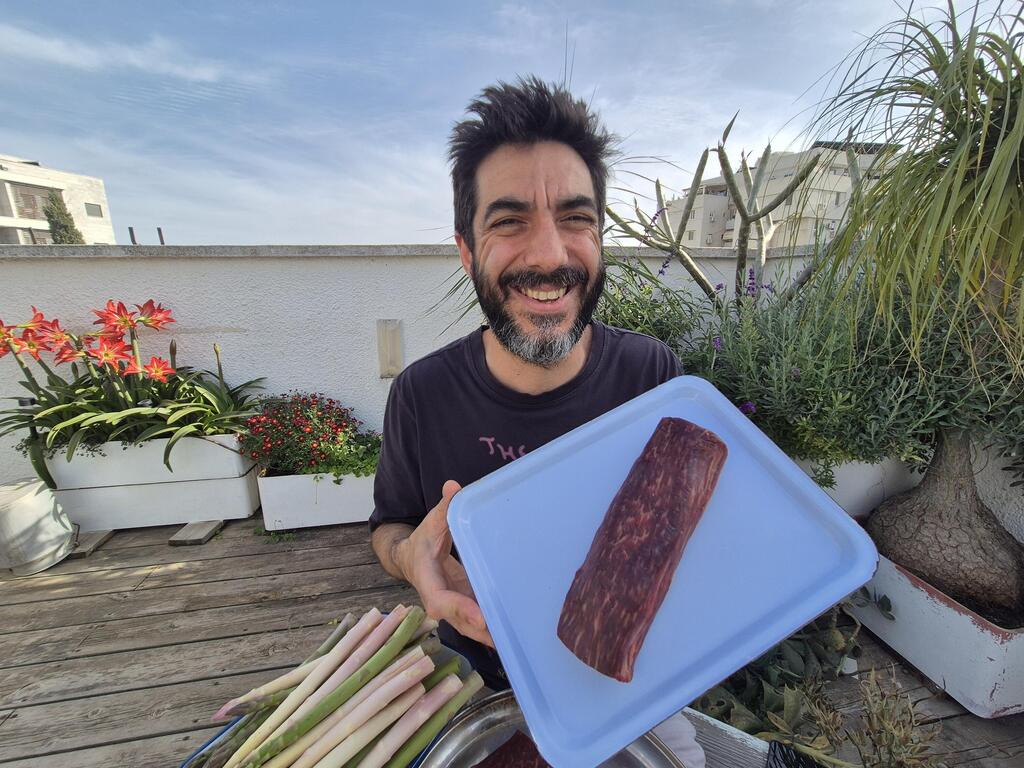
The meat must be dry before cooking. It goes into the hot grill-smoker, where high heat and smoke do their work until it reaches the tenderness expected of such a premium cut.
“This is a cut that costs more than gold — 117 shekels per 100 grams, about half a kilo of a diamond, explosive quality, pure meat desire, the purest of the pure, the top of the top.”
After the praise, he slices it thinly, and guests quickly reach for pieces. About 600 shekels ($160) disappears within moments.
Reactions are immediate: “Perfect. A luxury fillet, a fillet for the top one percent.”
Holstein Sirloin: 103 shekels per 100 grams
The sirloin follows, prepared with the same minimalist approach.
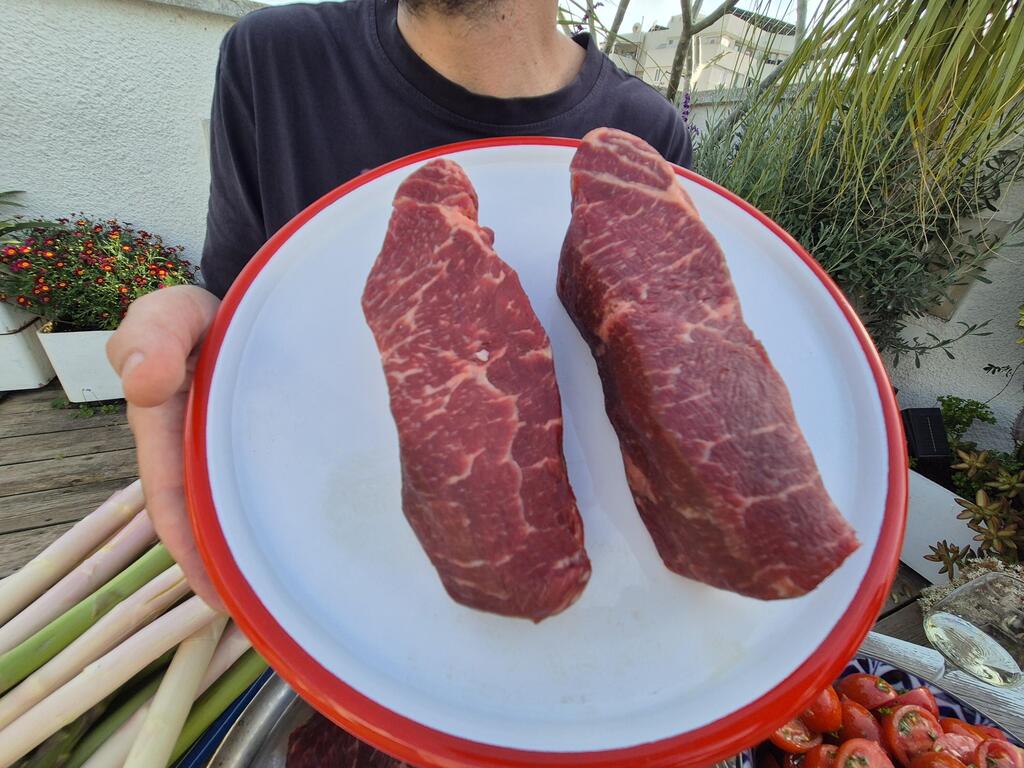
“Seasoning right now is only salt, pepper at the end,” Abrahams says, emphasizing the key rule for anyone willing to spend about 500 shekels on a cut: “It’s very important that the meat is dry before cooking.”
(Photo: Assaf Kamar)
The marbled cut is placed on the grill in high heat, smoke and fat working together.
“You can see the rare and crazy marbling we have here, meat aged two months on the bone, flavors of blue cheese and burnt butter, so rich in umami. There’s nothing like it. You’ll be shocked at how good it tastes.”
He is right.
Prime Rib: 102 shekels per 100 grams
One of the more impressive cuts in Israel’s meat scene.
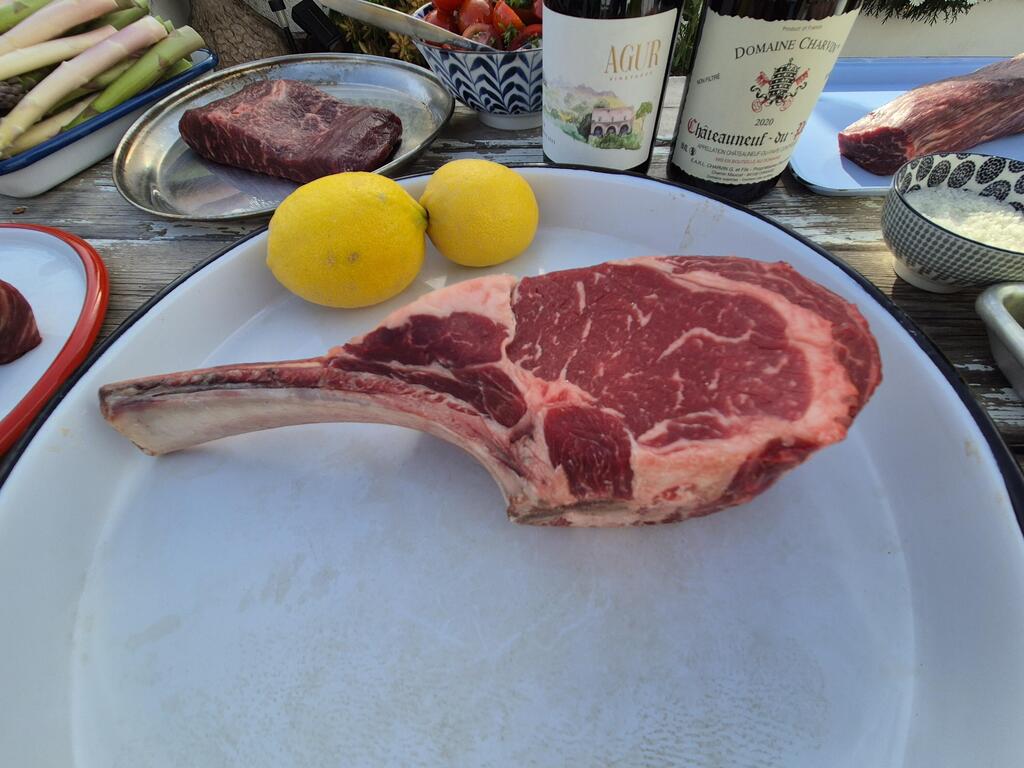
“This is prime rib — the first rib that separates the entrecôte from the sirloin. It was also aged on the bone for two months and is served with the bone,” Abrahams explains, again noting the price.
The treatment remains minimalist — salt only before cooking. When it comes off the grill, he quickly removes the bone.
(Photo: Assaf Kamar)
“It did its job, transferring flavor and heat.”
The slicing reveals juicy, tender meat that lives up to expectations.
Bone-in Entrecôte: 1,000 shekels for two cuts
The defining cut of the event arrives.
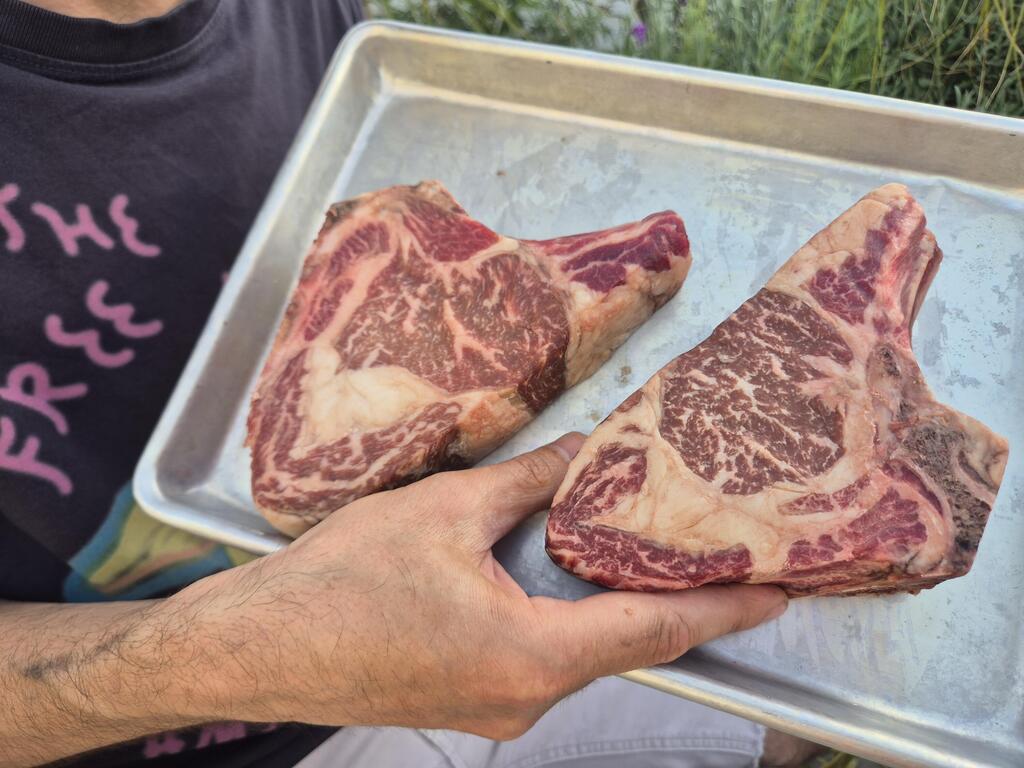
“This is bone-in entrecôte, cut to a thickness of 3–4 centimeters. Each piece here has insane marbling that will melt into the meat in the smoker, giving you a bite full of aged flavor and fat. You’re going to close your eyes and drift.”
(Photo: Assaf Kamar)
When the cut is sliced, the meat is visibly juicy.
“Look at the juice, look at the fat,” Abrahams says, visibly excited.
The taste — simply outstanding.
Long Island Cut: 700 shekels per cut
By now, guests are full and slightly intoxicated, having eaten about half a kilogram of meat per person. Still, Abrahams introduces the final cut, which he defines as the peak of the meal.
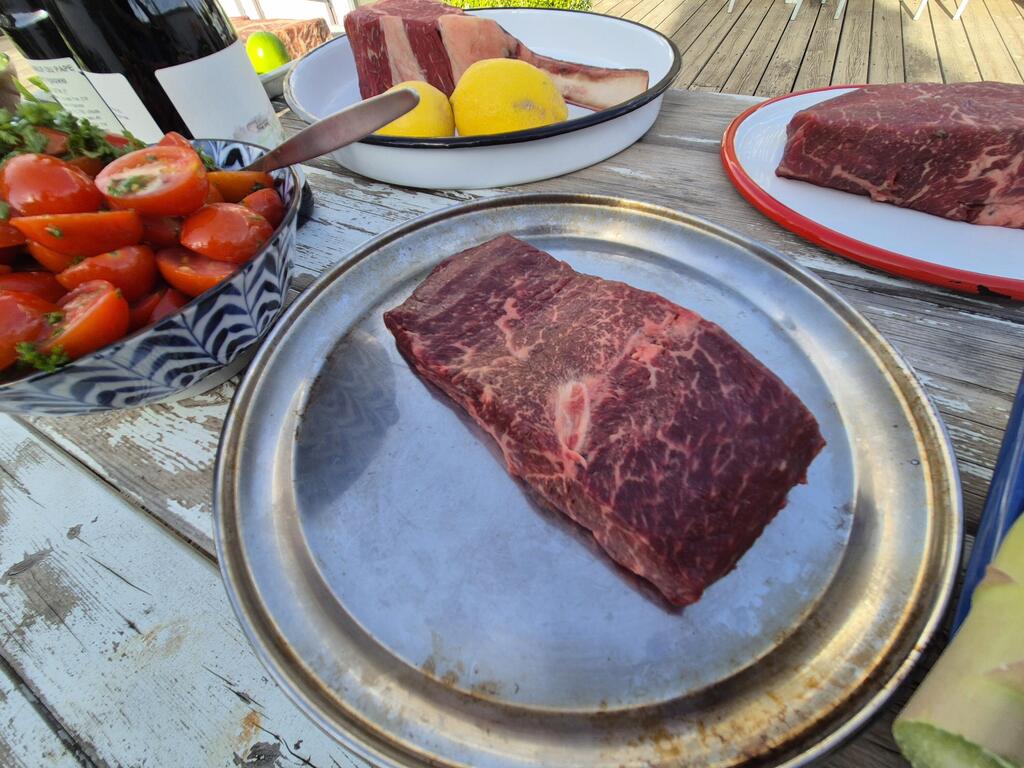
“This is the Long Island — a rear sirloin, dry-aged on the bone for two months. It’s marbled, powerful in flavor, yet soft and yielding in the mouth. One of the best steaks in Israel today, if not the best.”
The price — about 700 shekels — is enough to deter even dedicated meat lovers.
(Photo: Assaf Kamar)
The seasoning remains consistent: “plenty of salt, a bit of luck.”
As it cooks, the sound of dripping fat and rising smoke reignites appetites. The final slices are served.
“This is a celebratory steak, a once-in-a-lifetime steak. If you’re doing a barbecue on Independence Day, this is the kind that makes you feel like you’re on top of the world — that we’ve won.”
The taste, he concludes, is a complete victory.