

Walk into a Monoprix supermarket in central Paris looking for a bottle of wine, and the problem is abundance.
Hundreds of labels, price points and styles line the shelves. To find La Vieille Ferme, a widely available French table wine, shoppers may have to walk to the end of the aisle and bend down toward the lower shelves.
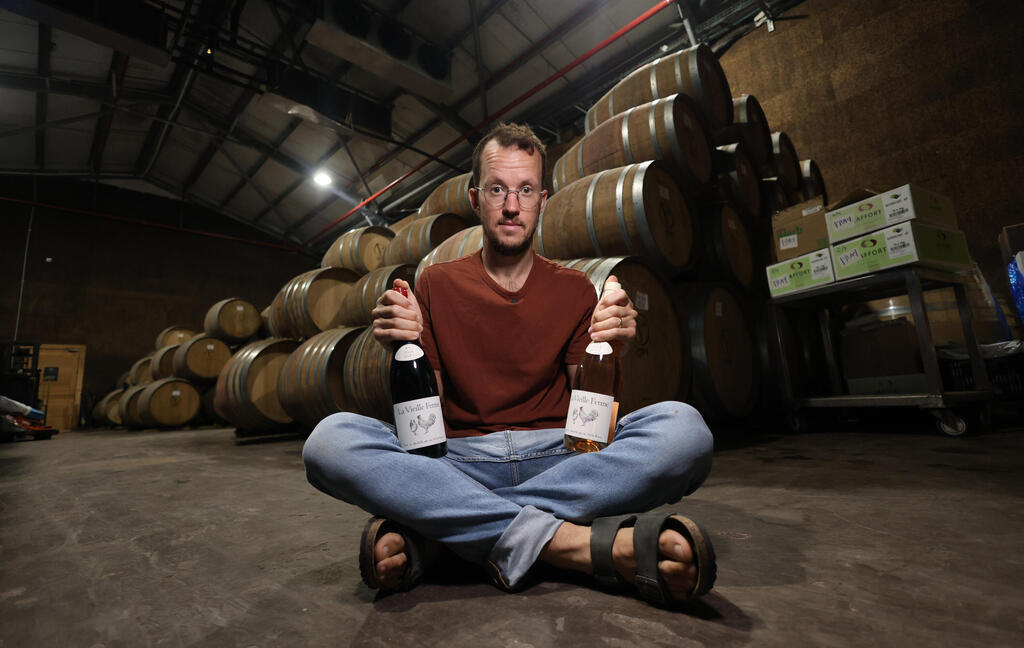
At €5.50 a bottle (US$6 and about 19 shekels), its appeal is obvious. The brand is popular at student parties precisely because it is cheap and approachable. Its quality is generally regarded as simple and everyday rather than prestigious, and in many specialist wine stores in Paris, including branches of the large Nicolas chain, it may not appear at all.
In Israel, the picture is almost reversed. The wine can be difficult to find in major supermarkets, but its distinctive rooster-and-hen label appears in some wine stores and upscale delicatessens, where a bottle can sell for as much as 70 shekels (about $23).
How does one of France’s inexpensive everyday wines become roughly 3.5 times more expensive by the time it reaches an Israeli shelf, and in the process acquire the aura of an almost premium product?
Calcalist followed the bottle through every stage of its journey.
Stop 1: Leaving the winery in France
According to estimates by Israeli importers, Shaked, which operates the Derech HaYayin wine-store chain and holds the exclusive rights to import the brand, pays the winery about 10.4 shekels (about $3.5) per bottle, roughly the same price paid by wholesalers in France.
An important methodological note: all the price estimates cited here refer to large orders capable of filling a shipping container, or roughly 6,000 to 12,000 bottles. The smaller the order, the higher the cost per bottle.
Stop 2: Shipping to Israel
Transporting the wine roughly 115 kilometers (70 miles), from the winery to the port of Marseille adds about 0.99 shekels ($0.33) per bottle.
Sea freight to Israel adds another 2.17 shekels ($0.72) per bottle, while insurance adds about 0.20 shekels ($0.07), bringing the total shipping-related increase to 3.36 shekels ($1.12) per bottle.
But distance is only part of the problem. Israel’s hot summers create another logistical challenge. Temperatures inside a standard shipping container can rise above 30°C (86°F), potentially damaging the wine.
Importers can use temperature-controlled refrigerated containers, which can add as much as 1.2 shekels ($0.40) per bottle, or sharply reduce imports between May and October. “Over the past three years, we’ve experienced dramatic increases in shipping costs,” says Kobi Shaked, Shaked’s import manager.
“Shipping within Europe has become a nightmare because of the energy crisis, a shortage of truck drivers and strikes. For much of the year, we import in refrigerated containers or use insulated thermal blankets. Shipping to Israel can add between two and five shekels ($0.67-$1.67) per bottle before you even reach the port in Israel.”
Lali Shomer of Hillebrand Gori, which handles about 95% of wine imported into Israel, says the cost of moving a container in Europe has risen from about $1,500 three years ago to roughly $2,500-$3,000 today.
At the same time, the euro has fallen over the past year from 3.98 shekels to 3.44 shekels. That has reduced some costs, but the savings have not translated into lower shelf prices for consumers. At this stage, the estimated cost of the bottle
has risen to 13.74 shekels ($4.60).

Luberon vineyard in the Rhône Valley, France, whose grapes are used to produce La Vieille Ferme. If the wine were kosher, its price would be about 10% higher
(Photo: Famille Perrin)
Stop 3: Local logistics and regulation
The wine is unloaded at the ports of Ashdod or Haifa. Local logistics and customs-clearance charges add around 2.77 shekels ($0.93) per bottle, while licensing and labeling costs add another 1.38 shekels (about $0.46).
Israel classifies wine as a “sensitive food,” meaning it is excluded from the broader import reform that allows many European-standard products to enter the country under simplified rules. Each wine label requires separate approval and laboratory testing.
Since the beginning of 2025, importers have been able to obtain preliminary approval based on an analysis certificate from the overseas winery. Once the container arrives, samples are sent to a laboratory for final clearance. Approval is now valid for 10 years instead of one.
A small importer describes the change as an improvement. “Under the old system, to get approval for a new wine, you had to specially fly in two bottles at enormous cost, waste half a day at customs and then send them to the laboratory,” he says. “Today, you can submit preliminary approval based on the producer’s certificate of analysis before the goods arrive.”
Still, even a repeat shipment can trigger fresh paperwork if the alcohol content fluctuates or the label changes slightly. “Every label you want to import requires separate licensing that costs around 1,000 shekels ($335),” the importer says.
“If I import Barilla pasta, I can bring spaghetti, macaroni and penne, and nobody forces me to conduct a separate laboratory test for every shape. But if I import 10 different labels from one winery, the licensing fees alone cost me 10,000 shekels ($3,348). Why does each of 10 different Rieslings from the same winery require its own separate approval?”
Shomer agrees. “The regulation around labels, font sizes and the wording on the back sticker is insane,” she says. “The process is cumbersome, and bureaucratic complexity ultimately feeds directly into the price of the bottle.”
Shaked says the direct regulatory fee is only part of the burden. “A small winery in France doesn’t have agreements with courier companies, so sending documents or samples can cost hundreds of euros, and they charge us for it,” he says. “I have four employees in the office whose entire job is dealing with this.”
“When people talk about regulation, they have to look at all the surrounding costs, not just the testing fee.” Once the goods arrive in Israel, he adds, “a wave of expenses begins.”
The small importer puts it more bluntly. “There’s a war tax, and a congestion tax that I don’t even understand, but I pay it to the port. Everyone takes a cut along the way.”
Israel’s Health Ministry says the average time needed to release goods from the port is less than one day, while preliminary approval is granted within 16 days.
The ministry also says the rules are aligned with European standards, but because alcoholic beverages are classified as sensitive food, imports cannot be allowed while based solely on an importer declaration.
The ministry adds that it is unaware of any direct effect of the regulation on wine prices, which it says are influenced mainly by international factors.
By this stage, the estimated price of the bottle has risen to 17.89 shekels ($5.99).

Yaniv: “Cutting bureaucracy in Israel won’t necessarily make wine cheaper. More than anything, the bureaucracy is simply exhausting”
(Photo: Yuval Chen)
Stop 4: The tariff
Israel imposes a wine tariff of 12% plus 1.41 shekels (about $0.47) per liter, while also setting a minimum tariff equivalent to roughly 3.9 shekels ($1.31) per bottle.
For expensive wine, that may represent a relatively modest percentage of the purchase price. For a low-cost wine leaving the winery at about 10.4 shekels ($3.48), however, the minimum tariff alone amounts to nearly 38% of the original price.
Among the countries examined for this report, Israel had the second-highest tariff on European wine after Brazil.
“For expensive wines, taxation in Israel is actually competitive,” says wine importer Uri Caftory. “But with inexpensive wines, the minimum tariff doubles the impact of the original cost.”
Because both importers and retailers calculate their margins on a price that already includes the tax, he says, every additional charge introduced early in the chain is magnified by the time the bottle reaches the consumer.
“Think about a basic wine sold in a store for 50 shekels ($16.74),” says Gilad Flam, co-owner of Flam Winery. “The tariff alone can account for almost 10% of the final shelf price, and sometimes you pay the state a tariff equal to 50% of the wine’s original value. How many other consumer products do you know where taxation reaches that level?”
Israel has duty-free import quotas under its trade agreements with the European Union, but the benefit is tiny relative to the size of the market. The annual duty-free quota from the EU totals about 285,000 liters, or roughly 380,000 bottles, out of annual consumption of about 40 million bottles.
In other words, only about 0.8% of the market qualifies. The tariff adds roughly 23% to the bottle’s price at this stage, taking the estimated cost to 20.42 shekels ($6.84), almost twice its original winery price.

Lali Shomer: “The high price of local wine allows stores to charge more for basic imported wine while still making it look cheap”
(Photo: Kobi Kuankas)
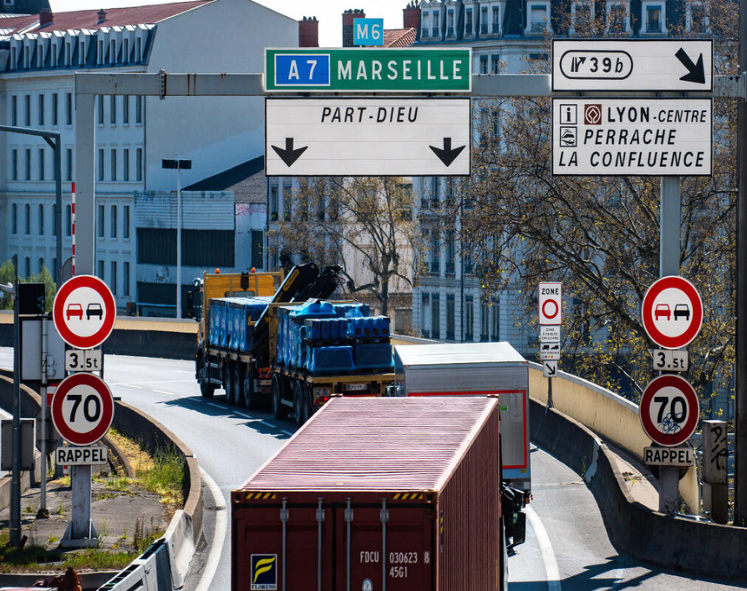
Cargo bound for the Port of Marseille. The cost of overland freight in Europe has surged in recent years
(Photo: Robert Deyrail/Getty Images)
Stop 5: Importer and retailer margins
The importer’s average margin is estimated at about 35% of the selling price to the retailer. Combined with marketing and distribution expenses, that adds about 11.68 shekels ($3.91) per bottle, taking the cost to roughly 33.5 shekels ($11.21).
The retailer then adds around 30%, or approximately 14.3 shekels ($4.79). Importers that also own retail chains can save some of these expenses or retain more of the margin themselves.
Value-added tax then adds another 8.6 shekels ($2.88). The resulting shelf price is about 56.4 shekels ($18.88), more than five times the estimated winery price and roughly three times the supermarket price in France.
In practice, the bottle currently sells in Israel for between 50 and 70 shekels ($16.74-$23.43).
Final stop: The bottle moves upmarket
By the time the bottle reaches an Israeli shelf, more than its price has changed. A modest everyday French wine has been repositioned as something closer to a premium product.
“When you walk into delicatessens, the upscale branding and the French label lead consumers to assume they’re looking at a quality wine,” Shomer says. “So they can sell a simple bottle that costs about €5 in a European supermarket for 70 shekels simply because they can, and because there are buyers.”
She argues that high prices for Israeli wine help keep the entire market expensive. “Local wines are often priced above what their quality justifies. That creates a high price floor, allowing retailers to charge more for basic imported wines while still making them seem inexpensive by comparison to Israeli wine.”
Gal Zohar, founder and director of W Wine School, says the largest markups are often found in basic, high-volume “everyday wines.” “The average consumer assumes that 60 or 70 shekels ($20-$23) is a normal price for a wine of that quality in Europe,” he says. “That lack of familiarity effectively comes with a ‘youth penalty’ for Israel’s still-developing wine market.”
Optional stop: Kosher certification
For some wines, kosher certification creates another layer of expense. Producing kosher wine in Europe requires supervisory staff, preparation of tanks and temporary shutdowns of production lines.
“To produce kosher wine in Europe, you have to prepare the tanks and send a team of rabbis who are present at every stage of the process,” Shaked says. “The daily cost of a kosher supervisor is fixed, whether he is supervising 10,000 liters or 50,000 liters. Kosher certification can add several shekels per bottle.”
Industry estimates suggest that producing kosher wine outside Israel adds at least 10% to the final price. La Vieille Ferme itself is not kosher, but the extra cost helps illustrate the pricing pressures on other imported wines.
So can imported wine become cheaper?
There is no single answer. Shaked believes bureaucracy plays a major role and argues that regulators should move toward spot checks for established importers.
“Sample us as licensed, large importers with zero violations in our history,” he says. “If there is an importer who repeatedly causes problems, inspect them constantly. But don’t impose this exhausting mechanism on every shipment again and again.”
Roy Yaniv, an adviser to wineries and importers, is less convinced that cutting red tape alone would significantly lower prices. “If you’re importing a container of 20,000 bottles, the lab test adds only a few dozen agorot to each bottle,” he says. “That cost isn’t what determines whether importing the wine is worthwhile. The bureaucracy is mostly just exhausting.”
Premium wine importer Eldad Levy says there is no reason wine should be excluded from Israel’s broader policy of recognizing European product standards and easing import barriers. “The real problem is the minimum tariff,” he says.
Israel’s Tax Authority says that, based on 2025 data, most wine imports fell under a tariff category in which customs duties amounted to about 25% of the goods’ value. “Wine is not classified as a basic consumer product,” the authority said, “and therefore has not been examined to date as part of efforts to reduce the cost of living.”
Yaniv argues that smaller importers could cut costs by working together. “If the industry really wants to bring wine prices down in Israel, it has to stop operating on an every-man-for-himself basis,” he says.
“The large importers don’t need that kind of cooperation because they already have scale. But small and medium-sized importers need to pool resources for logistics, sea freight, storage and distribution to restaurants and retailers. That could cut import and sales costs by 20% to 30%.”
Even that model, however, runs into practical and regulatory obstacles. “Small importers try to work together to save on freight, but technically and bureaucratically a container has to be registered under one owner, and all the import licenses have to be in that person’s name,” Caftory says.
“I formed a partnership with another small importer, which allowed us to move from importing individual pallets to bringing in full containers. That lowers our operating costs, but compared with the upfront tax the state collects, it’s still a drop in the ocean.”
Shomer, meanwhile, says consumers also bear some responsibility. “A mentality has developed here of, ‘Everything is crazy, you only live once, so fine, we’ll pay,’” she says.
“In a properly functioning market, consumers wouldn’t accept prices at these levels. In the end, it comes down to simple supply and demand. If people weren’t willing to pay, retailers and importers would have to lower their prices.”
Zohar, however, remains optimistic. “Israel’s wine culture is still relatively young, but the market is maturing quickly,” he says. “As consumer awareness and knowledge grow, people will make more informed choices and demand better value for their money.”