

Eti Freiberger from Kibbutz Adamit and Sheherazade Bargut Sweidan from Arab al-Aramshe have built a close friendship rooted in their shared vision of coexistence and good neighborly relations. Together, they founded Rolling, a grassroots project that brings together women from both communities through food. Now, they are also laying the groundwork for future educational initiatives. “It is our duty to live together,” the two say. “We can make a difference and create change.”
Freiberger, originally from Kiryat Shmona and a mother of six, met Bargut Sweidan, originally from Acre and a mother of four, years ago when she worked with Sheherazade's children in Adamit. Their bond grew stronger during a joint young leadership delegation to Poland organized by the Mateh Asher Regional Council. It was there that the idea for a joint women’s group was born.
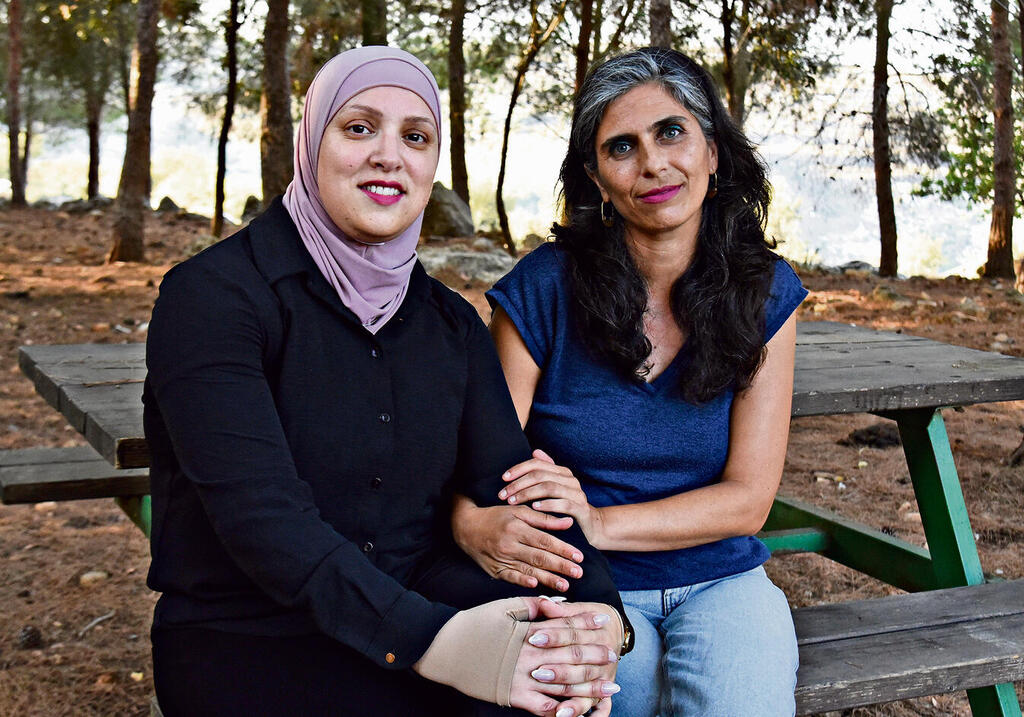
That idea became Rolling - meetings where Jewish and Bedouin women prepare grape leaves in the village and sushi in the kibbutz, sharing food, stories, hopes and struggles. Along the way, a new program emerged: Leading Change, aimed at strengthening ties between teenage girls from both communities.
Their enthusiasm has drawn in more women, and the narrow path linking the kibbutz and the village has turned into a bridge for connection and change. “Growth and prosperity come through investing in people.”
The initiative has received backing from Tzafona and HaBayta, in cooperation with the Education Ministry and Jewish federations worldwide. HaBayta, founded by Yizhar Armoni and led by CEO Sigal Moran, supports educational and community projects in Israel’s north and south.
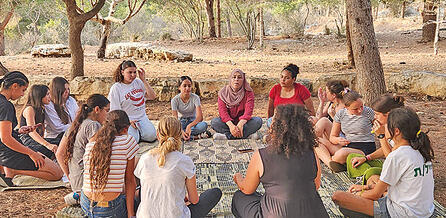
The Rolling group
“The path to growth and prosperity runs through investing in people,” Moran says. “Grassroots initiatives like Eti and Sheherazade’s show that Jews and Arabs share one destiny and one future.”
Eti: 'We want to be a flag for communities that want shared living but are afraid. There’s nothing to fear - it is our duty to live together.'
Freiberger recalls her own journey: "moving alone to Adamit as a young soldier, choosing a life on the mountaintop and later raising her family there despite the challenges of war and displacement.
"For me and Sheherazade, it’s not about Jew or Bedouin, we’re two women who want good, shared lives for our families and communities,” she says. “We already live on the same mountain, so why not do it in the best, safest, most welcoming way?
"When we were on the leadership delegation to Poland, we decided to create a connection between the women of the kibbutz and the village. We chose a cooking group because food brings people together. Twenty years ago, we were living in Jerusalem and already packed to return to Adamit, when the Second Lebanon War broke out. As soon as it ended, we came to Adamit and we’ve been here ever since.
"During that war, we moved between several places. I knew the evacuation would be long, so I had already planned to hold the Passover Seder outside our home. We moved to Kibbutz Kfar Masaryk, where we built a community that kept growing — Shabbat services on Zoom, holidays with guests from all over the country. We were always thinking about how to create connections between the kibbutz and the village. From there, we went to Gesher Haziv. For me, it was important to keep the community connected at all times, on holidays, on Shabbat, at every event.
"The closeness to Arab al-Aramshe is not only physical but also emotional. We started Rolling - at first we wanted to roll dreams, and later we rolled both dreams and food. They rolled grape leaves, we rolled sushi, and we would meet between the two communities. When one of our friends from the kibbutz passed away, all the women from the village came. That shows the bond."
The bus incident that turned tears into a new initiative
Eti recalls what happened after she returned with her family to Adamit, and how it led to the idea of bringing the younger generation of both communities closer together: "In January 2025, even before the state told us to, we returned to Adamit.
"On the first day after we returned, my daughter, who was in ninth grade, went to the gym in Nahariya and came back by bus. I waited for her at the kibbutz gate, and instead of seeing her happy, I received her in tears. She told me what had happened: three boys from the village harassed her, frightened her, shouted at her and the driver did nothing to stop them. I felt terrible, because I had so much wanted to return to Adamit, and then my daughter said to me, ‘Why did we even have to come back here?!’ It hurt me deeply, because I had feared the war, and in the end, my daughter’s tears came because of those we live alongside."
Sheherazade: "The girls of Arab al-Aramshe and Adamit share the same path home, and they should also share values, experiences and a way of life."
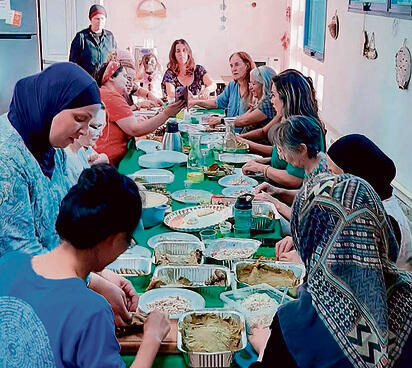
Rolling together: women from both communities
"My first phone call after the incident was to Sheherazade. After our conversation, I decided to write about it in the Rolling group. Within hours, all the women called me, including the mothers of the boys, who asked to come and apologize. The women were very firm; they said they would not allow such a thing. They passed the message to the head of the village, who promised the matter would be dealt with within hours.
"The next day, I filed a complaint against the driver and contacted the regional council. I felt this incident could not remain just at the level of talk and alarm, but had to be turned into a banner of unity, partnership and coexistence. At that point, we founded the Leading Change initiative, which is essentially the younger generation of Rolling.
"The first activities were painting bomb shelters and recording a song in both languages in a studio. All our thinking is in two voices, in two languages, but along one path. Later, we will also hold a meeting with the mothers. There are many encounters between the people of Adamit and those of Aramshe, but not between the teenagers. I decided to make that happen. From the moment my initiative was accepted, I received full cooperation from the council. I am in constant contact with Doa, the director of the community center in Adamit, and with Sheherazade, who leads the project."
What is the dream?
"I’ve thought about it a lot. I want to give everyone from the kibbutz and the village the tools they need to live properly. We’ll start with meetings for the girls to strengthen confidence and partnership, but we are already thinking ahead about a women’s center, leadership development and joint initiatives.
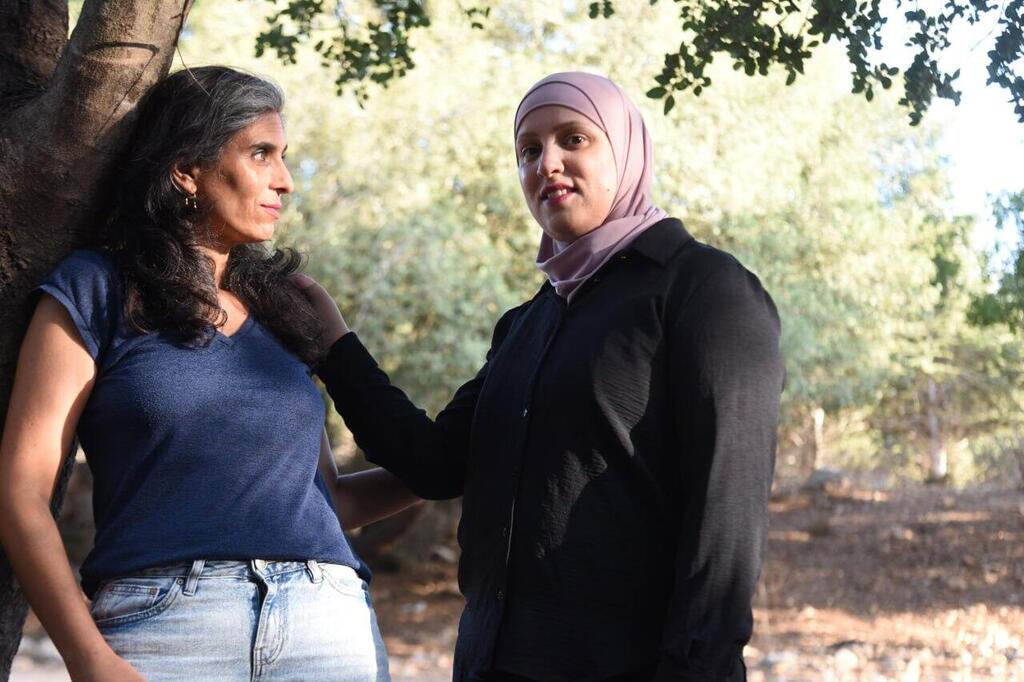
Eti and Sheherazad
(Photo: Avihu Shapira)
"There is a clear message here in a time when we lack hope. We want to establish a path between the village and the kibbutz, and it will be a path of hope, coexistence and partnership. The joint work we are doing here on the mountain should resonate across the country - in partnership between Arabs and Jews. We want to be a flag for those communities that want coexistence, but are a little afraid. Not only is there nothing to fear, it is our duty to live together."
Choosing partnership as a way of life
"I come from a place of coexistence. I grew up in a mixed city, lived in the United States for several years, and I understand the importance of living together," says Sheherazade. "When we came back to Israel, we decided to enroll our children in the Ma’ayanot school and in the kindergarten at Moshav Bezet. I wanted my children to receive an integrated education.
"My connection with Eti began 17 years ago, when she was the youth counselor for my children in Adamit. My daughter Tala and Eti’s son Omer, both 19 now, were in the same class. My daughter Malak and Eti’s daughter Yael were in the same elementary school class in Kabri, and now they are in the same grade. Today, 17 years later, my daughter Rand is a youth leader in Adamit for Eti’s children. It’s an incredible full circle.
"I have always lived together with Jews, and it always seemed like a duty in our reality. It doesn’t matter to me whether my friend is Jewish or Arab; we celebrated together, we marked the holidays together, we grieved together. We have nowhere else to go; we share the same destiny, we are in the same boat, and in our case, on the same mountaintop. The girls of Arab al-Aramshe and Adamit share the same path home, and so we decided they should also share other things - values, experiences and a way of life.
"We are all mothers, we all worry, we all want to raise our children in peace. We decided the children should know why one wears one kind of head covering and another wears a different one, why one fasts on Yom Kippur and another on Ramadan. I love connecting women from all walks of life. We can create change and make an impact. When we were together in Poland, as an Arab woman who grew up in Acre and studied in a Christian school, I realized the power of Jewish history. From that, I understood how important it is for each side to understand the history, religion and faith of every group."
How was the connection during the war?
"We were in Regba, in Nahariya and in Acre. My daughter, who was in 12th grade, decided to evacuate together with her friends from Adamit and went with them to Tiberias. When the kibbutz moved to Kfar Masaryk, she returned to Acre but kept traveling to see them. The war was complicated — it was hard for me to be far from my daughter, but I understood how important it was not to separate her from her friends. I think that is the best example of the strength of the bond between the teenagers of Adamit and Arab al-Aramshe.
"During the war, it was a big challenge to maintain the connection, but it showed that the bond is real and strong. The fact that families from the village evacuated together with families from Adamit says more than anything about a shared destiny — but also about the choice to live in partnership.
"When Eti called me on the day they returned to the mountain, after the serious incident with her daughter, I felt terrible. I felt that we, dozens of women, were trying to build shared lives together — and two teenagers came and destroyed it all. I promised myself it would not end that way. My first call was to the head of the village. I forwarded him the message that Eti had written in the Rolling group. I told him that just handling the case would not be enough; we needed to act, to give a decisive response that would show the exact opposite.
"This step shows our daughters that we do not give up, even in unpleasant situations. Everyone needs to recognize the good and understand that here on the mountain, in our shared lives, the light is stronger than the darkness.
"We never stop thinking about how to strengthen the connection between the girls in the village and the kibbutz, and about joint activities. Our dream is that the younger generation will be friends just like us. That must happen so that life on this mountain will continue to be good. Anyone who comes into Kibbutz Adamit should feel at home, and the same for the village. The mutuality between the two communities is the most important thing here. The girls should see each other on the bus or at the clinic, not with fear, but with an embrace."