

“Only the pure of heart can make a good soup,” declared Ludwig van Beethoven, who composed more than a few masterpieces. To find out whether the German genius was right, I set out to explore the country.
After a journey of sips and tastes, I compiled a list of 11 recommended restaurants, from south to north, that serve excellent soups of every kind, culture and origin. Each one offers warmth and comfort for body and soul, especially these days.
HaMiflat Haaharon (The Last Refuge), Eilat
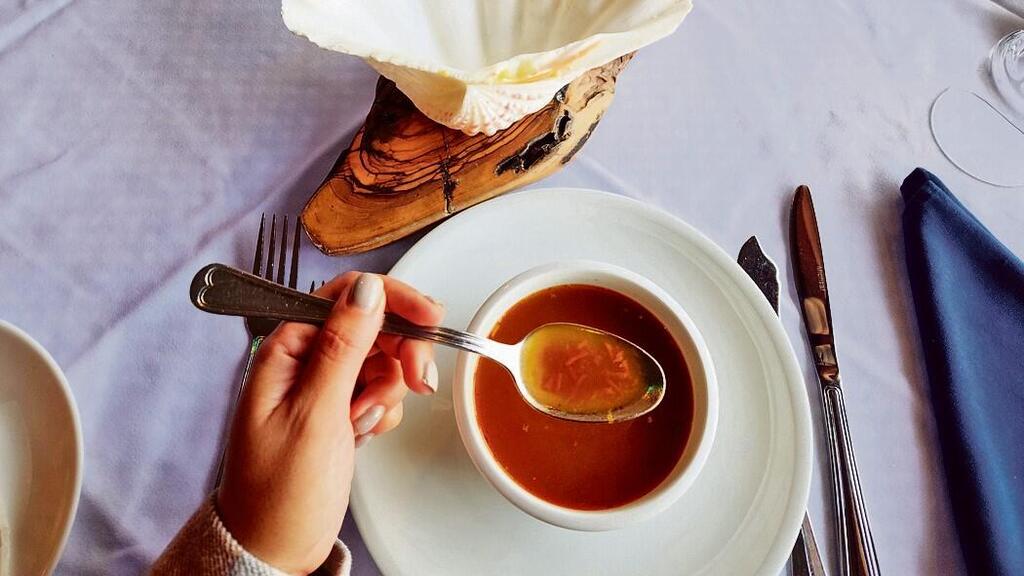
For 42 years, HaMiflat Haacharon has been serving a signature fish soup, a staple on the menu priced at 49 shekels. “This isn’t a bouillabaisse and it doesn’t contain seafood,” clarifies chef Guy Adi, son of founder and owner Aharon.
“The soup simmers for hours with a fish stock we make from vegetables—celery, parsley, carrots and onions—and the heads of large fish like grouper or sea bream, depending on the season’s catch. We used to cook it even longer when we used bones, but we’ve dropped those in recent years. During cooking, we break down the fish heads and extract the meat, then bring everything to a boil. We season it with ground cilantro, cumin and paprika.
"My father passed down the recipe, and I haven’t made any upgrades, interpretations or twists. The idea is to preserve what was. Customers love it just the way it is and we prepare many liters every week.”
The restaurant also offers a creamy crab soup for 55 shekels. “We used to make it with blue swimmer crabs from our own sea, but now we have to import them.”
HaMiflat Haacharon, Coral Beach, Eilat. 08-637-2437
Habait Hateimani Haorginali (The Original Yemenite House), Be'er Sheva
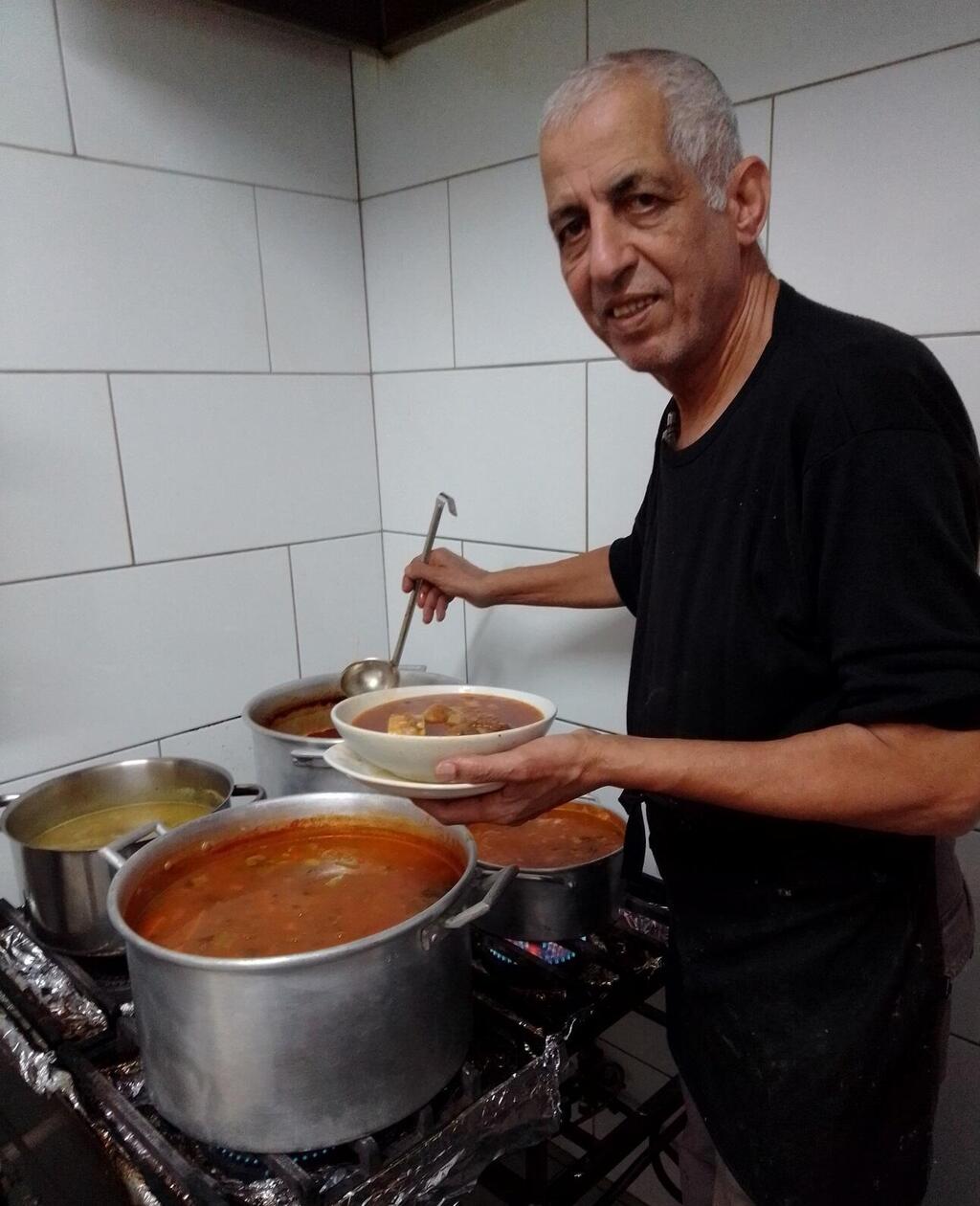
On the door there's a sign that proudly reads: “The Embassy of Yemen in Israel.” After tasting the outstanding soups prepared by Natan Cohen—who immigrated from Yemen at age 3—it’s easy to grant him the honorary title of ambassador. It also explains why politicians, celebrities and soccer players are hooked on this eatery, housed in a stone building and operating for more than 40 years.
“I treat everyone the same,” says Cohen, known for his slow but cheerful service. “If the prime minister shows up tomorrow and there’s no table, he’ll wait in line like everyone else. No exceptions here.”
(Photo: Artist-freed)
When asked about the secret to his flavors and success, Cohen, a former contestant on the reality show Royal Chef, replies: “A lot of love. I give it my all. This is my life’s project. I grind my own spices—turmeric, dried cilantro, cumin, paprika and salt.
"I use only fresh meat, directly from the slaughterhouse. You won’t find anything frozen here. In the winter, beef leg soup is very popular. The menu depends on what I find that day. You, for example, got to enjoy knee soup, which is much tastier. Sometimes I find oxtail. And you’d be surprised people here love soup even in Be'er Sheva’s summer heat.”
Soups are served with hilbeh (a traditional fenugreek-based condiment), zhug (Yemenite hot sauce), tahini, cabbage salad and excellent homemade pita. A bowl costs 60 shekels, except for the meatless bean soup at 50. Payment is cash only. The restaurant is kosher, though not certified. One of the many hand-written signs proclaims: “I oversee kashrut under the supervision of the Yemenite community.”
Habait Hateimani Haorginali, 45 Moshe Smilansky St., Be'er Sheva. 077-460-1005
Azura, Jerusalem
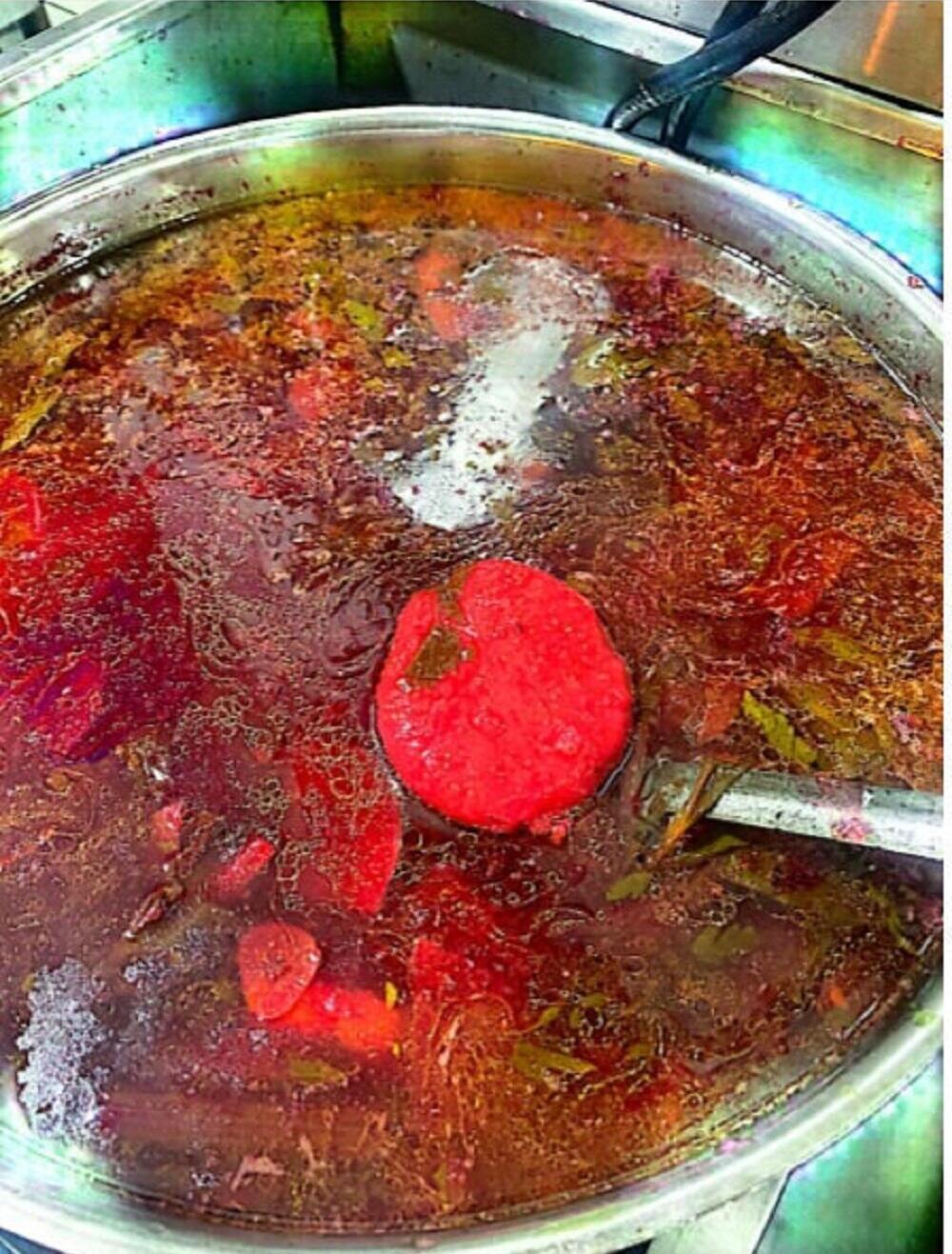
Seventy-two years have passed since the late Ezra Sharpler opened the place, and the pots still sit on kerosene burners, filled with bubbling stews and remarkable soups prepared today by his descendants. Azura is especially known for its kubbeh soups, dumplings filled with meat and served in richly seasoned broths.
(Photo: Courtesy)
“We have six kinds,” says Shabi Sharpler. “They’re the most popular. We combine different Jewish communities: beet kubbeh, originally Iraqi; spicy kubbeh hamu with chickpeas, Syrian; sour kubbeh hamusta with lots of freshly squeezed lemon, Kurdish; and kubbeh matfunia with zucchini and chard, from the Urfa tradition. We still follow, step by step, exactly what my late father did starting in 1952. He used to begin cooking at 4 a.m. and would say, ‘If you come at 4:30, the soup won’t turn out the same.’ And it’s true—the burner needs its time. The later you start, the more you lose the flavor and the texture comes out differently. Our taste is a winning taste.”
Kubbeh soups are priced at 40 to 60 shekels. The restaurant is kosher.
Azura also has a Tel Aviv branch, run by brother Roni Sharpler, at 1 Mikveh Israel St. 03-501-5050
Azura, 4 HaEshkol St., Mahane Yehuda Market, Jerusalem. 02-623-5204
Hamotzi, Jerusalem
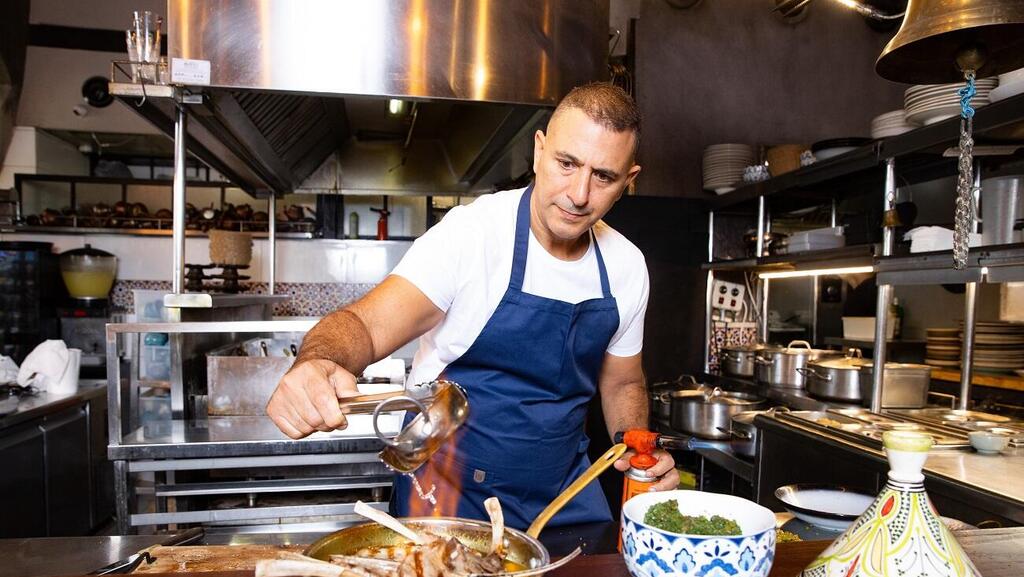
At wintertime, chef Avi Levy of Hamotzi pulls out the big pot and prepares a rich, tangy harira soup on Tuesdays and Thursdays. “Harira in Moroccan means ‘silk,’ and Moroccans add noodles, which, in my view, makes the soup heavier,” Levy says.
“In a square in Marrakesh, I was served harira with two shebakia cookies. I wondered what the connection was, but I tried it and it was pure magic—the contrast between the sweetness of the cookies and the soup’s acidity works beautifully.”
(Photo: Alex Kolomoisky)
At HaMotzi, Levy prefers the Algerian version he grew up with on Fridays at his mother’s home. “It has no noodles and includes lots of herbs and lemon, Swiss chard, chickpeas and fresh tomatoes. In my opinion, the Algerian version is better than the Moroccan one by several degrees—it’s tastier and lighter. After harira, you don’t need to eat anything else. It’s a complete meal.”
Harira soup at Hamotzi, Jerusalem, is priced at 42 shekels. The restaurant is kosher.
Hamotzi, 113 Jaffa Road, Jerusalem. 02-631-0050
Yorsh, Bat Yam
The restaurant-bar Yorsh has been operating for 15 years, named after the drink that combines vodka and beer. It is a one-woman operation: Olga Lerner, who immigrated from Ukraine in the 1990s, serves as the chef, waitress, host, dishwasher and manager.
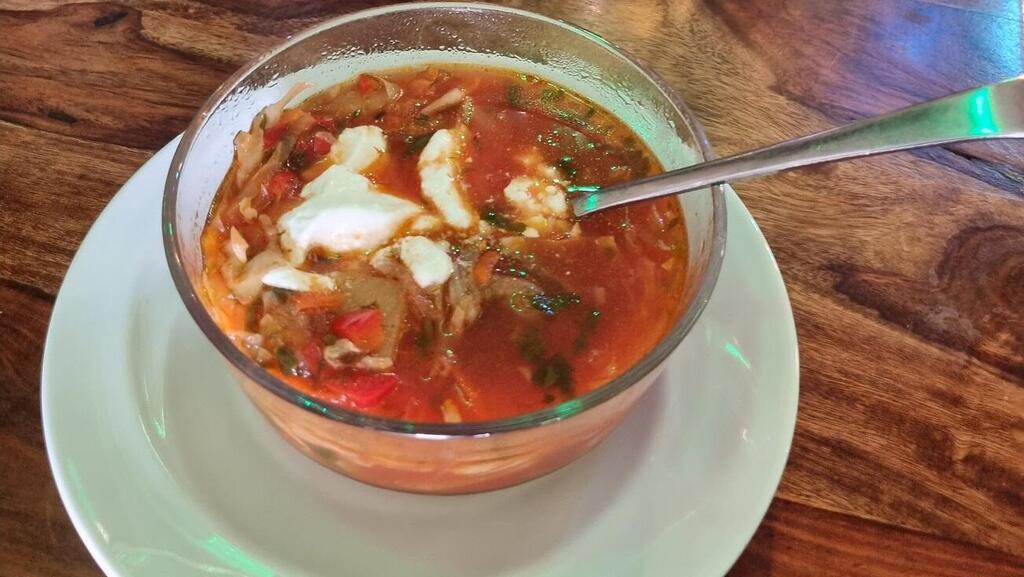
Yorsh has won fans well beyond the city’s Russian-speaking community, with devotees drawn in part by the soups. Two pots are always simmering: Ukrainian borscht with meat, potatoes, cabbage and carrots, and solyanka, a wonderful tangy Russian soup filled with assorted meats and sausages.
(Photo: Hadas Shmueli)
If you ask nicely—preferably ordering in advance—and are patient, Lerner will prepare additional soups, including mushroom cream, seafood, chicken with handmade kreplach stuffed with white meat, and okroshka, a rustic soup based on kvass (a lightly fermented wheat-and-barley beverage) or kefir (a fermented milk drink). “Our okroshka won’t leave you indifferent,” the menu declares.
Soups are priced from 50 to 79 shekels
Yorsh, 9 Balfour St., Bat Yam. 03-506-4810, 052-828-1647
Hanan Margilan, Tel Aviv
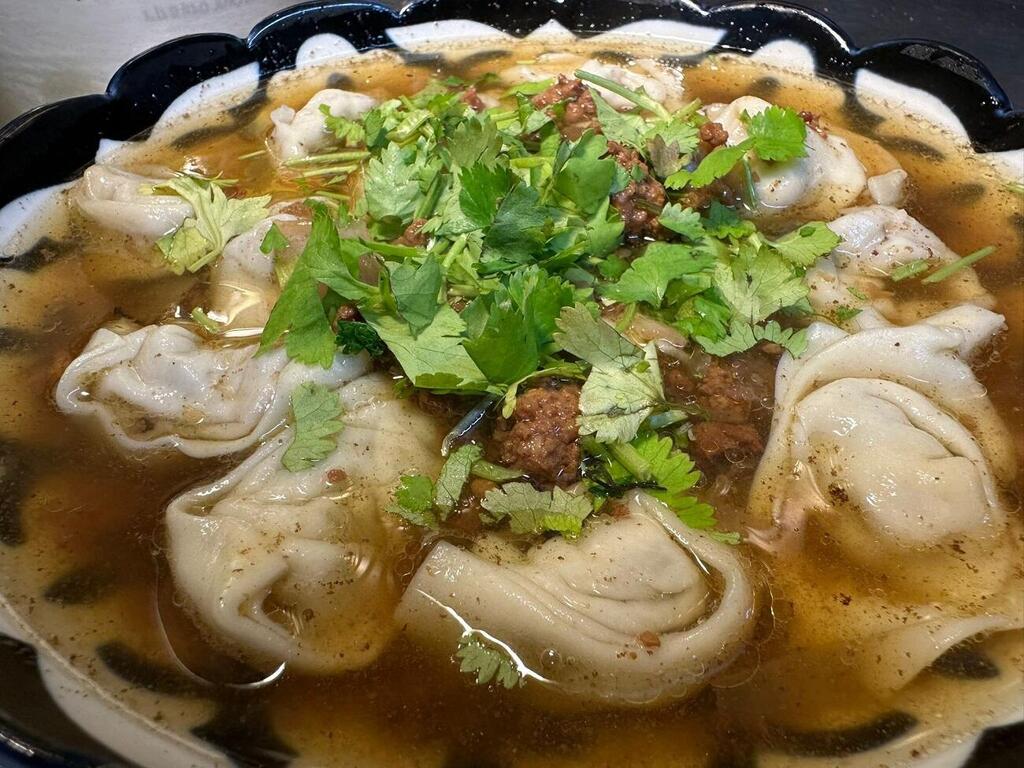
At the 2021 Israeli Kitchen Awards, the Bukharan restaurant won the prize for Outstanding Culinary Institution. The honor was likely earned in part thanks to the two flawless soups on the menu: dushpara, delicate dumplings floating in a house-made beef broth, and lagman, featuring long noodles prepared on site.
Thanks to these soups, along with the stews and grilled dishes, Hanan Margilan has amassed a devoted following willing to wait patiently in a long line: hipsters, businesswomen, high-tech workers, laborers and well-known chefs.
(Photo: Courtesy)
“Do you want me to reveal the secret of my soups? Only in a dream,” says Arthur Khanimov, who immigrated to Israel from Uzbekistan and runs the restaurant with his mother, Ziva. “Mom puts heart and soul into the soups.”
Price: 45 shekels. The restaurant is kosher
Hanan Margilan, 15 Mesilat Yesharim St., Tel Aviv. 03-687-3984
Giveret Kotiyao, Tel Aviv
As a child, chef Mati Nakash was intrigued by the “strange” food cooked by Thai workers at Kibbutz Magen in the northern Negev, but for reasons of kashrut he did not dare taste it. On a post-army trip, he finally took a closer look—and was hooked. “Those soups blew my mind. I was completely taken,” he says. “I loved the al dente noodles, the textures and the heat that comes with them.”
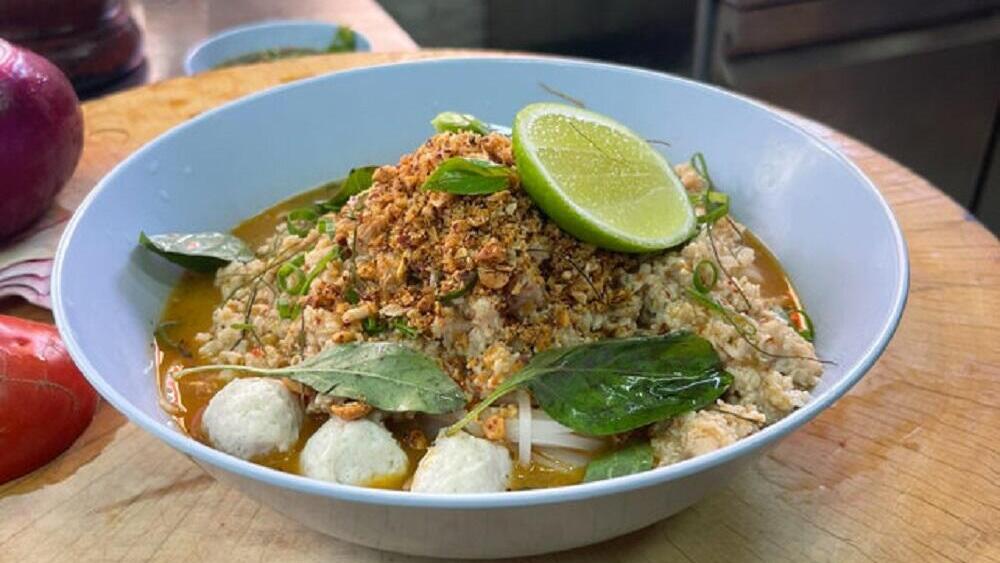
After working in well-known restaurants, Nakash opened Giveret Kotiyao four years ago, tucked into an alley in Tel Aviv’s Carmel Market, focusing on bold, intensely flavored soups. “Why soups? It’s a whole world. Kotiyao is a noodle soup sold in Thailand from carts. We had a cart I brought from there, but the municipality confiscated it and now it’s at my place. In the summer I serve a half portion, more in a noodle vibe. I don’t compromise on the heat, I don’t make concessions and I don’t cater to the Israeli palate. This is 100 percent Thai.”
(Photo: Mati Nakash)
Nakash grows some of his own vegetables and imports spices, rice noodles and other ingredients. Among the most popular soups are tom yum with chicken, shrimp or beef, and a meat soup that cooks continuously for three months. The result is precisely seasoned, balanced, clear and deeply flavorful. Don’t miss the kotiyao gai with chicken meatballs, and vegans are well covered as well. The restaurant is also a favored gathering place for Thai workers in Israel, whom Nakash actively supports during the war.
Soups are priced from 62 to 76 shekels
Giveret Kotiyao, 1 Yom Tov St., Carmel Market, Tel Aviv. 053-884-8618
Gohar, Kfar Saba
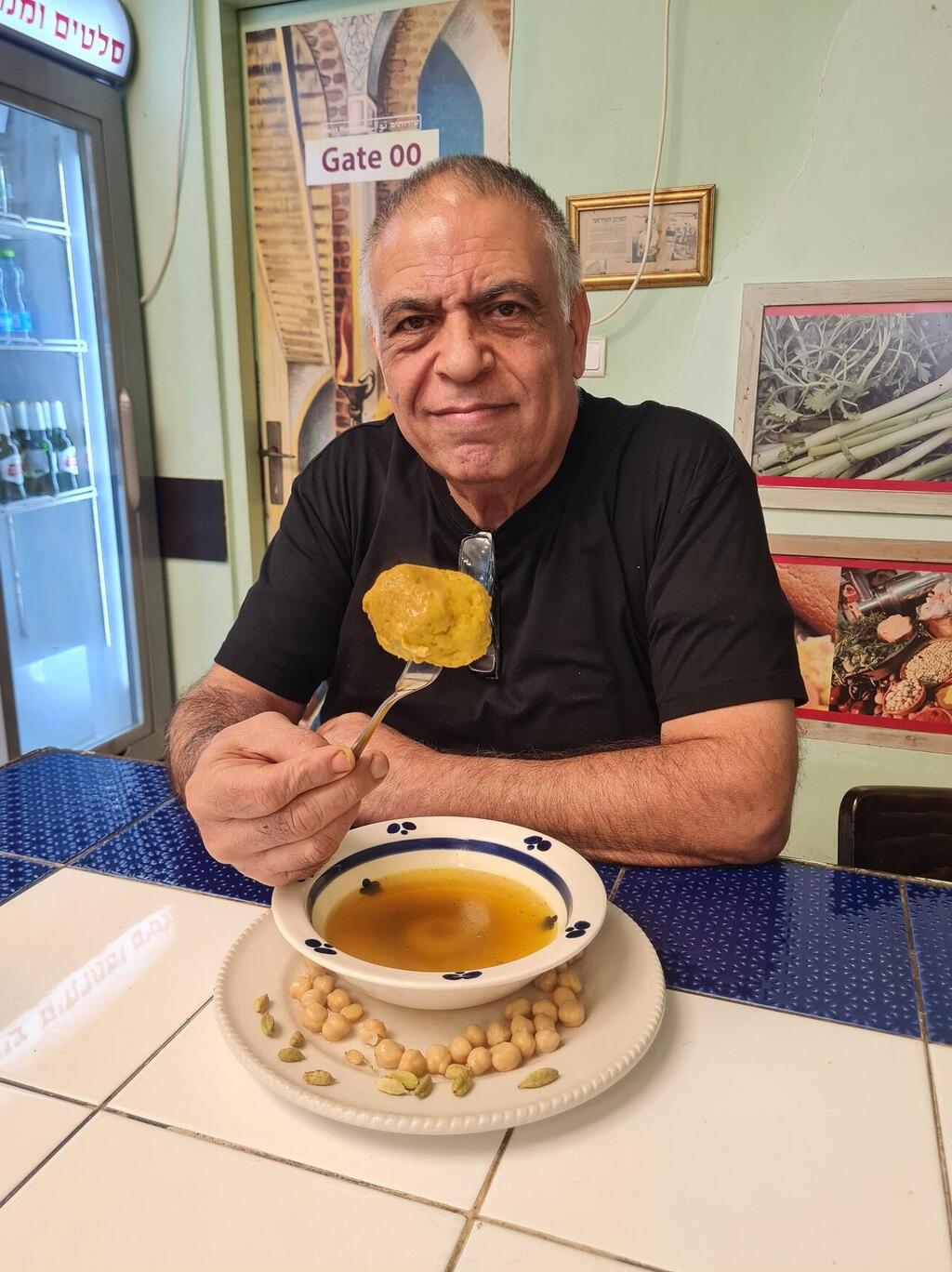
Gondi soup—the Persian-style dumplings made from chickpeas and chicken—has long since moved beyond restaurants specializing in Iranian cuisine. “Gondi has become a kind of semi-national dish. It appeals to many tastes. They even make it in kindergartens. Children really love the tender dumpling and connect with it,” says Israel Noralian of Gohar, a Persian restaurant located in Kfar Saba’s industrial zone.
“My parents, Rachel and Baruch, who founded the restaurant, immigrated from Isfahan, and our Gondi is different from what you’ll find in some Persian restaurants in Israel,” he says.
(Photo: Courtesy)
“We add cardamom both to the dumpling and to the soup, which is made with chicken stock, black pepper, cumin and salt. The combination of cardamom and cumin gives a special aroma. We don’t add Persian lime to the soup or dried black lime to the dumpling. We stick to the traditional recipe, and professional Persians who come to eat here are very happy with the Gondi because it reminds them of the flavors of childhood.”
Price: 25 shekels. The restaurant is kosher
Gohar, 26 HaTa’as St., Kfar Saba. 09-766-4533
Yamatoya, Hod Hasharon
Yamatoya, named for the ancient term for the Land of the Rising Sun, founded by the late Aya Imatani. After her death a decade ago, her husband, Israel Aviram, and their daughter, Daniel, stepped into her formidable shoes and have carefully continued her path, without changes or shortcuts.
(Photo: Amir Kaminer)
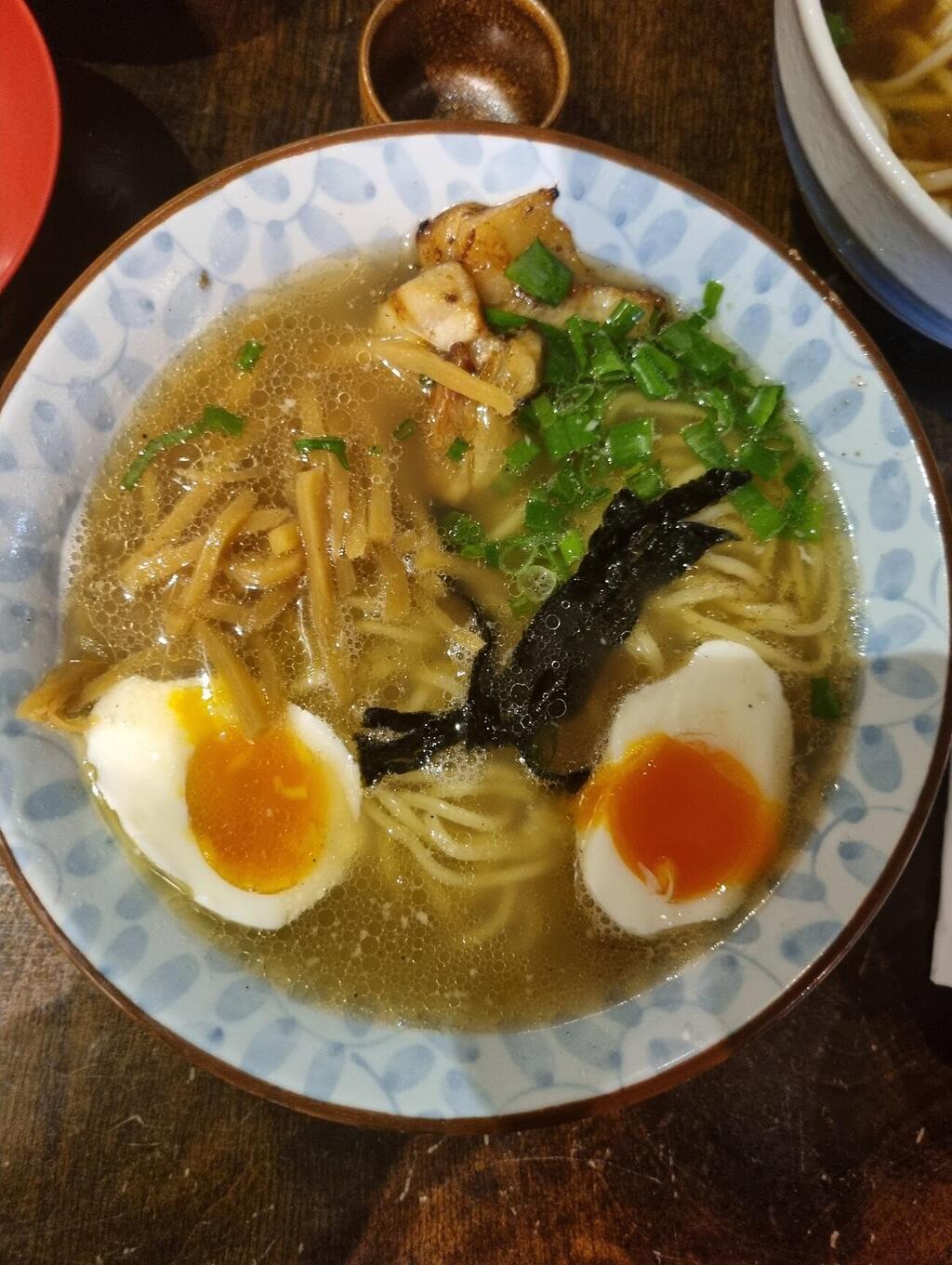
The soup selection is varied and highly commendable: miso (including a large version with seafood); Agedashi tofu in a fish-and-shiitake-mushroom broth, with crispy tofu cubes or a vegan version; Udon in a fish-based broth with wheat noodles and seaweed; and ramen. “We make our ramen only with a white-meat broth that simmers for 14 hours,” they say. “The soup also includes wheat noodles, bean sprouts, scallions, seaweed and half a hard-boiled egg. Israel’s ramen community is very supportive and often recommends us.”
Prices range from 28 to 79 shekels
Yamatoya, 6 Bnei Brit St., Hod Hasharon. 09-740-7554
Maayan Habira, Haifa
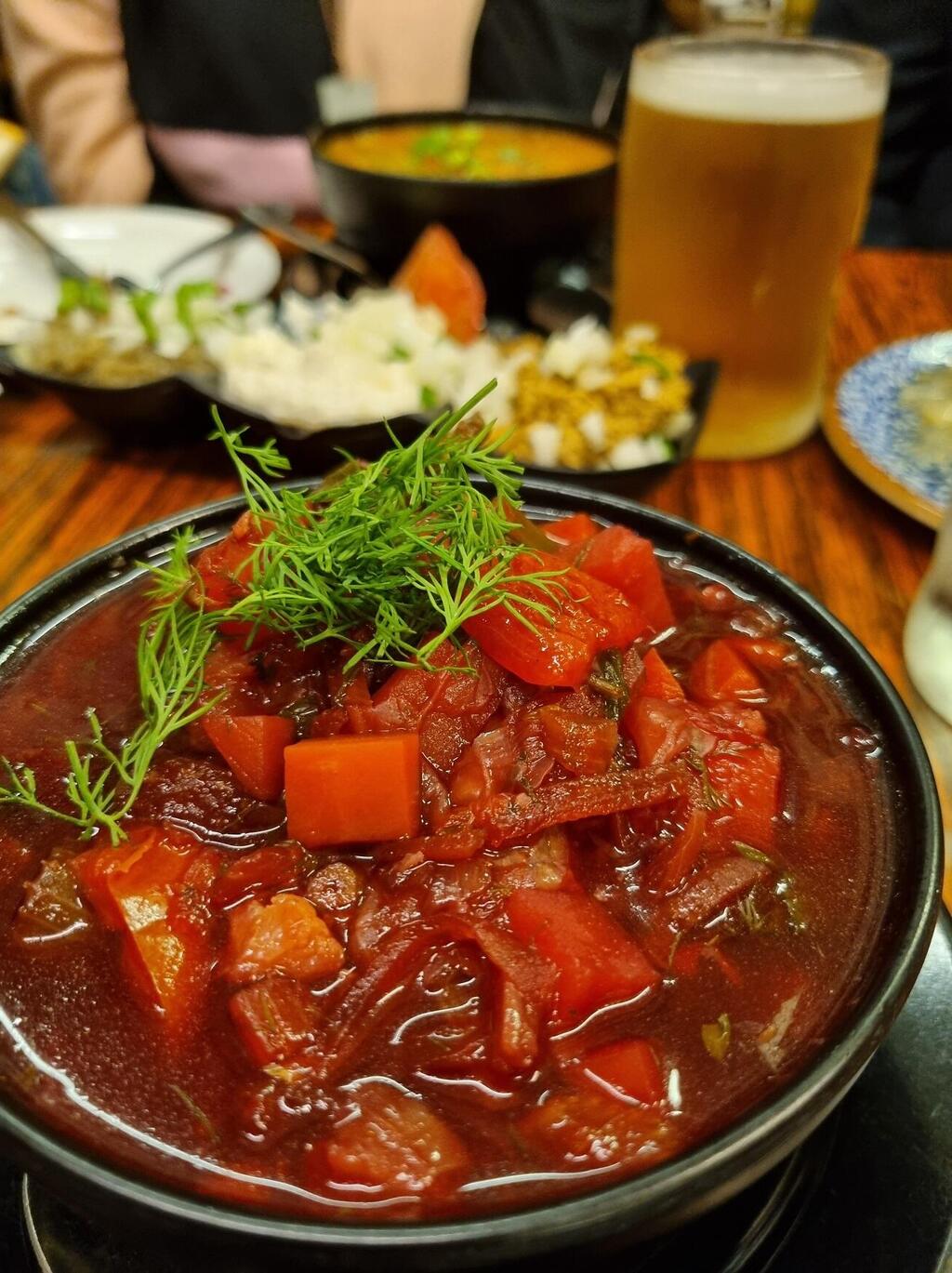
One of Israel’s oldest restaurants (75 years and counting), diners come from near and far—for the atmosphere, the beer, Ashkenazi comfort food, Romanian kebabs and unapologetically indulgent meats. They also come for the soup section, from which three standouts are worth singling out: a thick, rich bean soup—the best I have ever tasted; chicken soup with kreplach, aptly nicknamed “Jewish penicillin” or “nature’s antibiotic”; and a stunning Russian borscht with oxtail.
(Photo: Amir Kaminer)
“All of our soups are made with meat stock, except for the chicken soup,” says owner Reuven Meir. “I learned how to make them from my late parents, and now my son is the chef. The most popular are the kreplach and the bean soup, and Russian customers eat the oxtail soup with sour cream.”
Soups are priced from 35 to 42 shekels
Maayan Habira, 4 Nataneson St., Haifa. 04-862-3193
Noor, Julis
Chef Basma Hano, an army widow from the Druze village of Julis in the western Galilee, recently made headlines after she had her restaurant, Noor, certified kosher so she could cook for soldiers at the front.
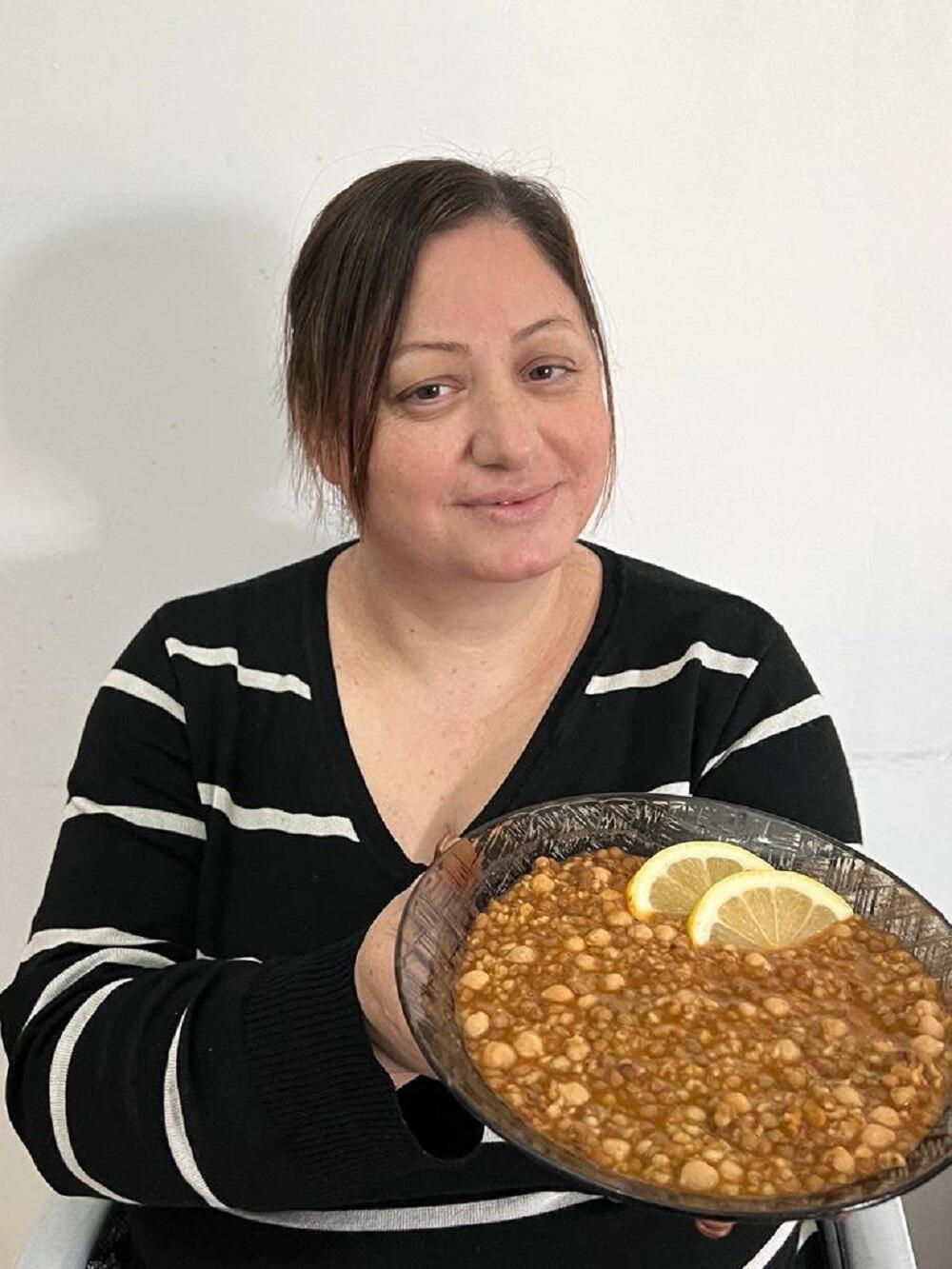
Thanks to the kosher certification, a broader public can now enjoy her cooking, including the two soups she serves in winter. The first is rakhwiya (48 shekels). “It’s a soup made from bulgur, lentils and chickpeas. It’s spicy and red because of a spice blend—the Druze really excel at that. It’s a healthy, vegan soup with real nutritional value, and it warms the body, the heart and the soul. It’s special and it lifts you up,” she says.
(Photo: Courtesy)
The second soup is Mughrabia (88 shekels). “It’s a soup with pieces of chicken and meat, chickpeas and handmade maftoul, a pearl-shaped couscous. It’s a festive, special dish. Among Druze, it’s not customary to eat soup as a starter at the beginning of a meal. Our soups are a complete meal,” she says.
Noor, Julis. 050-652-2280