

Two and a half months after an Iranian missile struck Soroka Medical Center in southern Israel, the hospital remains in crisis, operating at limited capacity and struggling to secure government funding for repairs and a new fortified facility.
Hospital director Prof. Shlomi Codish told a parliamentary committee on strengthening the Negev and Galilee that the facility, the region’s only tertiary medical center, needs roughly NIS 1.3 billion ($360 million) for reconstruction and upgrades. “Staff are leaving because they feel abandoned,” he said, describing the hospital’s ongoing struggle.
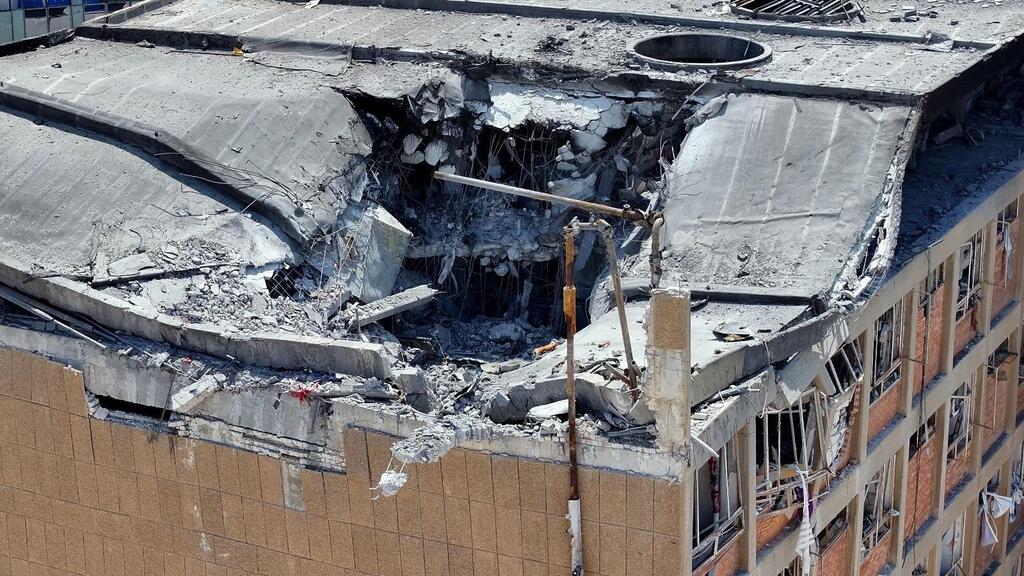
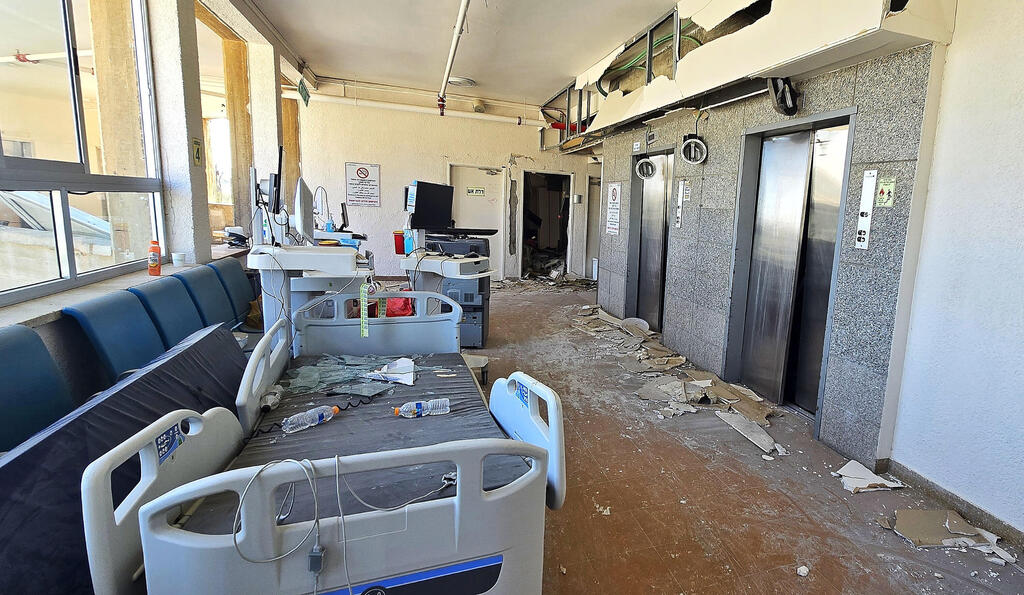
Soroka currently has 25% fewer beds—about 300 missing—with several departments completely nonfunctional, including rehabilitation, intensive care, dermatology, ophthalmology, urology, and ENT. Eight operating rooms remain closed, as do research laboratories shared with Ben-Gurion University.
Codish said a rehabilitation department would soon reopen off-site, but would be limited to younger patients, leaving older stroke victims without critical services. Surgeries are being postponed due to a shortage of functioning operating rooms. “Patients in the Negev waiting six months for surgery may receive notice next week that it cannot be done here,” Codish said.

(Photo: Meir Even Haim)
Earlier this week, Finance Minister Bezalel Smotrich and acting Health Minister Chaim Katz agreed on a plan to rebuild and renew Soroka. The finance ministry will establish a joint working team to create a framework for reconstructing damaged buildings.
Committee chair MK Oded Forer criticized the delay, saying the government should prioritize a decision on a new inpatient tower. “The missile strike widened the gap between peripheral and central healthcare. Soroka must prepare for future events; the last conflict isn’t over,” Forer said. He questioned the government’s priorities, noting that NIS 1.6 billion ($440 million) was recently allocated to aid Gaza, while Soroka’s urgent needs remain unmet.
(Photo: Meir Even Haim)
Disputes with the State Property Authority have slowed progress. Codish said the authority’s compensation for medical equipment is based on used value, not replacement cost, creating a multi-million-shekel gap that the hospital must cover. So far, NIS 30 million ($8.2 million) has been advanced.
Prof. Codish stressed that the hospital needs a long-term solution: a new ten-story “Resilience Building” designed to withstand future missile strikes, with full participation from the state, insurers, and philanthropy.
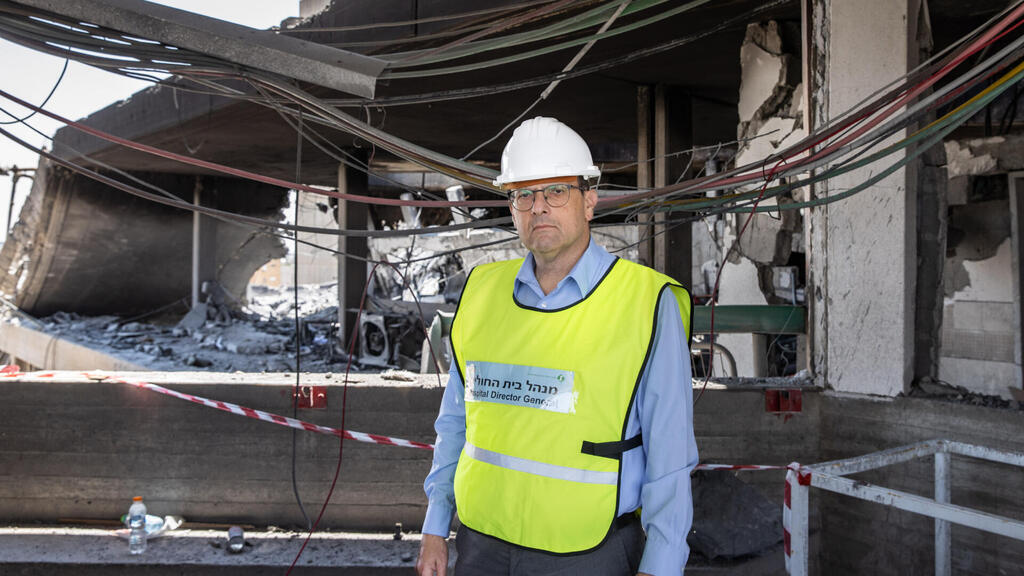
Hospital director Prof. Shlomi Codish
(Photo: Alex Kolomoisky)
Hospital staff and union representatives described the emotional toll of the ongoing crisis. “Our employees fight with exposed hands,” said Yael Levey, head of the hospital’s workers’ committee. “Soroka is the Iron Dome of southern Israel’s healthcare. Without it, there is no future.”
The situation has drawn comparisons to recent historic donations in Israel, such as the NIS 600 million ($164 million) granted to Beilinson Hospital in Petah Tikva, highlighting the need for coordinated government funding and philanthropic support for Soroka.