

About 20,000 wounded, most suffering mental trauma, have been added to the Israeli Defense Ministry’s Rehabilitation Department lists since the outbreak of the Gaza war.
The department estimates that by 2028, before even completing the planned military operation to take over Gaza City, another 20,000 will be added.
“Mental health issues come after the war,” explained Limor Luria, head of the rehabilitation department. “There is no magic cure for psychological injuries."
The number of soldiers wounded and those suffering mental health impacts has risen by 20,000 since the war started. The Rehabilitation Department foresees adding at least 20,000 more by 2028; by then about 100,000 wounded will be under its care, with roughly half of them dealing with psychological injuries.
These figures are projections made before accounting for the future toll of continuing fighting and the Gaza City campaign.
The expectation of an incoming wave of wounded stems from a familiar pattern, as Luria said, “mental health problems reach us after the war.” Each month the department receives about 1,000 new applications for recognition of war-related injury, plus another 600 for injuries from earlier wars and past incidents.
Data from the department show the severity of the challenge confronting both the Defense Ministry and Israeli society as a whole.
Of the 20,000 “Iron Swords” war wounded received so far, 45% have physical injuries only, 35% have mental injuries only, and the remaining 20% suffer both physical and mental wounds.
The projection is that the share of mental health cases will grow, as many such injuries become apparent only long after warfare ceases. Altogether, the department is now treating a record 31,000 people with mental illness across a spectrum of diagnoses: anxiety, depression, adjustment disorders and PTSD.
The ongoing rise in both the scale and proportion of mental injuries requires special preparation. Luria noted that someone with a mental health difficulty seeks help at three times the rate of someone with a physical disability.
“There is no magic cure for psychological injury, and the functional impairments are much more significant. We see this in reintegration into community life, into family life", she said.
Added to this are the growing incidents of suicide, “a national challenge that involves all of us, the families, the health maintenance organizations, the community,” Luria said.
The enormous need comes against a backdrop of therapist shortages across the population. “This is a big challenge; we are discussing it extensively with the Ministry of Health,” she said. The ongoing war, which also affects the home front, is putting pressure on the mental health system.
Meanwhile, since the war began the Rehabilitation Department has established several dedicated mental‑health treatment frameworks for soldiers, including three “balancing homes” that serve as alternatives to hospitalization in closed psychiatric wards.
Treatment of war‑wounded proceeds in stages: immediate care, intermediate recovery after hospitalization, and finally returning to work and everyday life. Luria said the final stage is the hardest, especially now. “It is challenging to return to normal. We see that in the difficulty of leaving the hospital, returning to work."
Of the tens of thousands of wounded and mentally wounded, about a quarter are still defined as being in the immediate treatment phase and are far from a normal life; they are either hospitalized, in day‑hospital care, or in other intensive settings like therapeutic farming.
About half of the wounded have returned to work. “That is the biggest challenge,” Luria said, noting that studies show returning to work within six months significantly increases the likelihood of long‑term employment.
Still, among those who have resumed daily routines, around 60% are still in various supportive settings.
Of the complex physical injuries, 99 soldiers have lost limbs, and 16 are paralyzed and wheelchair‑bound. Though they make up a small percentage of all wounded, their needs are very high, Luria said.
Also, about 160 suffer moderate to severe head injuries. Luria added that even “mild” head injuries are not trivial, as they involve memory problems, functional impairments, and difficulties returning to work.
The department opened a head injury unit at Sheba Medical Center to treat such cases and plans to expand it to treat the most severe head trauma.
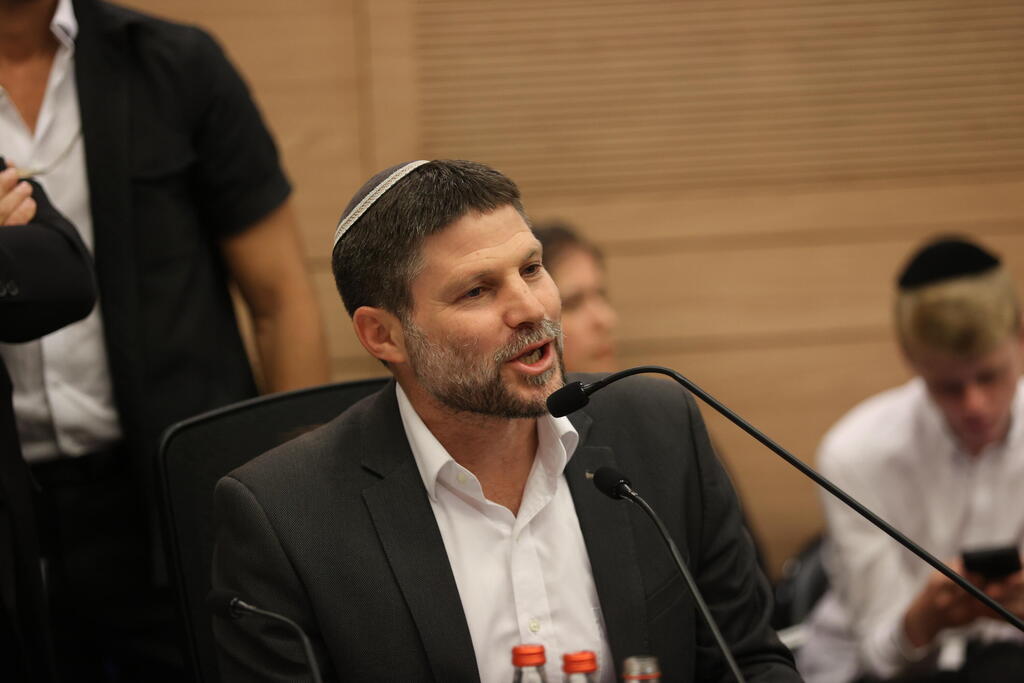
Finance Minister Bezalel Smotrich.
(Photo: Alex Kolomoisky)
Meanwhile, in today’s Finance Committee hearing in the Knesset, Omer Amsalem (IDF veteran who fought in Operation Protective Edge in 2014 and suffers from PTSD), one of the leaders of the PTSD veterans' protest, criticized Finance Minister Bezalel Smotrich.
“Promises need to be fulfilled. We do not want to be the next suicide case. We will escalate our protests every day. We will set the country on fire if you do not stop the next suicide,” he said. “I have no home to come back to, my wife could not stand me. You sent a 19‑year‑old to fight but did not care for him afterward."
Micha Katz spoke alongside him: “You cannot take away my daughter because I went to fight for the country. Do something. Speak up. Does this make any sense to you?”
Smotrich replied: “The first problem is that we, as a country, and the world do not yet fully know how to treat this. Since we met, we have placed it on the agenda. We established a special joint forum with the Defense Ministry."
Amsalem shot back: “I’m tired of hearing that you all 'understand'. Itzik Saidian is burned from head to toe, and he will tell you that everything is bullshit. The mental health reform for combat veterans with PTSD does not really provide solutions."