

Charles University in Prague has become a key destination for aspiring Israeli doctors, with dozens graduating from its First Faculty of Medicine each year. Many, however, are opting to remain abroad rather than return to Israel, citing better professional opportunities and working conditions.
Prof. Martin Vokurka, dean of the faculty, said the collaboration with Israel has been ongoing for over a decade and remains strong. “There are several dozens of students who graduate every year from our university, and the number has been stable for years,” Vokurka said. “This year, about 20 or slightly more are graduating and we are very satisfied with them.”
Why Israeli medical students are staying in Europe?
(Video: Miki Schmidt)


While exact figures on how many stay in Europe are unclear, Vokurka noted that graduates are well-positioned to practice medicine in the European Union and even in the United States. “They need to pass additional exams to work in Israel’s healthcare system, so there is a certain temptation for them to stay in Europe,” he explained.
Vokurka praised Israeli students for their commitment and maturity. “They are really above average. They are very motivated, more mature and they ask a lot. Teaching them can be challenging but it’s a big challenge we enjoy,” he said.
‘Conditions in Israel are so different’
Amalia Valentin, a recent graduate, said her decision to study in Prague was deliberate. “I always wanted to be a doctor. I even got into medical school in Israel but I chose to come here because I understood that the level of knowledge and research is much better than in Israeli universities,” she said.
Valentin plans to pursue her career in the United States, at least for now. “Studying abroad opens a lot of opportunities for me in Europe, the United States, even in Asia. For now, I’m going to work in the United States and stay there until things clear up in Israel,” she said.
She cited working conditions as a major factor. “The conditions in Israel are so different than what we’re getting in the United States and Europe — the payments, the rights. When I think about my future, my kids and my family, I want them to have a good life and I want my work to be valued equally,” she said.
Vokurka acknowledged the concern over Israeli doctors choosing to remain abroad. “Our main aim is to prepare students and young doctors for the world of medicine everywhere and we are very proud if they are successful globally,” he said.
Get the Ynetnews app on your smartphone: Google Play: https://bit.ly/4eJ37pE | Apple App Store: https://bit.ly/3ZL7iNv
“But we also collaborate with Israeli institutions to encourage graduates to return. Clinical rotations in Israel are part of our effort to get students familiar with the Israeli system and opportunities.” Despite these efforts, economic incentives and working conditions abroad remain powerful draws. “As Amalia mentioned, these factors are important for young doctors when planning their careers,” Vokurka concluded.
Peripheral neglect: Eilat as a case study
The challenges highlighted by graduates like Valentin are amplified in Israel’s peripheral regions, where healthcare disparities are acute. Dr. Moshe Cohen, a medical doctor and CEO who trains students for medical studies globally, warned that areas like Eilat are particularly underserved.
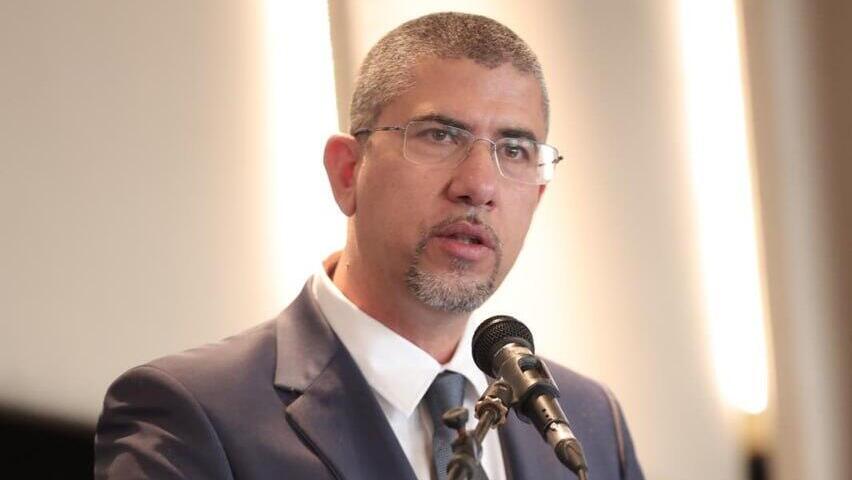
Dr. Moshe Cohen
“Israel has one of the best healthcare systems in the world, but the country is far from homogeneous in providing medical and academic services,” Cohen said. “In Tel Aviv, there are more than five doctors per thousand people, while in the south, there are fewer than two.”
Eilat, a Red Sea resort town home to about 70,000 residents and hosting millions of annual tourists, suffers from severe shortages in medical infrastructure and specialists. “Eilat lacks an emergency room, a proper children’s ward and a cardiac catheterization lab," said Cohen.
“A citizen or tourist who suffers a heart attack there can expect treatment as it was provided in the 1980s." Premature babies must be airlifted to Soroka Medical Center due to the absence of a neonatal intensive care unit.
Cohen added that the absence of a medical faculty in Eilat discourages top doctors from working in the city. “Doctors have always followed academia and academic achievements. Where there is no medical teaching, a medical desert will always prevail,” he said.
A vision for reform
To address these gaps, Cohen advocated establishing an international English-speaking medical faculty in Eilat, which he believes could transform the city into a hub for healthcare and innovation.
(Photo: Shutterstock)
“A medical faculty will attract doctors from all over the country and students from around the world. It will elevate healthcare services, create jobs and even position Eilat as Israel’s future Silicon Valley,” he said.
The project, with backing from donors and several European universities, is awaiting approval from Israel’s Council for Higher Education (MALAG). Cohen warns that bureaucratic resistance risks perpetuating inequality. “If MALAG continues to reject this idea outright, it will perpetuate the neglect of the periphery and the poor medical services available to residents and tourists alike,” he said.
A crossroads for Israel’s medical future
As more Israeli graduates seek opportunities abroad, experts warn that the combination of underfunded regional healthcare, low pay and limited career prospects may lead to a long-term “brain drain” in Israel’s medical sector.
“The situation is urgent,” Cohen said. “This is a Zionist project, a non-profit initiative aimed at improving healthcare in the south and across Israel. Citizens — whether in Tel Aviv or Eilat — must feel truly equal in their right to live with dignity and good health.”