

The corneas of Captain Reei Biran, a 21-year-old team commander in the Golani Brigade who was killed in southern Gaza, were transplanted two weeks ago into two young children at Schneider Children’s Medical Center: a 1.5-year-old girl and an 8-year-old boy. Thanks to the donation, both children have regained their sight.
“He was just a boy. My boy,” said Reei's mother, Tahal. “He lived a full life, and I was lucky to be his mother for 21 years.”
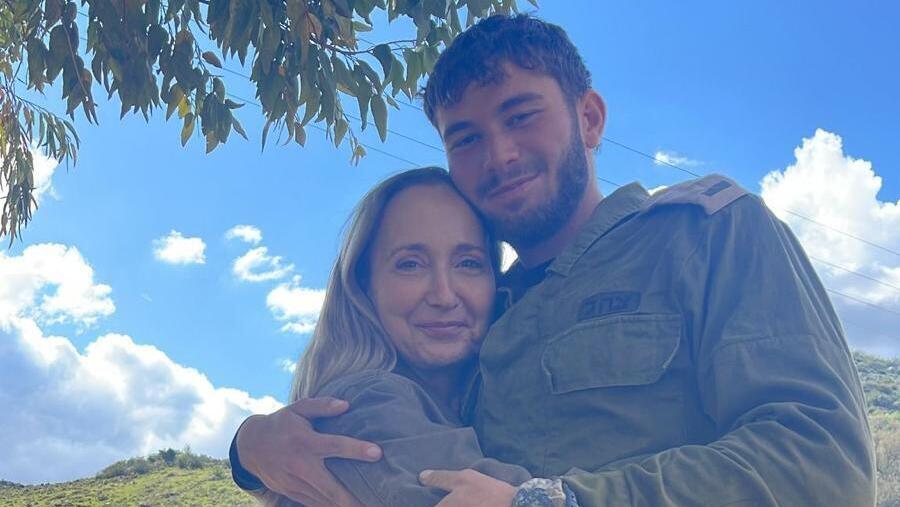
Captain Biran fell in combat near Khan Younis about three weeks ago during a brigade operation involving the placement of explosives in enemy structures. An explosion occurred outside one of the buildings. Reei was fatally wounded by shrapnel that struck his main neck artery and died instantly.
“At 11:20 PM, they knocked on my door,” recalled Tahal. “I didn’t even let them speak. The first thing I asked was: What about his team? I knew that if it was just Reei, it would be one kind of tragedy, but if it was him and his soldiers, it would be another. He loved them so much, and I was afraid that if, in his final moments, he knew someone else was hurt, he’d die with a broken heart. Only Roi was injured—his entire team survived.”
A gift of sight
The family did not hesitate when asked about organ donation. “There was no doubt,” said Tahal. “When I realized there was a chance that a part of Reei could help others live, I told the coordinator they could have all his internal organs. He was a healthy 21-year-old in peak physical shape. I only asked that they leave his external body intact. After two hours, we were told his corneas and heart valves were donated.”
One of the corneas was transplanted into 8-year-old Daniel Yosef Cohen, who was born with a genetic condition causing severe corneal clouding and impaired vision. “We noticed something was wrong when he was six months old,” said his mother, Avital. “His eyes were cloudy. His vision was blurry—like looking through a foggy window.”
Daniel’s condition worsened with age, making school life difficult. He required magnified textbooks and visual aids, struggled to see the board, and often bumped into things or fell. He had already undergone two failed cornea transplants—one that didn’t improve his sight and another, last year, that was rejected by his body.
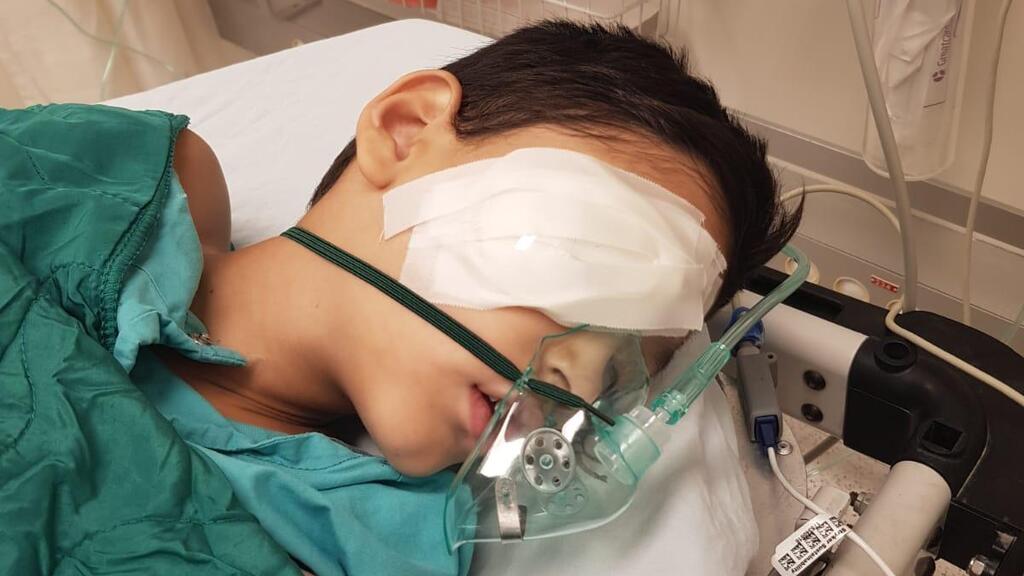
8-year-old Daniel Yosef Cohen
This third transplant, using Reei's cornea, changed everything.
“I was emotional and scared when I got the call,” said Avital. “We’ve been through so much, and it’s still a full surgery under general anesthesia.” The transplant took place two weeks ago. Daniel is now home and recovering. “He says he can already see better.”
On Wednesday, the family was informed that the donor was a soldier killed in Gaza. “It was overwhelming,” said Avital. “On one hand, we felt immense sorrow for another family that lost their son. On the other hand, we were incredibly grateful—this is a gift we’ve been waiting for over a year.”
Avital herself lost her brother, First Sergeant Yair Turgeman, a Nahal Brigade soldier, 21 years ago. “The pain never really fades,” she said. “That’s why I feel so deeply connected to this family. What they did is extraordinary—it’s something I can’t put into words. I hope to hug them one day.”
In a letter to the Biran family, Avital wrote: “I can only admire your strength. Out of unbearable grief, you chose to give life. That’s not just generosity—it’s a profound act of humanity. Your son continues to see the world through my son’s eyes.”
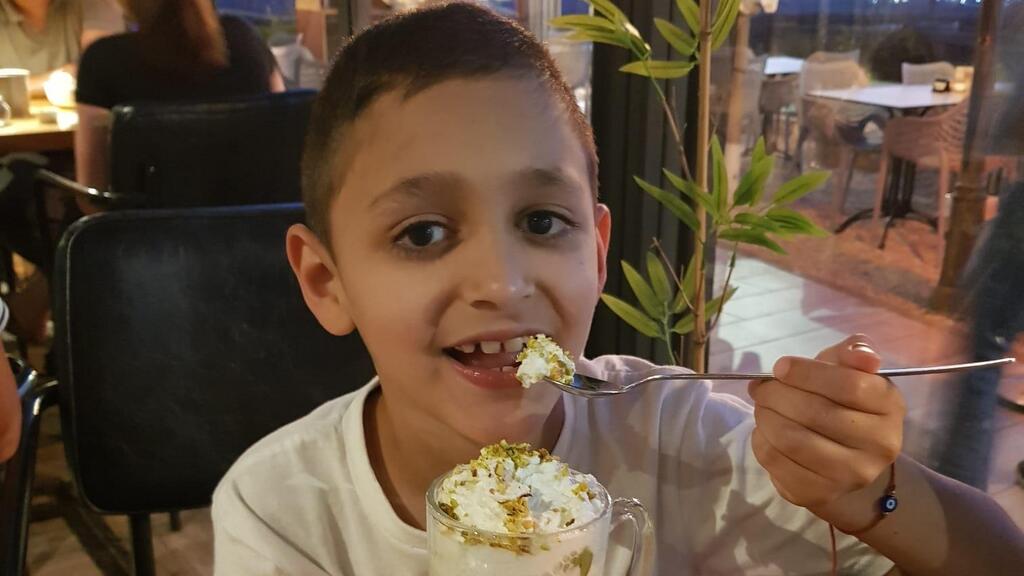
Daniel Yosef Cohen after the surgery
The second cornea was transplanted into a healthy 1.5-year-old girl who lost her vision just two months ago due to a traumatic fall that caused severe damage to one eye.
Dr. Ori Elbaz, a senior ophthalmologist at Schneider Medical Center, described the transplant as exceptional:
“Cornea transplants in children are always delicate and complex, but this case stood out—medically and emotionally. Two children with very different conditions received a life-changing gift from a fallen hero.”
Tami Pink, the transplant coordinator at Beilinson Hospital, shared:
“Approaching a family after the death of their son in war is heart-wrenching. As a mother of a soldier myself, I am in awe of how they found the strength to think of others and save lives in their darkest moment.”
Reei’s mother was deeply moved. “When they told us two children had regained their sight, it touched us deeply,” she said. “On the memorial flag we just made for him is one of Reei's favorite phrases: ‘All you need is a good heart and good eyes.’ And in the end, that’s exactly what he gave.”
A legacy of light
The Biran family will soon mark 30 days since Reei’s death. Tahal describes her coping strategy as “day by day.”
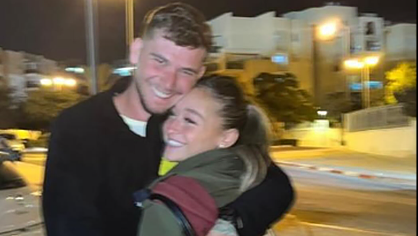
Reei Biran and his girlfriend
(Photo: from Instagram)
“We’re immersed in our grief, but we also focus on doing and thinking about how to spread his light to others. Reei was an exceptional leader and commander. I want to start a leadership workshop in his name for pre-army programs.”
Get the Ynetnews app on your smartphone: Google Play: https://bit.ly/4eJ37pE | Apple App Store: https://bit.ly/3ZL7iNv
Reei loved spending time with friends and family. “He lived life to the fullest—hanging out, going to restaurants. He knew how to turn 24 hours into 36,” said his mother.
He left behind his parents, Tahal and Dovav, his brother Omer (26), a psychology student and IDF reservist with over 300 days of service, and his sister, Ori, a rising high school senior.
To his girlfriend, Avia Rothschild, Reei left a farewell letter: “If you ever feel weak, look up at the sky. I’ll be there with you.”
Since the war began, Tahal said it felt like a constant back-and-forth between her sons. “One entered Gaza, the other came out. I learned to start each day with gratitude—that’s what kept me going. I’m thankful for my presence, my health, and those around me.”
Reflecting on the decision to donate Reei’s organs, she said: “There wasn’t even a moment’s hesitation. Every life we can save is a world unto itself. I encourage everyone to become an organ donor. Our whole family has signed Adi donor cards.”