

Canadian actress and comedian Claire Brosseau has become the face of a growing national debate over whether people with severe, treatment-resistant mental illness should be allowed to seek medical assistance in dying.
Brosseau, 48, says decades of psychiatric suffering have left her with no remaining treatment options. She is now seeking access to Canada’s Medical Assistance in Dying program, known as MAiD, even though the law currently excludes cases in which mental illness is the sole underlying condition.
Brosseau, who grew up in Montreal and is fluent in English and French, began her career at a young age. She finished high school at 16, entered a prestigious drama program in Quebec and later studied at New York’s Neighborhood Playhouse. Her career has spanned theater, film, television and comedy in Canada and the United States, including appearances on programs such as Entertainment Tonight Canada and The Strombo Show, as well as writing work in Los Angeles.
Behind the professional success, Brosseau says she has lived with severe mental illness since her early teens. Diagnosed with bipolar disorder at 14, she was later also diagnosed with anxiety, post-traumatic stress disorder, chronic suicidal ideation, an eating disorder, a personality disorder and substance use disorder.
Over more than 30 years, Brosseau says she pursued nearly every form of treatment available, including repeated hospitalizations, psychiatric care, psychotherapy, prescription medications such as antidepressants and antipsychotics and, more recently, guided psychedelic therapy. None provided lasting relief, she said.
Her condition has fluctuated over the years. In her early 20s, she was hospitalized for months after a severe depressive episode. Periods of improvement followed, allowing her to return to acting, but she says the suffering never disappeared.
In a recent interview with The New York Times, Brosseau described the contrast between her outward success and her inner turmoil. She said that while filming projects she enjoyed, she would return to her hotel room at night overwhelmed by despair and thoughts of death, only to appear functional and upbeat again on set the next day.
In 2021, after another sharp deterioration in her mental health and a suicide attempt, Brosseau decided to pursue MAiD, believing that the law would soon be expanded to include people whose suffering is psychiatric rather than physical.
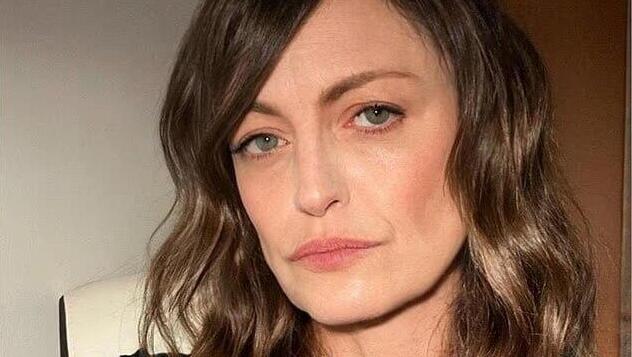
Claire Brosseau
(Photo: LinkedIn)
That expansion has not happened. While Canada permits medical assistance in dying for people with serious and incurable medical conditions, mental illness as the sole qualifying condition is explicitly excluded. The exemption was initially set to expire in 2023 but has since been delayed twice, with the earliest possible change now projected for 2027.
Brosseau has filed a legal challenge in Ontario’s courts, arguing that the exclusion violates her rights and discriminates against people with mental illness. She is pursuing the case alongside John Scully, a former war correspondent who suffers from PTSD.
“I’m asking for the same rights given to people with terminal illnesses — the right to choose when and how I die,” Brosseau has said.
Believing the law may eventually change, Brosseau has also begun preparing for the possibility of a legal assisted death, hosting what she has described as “farewell dinners” with friends and family.
Her case has reignited debate in Canada over autonomy, the definition of irremediable suffering and whether psychiatric illness should be treated differently from physical illness at the end of life.
Medical opinion in Brosseau’s case remains divided. One psychiatrist who evaluated her, Dr. Gail Robinson, told The New York Times that MAiD could be a reasonable option given her long history of treatment failure. Another psychiatrist who treated her, Dr. Mark Pappergard, said he believes her condition could still improve and warned against viewing assisted death as the only outcome.