

As Israel remains at war and many of its students continue to cycle between campus and reserve duty, those guiding them see their mission extending beyond academic excellence alone to include the needs of the state itself.
Speaking ahead of Israel’s 78th Independence Day, Technion President Prof. Uri Sivan says the country’s flagship engineering school has long seen itself as part of the state’s national backbone.
Interview with Technion President Prof. Uri Sivan


“We consider Israel’s security, Israel’s economy and Israel’s society as part of our mission,” Sivan said in an interview with ynet Global. “It’s not that anybody imposed that on us. But that’s how we feel.”
Sivan, who has led the Technion since 2019, said the answer came into focus after he was asked early in his presidency what makes the institution different from other universities in Israel and from elite engineering schools in the United States.
At first, he said, he thought of the usual measures: research, rankings, Nobel laureates and teaching. But eventually he concluded there was a third dimension.
“Every morning when I sit at my desk, I have Israel’s security, Israel’s economy and Israel’s society on my mind,” he said. “It dictates many of my decisions. So we’re mission driven.”
The Technion, which opened in 1924, predates the state of Israel by roughly a quarter-century. For Sivan, that history helps explain why the institution still sees itself as carrying responsibilities beyond campus.
Among the university’s many contributions, Sivan pointed to Nobel Prize-winning research, drug development linked to the work of its laureates and the Ziv-Lempel data compression algorithm. But when asked which Technion-linked innovation stands out most to him, he chose something simpler.
“My favorite is actually the simplest one,” he said. “And that’s drip irrigation, just a plastic hose and pores that don’t clog.”
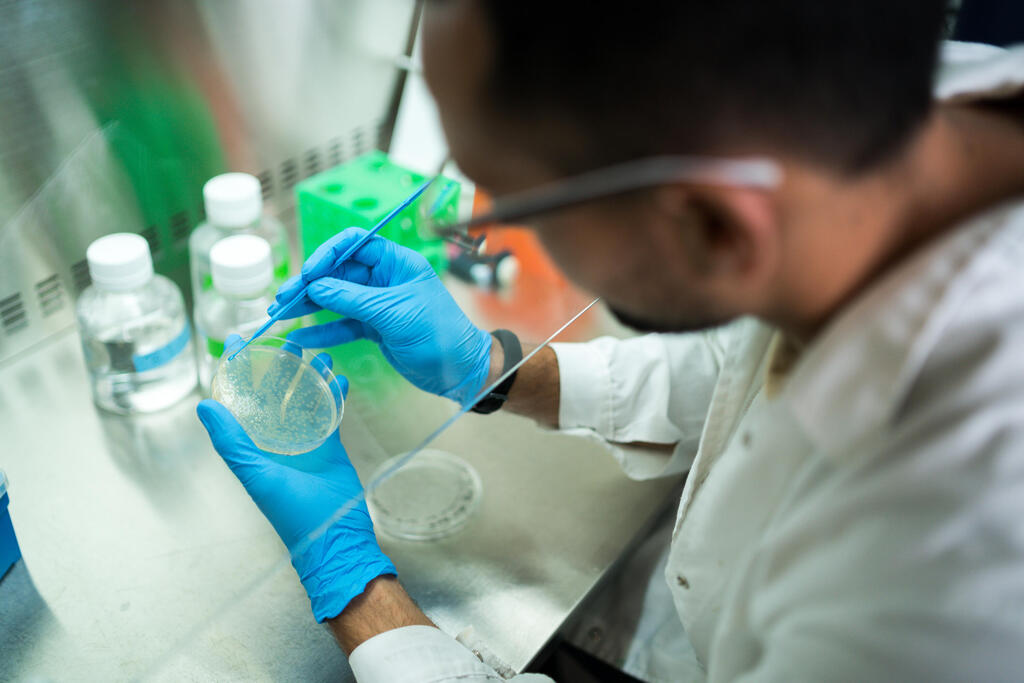
Calling it a world-changing innovation, Sivan said it now helps feed “over 1 billion people in arid areas around the globe.”
The interview came against the backdrop of war, which has disrupted daily life across Israel but, Sivan said, has not stopped the university’s work. He said the Technion has never shut its doors during major wars, from World War II to the present day. “Technion never closed its doors,” he said.
That continuity, he said, reflects both the institution’s commitment to the state and the demands placed on it by Israeli society. “Israel depends on our engineers, on our scientists, medical doctors, architects, educators,” Sivan said.
But he also acknowledged the toll of war on students called up for reserve duty. Drawing on his own experience as a reserve pilot during the 1982 war, Sivan recalled returning briefly for final exams and feeling disconnected from ordinary life.
“I remember this feeling of being strange to the rest of the world because reality just goes on,” he said. “Your colleagues who stayed in the university just kept studying.”
That memory, he said, has shaped the university’s response to thousands of reservists among its student body. “I know exactly how those reservists feel,” Sivan said. “We are committed to making it work so that one's not an obstacle to the other and that's remarkable here. We owe them.”
He said the university’s priority has been to keep those students from falling off track academically while also expanding emotional and psychological support. “The most important thing was just to keep them on track,” he said. “We supported them financially ... we put together an extensive academic support system. We essentially tailor the curriculum for each of them.”
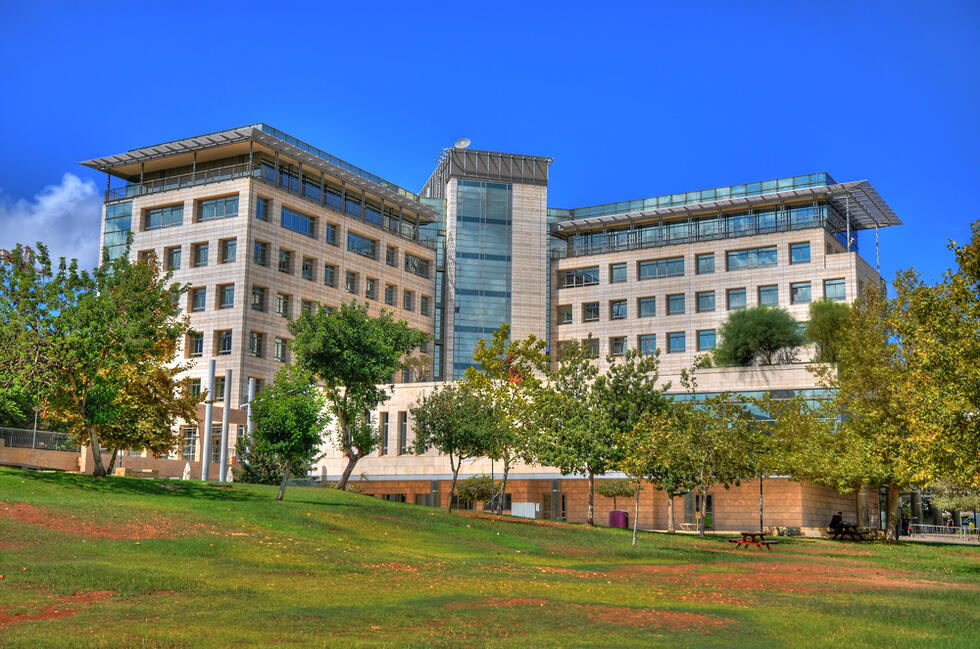
The Technion
(Photo: Shutterstock)
The Technion also expanded psychological services and trained staff to identify trauma and post-trauma symptoms, he said, adding, “We try to provide, to embrace them, to provide them with an extensive support.”
Sivan also described the university as having a broader obligation beyond Israel’s borders, particularly at a time of rising antisemitism on campuses abroad. “We always considered ourselves as the engineering school of the Jewish people, not just the state of Israel,” he said.
In response, he said, the Technion has opened opportunities for students and faculty from abroad and launched a first-year program in English for those seeking what he called an “antisemitism-free environment.”
At the same time, he said, academic boycotts and hostility toward Israeli institutions remain a serious concern. “This is a major challenge for us because academia depends on collaboration, academic exchange of ideas, and so on,” Sivan said. “Openness and inclusivity is part of the academic spirit.”
Rather than retreat, he said, the Technion is to blunt the damage by deepening formal partnerships abroad and expanding its ties to industry. He pointed to the Resnick-backed collaborative science program with Caltech and to the longstanding Cornell partnership, including Cornell Tech and the Jacobs Technion-Cornell Institute in New York, as examples of alliances meant to preserve research exchange and joint innovation even as parts of the academic world grow more hostile to Israeli institutions.
The pressure, he suggested, is not merely theoretical: in New York politics, Zohran Mamdani has called for a boycott of Cornell Tech because of its ties to the Technion, explicitly framing the issue through BDS logic. “It’s painful,” Sivan said, “but we are trying to mitigate those.”
His final summary of the institution’s stance was terse and unmistakable. “We are very stubborn,” he said.

First published: 14:34, 04.21.26