


Walking and aerobic activity have long been considered cornerstones of healthy aging. But a new study shows the question is not only how much people move, but also how strong their bodies are.
Researchers at the University at Buffalo found that older women with greater muscle strength had a significantly lower risk of death, even after accounting for physical activity levels, cardiovascular fitness and inflammation markers. The findings were published in JAMA Network Open.
“World Health Organization recommendations for physical activity say that in older age, people should combine aerobic activity, anaerobic activity — muscle strengthening for 150 minutes a week — and balance training,” said Miriam Greenstein, a physiotherapist at Meir Medical Center, part of Clalit Health Services. “This study examined the specific effect of muscle strength. It was based on data from 5,000 older women ages 63 to 99 and examined the link between muscle strength and mortality after eight years."
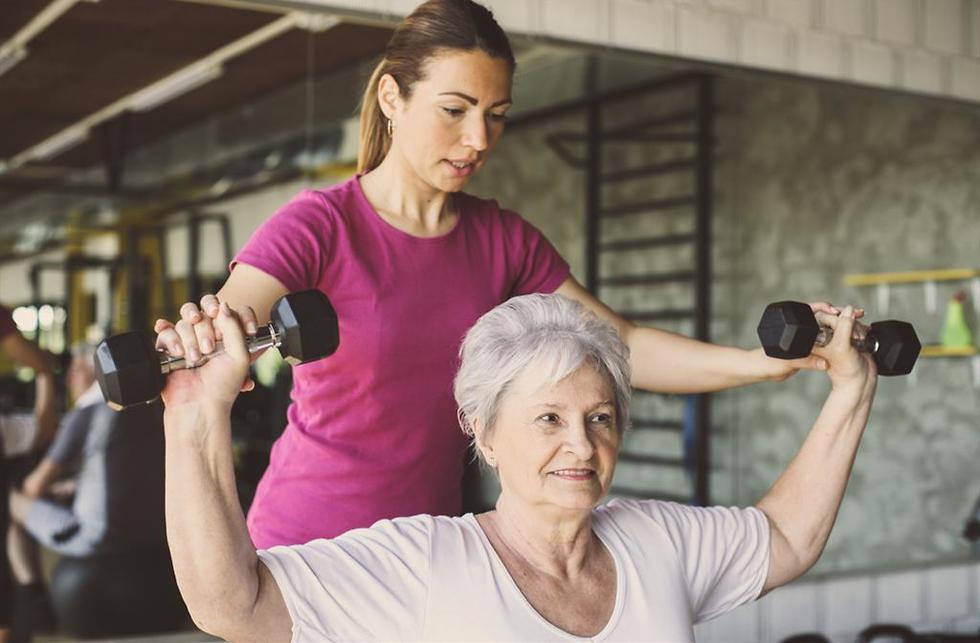
The study focused on two simple measures often used in medical settings to assess strength and function in older adults: grip strength and the chair stand test.
“These are two very simple tests to perform: grip strength, measured precisely in kilograms, and the ability to stand up from a chair five times in a row as quickly as possible,” Greenstein said. “Grip strength really measures strength. Rising from sitting to standing requires more than just strength. It is not a pure strength test, but it can reflect lower-limb strength.”
At the end of the study, women with stronger muscles were found to have a lower risk of death during the follow-up period. The researchers also found that every additional 7 kilograms of grip strength was associated with an average 12% reduction in mortality risk. Faster performance on the chair stand test was also linked to better survival: a 4% drop in mortality for every 6-second improvement, from the slowest to the fastest times.
What muscle strength means
Lead researcher Dr. Michael LaMonte, a professor of epidemiology and environmental health at the University at Buffalo’s School of Public Health and Health Professions, said it was the largest study to date examining the link between muscle strength and longevity among women over 60. Previous large studies often did not include detailed measures of physical activity, cardiovascular fitness and inflammation, making it harder to isolate the role of muscle strength itself.
“If you don’t have enough muscle strength to get up, it will be difficult to do aerobic activity such as walking, which is the most common leisure-time physical activity among adults in the United States aged 65 and older,” he explained. “Muscle strength, in many ways, is what enables a person to move the body from one point to another, especially when it involves movement against gravity. Healthy aging is probably best achieved through a combination of sufficient aerobic activity and muscle-strengthening activity. When we can no longer get out of a chair and move around, we are in trouble.”
The researchers also found that body size did not explain the link between muscle strength and longevity.
“We also showed that differences in body size do not explain the relationship between muscle strength and mortality,” LaMonte said. “Even when we adjusted strength measures for body weight and even lean body mass, a significant association with lower mortality risk remained.”
One of the study’s notable findings was that even women who did not meet standard physical activity recommendations still benefited from higher levels of muscle strength. Current guidelines recommend at least 150 minutes a week of moderate-intensity aerobic activity. Even among women below that threshold, higher muscle strength was linked to a significantly lower risk of death.

Physiotherapist Miriam Greenstein
(Photo: Anna Brandsma)
LaMonte said the finding strongly supports placing greater emphasis on muscle-strengthening activity in public health recommendations, especially for older adults.
“Because women aged 80 and older are the fastest-growing age group in the United States, the importance of monitoring and preserving muscle strength will have enormous public health implications in the coming decades,” he said.
Greenstein said the link between muscle strength and lower mortality risk is not entirely surprising, but the new study reinforces an important point: Muscle strength is not only a result of better health or greater physical activity, but may serve as an independent measure of an older person’s functional and health status.
“This connection is not new,” she said. “A person who is stronger finds it easier to function, easier to protect themselves and is at lower risk of falls. Having sufficient muscle strength helps us protect ourselves.”
Still, she stressed that the relationship between muscle strength and overall health is probably two-way.
“On one hand, good muscle strength enables better function and reduces fall risk. On the other hand, medical, nutritional and other conditions that negatively affect our general health also negatively affect muscle strength.”
She noted that grip strength, one of the key measures examined in the study, is also well known in clinical work with older adults.
“Poor grip strength is one of the indicators of frailty in old age,” she said. “This is a concept that has long been recognized, referring to the body’s general reserves in an older person and their ability to recover from medical events.”
The study’s main innovation, she said, is not the existence of a link between muscle strength and mortality, but the fact that researchers showed the connection remained even after accounting for other variables.
“These women’s general fitness level and daily activity levels were also examined. Even when those variables were isolated, the connection between muscle strength and mortality remained. That is really the study’s innovation,” she said. “The connection is not new, but the study emphasizes strength as something that stands on its own as a predictor of mortality risk.”
How to strengthen muscles in old age
The practical question is how to translate the finding into daily life. Greenstein said one of the main problems is that many older adults identify exercise almost exclusively with walking, while muscle strengthening is often left out. Walking is very important, she stressed, but it is not enough on its own to preserve strength.
“How can you strengthen muscles in old age? The same way you strengthen muscles at any age,” Greenstein said. “That is the important thing to understand. In older age, there is a very strong tendency to focus only on aerobic activity. I ask every older person who comes to the clinic or whom I meet in the department: ‘Do you exercise?’ Some tell me, ‘Heaven forbid, no.’ But even those who say yes, I always ask further: ‘What kind of exercise do you do?’ I want to see that they have all the necessary components.”
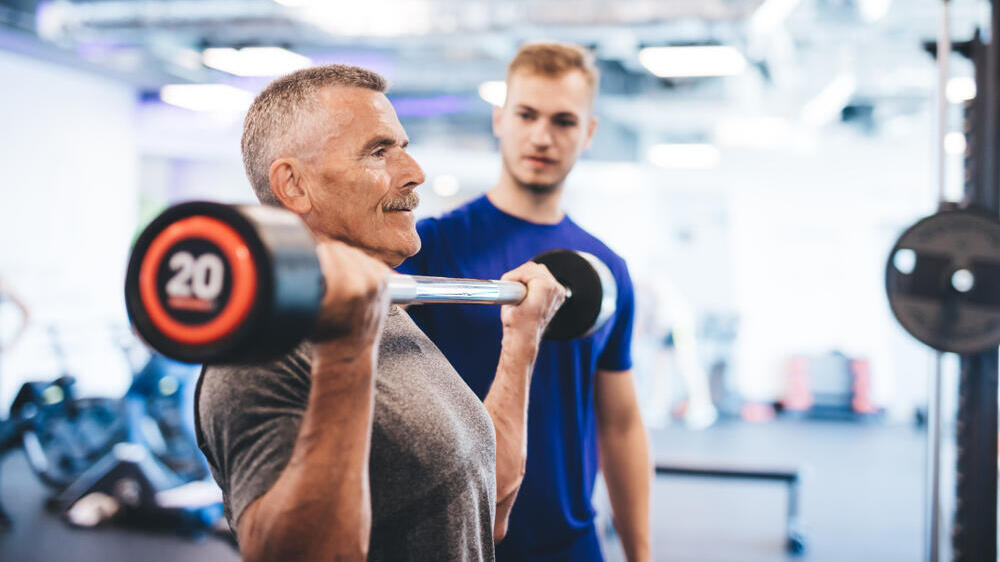
Walking is important but not enough. Strength training
(Photo: Shutterstock)
In many cases, she said, the answer is the same.
“The vast majority focus on walks — in the park, by the sea. Walking is very important, but ultimately it is only aerobic activity. Muscle strength in old age is neglected. There are many myths around it. If you Google ‘fitness in old age,’ you will see an older person lifting a 1-kilogram weight. So no: An older person, like at any age, needs to challenge the muscles to strengthen them, and work at a level suited to their ability.”
That does not necessarily mean intense gym workouts or expensive equipment. Gradual work at home can also be a good start, as long as it is adapted to the person’s condition and done carefully.
“Many times, at home, with people who are weak and find it hard to leave the house, I start small,” Greenstein said. “I tell them: Let’s use things you have at home. Many people have equipment, but when they don’t, you can work with water bottles. A 1.5-liter bottle weighs 1.5 kilograms. Of course, it is advisable and worthwhile to have guidance, to meet with a professional who can help build a personalized training program according to ability.”
Test yourself
Alongside muscle strengthening, Greenstein suggests a simple way to conduct an initial self-check of function. Grip strength requires a dedicated measuring device, but the chair stand test can be done at home.
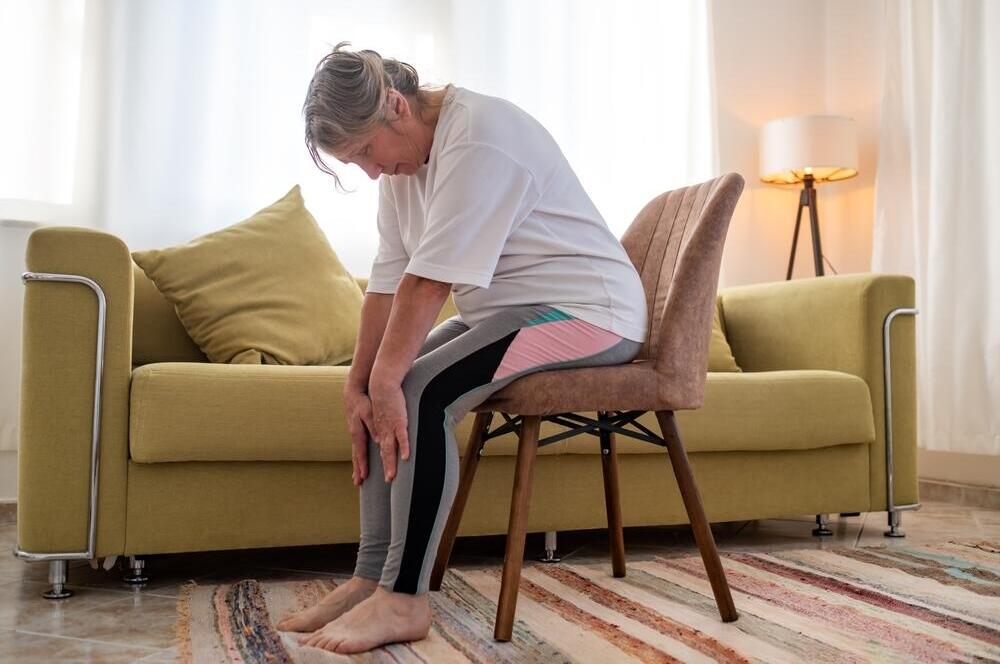
Stand up and sit down five times in a row and measure the time
(Photo: Shutterstock)
“Check yourselves. Standing up from sitting is something every person can test on their own. Sit on a standard-height chair, without armrests or at least without using them. Stand up and sit down five times in a row and measure the time.
“Anyone who does it in less than 13 seconds, meaning stands up and sits down five times in a row in less than 13 seconds, is at very low risk of falls,” she said. “It indicates good fitness, strength, speed and good condition. Above 15 seconds already indicates a higher risk of falls. In this study too, they saw that the average was around 15 seconds.”
First published: 09:34, 05.19.26