

“It was always important for us to be together. I would not want to go through this with someone I do not know. We draw strength from each other. It is this kind of shared fate, until we have had enough, and then we close the curtain between the beds,” said Sgt. Maj. H., 37, a reservist. He and Sgt. Maj. (res.) Y., 36, have been close friends for nearly 20 years, dating back to their regular service in the Givati reconnaissance unit.
Since October 7, they have logged hundreds of reserve duty days together in Gaza and Lebanon. About three weeks ago, they were seriously wounded by an anti-tank missile in Lebanon during an operational mission, and they are now hospitalized together at Tel Aviv Sourasky Medical Center, also known as Ichilov Hospital.
Gallery
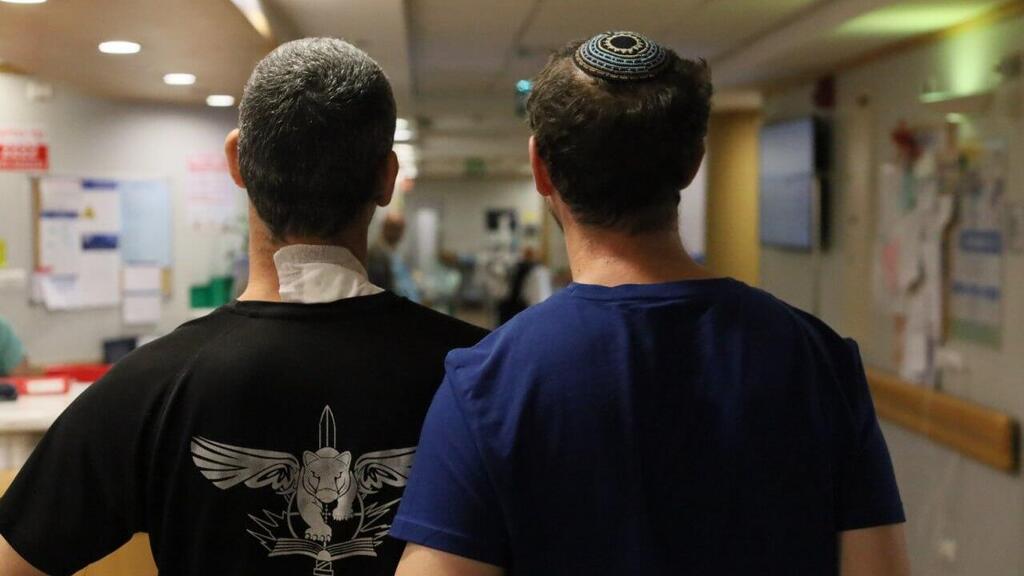
H. and Y., two IDF reservists wounded in Lebanon and hospitalized at Ichilov
(Photo: Miki Schmidt)
“The fact that we have known each other for so many years helps a lot, also on the emotional level,” Y. said. “There are things you go through over the years, and no one else knows you like that, no one else has been with you for hundreds of days, worn out in Gaza or Lebanon, on cold, rainy days or in the heat, when you are dying to get home and missing everyone. A certain intimacy forms between people, and an outsider would not understand it. We know how to step in and support each other when things are hard, when the pain is worse, to recognize it even just from a glance. Even the doctors are already getting confused about who is who.”
The two were called up to the north when the current campaign against Hezbollah began, as part of their service in the Bislah commando battalion. “Within 48 hours, we found ourselves inside Lebanon, in one of the villages in the Margaliot area,” Y. said. A short time later, they went on the attack, and while they were in a building they had captured at the forward position, a Kornet missile struck them.
H. and Y. were seriously wounded by shrapnel throughout their bodies, while the rest of the team, who were in an inner room in the building at the time, were not hurt. “It felt like someone hit you over the head with a table. A second later, I opened my eyes and immediately understood it was a missile,” H. said. “I looked to my right and saw Y. lying next to me.”
He said he feared another missile would be launched, and with great effort, managed to move away from the scene. At the same time, Y. tried to report the strike over the radio. “Later, it turned out the radio was not even working, but the guys heard the explosion and ran forward. I remember someone grabbed me by my vest. At first, I tried to get up by myself, but I could not, and he dragged me into another room.”
H. and Y. suffered shrapnel wounds across their bodies, from their faces to their legs, and their teammates gave them initial medical treatment. “One of the pieces of shrapnel entered through my neck, broke one of the vertebrae in my spine and cut one of the arteries,” Y. said. “The guys were lions and treated us quickly.”
A short time later, the two were evacuated, first by vehicle from Lebanese territory back to Margaliot, and from there by helicopter to Ichilov. “Already on the way to the helicopter, it was important for us to speak directly with our wives, so they and the children would stay calm, so they would know we were conscious and that we were OK.”
A sense of mission
When they arrived at the hospital toward evening, H. was photographed in a striking image, smiling at the camera. “For me, it was a kind of sense of mission, to show that no matter what condition we are in, we keep our heads up,” he said.
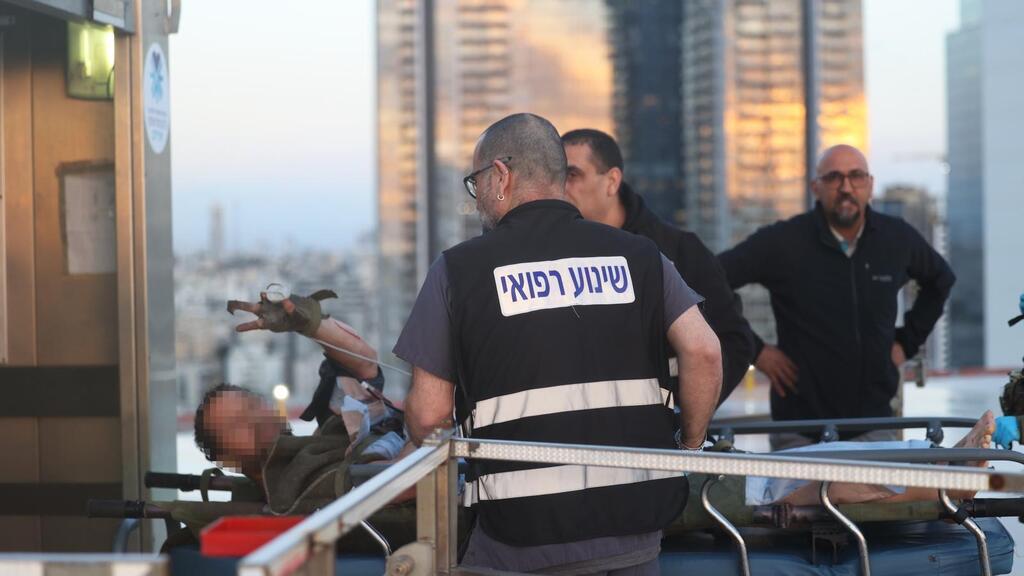
H. photographed upon the helicopter’s arrival at Ichilov
(Photo: Miri Getenyo, Ichilov spokesperson)
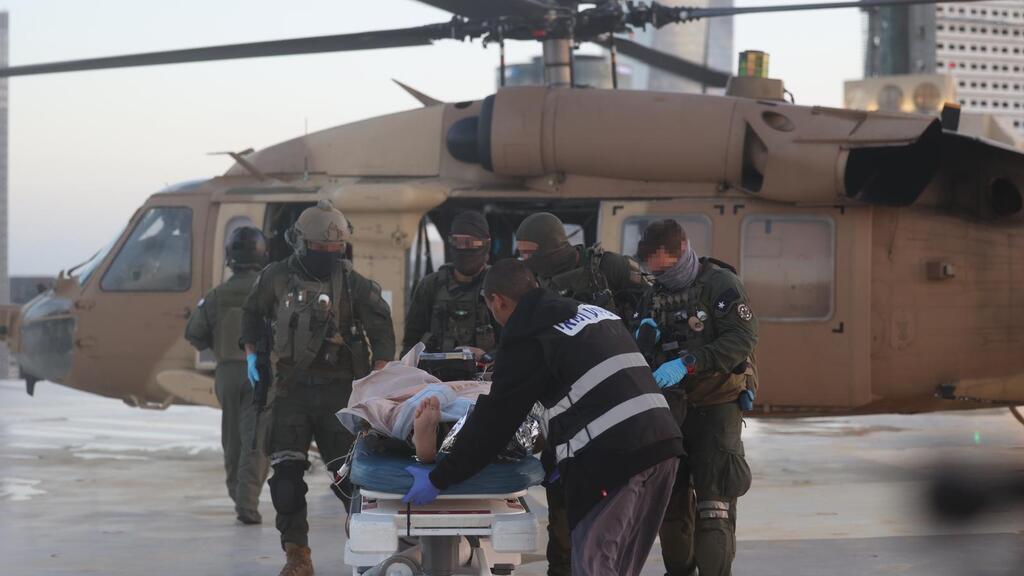
Y. at the moment the helicopter landed at Ichilov
(Photo: Miri Getenyo, Ichilov spokesperson)
When they reached Ichilov, the two were taken into the trauma room suffering from severe blast injuries. “This is a complex injury because it includes a combination of up to five different mechanisms of injury,” said Dr. Eyal Hashavia, head of the trauma division at Ichilov. “In this kind of injury, there is a challenge in assessing the severity of the condition in the first hour, and therefore management of the wounded must be carried out by teams skilled in the field.”
H. and Y. underwent surgery to remove some of the shrapnel and were hospitalized in the surgical division under the management of the trauma unit and a multidisciplinary team that included specialists in plastic surgery, orthopedics, neurosurgery, ear, nose and throat medicine, and oral and maxillofacial surgery. Later, they underwent a series of additional operations by plastic surgery specialists, all while the hospital was operating on an emergency footing, with hundreds of patients in protected underground wards.
“It was not ideal. I am lying there, H. is next to me, and the next bed over is already the women’s ward,” Y. said. “There was not much privacy, but we felt that all the staff, from the aides to the nurses and doctors, were doing everything to make your stay there as good as possible.”
After the ceasefire was announced, the wards returned to operating above ground. Y. and H. are expected to undergo additional surgeries in the coming days, after which they will begin rehabilitation.
Friends then and now
The bond between the two began nearly two decades ago in the Givati reconnaissance unit. “H. did not start basic training with us, he ‘climbed’ over to us from one of the special units,” Y. said with a smile. “He fit in immediately, as if he had been there from the very beginning.”
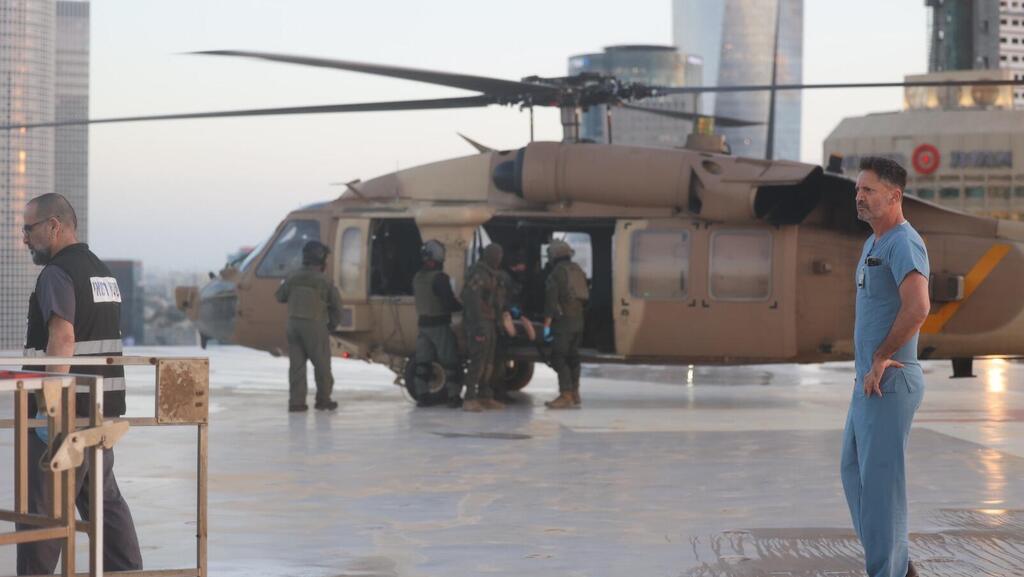
Dr. Eyal Hashavia, head of the trauma division at Ichilov Medical Center
(Photo: Miri Getenyo, Ichilov spokesperson)
Since 2011, they have served together in the reserves, while also becoming close friends in civilian life.
“We all choose to get under the stretcher again and again, with the willingness to pay a price,” said Y., who is married and a father of four. “In the end, the missile that hit us, in the worse scenario, could have hit a family in Moshav Margaliot while they were sitting down for a Sabbath meal or while they were playing in the yard. We have no doubt that the very fact that we are there keeps the threat away from the residents. They deserve quiet and peaceful lives.”
H., who is married and a father of five, added: “There is a very strong sense of mission. Alongside that, there are also the usual feelings of losing work, losing income, being far from the family. My daughter was born only four months ago. But in the end, you understand that if not us, there is no one else. With all the difficulty, it is a great pride to serve. In the past, we had conversations like, ‘Another round, and how much and why,’ but in the end, that fades away. Everyone showed up.”
He said the credit belongs to the families at home. “You can run forward, but in the end, if you do not have somewhere to return to and no one holding things together at home, it is much harder,” H. explained.
Only recently did the two receive another powerful boost to that sense of mission. A few days ago, as they lay in their hospital beds, a resident of Margaliot called them. “She said to us very emotionally, ‘Thank you so much for being there,’ and we told her we would do it another 20 times if needed. That sharpened even more for us why we are there,” H. said.
Despite everything, both men are certain that after rehabilitation, they will return to reserve duty. These days, they also want to send a message to the people of Israel: “Better days will come, just do not lose hope.”