

A new study is stirring debate in the scientific community: could the global population shrink by half within about 40 years? According to a mathematical model published in the journal Chaos, Solitons & Fractals, in what the researchers describe as a “conservative worst-case assumption,” Earth’s population could fall by roughly 50% by 2064 if a severe global crisis leads to a sudden collapse in humanity’s ability to use resources.
The study examined patterns of human population growth over roughly 12,000 years and argues that different phases of expansion, from the agricultural revolution to the present, can be explained through a single mathematical equation describing the interaction between population size and available resources.
Gallery
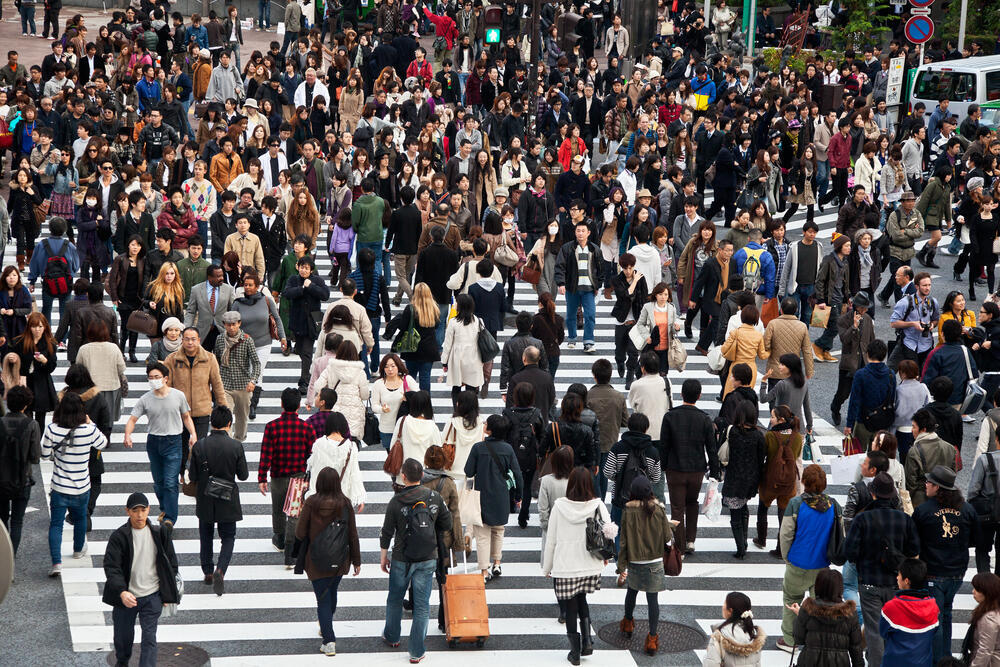
Could the global population shrink by half within about 40 years?
(Photo: Thomas La Mela / Shutterstock)
The researchers, physicists Alessio Zaccone from the University of Milan in Italy and Kostya Trachenko from Queen Mary University of London, say the model successfully reproduces known historical growth patterns, including exponential growth (Malthusian model), logistic growth and periods of particularly rapid expansion. However, they emphasize that the purpose of the study is not to predict the future with certainty, but to examine how sudden changes in global conditions could affect humanity.
According to the model, the world population, currently about 8.3 billion people, is still on a growth path that does not lead to a “worst-case illustration.” In fact, the researchers explicitly note that the widely cited 1960s prediction that humanity would approach mathematical infinity and collapse on November 13, 2026, has already been disproved as population trends have changed.
Still, the study also explores an alternative scenario in which environmental constraints suddenly become dominant, for example, due to an accelerated climate crisis, a severe global pandemic, large-scale war or resource shortages. In such a case, the researchers say, a rapid shift to global population decline could occur, potentially cutting the world population in half by 2064.
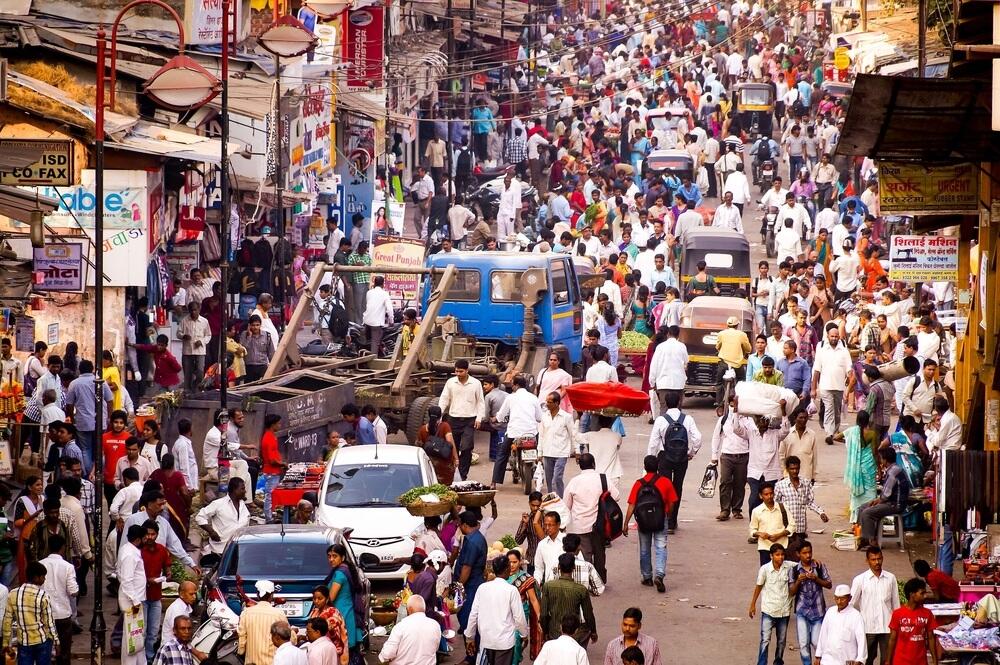
A rapid shift to global population decline could occur
(Photo: Shutterstock)
The researchers stress that this is a theoretical illustration of a possible scenario, not a prediction. “In the article we stress that this is not a forecast, but rather an illustrative mathematical scenario intended to show how sensitive population dynamics may be to abrupt environmental or societal changes,” they wrote in the paper. They add that the work is meant to provide a compact mathematical tool for examining different future scenarios.
The study adds to a growing body of warnings in recent years about the potential impact of climate change, food crises, geopolitical tensions and pandemics on the stability of human societies, while also noting that the future will depend heavily on decisions made in the coming decades.