

Visits by children and teenagers to psychiatric emergency rooms have risen 121%, prescriptions for a bedwetting medication among children evacuated from southern Israel are up 47.8%, and new diagnoses of high cholesterol among northern evacuees have climbed by about 60%, according to data released Sunday by Clalit Health Services three years after the October 7 massacre.
The report examined the health of about five million Clalit members from October 2023 through September 2026 and compared the findings with the two years before the war. While some health indicators remained relatively stable, others showed that the physical and psychological effects of the war have yet to subside.
Gallery
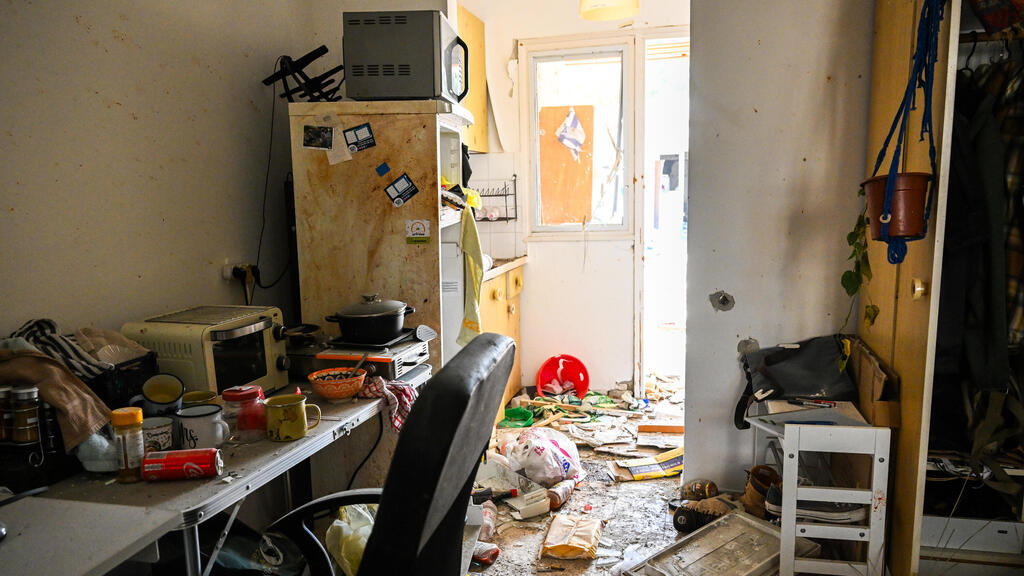
The destruction inside a home in Kfar Aza. The massacre’s effects continue to take a toll on physical and mental health to this day
(Photo: Alexi J. Rosenfeld/Getty Images)
“The war does not end when the security incident passes. It leaves a health imprint behind,” Clalit CEO Prof. Ehud Davidson said.
PTSD rates remain far above prewar levels
Across the general population, new anxiety diagnoses rose 45.5% during the first year of the war, while new diagnoses of post-traumatic stress disorder doubled.
The trend did not disappear over time. Referrals to and visits at community mental health services rose by about 20% to 28% over the three-year period.
Among residents evacuated from communities near the Gaza border and elsewhere in southern Israel, the figures were far more pronounced. New PTSD diagnoses were 18 times higher in the first year of the war than in the year before it, remained 11 times higher in the second year and were still six times higher in the third.
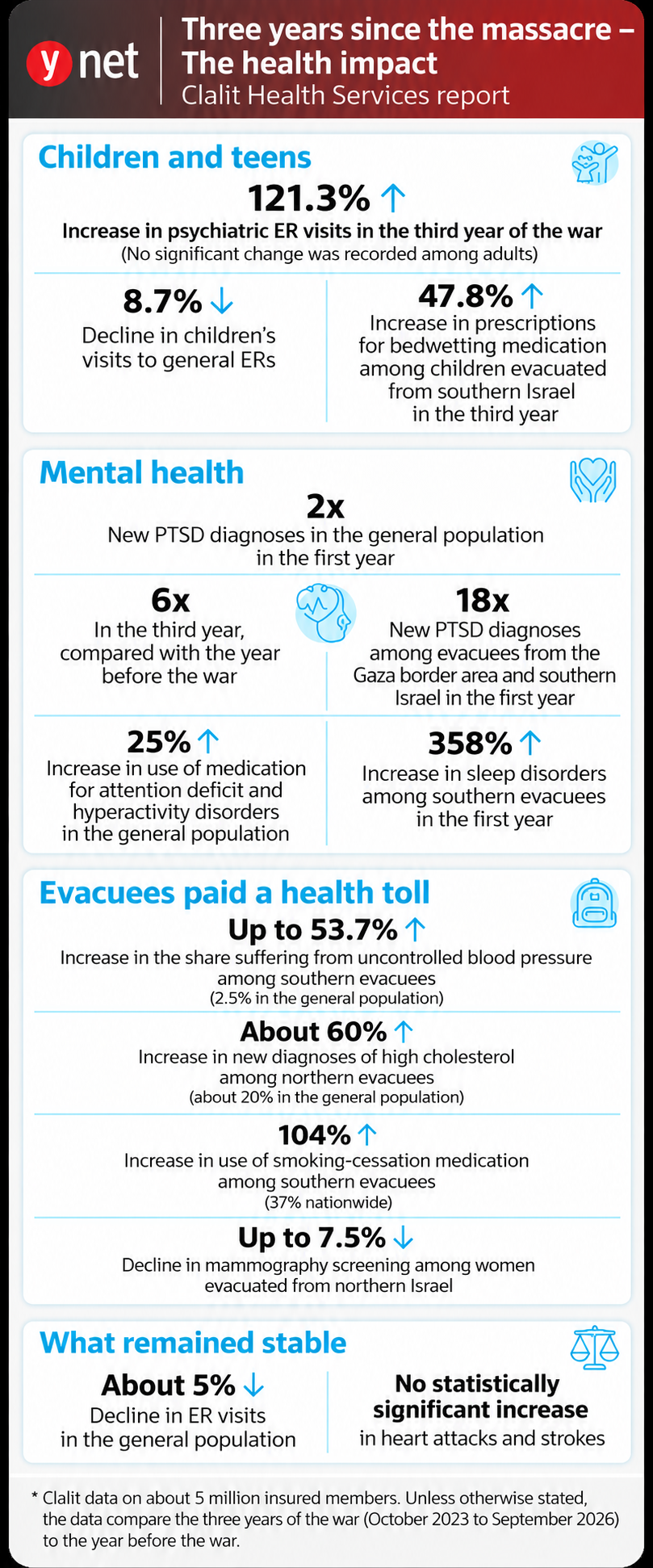
New anxiety diagnoses among southern evacuees rose tenfold in the first year, while sleep disorders increased by about 358%. Referrals to and visits at mental health services increased between twofold and 4.5-fold.
“The psychological consequences of the war and the events of Oct. 7 are not a temporary, isolated event, but a deep and ongoing crisis,” said Prof. Amir Krivoy, director of Clalit’s Geha Mental Health Center.
Krivoy said the fact that new PTSD diagnoses among populations exposed to high levels of stress remain two to six times higher than before the war even in the third year requires a broad response, including a significant increase in professional staff and specialized treatment frameworks.
Use of medication for attention deficit disorders increased by 25% in the general population, compared with 20.5% among southern evacuees and just 5% among northern evacuees.
The pattern was reversed for smoking-cessation medication. Use among southern evacuees rose 104%, compared with 37% nationwide and 26.7% among northern evacuees.
Sharp rise in child psychiatric emergencies
Among adults, there was no significant change in psychiatric emergency room visits. Among children and teenagers, however, visits climbed sharply, rising 78.3% in the second year of the war and 121.3% in the third, more than double the prewar level.
Referrals by pediatricians to mental health services rose 52.1%, while anxiety diagnoses among children increased by about 40% to 70%.
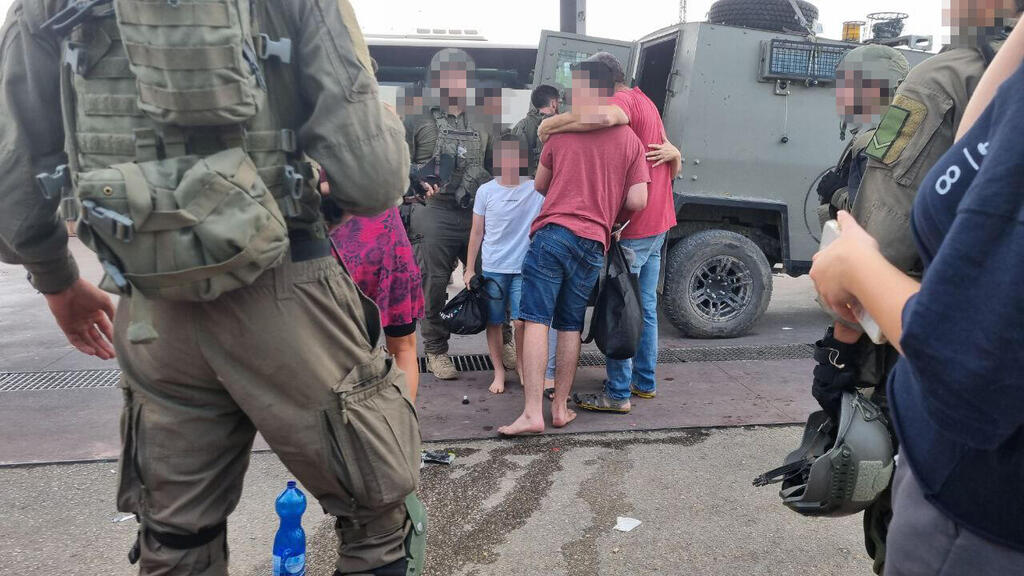
Evacuation of residents from Kfar Aza, October 8th 2023
(Photo: Ilana Curiel)
Among children evacuated from southern Israel, the distress was also reflected in prescriptions for Minirin, a medication used to treat bedwetting. Dispensing of the drug rose 47.8% in the third year.
The effects among evacuees were not limited to mental health. Among southern evacuees, the proportion suffering from poorly controlled blood pressure increased by between 30% and 53.7% during the three years, compared with just 2.5% in the general population. Diabetes control also worsened among southern evacuees during the first year.
New diagnoses of high cholesterol and other elevated blood lipids increased by about 20% nationwide and by roughly 60% among northern evacuees. Among patients already diagnosed with the condition, however, control improved steadily over time.
Dr. Avital Margalit, who heads Clalit’s Galilee administration in the Northern District, said many evacuees experienced major changes in their lifestyle and diet after spending months in hotels, eating several large meals a day, engaging in emotional eating and exercising less.
She said the deterioration in health indicators was smaller than expected.
“It is possible that the continuous contact maintained by medical teams with evacuees, through temporary clinics and telephone and digital medical services, helped limit the deterioration and contributed to the faster recovery we are now seeing,” she said.
Remote medicine surges
The shift toward remote medical care was evident nationwide. The overall number of primary care consultations remained relatively stable, but in-person appointments fell about 13%, while telephone consultations rose about 36%.
Among evacuees from northern and southern Israel, telephone consultations increased by about 50%.
Preventive medicine also suffered. Screening rates remained relatively stable nationwide, but mammography screening among women evacuated from the north fell by as much as 7.5%. Colorectal cancer screening among northern and southern evacuees declined by between 2.5% and 3.5%.
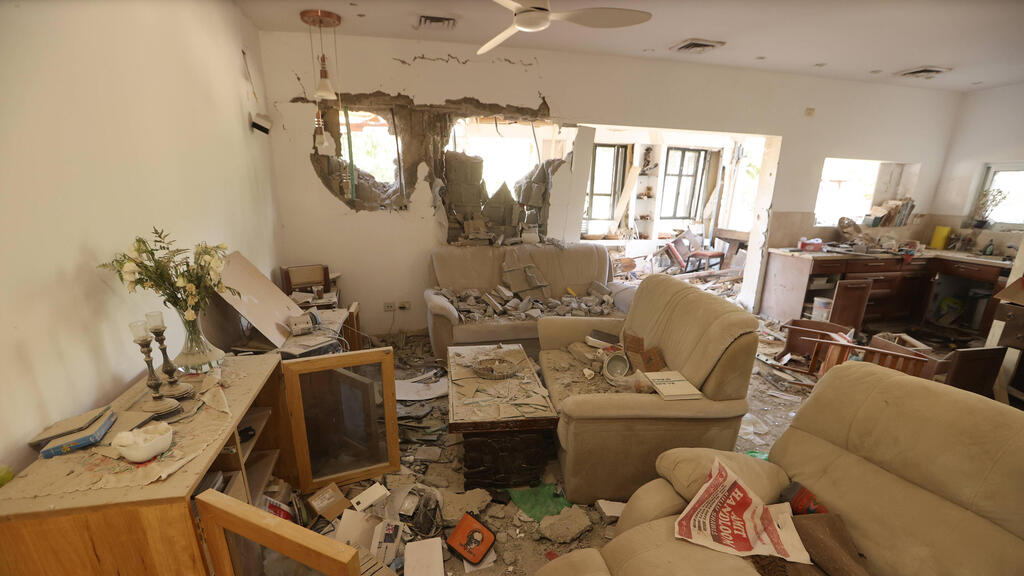
The destruction at Kibbutz Be’eri after the massacre
(Photo: Gadi Kabalo)
Over the three years of war, no statistically significant increase was recorded in heart attacks or strokes among the general population.
Dr. Anda Eilam, director of the Neurology Department at Kaplan Medical Center, said the stability in stroke rates may reflect the fact that changes in risk-factor control do not necessarily translate immediately into strokes, but may accumulate over time.
Emergency room visits among the general population fell by about 5%, while emergency hospital admissions declined by roughly 10%.
Northern evacuees showed the opposite pattern during the first years of the war, with emergency room visits increasing amid disruptions to daily life and reduced access to medical services in evacuation areas.
Among children, visits to general emergency rooms fell about 8.7%.
Dr. Dana Singer-Harel, a senior physician in the Emergency Medicine Department at Schneider Children’s Medical Center, said that during periods of fighting and rounds of conflict with Iran, children spent less time in schools and other frameworks, reducing their exposure to infectious diseases.
With fewer extracurricular activities and less scooter riding, injuries also declined, she said.
Parents also changed their behavior.
“Fear of the security situation led many people to tolerate symptoms that previously would have brought them to the emergency room, such as abdominal pain or rashes, and instead to wait,” she said.