

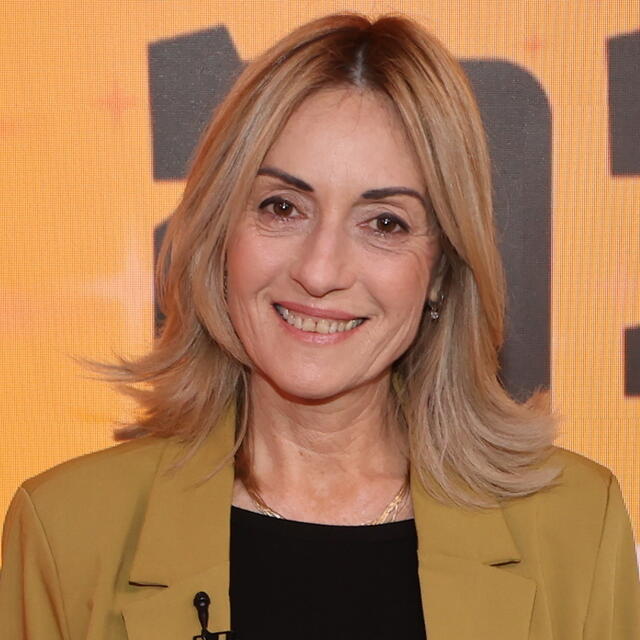
If the name Anat Aharon doesn’t sound familiar, that’s understandable—especially if you’re not among Israel’s wealthiest one percent or high-profile celebrities in Israel or abroad. Aharon is a cosmetic and therapeutic aesthetician, as well as the founder of her own product line, AMBER FORMULA. A partial list of her clients includes Rita, Miri Bohadana and Linor Abargil. Even businesswomen from abroad fly her in for treatments, such as Lorraine Schwartz, one of two Jewish sisters who dominate Hollywood’s diamond and jewelry industry, and Israeli–New York fashion designer Ronny Kobo.
Another loyal client base comes from religious and ultra-Orthodox communities in Israel, including Bat-Sheva Kook, granddaughter of Rabbi Kook. “She is a wonderful client,” Aharon says. “These days her grandfather is very ill, and we pray together for his recovery.”
Gallery
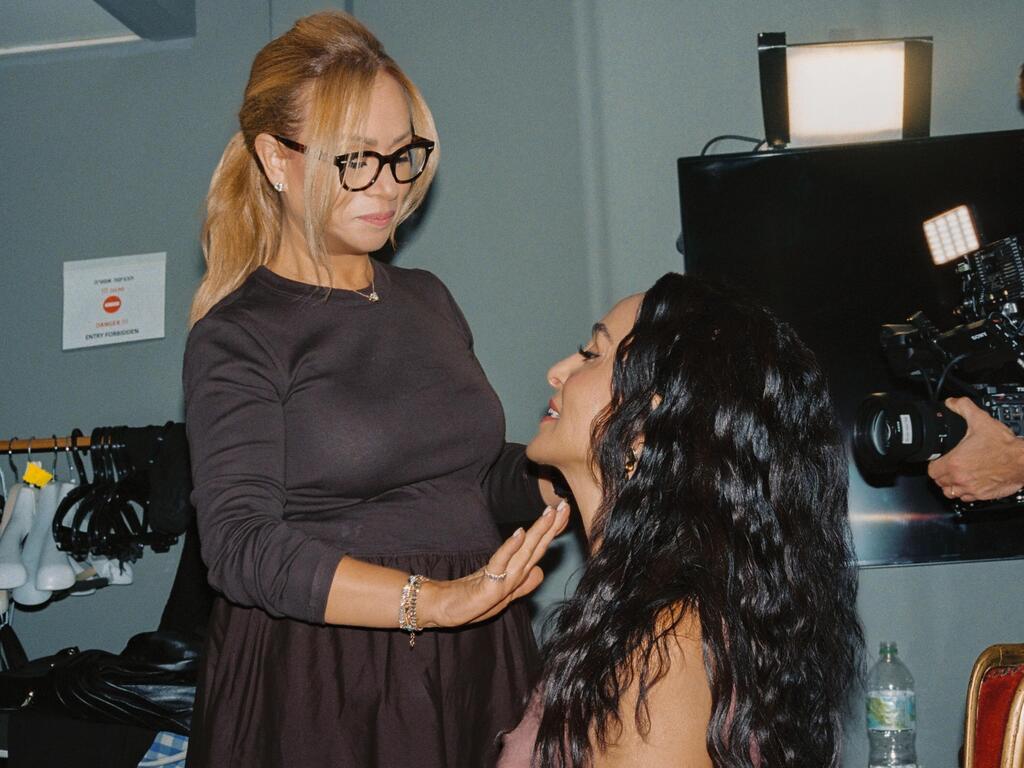
If the name Anat Aharon doesn’t sound familiar, that’s understandable—especially if you’re not among Israel’s wealthiest one percent or high-profile celebrities in Israel or abroad
(Photo: Elrun Rose)
She is approaching 60, married to Ariel—a former football referee—and mother of two sons, Idan and Omer, aged 26 and 30, all of whom work in the family business. She is also a grandmother to Rafael. For the past eight years, the family has lived in northern Tel Aviv, while developing a clinic in Herzliya that opened about three years ago and expanding internationally to the United States and Europe.
Looking back, her beginnings were far removed from where she is today. She was born and raised in Nazareth Illit (now Nof HaGalil). “I grew up in a traditional home, the youngest of seven children. Even as a child I was interested in the human body. While my siblings read adventure books, I read books about anatomy. As a teenager I dreamed of becoming a doctor, but it didn’t work out. My parents wanted me to be a teacher, like my sisters.”, one of two Jewish sisters who dominate Hollywood’s diamond and jewelry industry, and Israeli–New York fashion designer Ronn Kobo.
She enrolled at Oranim College but left after four months. “I came home crying and told my parents: ‘This isn’t it.’”
“At first it was hard for them to accept, especially when I said I wanted to study cosmetics—a field that wasn’t respected at the time. But eventually they understood it was what I wanted. My father used to say he might not be able to buy me a house, but he would pay for my education. When he realized this was truly my calling, he supported me financially. Unfortunately, he passed away about four years ago, but he lived to see my clinic and even apologized for not understanding at first where I could go. My mother passed away 20 years ago, but she did see me progress and fulfill my dream. I received full love, warmth, and support at home, which gave me self-confidence.”
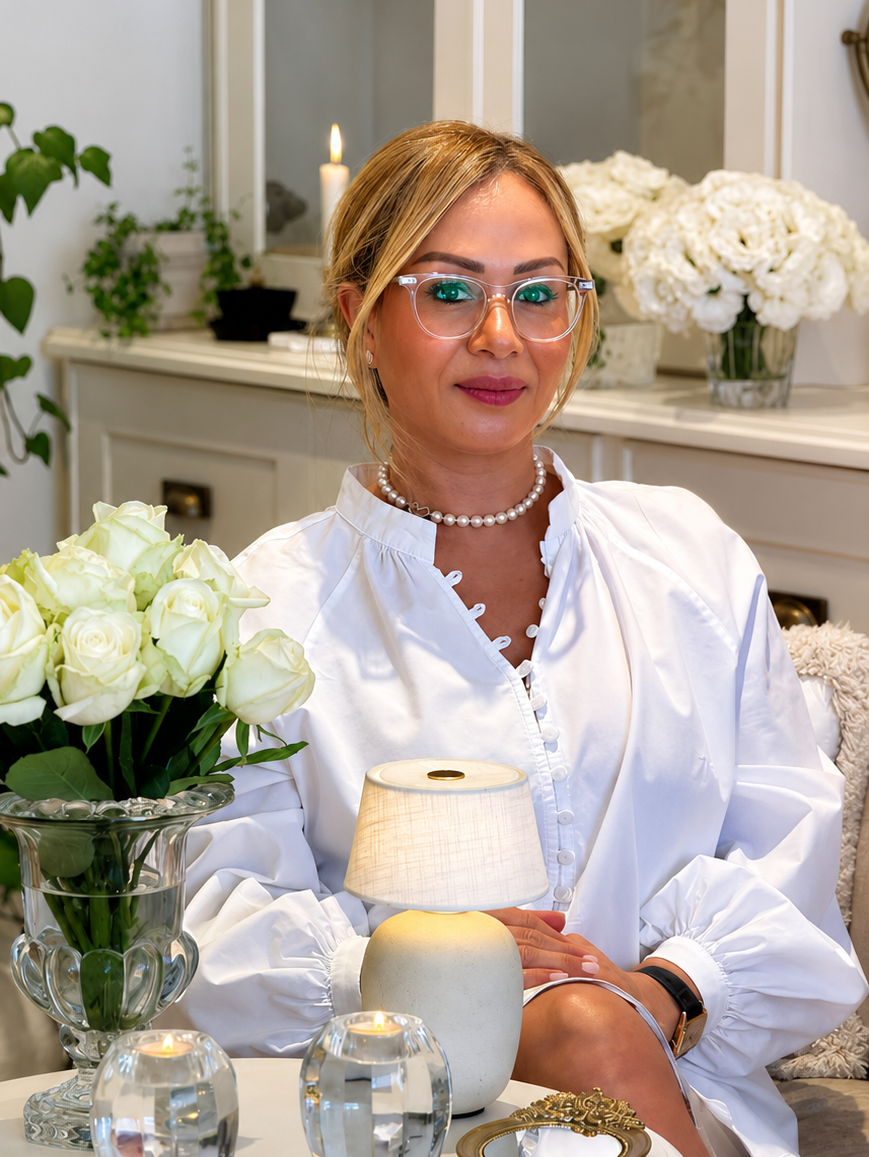
'I grew up in a traditional home, the youngest of seven children'
(Photo: Press release)
'I bring technology inspired by Maimonides'
Her traditional upbringing still shapes her worldview and working method. “At home we always spoke about the soul breathing life into the body. I began to understand the difference between the spiritual and physical worlds through the lens of the psyche. We also learned that natural medicine was central—herbs, healing plants, decoctions. I brought that holistic approach into aesthetics and medical cosmetology. My unique method draws, among other things, on the teachings of Maimonides, connecting body and soul through reading the ‘facial skin map.’”
She began studying cosmetology in Haifa. “After two years I realized I wasn’t learning enough. Treatments didn’t last. I knew I had to specialize abroad. I started flying to Paris, London, and elsewhere. While my friends brought back clothes and bags, I came back with cosmetic formulations and pharmaceutical materials.”
At 22, she began treating women in a small room in her parents’ apartment. “Very quickly my name spread by word of mouth, without marketing or PR. The breakthrough came after I developed a lymphatic drainage method. Clients began arriving from across Israel and the world.”
At 26, after getting married, she began receiving clients at home. “I realized I needed trusted people around me, because each formula costs tens of thousands of shekels. I asked my husband to join me, and thankfully he agreed. I was no longer ‘someone’s wife’—he became ‘my husband,’” she says with a smile. “We work together wonderfully. The decision to move to central Israel was mutual.”
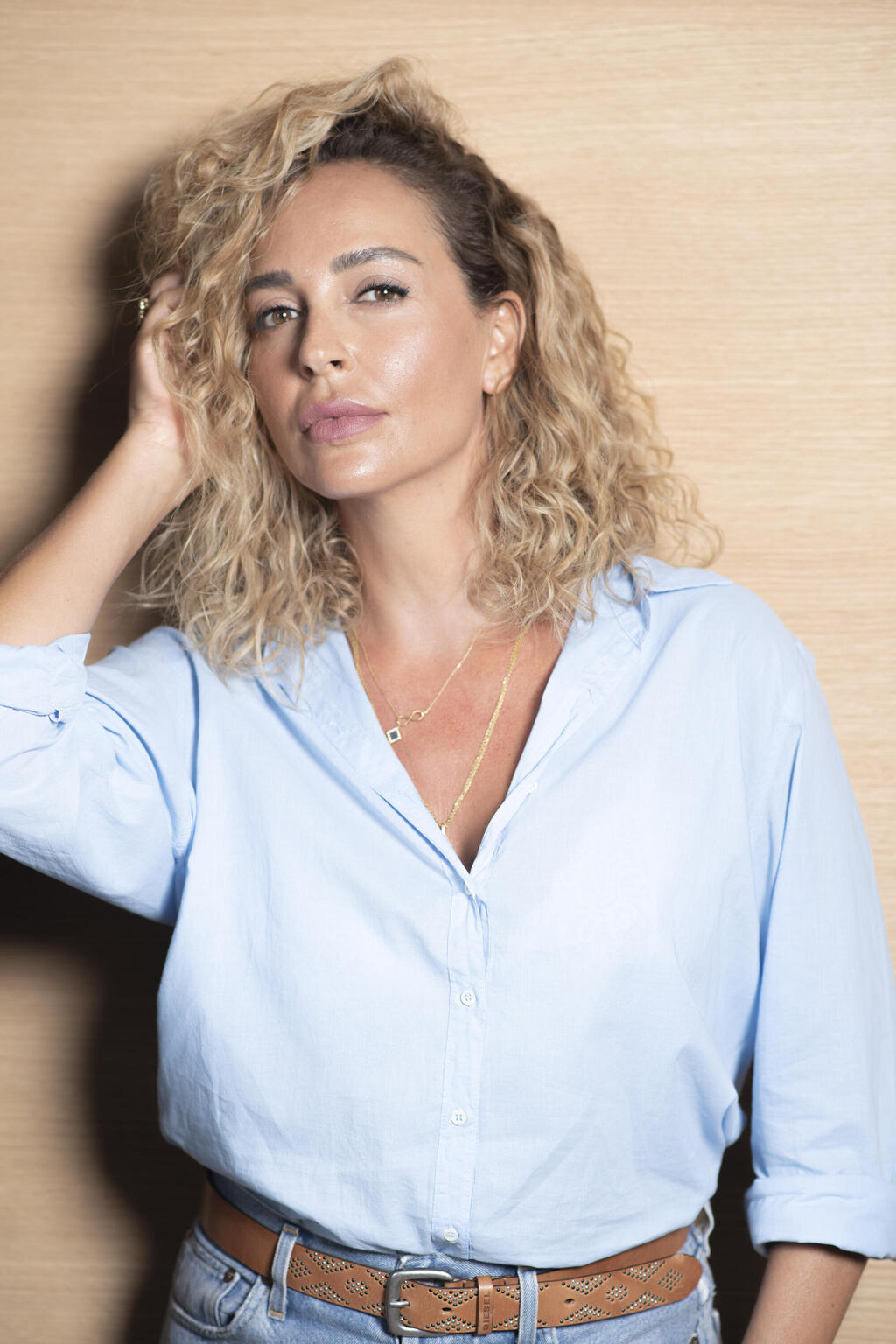
Miri Bohadana
(Photo: Yuval Chen)
Did she intentionally aim for an elite clientele?
“Not at all. I treat every woman, regardless of financial or social status. It’s true I have clients from the top economic tier, but that’s because they connect to the treatments and products. They also know discretion is absolute. Some choose to be public about it, others don’t. In the treatment room they are not a headline or a celebrity—they are a woman with skin and a life story. They lie down, release stress and pressure. Many come from worlds of power and visibility, but they come for results. And the rules are clear: everyone pays, no discounts, no free gifts.”
Gradually, alongside treatments, Aharon developed her product line, AMBER FORMULA, which continues to expand year after year. “My formulations are now sold in over 50 countries. I kept learning and developing products for clinic use, but when I realized my schedule was limited, I decided instead of expanding staff to replicate my knowledge into formulas—so what happens in the treatment room continues at home.”
Many women today prefer injectables and surgery.
“True. I respect every woman’s choice to go for aesthetic medicine or plastic surgery. But I offer a foundation of healthy, radiant skin without a scalpel, and I believe it’s better to delay invasive procedures if possible and improve skin quality without them. My approach is not to erase age or change faces, but to understand what the skin is saying. The face reflects fatigue, stress, hormones, nutrition, sleep, and life experiences. Sometimes what it needs is not cutting or filling, but precise care, listening, and patience.”
'Luxury is relative to results'
Let’s talk prices.
“Treatment costs range from 770 to 2,600 shekels, depending on the type. I recommend an initial series of four monthly treatments, then maintenance of two to four sessions per year. I also recommend continued at-home care with my products.”
The average product costs hundreds of shekels. Combined, this can amount to thousands per month.
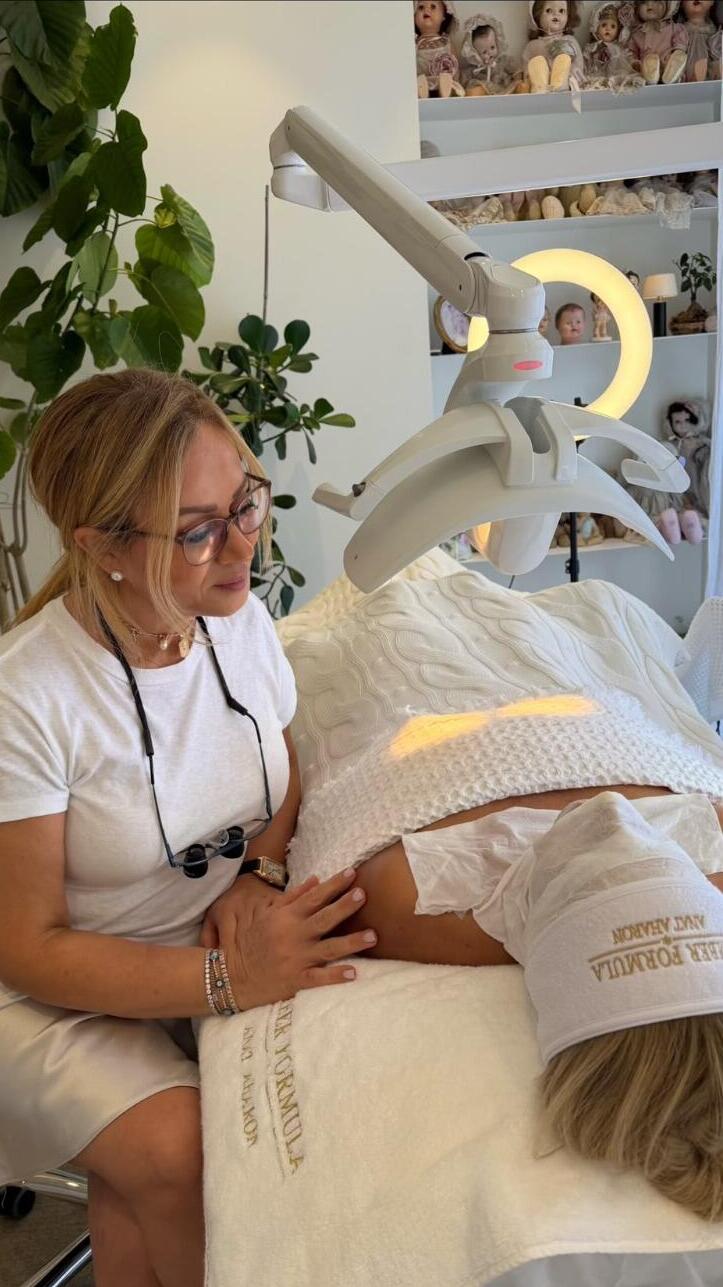
Gradually, alongside treatments, Aharon developed her product line, AMBER FORMULA, which continues to expand year after year
(Photo: Press release)
“Luxury is measured relative to results, not just price. Compared to the quality and outcomes, my prices are reasonable. If you break it down daily, it’s a few dozen shekels a day—like a coffee and a sandwich. It may not be cheap, but it’s an investment in yourself and your confidence. Each product line is tailored like haute couture. Every client receives an understanding of her needs and ongoing follow-up, with discreet, precise service. There’s a big difference between mass-market products and those developed through research and testing. Women often make mistakes chasing trends and overloading their skin with unsuitable products. Skin needs consistency, precision, and attention.”
For example?
“Women invest heavily in eyelid surgery, jawline tightening, and neck injections, but overlook the central feature of the face: the nose. After age 40 it widens, changes, loses definition, and has a major impact on appearance. I’ve launched two new patented products with a corrective ingredient for the nose. No one had thought of this before.”
Where do you see yourself in five to ten years?
“Continuing in Israel, but also spreading my skin philosophy around the world. Just today I got a call from Belgium asking me to come. A few days ago I returned from Miami. I see myself operating globally. With all humility, I believe I belong there. I was given a gift from God, and I’ve refined it through constant learning and development. People travel to me because they understand what they’re getting. I combine new technology with traditional, human touch.”
What remains of the girl who grew up in the periphery?
“I haven’t lost myself for a moment. I am still the same Anat from the north. I’m invited to the most exclusive events and I don’t go. I protect my privacy and my family’s privacy. I’m not drawn to a flashy lifestyle, even though I work with very wealthy people. I keep the values I grew up with—honesty, humility, and ‘love your neighbor as yourself.’ My children are the same. My hometown is proud of me, and I’m happy I reached where I always dreamed, achieving everything through hard work and persistence.”