


There are noises we learn to live with. Snoring is probably not one of them. It comes from the bed beside us, returns night after night and slowly breaks down one of the most basic things we need: good sleep.
For years, snoring was treated as a comic nuisance or a serious relationship problem. Today, it is increasingly understood as a possible sign of something happening in the body while we sleep. Put simply, behind that nightly sound there may be a real difficulty in airflow through the airways, one that can harm sleep quality, daytime alertness and, in some cases, point to a deeper health problem.
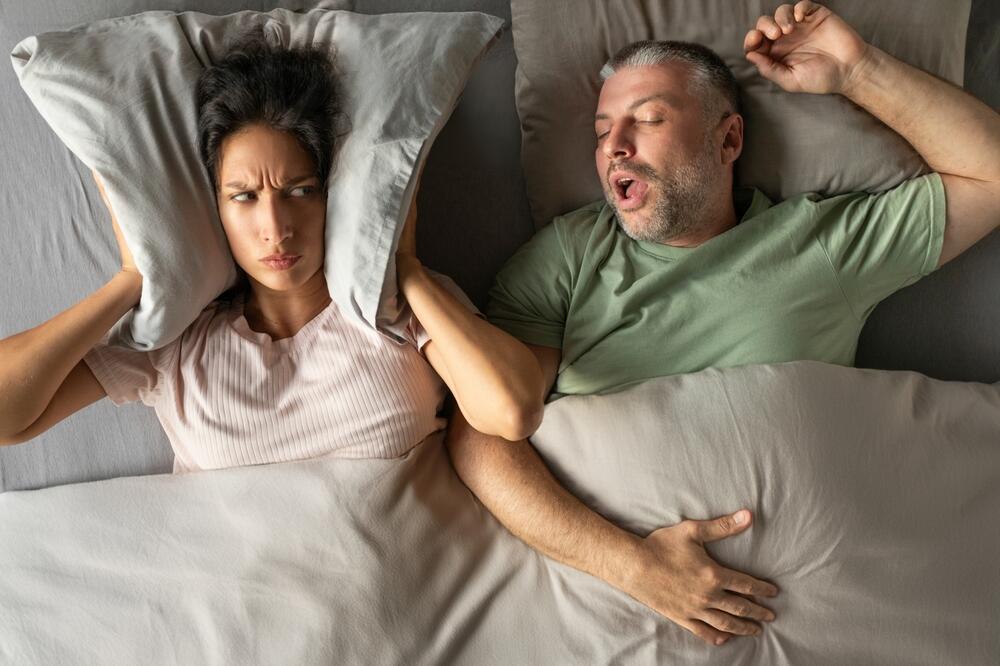
According to Dolev Braverman, a speech-language clinician and head of the speech field at the communication disorders clinic at Achva Academic College, snoring is first of all a mechanical phenomenon: vibration of soft tissue in the airways as air passes through.
“Snoring is basically vibration,” he explains. “When we inhale air, airflow passes through a narrowed area. That passage creates negative pressure, the soft tissues in the throat collapse and vibrate, and that is the sound we hear as snoring. For example, if you take two sheets of paper, hold them together and pass air between them, they will vibrate. That is what happens in the throat, which is a tube made of soft tissue and muscles.”
That vibration can occur in different areas along the throat, and in most cases it happens during inhalation. “Snoring essentially signals difficulty bringing air in,” Braverman says. “It will almost always happen during inhalation, and it is something that interferes with getting air inside.”
In simple terms, the noise heard from the outside is the result of air passing unevenly through a narrowed or partly blocked area of the airway.
But snoring does not always stand alone. It sits at the mild end of a broader spectrum known as obstructive sleep-related breathing disorders. At the more severe end of that spectrum is sleep apnea.
“Snoring is the lightest part,” Braverman says. “It is always seen as something funny, less medical, more like an aesthetic disturbance that affects quality of life. There is even a term called ‘snoring divorce,’ when people separate bedrooms because of snoring. It is seen more as a social quality-of-life problem, but studies show that even snoring alone has problematic characteristics.”
Those characteristics, he says, affect both the person who snores and those sleeping nearby. “Snoring has been linked to an increased risk of uncontrolled high blood pressure among adults,” he says. “It has also been found that children who snore may be at risk for cognitive difficulties if it happens more than a few times a night. In other words, snoring is not just an aesthetic disturbance. It should be viewed as a significant health issue.”
Beyond its possible health links, snoring first and foremost harms sleep quality. “It is treated like a noise disturbance, a noise hazard,” Braverman says. “People wake up more tired and less alert. There is also evidence that snoring can cause hearing decline in a partner. The structure of sleep itself may also change in people who snore. Among children who snore, changes have been found in typical sleep structure. The architecture of sleep is different between children who snore and children who do not.”
So what can be done about snoring? First, it is important to understand that there is no single solution that fits everyone. Snoring can originate in different points along the airway, so treatment depends on where the narrowing or vibration is taking place.
“It can be in the soft palate, at the base of the tongue or in the epiglottis. That is why there are different treatments and surgeries depending on the source of the vibration,” Braverman says.

(Photo: shutterstock)
Treatment options include both surgical and conservative approaches. One common conservative option is a dental device fitted by a dentist. “Its purpose is to move the jaw forward, and that action opens the airway,” Braverman says, though he notes such solutions are usually offered in cases of sleep apnea and not only simple snoring.
In other cases, especially when the blockage is related to the structure of the nose, palate or tongue, an ear, nose and throat procedure may be considered. “There are many types of surgeries,” he says. “Generally, the purpose of most surgeries for snoring is either to enlarge the airway or to allow better airflow through the nose.”
Another conservative treatment that has been shown to be effective involves functional work with a speech-language clinician on the muscles of the mouth, tongue and breathing.
“The treatment we offer is behavioral treatment,” Braverman says. “The goal is to strengthen the muscles, improve the endurance of muscles that may collapse and improve functions that affect strength in the oral cavity.”
While ENT specialists and dentists focus on the anatomical and structural side, he says, speech-language clinicians look at function. Treatment may include work on proper swallowing, nasal breathing and correct resting tongue posture.
“Proper swallowing is swallowing in which the tongue is on the roof of the mouth, and the pressure it applies is upward rather than toward the teeth,” he explains. “We also work on nasal breathing, habitual resting tongue position, both during swallowing and at rest, muscle-strengthening exercises and improving carbon dioxide tolerance during sleep.”
In children, the picture is somewhat different. Snoring in childhood is often linked to enlarged tonsils or adenoids, and in such cases the common treatment may be surgery to remove the tonsils and adenoids.
Braverman notes that in children with a narrow, high palate, expanding the palate at a young age can in some cases help open the airway. “You have to remember that the floor of the nose is the roof of the mouth,” he says. “If you widen the palate, you are actually allowing easier, more comfortable airflow, with less negative pressure.”
He also says oral function is especially important in childhood because it can influence facial growth and encourage better development. “In children with poor oral function, the face may become longer, narrower and more recessed, which raises the risk of snoring and obstructive sleep-related breathing disorders later in life.” Speech-language clinicians, he says, can be part of treatment for both children and adults.
Smart beds, sensors, masks and mouth guards
In recent years, technological solutions have also entered the field, aiming to address snoring in real time without waking the sleeper.
One example is the Smart Bed 360 by Swiss System from the Poliron Group, a smart bed equipped with a sensor that identifies snoring through physiological changes in the user. When the system detects snoring, it automatically changes the sleeping position until the snoring is reduced or stops. It also monitors sleep and breathing measures throughout the night, with the goal of improving sleep quality for both the user and their partner.
Another approach comes from the medical device field and examines whether breathing during sleep can be affected through the sense of smell. Apscent Medical, a company operating from the Hosen and Health Innovation Hub together with the Sderot Municipality, has developed a system that aims to identify changes in breathing patterns in real time and respond before snoring or airway obstruction worsens.
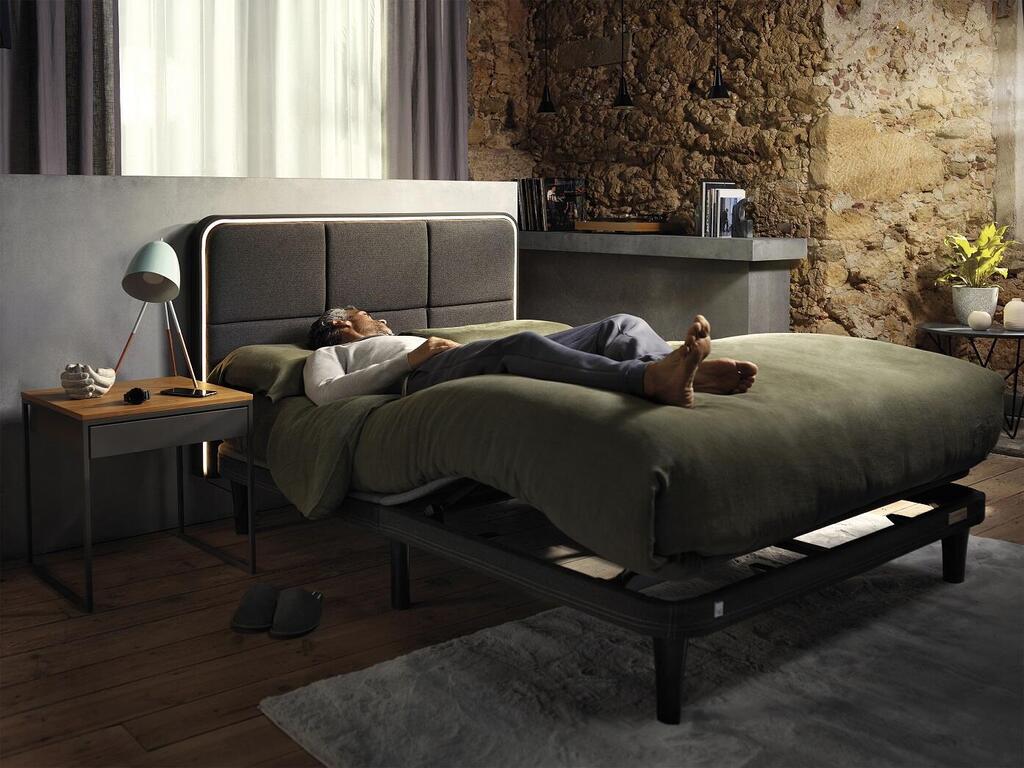
Smart Bed 360 by Swiss System
(Photo: PR)
According to company CEO Yossi Azulay, the idea is based on the fact that even during sleep, the body continues to respond to smells. “The nose is part of the respiratory system, but what is less known is that the sense of smell is directly connected neurologically to the breathing center in the brain,” he says.
During sleep, he explains, muscle tone naturally drops, including around the base of the tongue and the airways. In some people, that relaxation narrows the air passage. Air has difficulty passing, the tissues vibrate and snoring begins.
The company’s system is designed to detect that change in breathing through a sensor and release an odor stimulus at the right moment. The smell is not meant to wake the person, but to trigger a subtle sniffing response, a brief breathing reflex that may cause the body to take a deeper breath or reopen the airway. “The goal is to make the body breathe again without waking the person,” Azulay says.
When snoring is related to sleep apnea, there are also solutions designed to keep the airway open throughout the night. ReMed Sleep Medicine offers several treatment options, depending on the patient’s needs. One is a CPAP mask, which connects to a device that delivers air through positive pressure to keep the airway open during sleep, prevent blockages and allow safer, more continuous rest.
For patients who have difficulty adjusting to a CPAP mask, the company also offers dreamTAP, a custom-made dental device by the American company Airway Management. The device is designed to move the lower jaw forward during sleep, helping open the airway and reduce obstructions.
What can be done at home? Alongside proper diagnosis and personalized treatment, daily habits can also worsen snoring, and they are a reminder that snoring is not only a problem for the person sleeping next to us, but also a signal worth listening to.
“Heavy meals have been linked to snoring, so it is better not to eat very heavy food before sleep,” Braverman says. “It is also better not to go to sleep extremely tired, because that increases the risk of snoring. Drinking alcohol also raises the risk.”
In other words, when the nightly noise returns again and again, closing the door or turning over in bed is not always enough. Sometimes it is exactly the reason to stop, check what is happening to breathing during sleep and look for a solution that truly matches the source of the problem.