

As winter approaches, the familiar box of tissues returns to the table, along with a flood of well-meaning advice on how to ward off a cold. Every household has at least one traditional remedy passed down through generations: hot chicken soup when a runny nose starts, a glass of orange juice to "boost the immune system" and the familiar warning at the door: "You're not going outside with wet hair!"
But there can be a considerable gap between grandmother's wisdom and what modern medicine tells us. Dr. Guy Choshen, head of Internal Medicine Department B at Meir Medical Center, part of Israel's Clalit Health Services, examines the most common home remedies and myths surrounding colds, distinguishing between what works, what does no harm and what simply isn't true.
Gallery

Which remedies actually work and which just have good publicity?
(Photo: Shutterstock/yanishevska)
'Put on a coat or you'll catch a cold!': Myths about what causes colds
Myth: Going outside with wet hair causes a cold
This may be the most familiar warning from grandmothers, but according to Choshen, the answer is unequivocal: False.
"Colds are caused by viruses," he explains. "It makes no difference whether you go outside with wet or dry hair. People become infected through contact with other people and spending time around them."
It is true that some viruses, including the influenza virus, survive better at lower temperatures, but wet hair has no effect on that.
Myth: Air conditioning and cold weather cause colds
Here, too, the cold itself is not to blame. The cause is a virus, not the air conditioner or the chilly wind.
So why does everyone seem to get sick in winter? Some viruses survive better in cold environments, and during winter we tend to spend more time indoors and in close proximity to others, increasing the likelihood of exposure.
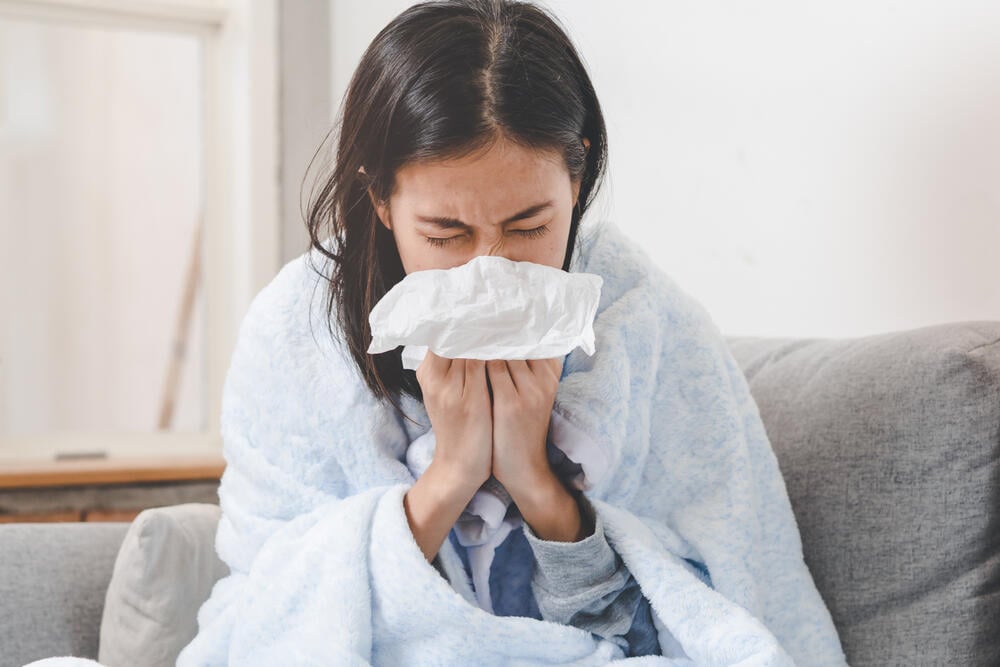
Why do we get sick more often in winter?
(Photo: Shutterstock/Pormezz)
Myth: 'It's just a cold'
According to Choshen, the common cold is not a distinct medical diagnosis but a general term for a mild viral illness. Medical professionals use the term "influenza-like illness" to describe a range of viral illnesses with similar symptoms.
A group of approximately six or seven viruses can cause similar symptoms, including a runny nose, congestion, sore throat and a general feeling of being unwell. Family physicians generally cannot identify the specific virus based on symptoms alone unless an antigen test or another microbiological test is available at the clinic.
The severity of an illness also does not necessarily indicate which virus is responsible. The same virus can cause severe illness in one person and very mild symptoms in another, partly because of the interaction between the virus and the infected individual.
From grandma's kitchen: Chicken soup, vitamin C and avoiding milk
Vitamin C: Neither prevents nor shortens illness
Orange juice to "boost the immune system" is probably one of the most popular traditional remedies.
But studies have found that taking daily vitamin C supplements offers no benefit in protecting the general population against influenza or similar viral infections, nor does it shorten the duration of illness.
The good news is that vitamin C is unlikely to cause harm at reasonable doses, and it can always be obtained naturally from fruits and vegetables.

Orange juice
(Photo: shutterstock)
'Avoid milk. It increases mucus production'
For some people, drinking milk can cause gastrointestinal reactions, such as intolerance, gas or bloating, and sometimes a sensation of increased mucus. But this has no direct connection to a respiratory illness or any particular virus.
Even if a dairy product makes someone feel as though they have more mucus or causes them to cough, that does not mean it will also increase nasal discharge. These symptoms can occur independently.
Chicken soup: Not a cure, but still recommended
No research supports the claim that chicken soup cures influenza or influenza-like illnesses or shortens their duration.
Nevertheless, Choshen recommends keeping it on the menu. It poses no inherent danger, has excellent nutritional value and provides emotional and psychological comfort.
In other words, grandma's warm bowl of soup won't eliminate the virus, but it can certainly make us feel better.

If it doesn't cure the body, at least it comforts the soul
(Photo: Shutterstock/Juefrateam)
'Green mucus? You need antibiotics'
Another common belief is that green or yellow nasal discharge indicates an infection requiring antibiotics. But the color of nasal mucus alone does not establish a need for antibiotic treatment.
Nasal discharge can change color and consistency during an illness, and that does not necessarily mean a bacterial infection is present.
It is important to remember that antibiotics treat bacteria, not viruses. Antiviral medications are used to treat certain viral infections.
What does research say about other traditional home remedies?
Beyond the remedies Choshen discussed, we examined what scientific research has found about several other popular home treatments.
Hot tea: There may be something to it
In a 2008 study conducted at Cardiff University, 30 people with colds were given either a hot fruit drink or the same beverage at room temperature.
The hot drink did not improve nasal airflow when measured objectively, but participants reported immediate and sustained relief from a runny nose, coughing, sneezing, sore throat, chills and fatigue. The room-temperature drink relieved only some of the symptoms.
The researchers did not rule out the possibility that part of the effect was due to a placebo response, but concluded that their findings supported the traditional practice.
Honey: May help relieve coughs, but is unsafe for infants
A systematic review by researchers at the University of Oxford, published in 2020 and covering 14 studies, found that honey improved cough frequency, cough severity and overall symptoms compared with usual care.
However, honey was not proven to be more effective than a placebo, and the researchers called for additional high-quality studies.
Important: Honey must never be given to infants under 1 year old, in any form. It can contain spores of the bacteria that cause infant botulism, a rare but serious illness.

Honey may help relieve a cough
(תמונה: Shutterstock/gpointstudio)
Garlic: Not enough evidence
One study found that people who took garlic supplements for three months reported fewer episodes of the common cold. However, recovery times were similar in both the garlic and comparison groups.
The conclusion: There is insufficient evidence to recommend garlic for preventing or treating colds.
Steam inhalation: May feel good, but benefits are unproven
Inhaling steam is a longstanding home treatment for nasal congestion.
A 2017 Cochrane review found no clear evidence of either benefit or harm from heated, humidified air in treating the common cold and therefore did not recommend it as a routine treatment.
Can traditional home remedies be harmful?
Generally, no. According to Choshen, going outside with wet hair, eating chicken soup or taking reasonable doses of vitamin C does not cause harm. These practices simply do not cure a cold.
So what does help?
For a mild cold, staying home, resting, drinking warm beverages and allowing time for recovery remain the best advice. As it turns out, grandma was right about that part.
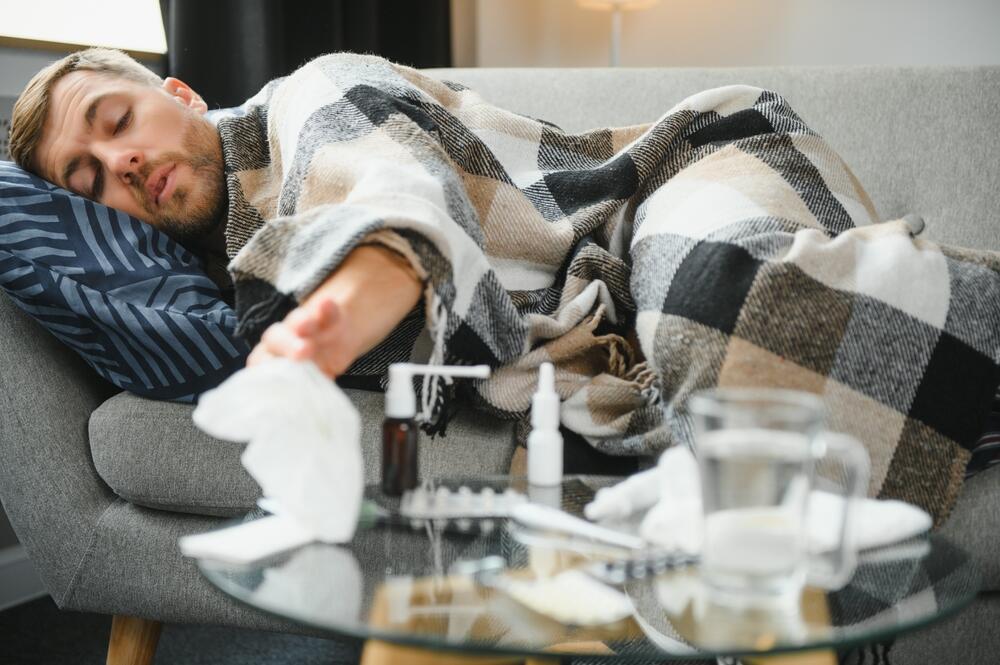
Eventually, even a cold will pass
(Photo: Shutterstock/Hryshchyshen Serhii)
To relieve a runny nose and congestion, over-the-counter products such as saline nasal sprays or medications that reduce nasal secretions and dry the nasal membranes may help. However, this is not a blanket recommendation. Some products have side effects, so it is important to use them according to instructions and avoid prolonged use.
It is also important to remember that these treatments address symptoms, not the virus itself.
People who have been vaccinated against influenza can still become ill because the vaccine protects against influenza viruses, not other respiratory viruses, and its effectiveness varies from one winter to the next.
Is it possible to avoid catching a cold altogether?
The only way to completely eliminate the risk of infection would be to isolate yourself at home and wear a surgical mask. But because humans are social creatures and spend more time indoors during winter, the spread of respiratory viruses from person to person will remain a part of everyday life.
And yes, even a mild cold without a fever is contagious. The recommendation is to avoid going to work, school or crowded places when sick.
For influenza accompanied by fever, muscle aches and weakness, the standard advice is to resume normal activities at least 24 hours after the fever has subsided, provided symptoms are improving.
A cough or runny nose that persists for two or three weeks does not necessarily mean a person is still contagious. However, anyone who continues to feel unwell is better off staying home.

Rest remains one of the best remedies
(Photo: shutterstock)
When should you see a doctor?
- Traditional remedies may provide comfort, but certain symptoms require medical attention:
- Significant shortness of breath.
- Inability to eat or drink, or vomiting.
- Reduced alertness, apathy or a marked decline in energy, particularly among children and older adults.
- A high fever that does not resolve within 72 hours.
The bottom line is that most traditional home remedies will not cure a cold, but they generally will not cause harm either.
So if a bowl of hot soup or a cup of tea with honey makes you feel better, there is no reason to give it up.
Just remember that what really gets you through a cold is time, rest and your body's own ability to recover.