

“Two weeks ago, Elad was at the beach with friends. Two drones passed overhead, and within seconds he was back to that morning. He lay down on the sand, shaking and struggling to breathe. I had to call Magen David Adom and guide his friends on how to handle the anxiety attack he was having there,” says Osnat, the mother of Elad Amos Hasson, 25, from Herzliya, who survived the massacre at the Nova festival but has struggled to recover ever since.
Since that Saturday on October 7, Elad has not returned to work. According to him and his mother, he wants to, but cannot. He lives with severe anxiety attacks, avoids situations that could overwhelm him and is asking for only one thing: to enter a stabilization home for a period that would allow him to undergo real rehabilitation. But according to him, the funding approved for his case covers only one month, a period that does not allow for real treatment.
Gallery
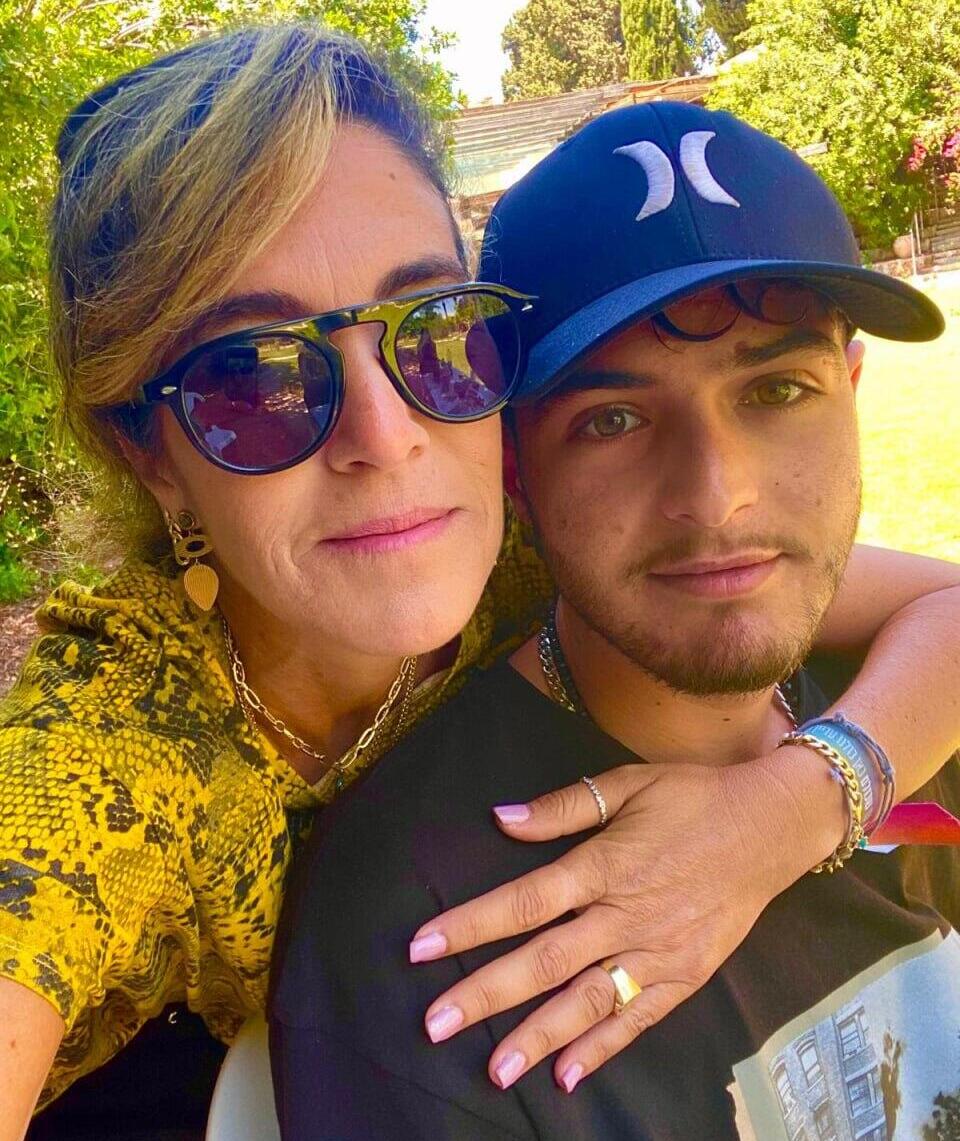
Elad Hasson and his mother Osnat: 'As mother of a Nova survivor, I am not supposed to chase after help. Help is supposed to chase me'
(Photo: Courtesy of the family)
“I would really like to get help. I’ve been chasing it for too long,” Elad says. “To go for one month and that’s it? What for? It’s a temporary Band-Aid. I need to go through a process. Even a flower takes time to bloom; you have to care for it. A month is the time it takes the body to release stress. How can you treat the soul in a situation like that? Only after a period of time do you really begin to heal.”
About two years ago, he entered a private stabilization home after his family raised tens of thousands of shekels to fund his stay. “No one from the state helped. Today, when I already know what treatment I need, I have nowhere to get tens of thousands of shekels.”
The struggle is visible every day
His mother has been fighting since October 7 alongside other parents on behalf of Nova survivors, in Knesset committees and anywhere else possible. She is not waiting for someone else to fight for her son.
She has accompanied survivors and even helped save the life of one who turned to her during a suicidal crisis. But, she says, while she was fighting for others, her own son’s condition only continued to deteriorate.
“For three years I have been fighting for everyone,” she says. “What about my child? I am not asking for pity. I am only asking that he be treated.”
According to her, Elad is doing everything he can to hold himself together. He is a professional surfer, spends hours at sea and volunteers at children’s camps.
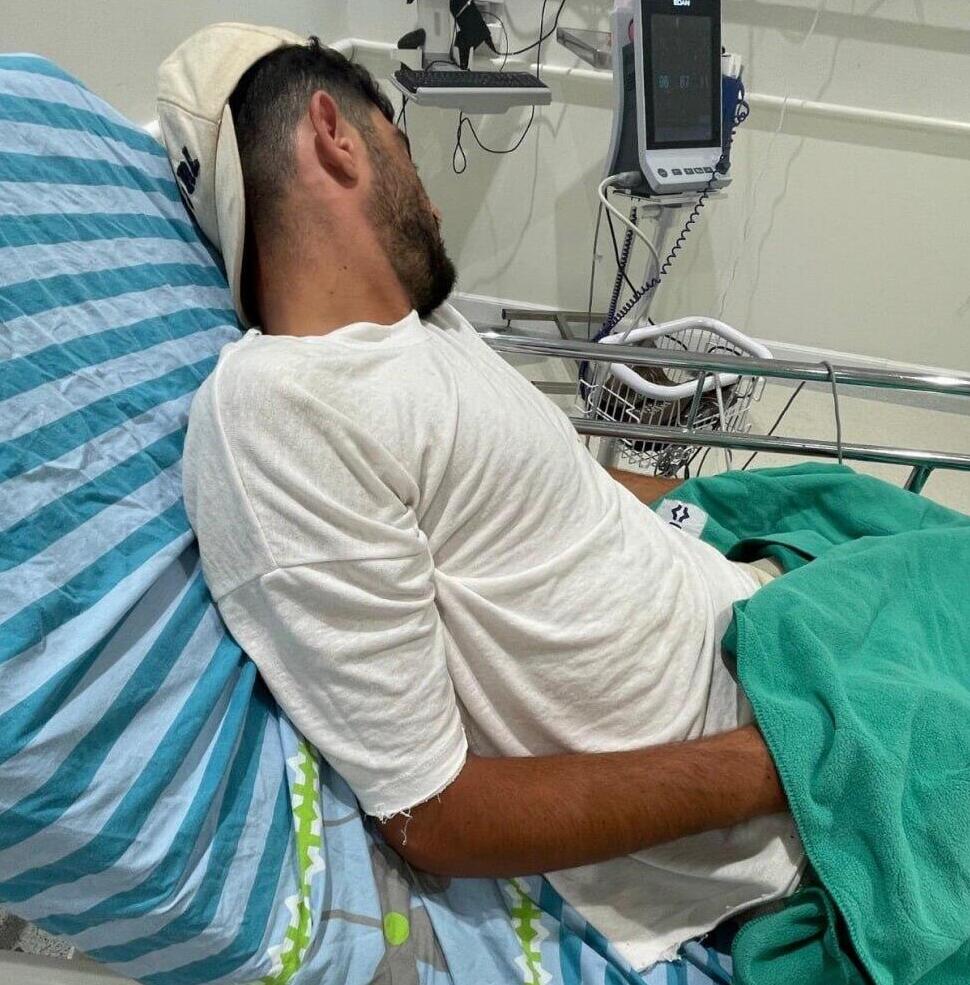
Elad in the hospital after another anxiety attack: 'Three years of stress, fear and vigilance'
(Photo: Courtesy of the family)
“Surfing keeps him sane,” she says. “He is constantly trying to find solutions for himself. He so badly wants to go back to being who he was. He says to me: ‘Mom, I can’t.’”
Osnat sees her son’s struggle every day.
“I get phone calls in the middle of the night from his friends telling me he had an anxiety attack, and I find myself chasing after him in fields. I was with him during an anxiety attack when he was in the bath and shouted, ‘They’re coming, they’re coming.’ I knocked on the door and he didn’t answer. His upper body turned blue and he was foaming at the mouth.
“Over time, I simply invented tools for myself to deal with these situations. When he calls me, I answer the phone only with, ‘What happened?’ I am constantly on alert.”
When he was evacuated from the beach after his latest anxiety attack, it was the 21st time Elad had been taken by ambulance since October 7.
“MDA can check pulse, blood pressure and vital signs, but no device can measure the main thing. These are three years of pressure, fear and hypervigilance. I need my son to be treated, period,” Osnat says.
She explains that Elad’s triggers are unpredictable and continue to emerge almost three years later.
“Yesterday I discovered a new trigger. He heard me speaking on the phone about someone else’s problems, got up and left without saying a word. Later he told me he simply can’t hear other people’s problems. Each time we discover something else that overwhelms him.”
As part of the things that limit him, Elad tries to be only around people who know how to handle him during an attack.
“I am fragile,” he admits. “If I am going through a bad period, sometimes I sleep outside like a homeless person. I don’t want the house to be hurt because of me. I have already slept on the street, at friends’ homes, with anyone I could. I hurt my family because I am not getting the right treatment.”
Osnat says the future also worries him.
“One day he asked me: ‘Mom, how will I be a father? My children don’t need to suffer from my scars.’”
Psychological treatment is not enough
In his current condition, even completely routine places can instantly become a trigger.
“One day I went with my mother to the mall,” he recalls. “I heard someone speaking Arabic, and I went straight back to October 7. I couldn’t eat, I went outside and ran through the park shouting.”
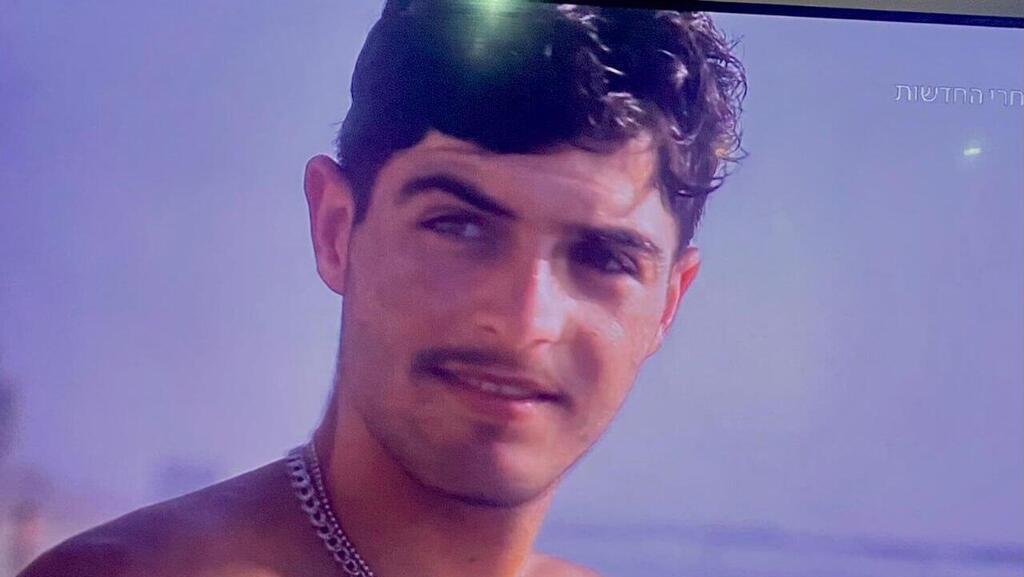
Elad before the Nova massacre
(Photo: Courtesy of the family)
Elad says he previously tried psychological treatment, but the attempt did not help him.
“At the end of the sessions, the psychologist told me she had no way to help me. I am losing trust in the system. I am not recovering; I am going backward.”
Osnat stresses that she is not looking for donations or temporary solutions.
“First of all, the state should treat him, and afterward they can fight among themselves over who pays. One month in a stabilization home is simply not enough. By the time trust is built with the staff, by the time they begin to reach the soul, he already has to leave. Elad needs at least three months to go through a real process.”
The past three years have become an endless chase after committees, approvals and treatment providers.
“There are good people along the way who want to help, but in the end everything gets stuck because of budgets, procedures and approvals. There is a fight between ministries, there is a fight between health funds, and in the end the ones who pay the price are us,” she says.
“As the mother of a Nova survivor, I am not supposed to chase after help. Help is supposed to chase after me. They abandoned them enough on October 7. They cannot abandon their treatment too. What did my Eladi do, after all? He went to a party to dance with friends. He is only asking for a real chance to recover.”
The Health Ministry said in response: “We support the provision of therapeutic hospitalization alternatives, not rehabilitative ones, through stabilization homes and home hospitalization, which are operated by the health funds. As a rule, the recommendation is for an average treatment period of about one month and up to 45 days. It is important to say that a stabilization home is one layer of treatment, while continued treatment is provided through additional services.
“Regarding the specific case, the information is not held by the Health Ministry but by the patient’s health fund or insurer, insofar as he is eligible for services as a victim of hostile acts or through the Defense Ministry’s Rehabilitation Department.”
The National Insurance Institute declined to comment.
First published: 17:56, 07.16.26