

A few years ago, Lee Ross was about to sit down with his family for a Shavuot holiday meal when an emergency call came in.
Within moments, he was pulling on his protective gear, leaving the dinner table and heading for the door. His family knew the routine. When the radio crackled and Ross began getting dressed, they opened the front door and called the elevator so he would lose as little time as possible.
Gallery
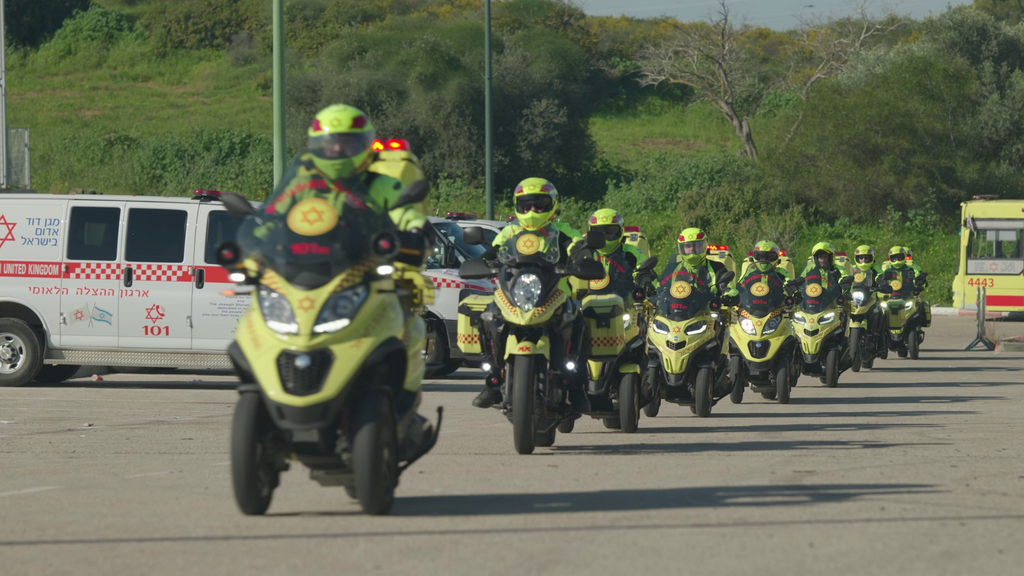
'Sometimes it means leaving your family in the middle of a holiday meal'
(Photo: Magen David Adom)
“Sometimes it means leaving your family in the middle of a holiday meal,” Ross said. “It’s difficult for the family, of course, but it gets into your blood.”
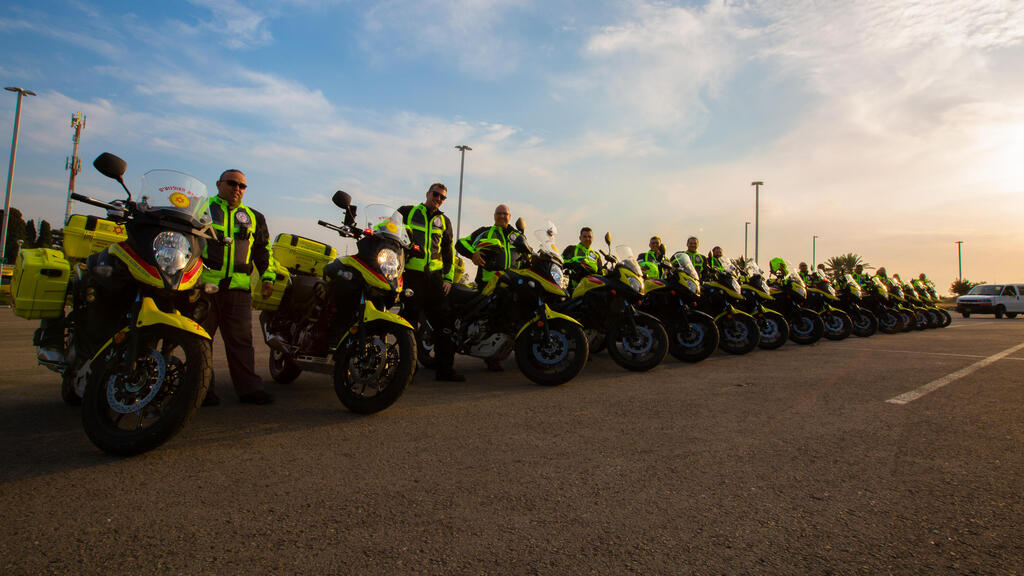
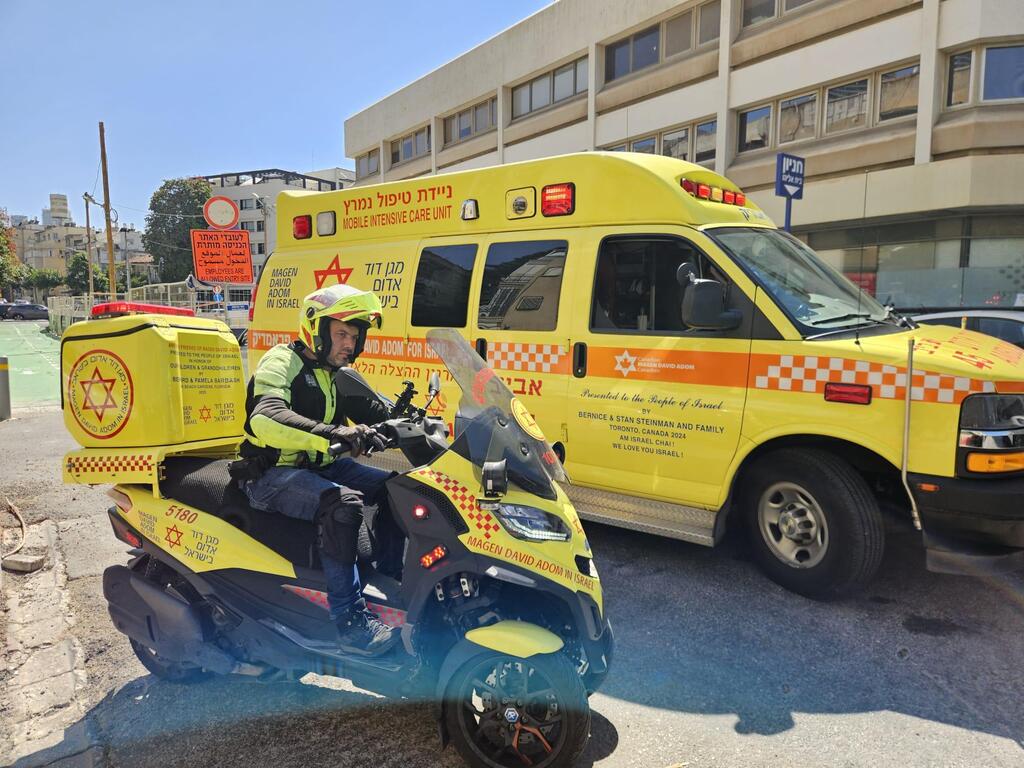
For Ross, 55, emergencies have been interrupting ordinary life for nearly 35 years. A retired Egged employee, he began working with Magen David Adom (MDA), Israel's national emergency medical and ambulance service, after serving as a military medic, and has since driven nearly every type of vehicle in the organization’s fleet. For the past decade, he has also served in its medicycle unit, responding around the clock on a yellow Ducati 1200 assigned to him by MDA.
The calls have taken him from cardiac arrests and roadside births to some of the most traumatic events in Israel's history. He responded to the 2021 Mount Meron disaster, where 45 people were killed in a crowd crush during a religious festival, and deployed to southern Israel on the morning of the Oct. 7, 2023, Hamas-led terrorist attack.
By 10:30 that morning, Ross said, he was already in the Ashdod area on his motorcycle. He later joined a paramedic aboard one of MDA’s four-wheel-drive emergency vehicles and spent more than two months in the south evacuating wounded soldiers and survivors of the Nova music festival.
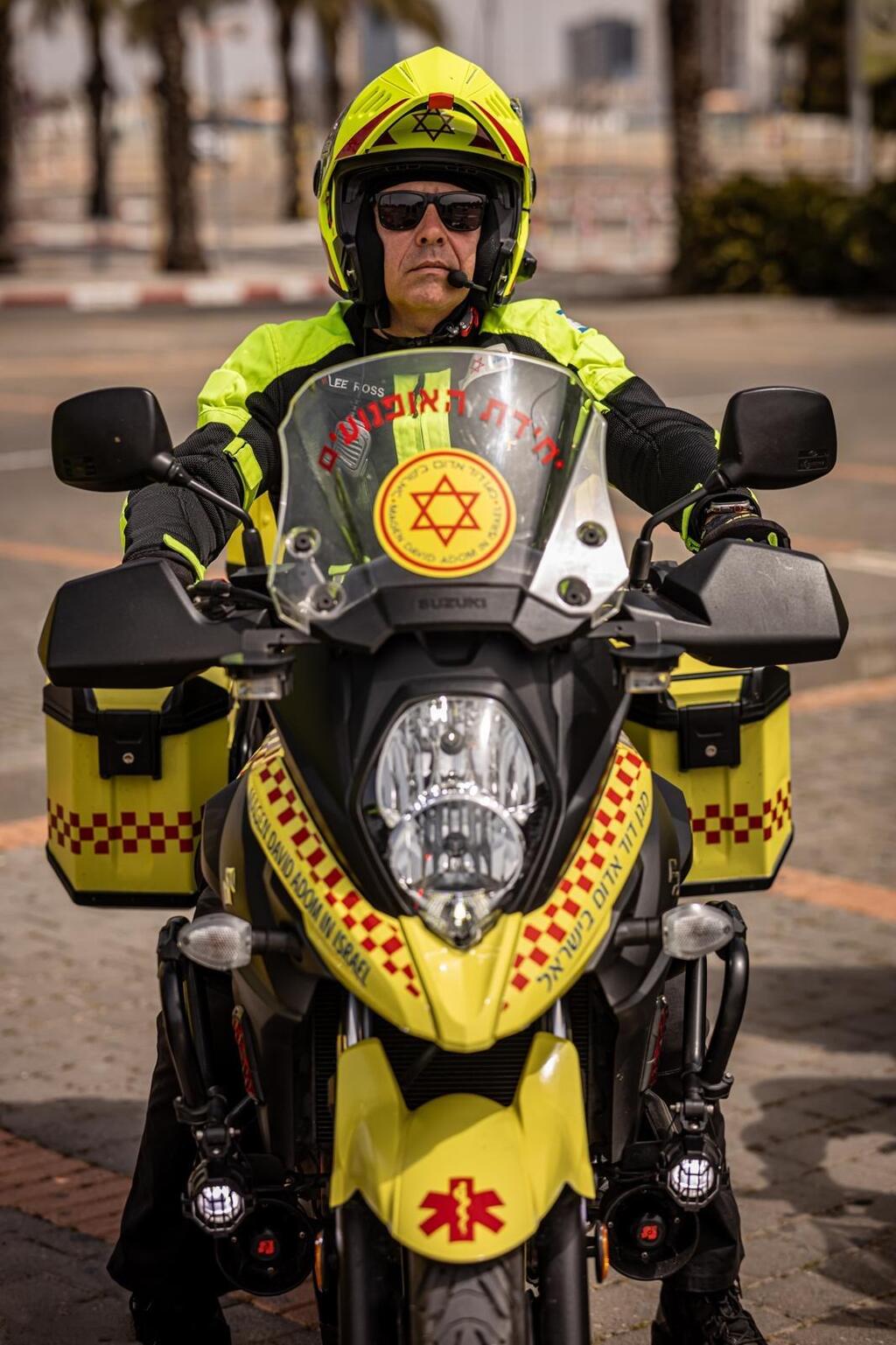
Lee Ross
(Photo: Magen David Adom)
Many of those he treated were younger than his own children.
“You naturally slip into a fatherly role,” he said. “You’re the responsible adult. You speak to them as though they were your own children.”
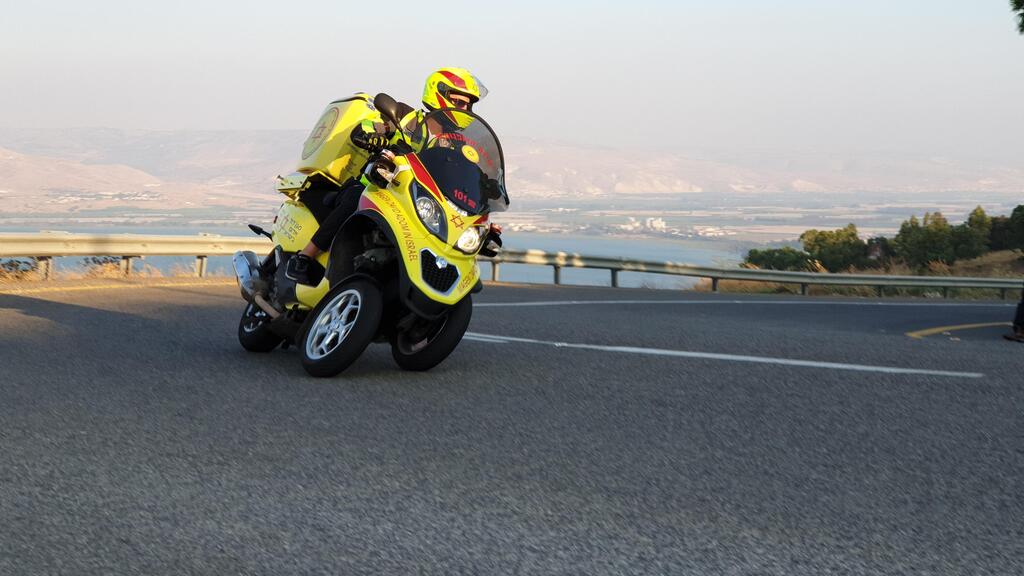
MDA's yellow motorcycles are among the organization's most recognizable emergency vehicles, designed to reach patients before larger ambulances can navigate traffic, blocked roads or crowded urban streets.
According to Ross, the machines’ ability to bypass traffic can make the difference between saving a patient and arriving too late.
Founded in 2002, the motorcycle unit was the first in Israel to use motorcycles as first-response medical vehicles. It now includes about 800 riders deployed across the country, from Israel’s northern border to Eilat in the south.
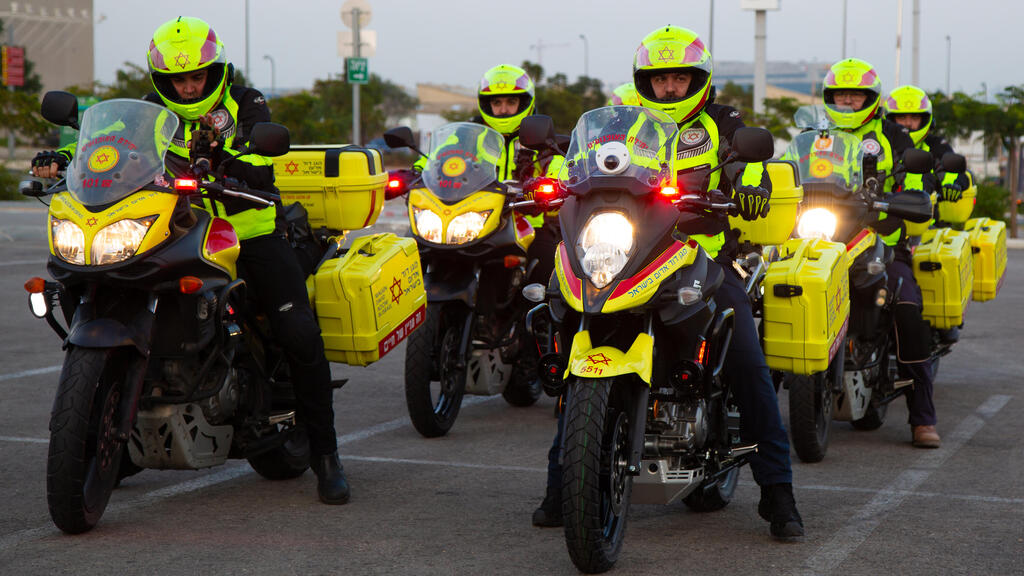
The riders are EMTs, paramedics and physicians, but many spend their working lives far from hospitals or ambulances
(Photo: Magen David Adom)
The riders are EMTs, paramedics and physicians, but many spend their working lives far from hospitals or ambulances. They include teachers, lawyers, construction workers, cooks, programmers and retirees who have undergone medical training and remain on call alongside their regular jobs and family responsibilities.
When an emergency is reported to MDA’s 101 dispatch center, the nearest available rider can be alerted through an app or radio system. Within minutes, the rider can be on the road carrying medical equipment, a defibrillator and the training needed to begin lifesaving treatment before an ambulance arrives.
On most days, Guy Goldschmit writes software for a startup that delivers food by drone across Texas.
"The Wolt of the skies," he joked.
Medicine isn't his profession. It's what he does when his phone rings.
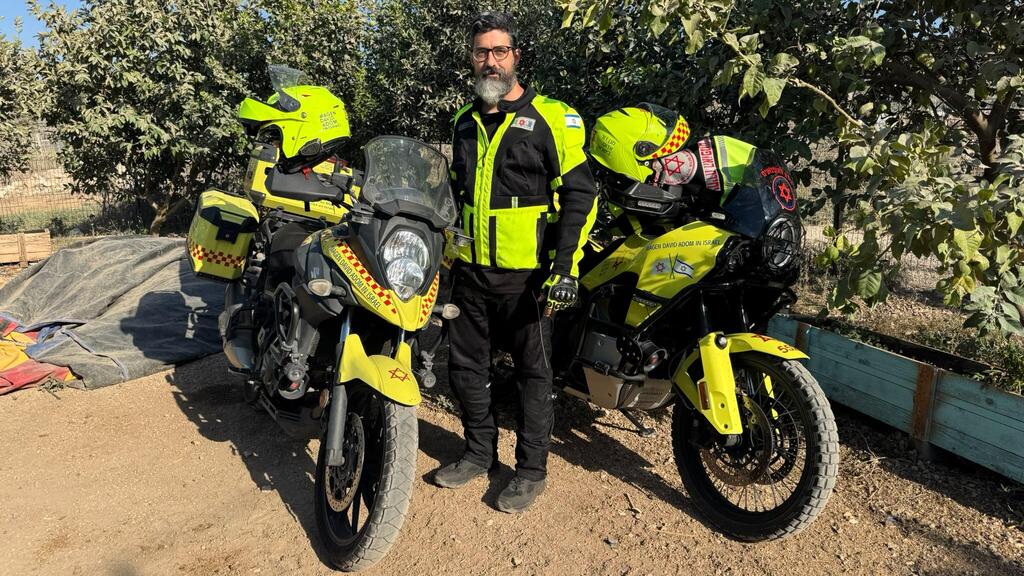
Guy Goldschmit
(Photo: Magen David Adom)
Goldschmit, a volunteer paramedic, commutes each day between his home in Kfar Saba and his office in Tel Aviv with an MDA motorcycle nearby. Every drive to work, every trip home and even the middle of the night can turn into an emergency response.
"I'll tell my colleagues, 'Sorry, there's an emergency,' and head out," he said. "It happens fairly often."
Sometimes it's an elderly person who has fallen at home and simply needs help getting back into a chair. Other times it's a cardiac arrest, a major traffic collision or a fire with people trapped inside.
"There have even been times when I've left the motorcycle at the scene and joined the ambulance to the hospital because they needed another pair of hands," he said.
The same balancing act plays out across the motorcycle unit.
Dr. Paz Ovics spends his days practicing internal medicine at Rambam Health Care Campus in Haifa. Pediatrician Dr. Kobi Shiff sees patients at a Clalit Health Services clinic. Ross retired after three decades driving buses. The unit's volunteers come from all walks of life.
When MDA's dispatch center calls, their professions become secondary.
Dr. Paz Ovics
(Photo: Magen David Adom)
"My family doesn't particularly enjoy hearing the radio at home," Ross said with a laugh. "But when a call comes in and they see me putting on my gear, they open the front door and call the elevator so I can get downstairs faster."
For Shiff, volunteering has become a family trait.
"I describe MDA as an incurable disease that is both contagious and hereditary," he said. "I haven't been able to shake it for 40 years. I infected my brother and passed it on to my son."
His son is now a paramedic, and the two occasionally volunteer together.
"The beeping of the dispatch app is part of the soundtrack of our lives," Shiff said. "Everyone knows this is what we do."
No matter how experienced they become, however, some calls stay with them.
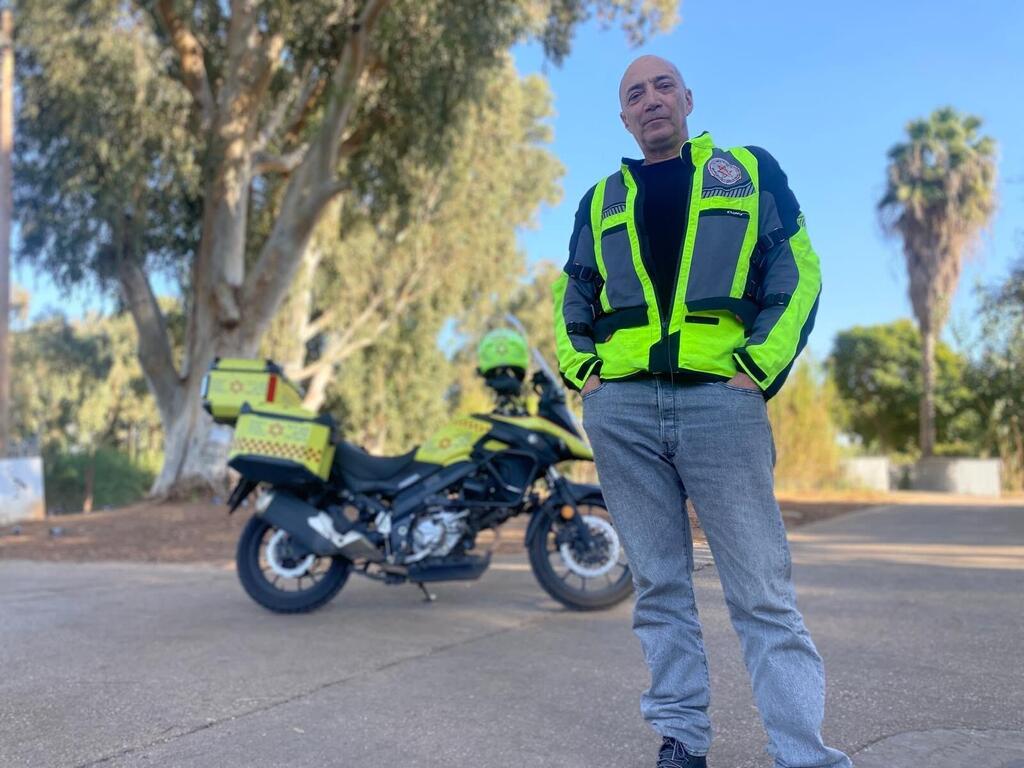
Dr. Kobi Shiff
(Photo: Magen David Adom)
For Goldschmit, one of those involved a four-month-old baby in cardiac arrest.
"We did everything we possibly could," he recalled. "Thankfully, after arriving at the hospital, the baby's heart started beating again."
The call changed him.
"It played a major role in my decision to become a paramedic," he said. "I'm a father to a young daughter, so cases involving children inevitably affect me on a personal level."
Ovics said experience has taught him that emergency medicine doesn't end when the ambulance leaves.
He recalled responding to an elderly hospice patient whose family initially wanted every possible lifesaving measure. As he explained what prolonged resuscitation and mechanical ventilation would likely mean, they realized those interventions were not what their father would have wanted.
"They agreed that this wasn't how he would have wanted to live," Ovics said. Instead, the team focused on keeping the patient comfortable.
'I describe MDA as an incurable disease that is both contagious and hereditary'
(Photo: Magen David Adom)
"I try to pass that perspective on to younger responders," he added. "It's important to understand not only what happens at the scene, but what comes afterward."
Shiff, meanwhile, says the hardest calls are often the ones that remind him of himself.
"The hardest cases for me are motorcycle accidents," he said. "You arrive, see a rider around your own age and have to pronounce him dead. Then you have to get back on your own motorcycle."
He paused.
"You stop and think, 'Now I have to ride again.'"
For all the stories of lives saved, the volunteers are quick to point out that the motorcycle itself is only a tool. Getting there first has never meant simply beating the ambulance.
It means walking into a stranger’s life at the moment everything has gone wrong. A family is panicking. Someone is injured, unconscious or struggling to breathe. The people in the room may remember only fragments of what happened, but they often remember the person who arrived and took control.
“You meet people during the worst few minutes of their lives,” Ross said. “Sometimes it’s five minutes, sometimes 10 minutes and sometimes an hour. But whenever we meet them, it’s almost always the hardest moment they’ve ever experienced.”
Then the ambulance pulls away, the family follows and Ross gets back on the motorcycle.
Sooner or later, the radio crackles again.